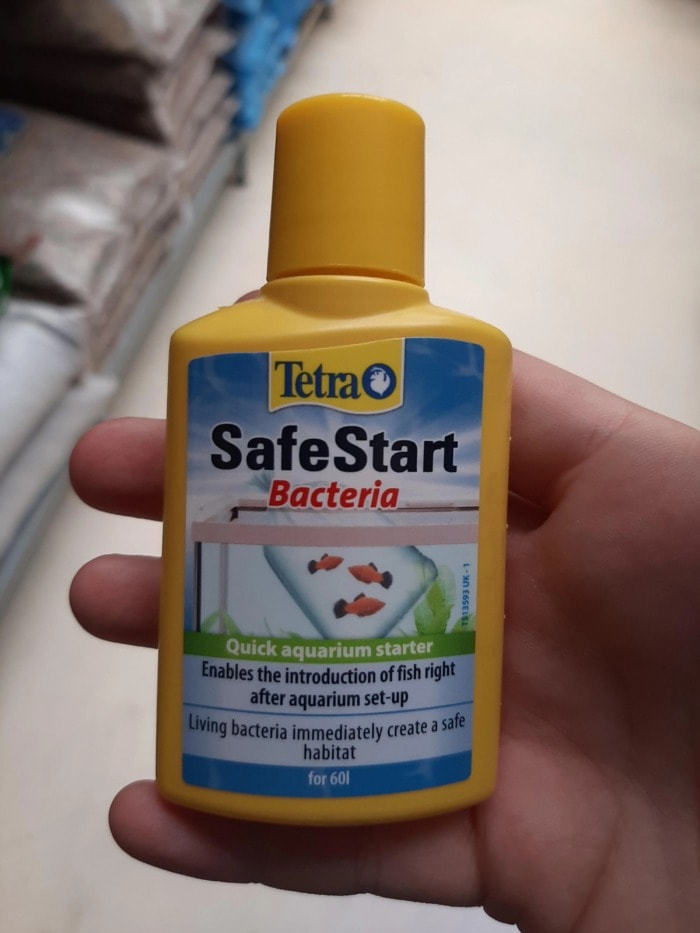
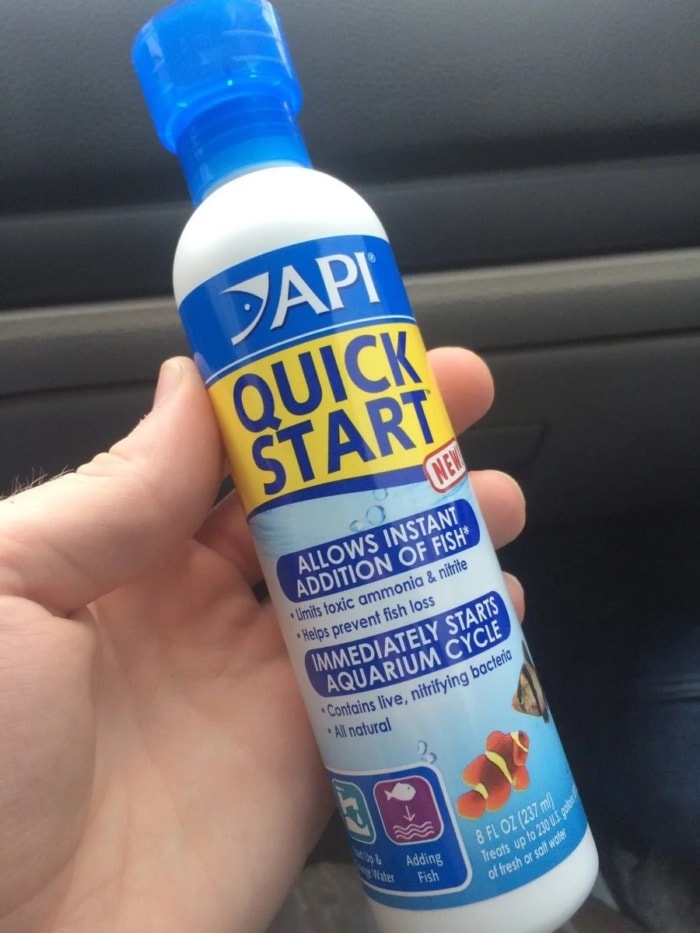
The difference between the two products is that API Quick Start can be used in both freshwater and saltwater aquariums whereas Tetra SafeStart can only be used in freshwater systems by design. These aquarium cycle starters also contain slightly different strains of bacteria, which affects how fast each product works.
Both Tetra Safe Start and API Quick Start will work, given that they are applied in a correct manner. The cycling of a new tank will speed up significantly but it won’t happen overnight.
Generally speaking, with proper use you can realistically expect to wait about 14 days to fully cycle a fish tank with API Quick Start. Tetra SafeStart takes about the same time although often it may finish the process in just 10 days. Dosage plays a major role in success.
Unfortunately, following the instructions on the back is not something that will help, as they are pretty vague.
After experimenting hard I’ve managed to highlight what strengthens your chance for success, eventually finding a process that, in my opinion, is foolproof.
I ran two tests on both before actually using them in a real fish tank project.
The only disappointing part is that they will not cycle your fish tank the same day.
Also, by the “add fish instantly” on the label they don’t mean all the fish the tank can hold but rather just a couple, until the beneficial bacteria settle.
Both API Quick Start and Tetra SafeStart can be added with live fish in the tank.
The bottles obviously don’t contain substrances harmful to fish, just the opposite.
How to use them and make them work?
After running a couple of tests I am confident to share my success formula with you.
Going through hundreds of forum threads and speaking with fishkeepers I know, I did find confirmations of my findings.
This means that my logic was correct.
Firstly you’d need to get the right bottle of bacteria.
Safe Start and Quick Start both contain live “inactivated” bacteria. By being inactivated like this the products last longer on the shelf and are easier to store, which makes them more beginner-friendly.
Both brands are claiming no refrigeration is needed.
The perfect temperature for the bacteria’s shelf and in-water life would be between 40°F and 80°F (5°C to 25°C).
Going beneath or above that range may spoil it, by killing the microorganisms and rendering the product useless.
Trusting your local fish store is okay, but I do prefer getting mine over at Amazon (link that will open in a new tab).
Anyway, if you do insist on getting the bottles from your local market make sure that they were safely stored and aim to get the most recently shipped ones (with the farthest expiration date).
Some instructions before you start are:
Get a bottle that has been manufactured as recently as possible – The newer the bottle, the better. Also, get at least two bottles, I will explain why later.
Choose a bottle meant for a larger aquarium than yours – For me, it worked best when I used the 3.38 Oz bottle of Tetra SafeStart Plus for my 20 gallons, and also when I doubled the dose recommended for the API Quick Start.
Make sure the ammonia is not already deadly high – everything above 2.5 ppm of ammonia will be harmful to your fish AND the bacteria. Before you start with the nitrogen cycle you need the ammonia lowered as much as possible.
With that out of the way, you can start cycling your aquarium.
If you’re cycling a 5-gallon tank it’s really best to put a source of ammonia in it and no live fish. Such source could be fish food.
Anyway, it’s technically true that you can stock the tank up, but you’d need very clean fish (ones that do not poop as much) and you’d have to feed them very carefully to either not overfeed (leaving extra ammonia work for your bacteria) or starve them (being too cautious not to overload your tank with ammonia).
Add another bottle of the product if that happens.
This is why I told you to get a second bottle.
However, there’s another solid reason behind this point.
You’re probably using chlorinated tap water for your fish tank. In order to perform a water change you’d need to dechlorinate the water first, right?
Water facilities in the more developed cities use Chloramine instead of Chlorine for disinfection.
Chloramine represents the chemical bond between chlorine + ammonia.
Seachem Prime (a commonly used dechlorinator), for example, breaks down chloramine to chlorine and ammonia, takes care of the chlorine, and detoxifies the released ammonia. Every product that claims to detoxify ammonia likely transforms it into ammoniUum Ammonium is harmless to bacteria and fish alike, but the detoxifying effect only lasts for 24 to 48 hours if your tank’s pH is above 7.0. This does not mean that having more than 7.0 pH is bad, it just means that using ammonia detoxifiers in a non-cycled tank is not a good long-term solution.
Anyway, after that, the ammonium turns back into ammonia, which means you now have more of the latter in the cycling aquarium.
The more Chloramine your water facility uses, the more the released ammonia after the effect of the detoxifier expires. This could consequently harm your bacterial biofilter and fish if the contents turn out to be too high for the bacteria to handle in time.
Author’s note: This only affects new aquariums that do not have an established colony of nitrifying bacteria.
Anyway, another argument for not changing the water in the first 14 days of cycling (unless there’s a dangerous ammonia spike out of nowhere) is that studies suggest that nitrifying bacteria use ammonia instead of ammonium for their source of energy.
Continuously using a dechlorinator that turns ammonia into ammonium could actually slow down the nitrogen cycle in your aquarium even further. The nitrifying bacteria would not be interested in the latter and will not be stimulated to multiply further.
This can easily turn into a vicious circle and a never-ending supply of Prime for a new, non-cycled fish tank…
If you’re using bottled bacteria you’d want your fish tank to cycle as soon as possible, right?
Tip: The best way to avoid all of this is by having a separate batch of dechlorinated water to use for water changes during aquarium cycling. The “emergency batch” should be dechlorinated at least 24 hours before use. Add a little bit of bottled bacteria to it to make up for the residual ammonia and it’s good to go.
Despite the described scenario Seachem’s Prime still remains a fantastic option for water dechlorination in a fully cycled aquarium. I’d recommend it to anyone who is using tap water for their aquarium. The residual ammonia from breaking down the Chloramine would be negligible to the already-established bacterial colony in a mature tank.
Anyway, after 14 days of cycling, you can perform a water change the regular way.
Don’t test the water for the first 2 days.
It’s okay to test it whenever you want but that is something that I stuck with throughout my tests.
Turn the UV lights off for the first day or two.
Ultraviolet light does affect the bacteria in a negative way.
For it to successfully establish I’d strongly recommend not turning those lights on the first day after the application (if you have them).
After the second week you can gradually add fish, but of course, don’t add 10 at a time. This would overwhelm the bacteria.
When doing the first water change the ammonia may go up, as there may be some ammonia in tap water, but I wouldn’t worry about it that much.
The levels should be overall low and should quickly get back to normal within the next 12 hours or so.
Also, don’t freak out if you don’t see your nitrites spike when water testing.
If you’re using Tetra’s SafeStart the process will skip the nitrites building up and will directly build into nitrates.
Don’t worry if your aquarium becomes cloudy at first.
The water will get clear within two to three days or a week at most.
Seeing cloudy water in a new aquarium at the beginning of its Nitrogen cycling is completely normal and it means that different bacteria are establishing their hierarchy.
Visit the link if you’d like to understand the process in depth. Understanding aquarium microfauna is, in my opinion, a core component of long-term success in fish keeping.
And that’s not an overstatement.
Which of the two should you choose? Which one is the best for your?
This is not one of those posts where I discuss the pros and cons of both products and leave the choice to you.
I have a statement:
Both can be (successfully) used for a start but If you’re starting a brand new empty fish tank and want to establish an environment safe from Ammonia, I’d recommend using Tetra SafeStart.
If you’re starting a brand new planted tank, doing huge water changes, or adding a lot of fish at once to an already cycled planted tank I’d go for API Quick Start.
Tetra SafeStart’s better at handling the nitrites (it virtually skips them) and API Quick Start will normalize the ammonia levels in the water quicker. The latter is more important in a mature tank with many live fish in it.
The API Quick Start is more efficient when you have a planted tank as it does not handle the nitrite levels as well as Tetra’s SafeStart. Live aquatic plants prefer ammonia and nitrite over nitrate as their source of nitrogen so, by using API’s product you will both speed up the cycle and let your plants feed on the nitrite.
Note: Between Tetra SafeStart and Tetra SafeStart Plus the difference is only in the concentration of the bacteria. I’m really happy with Using the Plus version, so the instructions will remain the same.
The alternative bottled bacteria for saltwater aquariums is called Bio Spira.
API doesn’t have a saltwater version, you just double the dose.
What’s with the mixed opinions then?
Honestly, it’s probably a human error.
Seeing how (upon proper use) the products kept proving themselves to me and others I spoke to, I can only conclude that.
Then again, the negative reviews pushed me to test them myself, before anything.
Conclusion
Fishkeeping is a hobby that requires some patience.
Momchil Boyanov is the Founder and now Senior Editor of AquAnswers. He has over 13+ years of experience in keeping home aquariums as well as providing professional aquarium services.
Momchil has had his fair share of adventures in aquarium care. He has made MANY mistakes throughout his fishkeeping journey and thus learned A LOT. Through Aquanswers, Momchil shares knowledge about freshwater and saltwater aquariums with the people within this community.
Aquanswers is a blog about freshwater and saltwater pets, where we share inspiration, tips , detailed research, & ideas for your aquarium. We have made MANY mistakes throughout our fishkeeping journey and thus learned A LOT of valuable lessons. Join in on our community of hobbyist to grow and Share Your Experiences!

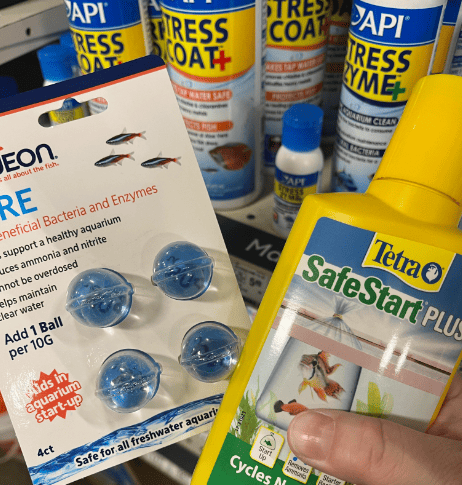

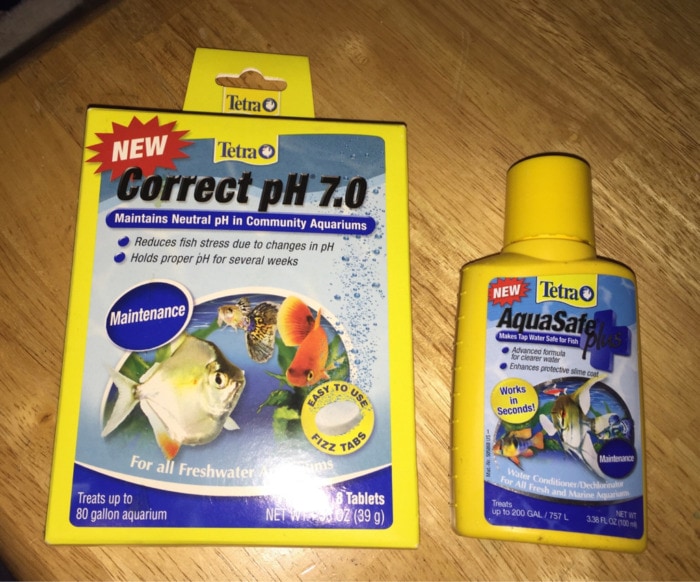
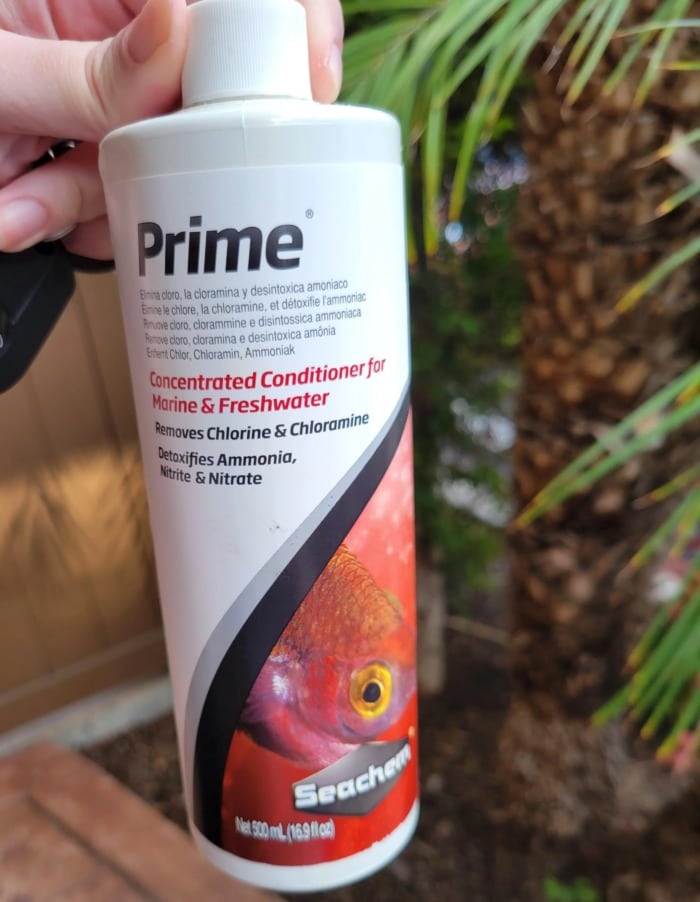 Seachem Prime (a commonly used dechlorinator), for example, breaks down chloramine to chlorine and ammonia, takes care of the chlorine, and detoxifies the released ammonia. Every product that claims to detoxify ammonia likely transforms it into ammoniU