Skip to content
Beautify your aquarium with the vibrant Tuxedo Platy fish, which is an ornamental species with low-maintenance needs and care requirements suitable for beginners. This post will detail everything needed to keep this fish happy and healthy.
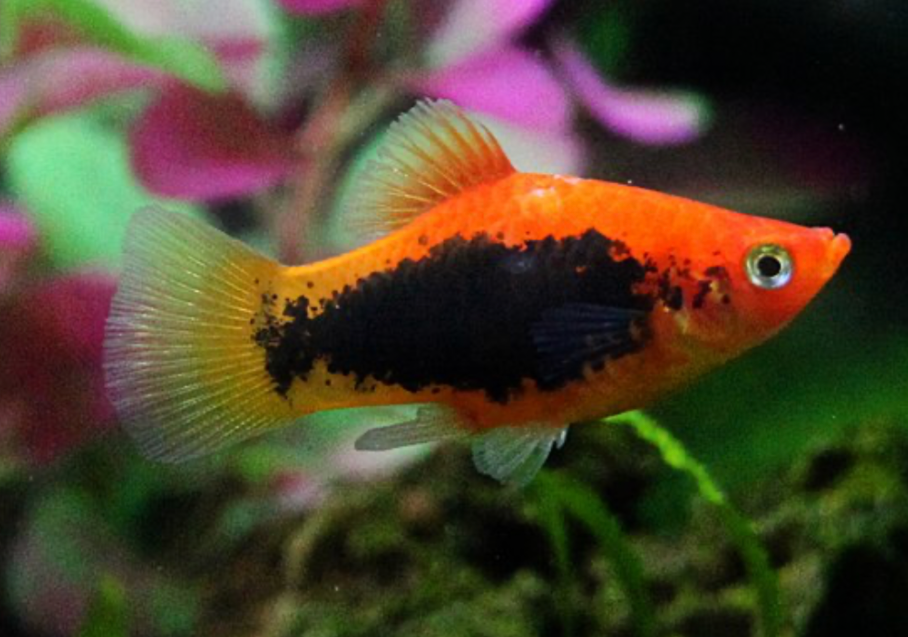
Tuxedo Platy Care Guide: Stunning Black-and-Gold Fish for Community Tanks
Can you imagine seeing a fish that looks like it’s dressed for a black-tie function? That’s the experience of seeing the Tuxedo Platy for the first time. This livebearer fish is a dual-toned beauty with a distinctive, eye-catching tuxedo pattern.
Although the Tuxedo Platy is one of the most recognizable platy varieties due to its striking dual-tone, it has several other variations worth exploring.
In this guide, we’ll analyze basic Tuxedo Platy care for beginners and experienced aquarists, including tips for building a community around it.
Author’s Note: Check out our post on the 13 Types of Platies That Are Perfect for Beginner Aquarists for an in-depth overview of the wide variety within this species!
Tuxedo Platy Scientific Name, Origin & Classification (Xiphophorus maculatus)
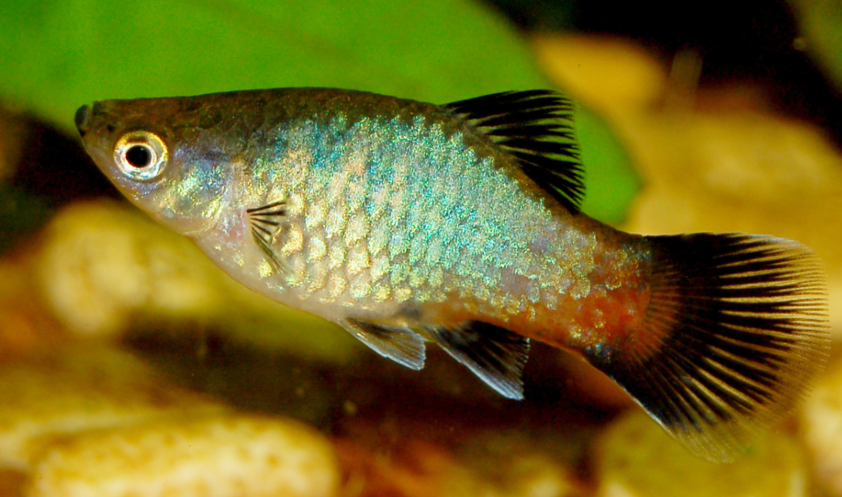
We’re starting with the Tuxedo Platys’ origin story and scientific classification because it’ll give you a deeper understanding of its natural habitat and environmental needs in an aquarium or pond.
Origin
Tuxedo Platies originated in waters flowing from Central America through the Atlantic and into Mexico. So, you’ll find this species naturally in the waters of Belize, Veracruz, Guatemala, and Honduras.
However, due to the aquarium trade, Tuxedo Platies have spread worldwide beyond their natural habitat.
In the wild, Tuxedo Platies develop a unique dull brown and olive-green tuxedo pattern that matches their natural habitat and helps them blend into their surroundings.
However, for the vibrant reddish-orange and black tuxedo tone that’s popular in the aquarium trade, you’d have to get a species that’s domestically bred and genetically modified.
Scientific Name and Classification
Identifying the Tuxedo Platy by its scientific classification mostly helps with choosing the right tank mates and managing its breeding.
Tuxedo Platies belong to the phylum Chordata, which includes animals with a spinal cord. As a livebearing ray-finned fish, they’re from the Actinopterygii class and Cyprinodontiformes order.
Livebearers are in the subfamily Pocillinae, which includes true livebearers, and Tuxedo Platies belong here. Due to its swordlike tail fin, this fish belongs to the genus Xiphophorus, while its biological species depends on its origin, genetics, and unique features.
So, the general Tuxedo Platy scientific name is Xiphophorus maculatus or X. maculatus, while a subvariant is X. variatus.
What Is a Tuxedo Platy? Understanding the Famous Pattern
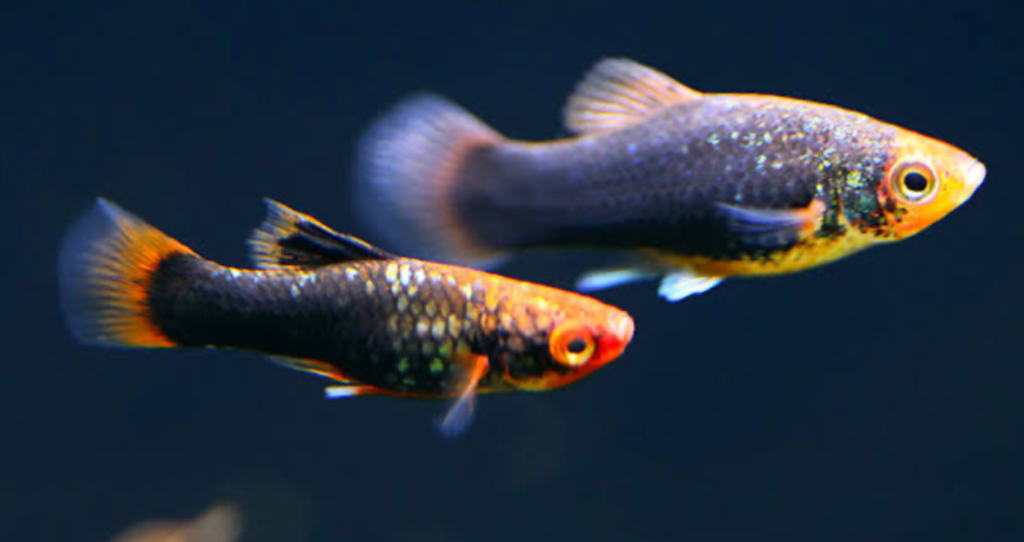
A Tuxedo Platy is a livebearing swordlike fish with a unique two-toned contrasting appearance.
Although there are many variations of Tuxedo Platy colors, its most common appearance is a striking black rear half with a contrasting, vibrant, metallic orangish-red upper body and outline. Due to the selective breeding of this species over the years, the natural Tuxedo Platy pattern in wild variants has evolved into different combinations.
Some Tuxedo Platies have vibrant red, orange, or golden upper bodies with dark black lower bodies, while others feature a dark black mid-body outlined by fiery tones on the upper and lower bodies.
Color Variations: Red, Gold, Blue, & Sunset Tuxedo Platies
Let’s dissect the many variations of the Tuxedo Platy’s colors so that you don’t think there’s only one two-toned combo.
Red Tuxedo Platy
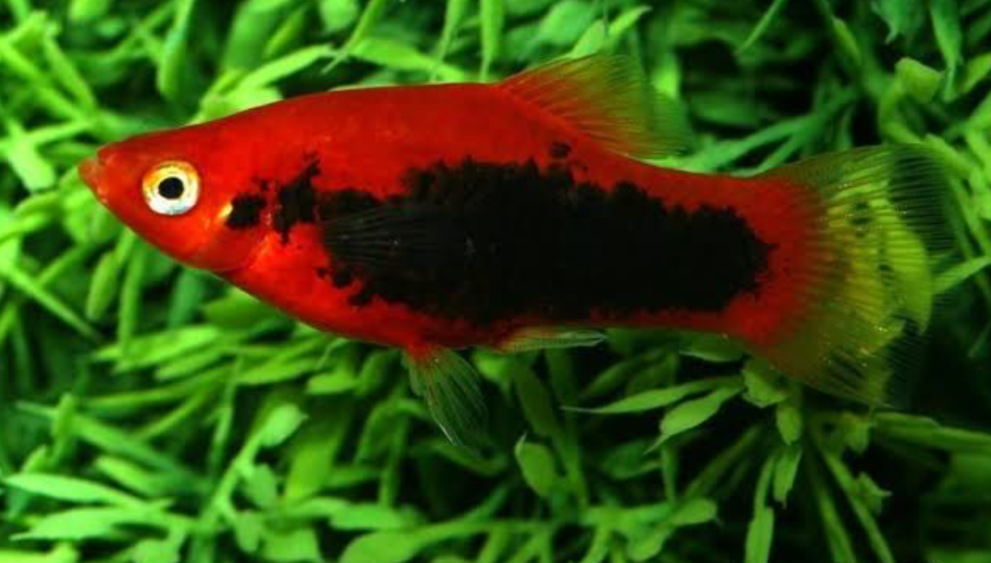
One of the most common subvariants of this species is the Red Tuxedo Platy. It’s a two-toned version with a metallic cherry-red upper body and a deep black lower body.
Gold Tuxedo Platy
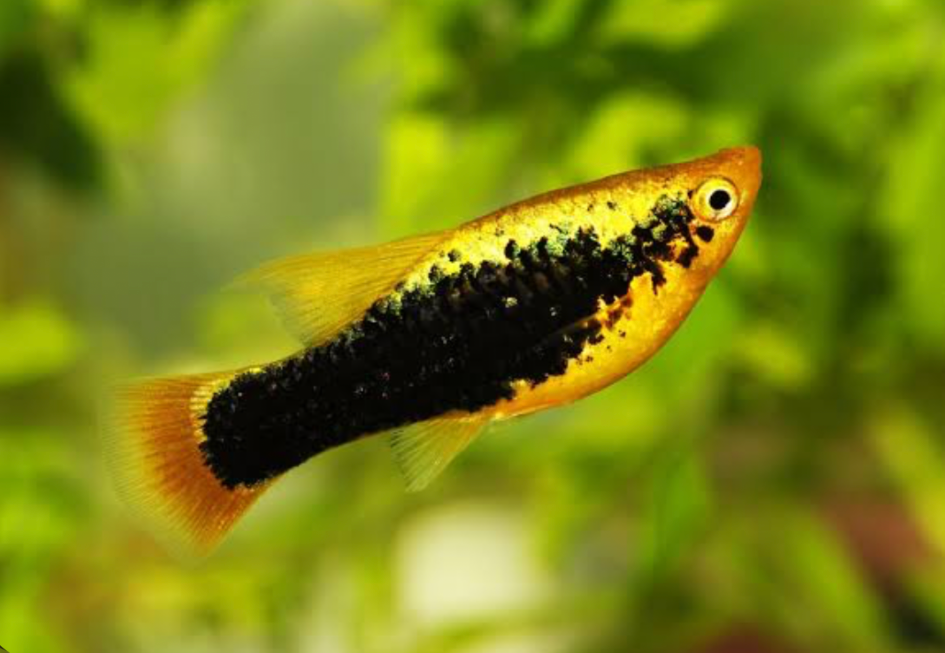
A close second to the red variant is the Gold Tuxedo Platy, which has a golden-orange, sometimes vibrant yellow, upper body paired with a deep black lower body.
Its golden hues often shine through the black tone, which earned this variant the nickname of Sunburst Tuxedo Platy.
Blue Tuxedo Platy
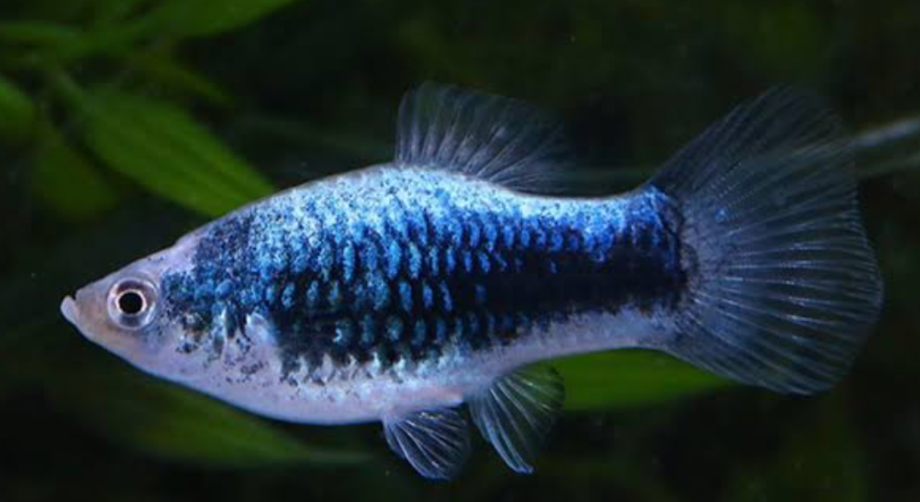
Blue Tuxedo Platies are one of the rarer subvariants of this species due to their distinctive metallic neon blue-green upper body, which shimmers against a matte black lower half. This color combination creates a striking visual display that leaves a lasting impression.
Sunset Tuxedo Platy
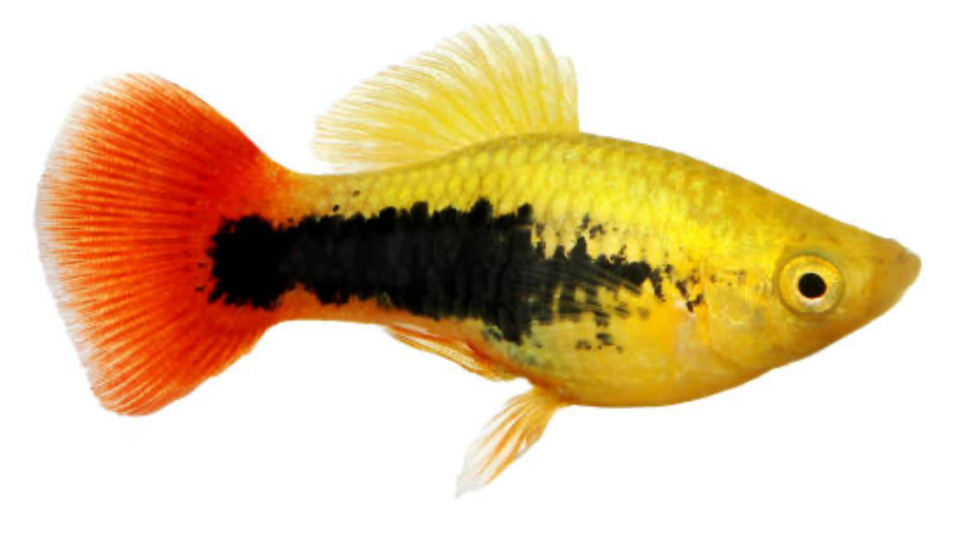
Another rare color morph of this species that’ll leave you in awe of its appearance is the Sunset Tuxedo Platy. It’s a beautiful mix of red, gold, and sunburst colors on the upper body, creating a sunset gradient that blends into the black lower body.
Green Tuxedo Platy
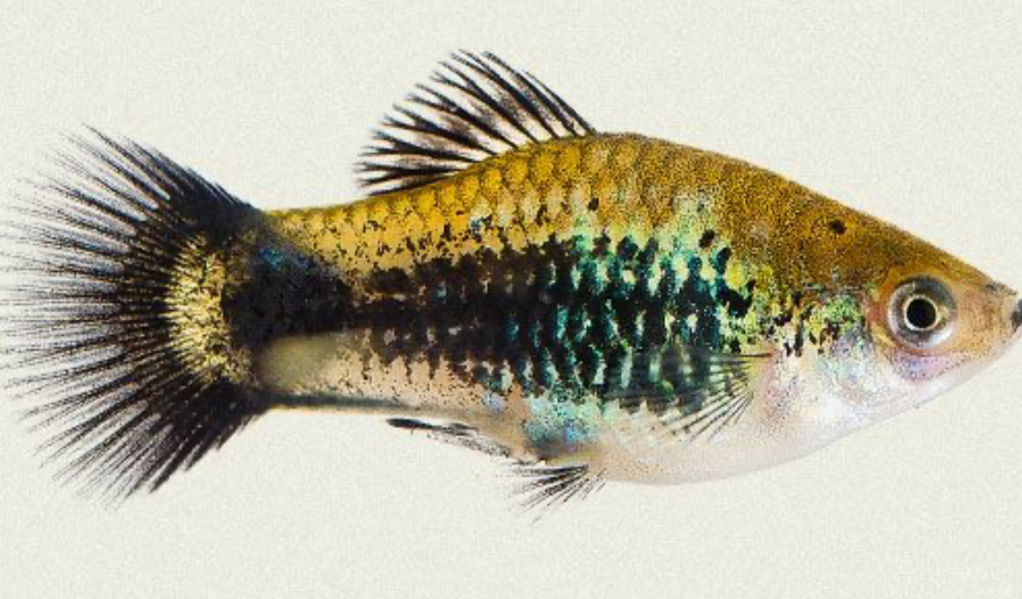
As you saw earlier, the green-and0muted0brown tuxedo Platy is the natural color variant you’ll find in the wild. Although the color is dull, it’s a great camouflage that helps this fish survive in its natural home.
Adult Size and Lifespan
Your Tuxedo Platys’ size and lifespan depend on several factors, including environmental conditions, feeding, genetics, and gender.
Sizing the Tuxedo Platy
In the wild, an adult Platy can grow between 2 and 2.5 inches, with females being larger. However, with proper care and excellent maintenance in a home tank, these species can grow an additional 0.5 inches.
Extending Tuxedo Platy’s Lifespan
Unfortunately, no matter how much you love your Tuxedo Platies, you can only enjoy their company from birth to death for about 3 years.
With excellent, careful maintenance, though, you can extend the Tuxedo Platy’s lifespan by 2 years, bringing the total to 5 years. That’s why you must build an excellent tank setup to encourage this species to grow and reach its full potential.
Best Tank Setup to Showcase Tuxedo Colors
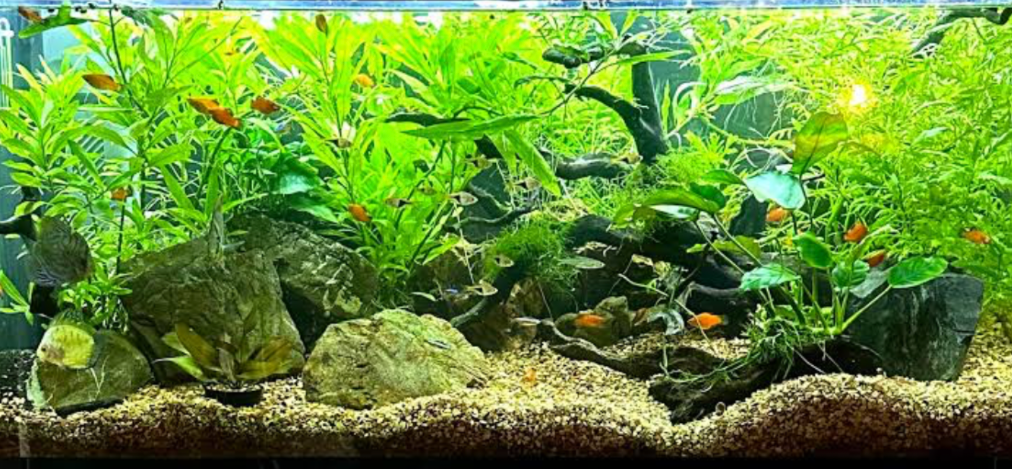
The natural waters of the Central American and Mexican waters, where the Tuxedo Platy’s ancestor originated from, are slow-flowing with rich, dense vegetation. So, consider that when you’re building your Tuxedo Platy’s tank setup.
Tank Size
Since Tuxedo Platies are a small fish species, a tank of about 10 to 20 gallons would comfortably house a group of 4 to 6.
Get a long, rectangular enclosure with enough swimming space and dense vegetation, just like the tuxedo platy’s original habitat.
Aquascaping
Aquarscaping for Tuxedo Platies is a two-fold project. Firstly, you must match its natural environment to make this pet as comfortable as possible despite being in captivity. Then, you must set up the tank to match its appearance and environmental needs.
Highlight contrasting body colors by using dark substrates like fine black sand, then add enough aquatic plants for cover. Use Java Moss, Java Ferns, and Amazon Swords around the tank, and anchor the plants with smooth rocks and caves to provide hiding spots.
Water Parameters and Maintenance
Because the natural waters of the Tuxedo Platys are slow and steady, like streams and springs, you need to set up a moderate flow with ideal, stable water parameters in your decorated tank.
Ideal Water Parameters for Tuxedo Platy
Ideal tuxedo platy water parameters include the following:
- Temperature: 70 – 80F
- pH Level: 7.0 – 8.0
- Hardness: 10 – 25 dGH
Tuxedo Platies thrive in highly alkaline water with a hardness of 10-25 dGH.
Maintaining your Tuxedo Platy’s Environment
To keep your pet’s water clean before and after feeding, always change about 25% of the water content weekly and use a gentle filter to remove any uneaten food and harmful waste.
Best Foods for Color Enhancement

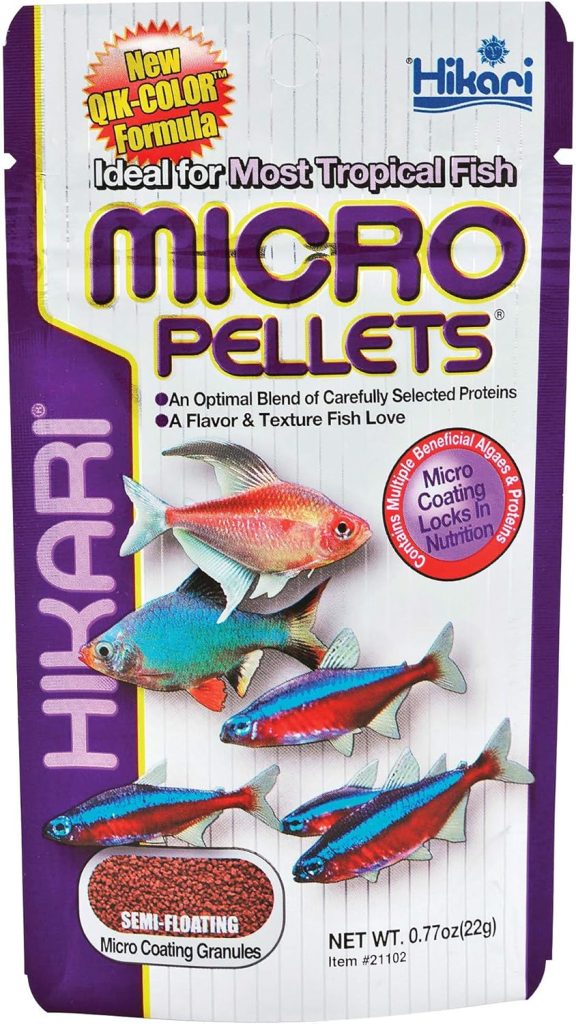
TetraMin Tropical Flake Food (Left)
Tropical Semi-Floating Micro Pellets (Right)
Tuxedo Platies are omnivorous pets, which means they’ll eat both plant and animal foods. However, that doesn’t mean you shouldn’t regulate their diet or curate their meals for specific results.
Balanced Diet for Tuxedo Platy
Tailor your tuxedo platy diet to include diverse food classes that’ll boost their vibrant pigmentation and improve their mood.
Feed them high-quality flakes made for colorful ornamental fish as staples, then mix them with live and frozen foods rich in carotenoids and other nutrients, such as fiber, to aid digestion.
Author’s Note: For more on feeding your aquatic pets check out The Ultimate Guide to Fish Food: Pros and Cons & Best Choices!
Feeding Schedule for Tuxedo Platy
Feed your Tuxedo Platy twice daily in small portions that they can finish in under two minutes. It’ll keep them from overfeeding, indigestion, wasting food, and passing out excess waste.
Tank Mates and Community Compatibility
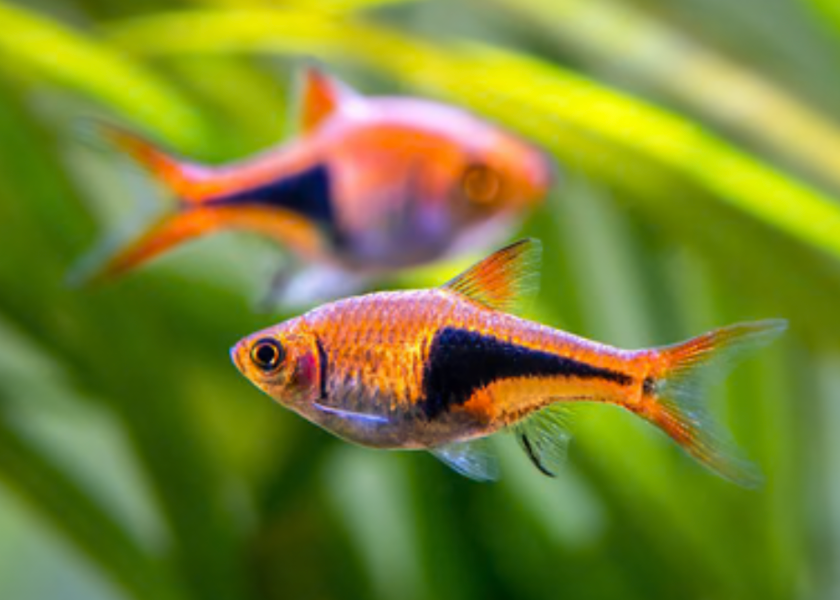
Tuxedo Platy fish are social and peaceful, species that love to school and be around other fish species, which makes them community pets.
If you want a diverse aquarium with Tuxedo Platies as the centerpiece, then there’s a wide range of options to explore, but be careful because not all fish are compatible with your two-toned livebearers.
Ideal Tank Mates for Tuxedo Platies
When choosing compatible Tuxedo Platy tank mates, you must consider the following factors:
- Temperament
- Size
- Environmental needs
- Feeding habits
You need to select calm fish, like your Tuxedo Platy, to reduce the risk of stress. Ensure they can survive in the same natural-toalkaline water conditions and eat omnivorous foods as well. Ideal tank mates that fit these conditions include Tetras, Corydoras, Rasboras, Mollies, and Guppies.
Avoid large fish that can bully your pets or turn them into prey. Also, avoid nanofish and other species your pets can eat, such as brine shrimp.
Breeding Tuxedo Platies: Will Fry Keep the Pattern?
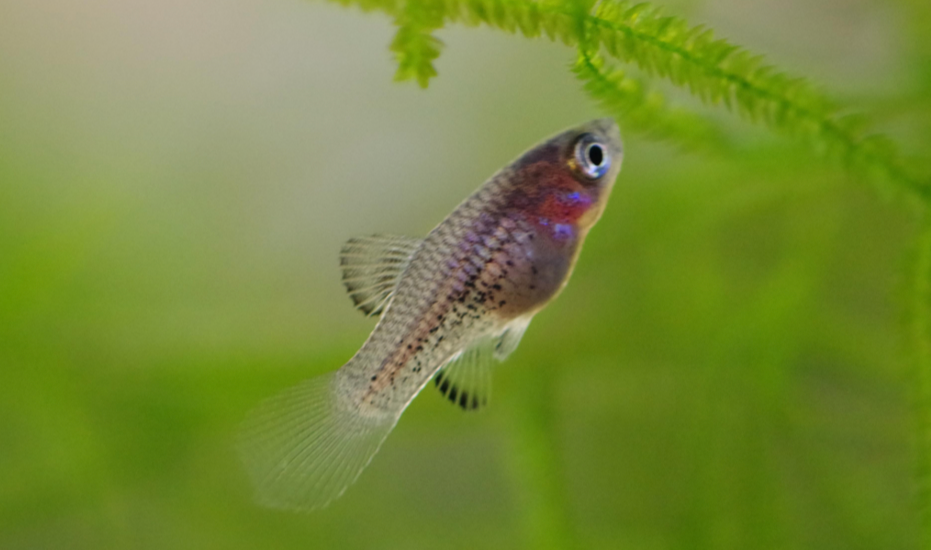
Tuxedo Platies’ breeding methods bypass a step in the typical fish reproduction cycle, which is the egg stage, because they’re livebearers.
As livebearers, they deliver their young as free-swimming fry, and so, you must ensure they have the right environment to support their healthy growth and development.
Most beginners always want to know how the unique Tuxedo platy genetics appear on the fry, or if they need genetic modification, and you’re about to find out.
Tuxedo Platy Genetics
Tuxedo Platies retain their unique and beloved two-toned patterns when the parents carry the dominant genes that give the bold Tuxedo color. Still, it won’t show on fry until they start growing larger and attaining maturity.
Also, because of commercial breeding practices, this trait is often diluted or modified through crossbreeding.
So, if you want to have an authentic Tuxedo Platy fry, you must start with the basics of choosing healthy parents with the dominant genetic characteristics you desire.
Selecting the Breeding Pair/Trio
Distinguish male and female Tuxedo Platies by their physical characteristics. The males are smaller, with a pointed tail fin called a gonopodium, while the females are larger and rounder, with rounded fins and duller colors.
Choose a simple, healthy adult male Tuxedo Platy to mate with about two or three females per breeding tank. This ratio helps to distribute your male pet’s aggression and reduce the stress it could cause to a single female Tuxedo Platy.
Look out for Texedo Platies with strong genetic markers such as dark, pigmented lower tails and vibrant red or orange upper bodies.
Setting up The Breeding Tank
You can get a breeding tank of about 10 to 20 gallons and set it up like the normal Tuxedo Platy home aquarium described above, but make a few additions.
Increase the vegetation in the tank by adding hornworts and more floating plants to protect the fry and ensure stable water parameters.
Gestation and Delivery
When they’re ready to breed, the male Tuxedo Platy will mate with females and fertilize them internally. Immediately remove the male from the tank and monitor your females. They’ll grow large and develop bellies around their tail fins, and this spot will become dark and gravid to indicate pregnancy. The gestation period lasts for about 28 to 30 days, after which the female Tuxedo Platies will deliver their fry.
Tuxedo Platy Fry Care
A single fertilization can produce up to 50 Tuxedo Platy fry at once or in batches, depending on your female pet’s strength. Once you’re sure the delivery is complete, remove the mother from the breeding tank and take over the fry care because the parents could eat their babies.
Tuxedo Platy fry comes out as a clear, neutral-colored pet and doesn’t show the Tuxedo Platy genetic markers until it starts maturing.
Feed the fry with infusoria and liquid foods until they start developing mouths to chew finely-crushed fry food and baby brine shrimps.
Unlike adults, growing Tuxedo Platy fry require more food to support healthy growth. So, increase their feeding frequency to 3-4 times daily.
Because fry are more sensitive to poor water conditions, ensure you change about 10-25% of your Tuxedo Platy’s breeding tank water every other day, and always remove any uneaten food to keep the water pristine.
Common Problems and Troubleshooting
The Tuxedo Platy fish is a hardy species that rarely gets sick, but if you don’t care for its environment and feed it a proper, balanced diet, you risk losing them to disease or stress.
Common Problems
Common Tuxedo Platy diseases that can affect your pet include:
- Ich: A white spot disease caused by protozoan parasites in the water.
- Fin Rot: Your fish rocks side to side from discomfort.
- Shimmies: Your fish rocks side to side from discomfort.
- Pinecone Scales: Raised scales from internal organ failure.
- Gasping: Your fish would gasp for breath if the tank is low on oxygen due to ammonia poisoning.
Troubleshooting
First aid treatment for common Tuxedo Platy diseases includes:
- Ich: Increase water temperature to 80-85F to speed up the parasite’s life cycle.
- Fin Rot: Change about 30% of the water and apply anti-bacterial cream on your pet’s body.
- Shimmies: Regulate water temperature and ensure the environment is clean.
- Pinecone Scales: Quarantine the affected fish first. Add Epsom salt to the quarantine tank, then feed the fish anti-bacterial food, and finally visit a vet for diagnosis and advanced treatment.
- Gasping: Increase oxygen using an airstone after testing the tank for ammonia poisoning.
Conclusion: One of the Most Beautiful Platy Varieties
As we close this guide on this ornamental platy fish, you’ll agree that it’s a beginner-friendly species when it comes to daily maintenance.
Tuxedo Platies appeal to many first-time aquarists because their Pinterest-worthy appearance doesn’t require much maintenance to succeed.
They’ll eat plant-based and animal-based foods, enjoy the social company of other compatible pets, and thrive in a small, clean tank filled with dense vegetation.
So, what’s not to love about this species that can keep you company for up to 5 years?