Skip to content
A detailed guide on starting your aquarium-keeping journey with a unique yet low-maintenance ornamental fish species, the Mickey Mouse Platy. Including exclusive livebearer breeding tips and dietary guide for feeding your pets.
Mickey Mouse Platy Care Guide: Meaning of the Tail Spot, Care, Tank Size & Breeding
Does the name Mickey Mouse Platy fish make you wonder about whether your pet would have similar features as the beloved Disney character, because it does.
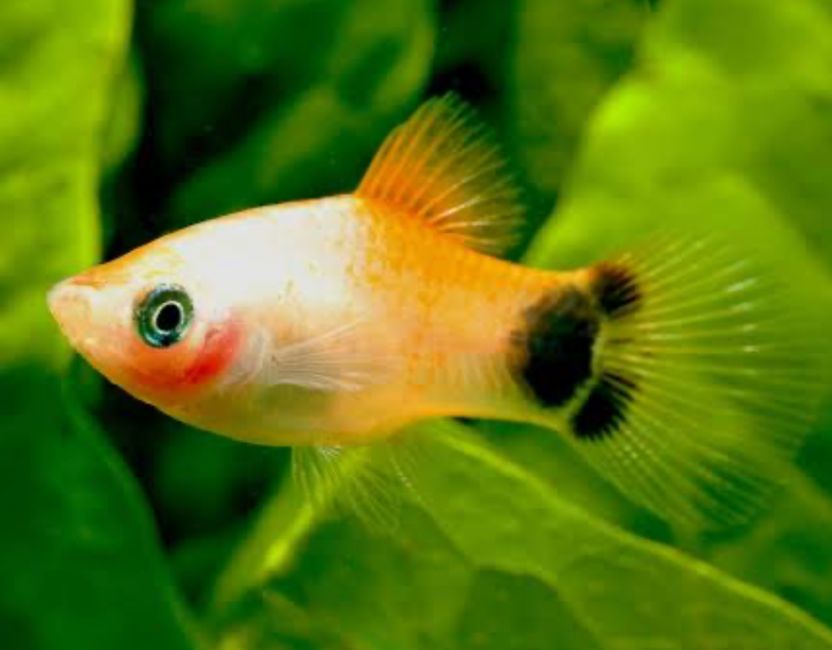
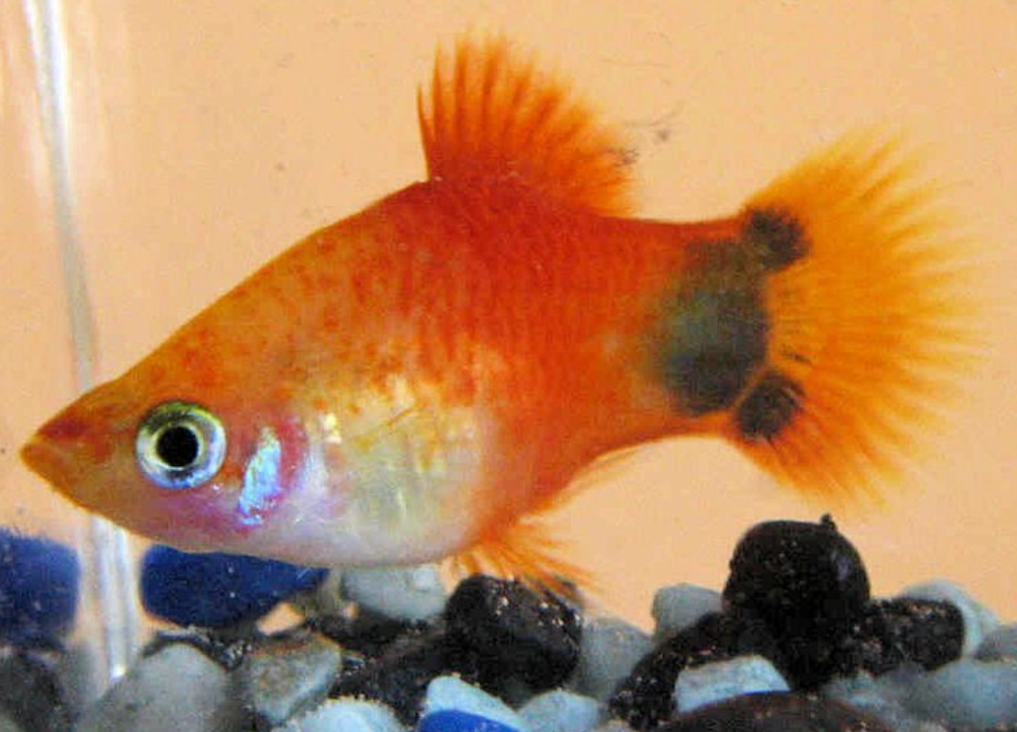
This species doesn’t have the same colors as the cartoon figure, but it bears a distinctive tail marking similar to the cartoon’s head shape. At the base of this fish’s caudal fin, three bold black dots form a Mickey Mouse head’s shadow, hence the name, Mickey Mouse Platy fish.
Besides its unique physical appearance, the Mickey Mouse species (Xiphophorus maculatus) is a beginner platy fish because of its peaceful nature and adaptability.
In this guide, you’ll learn essential Mickey Mouse platy care tips from housing this species to feeding them, breeding juveniles, and ensuring they live a healthy life outside the wild.
Author’s Note: Check out our post on the 13 Types of Platies That Are Perfect for Beginner Aquarists for an in-depth overview of the wide variety within this species!
Mickey Mouse Platy Scientific Name, Origin & Strain Background (Xiphophorus maculatus)
To truly give you Mickey Mouse Platy fish the best life outside its natural habitat, you must understand where it comes from and what it needs for survival. We’ll start with the basics like the Mickey Mouse platy’s scientific name and classification, then focus on its origin and strain.
Scientific Classification of Mickey Mouse Platy
Mickey Mouse Platies fall under the Actinopterygii class of ray-finned fishes in the order of the Cyprinodontiformes. As a livebearer fish species, they belong to the Poeciliidae family but fall under a separate genus and species.
Mickey Mouse Platys is from the genus Xiphophorus, which includes Platys, and as a Southern Platyfish, its scientific name is Xiphophorus maculatus (X. maculatus).
Mickey Mouse Platy’s Origin & Strain
Mickey Mouse Platy fish is an ornamental platy strain developed through selective breeding that isolates the unique moon-shaped tail spot design around the caudal fin. Its ancestors originated in Central America, around the Southern Mexican rivers, and into the Guatemalan waters.
Knowing the origin of this species would help you understand that the Mickey Mouse Platy is not a separate species but a subvariant of the large Platy genus. Keep reading to learn why this species earned its name.
Why Is It Called a Mickey Mouse Platy?
By now, you already have an idea of this pet’s appearance and why it has its name, but let’s dive deeper into the details that make it a famous Platy variety.
The Tail Markings
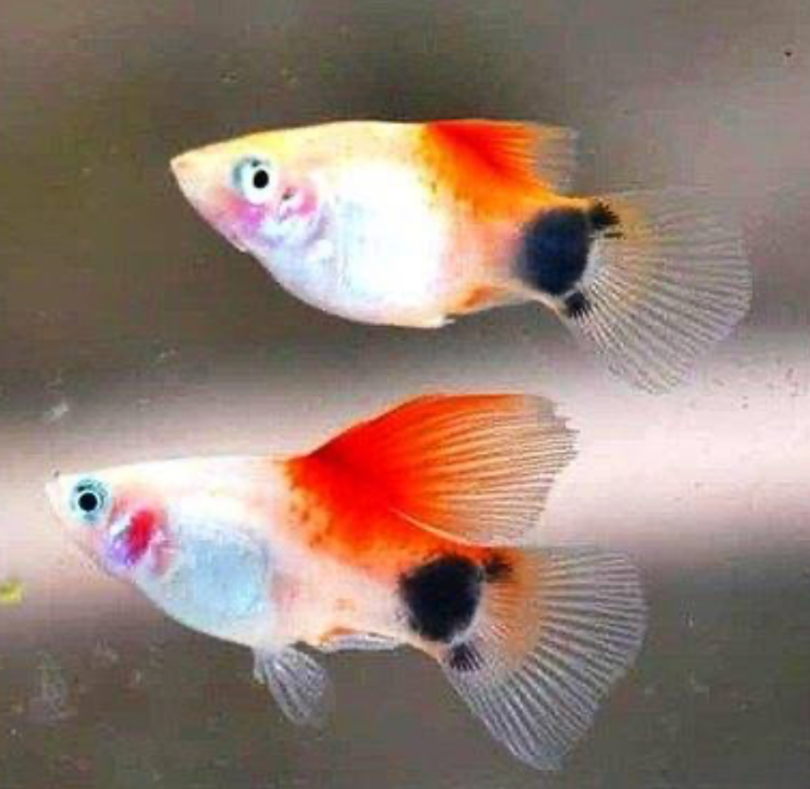
That Mickey Mouse Platy spot, which forms three round black marks at the base of the tail, creating the silhouette of the famous Disney character’s head. These black marks stand out against the Platy’s vibrant sunburst body color.
The Color Variants
Although the tail peduncle marks remain constant in all sub-variants, Mickey Mouse Platys have diverse body colors. These colors range from the common yellow and orange sunburst species to rarer blues, whites, and sometimes red.
Some of these Mickey Mouse Platy colors appear as plain hues with translucent fins, like the sunburst variants, while the rare colors are often a two-toned mix.
There’s the Sapphire Blue Mickey Mouse Platy, an ombre silver and dark blue variant; the pure white Mickey Mouse Platy with vibrant red fins; and the regular Mickey Mouse Platy with dark black fins instead of the classic sunburst color.
Now that you know the meaning behind the Mickey Mouse Platy and understand its origins, you can focus on giving your pet the best possible life outside its natural habitat.
Mickey Mouse Platy Size, Lifespan & Growth Rate
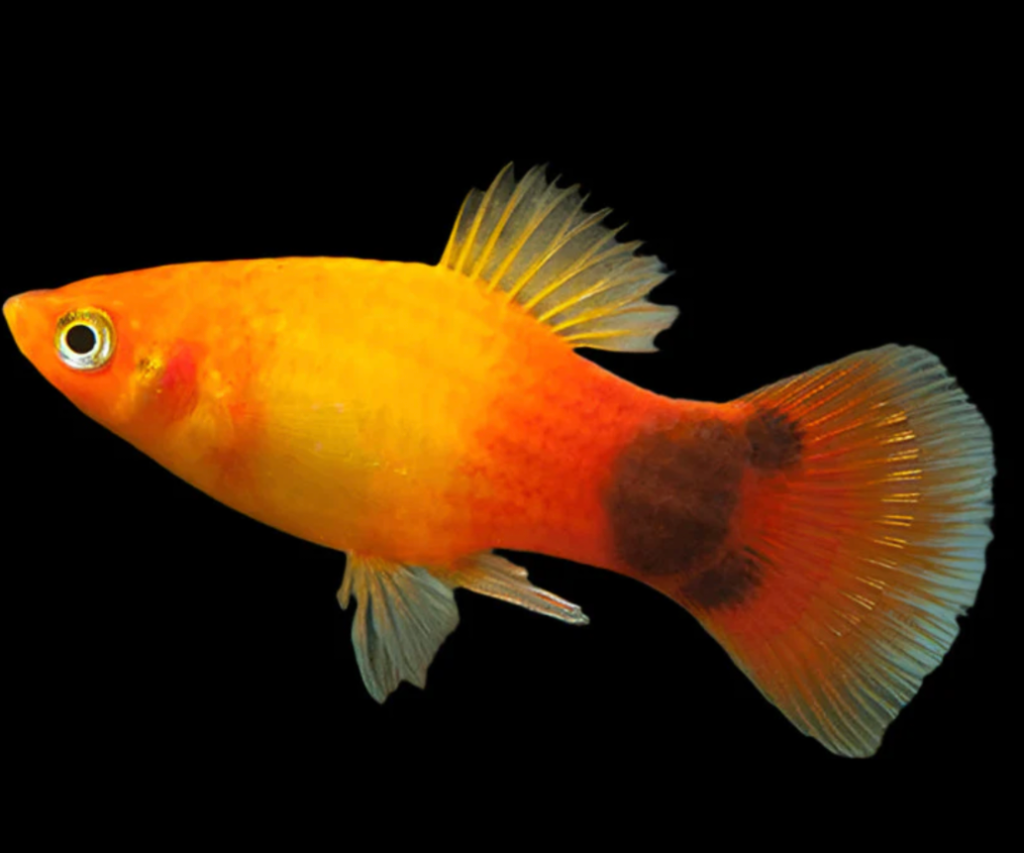
Understanding your pet’s primary needs and potential would help you adequately maximize this beginner fish’s lifespan. This guide will tell you the maximum possible Mickey Mouse Platy size, growth rate, and average lifespan so that you can properly monitor its behavior and patterns.
Mickey Mouse Platy Size
An average Mickey Mouse Platy grows about 2 to 2.5 inches in adulthood, but with premium care, certain sexes can grow an extra inch or two.
Female Platies can grow up to 3 inches, with rounder bodies and wider caudal fins, while males grow, males grow to about 2 – 2.5 inches;, with proper care, females can grow up to 3 inches.
The female Platy is often larger, with a rounder body, than the ,male, while the male Mickey Mouse Platy has a slimmer body with a longer anal fin. A male Platy can even be smaller, at about 1.5 inches, with more slender bodies and pointed tail fins.
Mickey Mouse Platy Lifespan
Although they live in groups, the Mickey Mouse Platys’ size affects their lifespan. lifespan. To extend your Mickey Mouse platy’splaty’s lifespan to a maximum of 5 years, you must provide adequate care, including a spacious tank enclosure and a proper diet because excellent care gives your Mickey Mouse Platy an average of 3 to 5 years of life in good health.
Best Tank Size for Mickey Mouse Platies
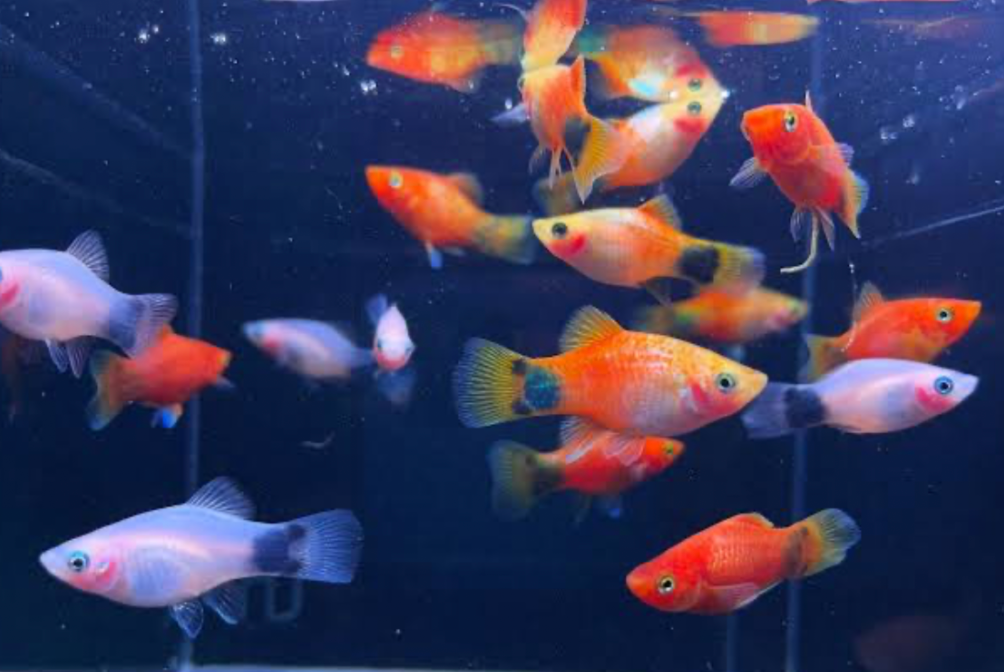
Getting the perfect Mickey Mouse Platy tank size depends on whether you’re keeping a single pet or a small group of 4 to 5.
10 Gallon Tanks vs. 20 Gallon Tanks for Mickey Mouse Platies
For a single pet, a 10-gallon Platy tank would do, but with a small group, you’d need extra space, so get a minimum of 20 gallons.
Because of their shape, Platies thrive in long, wide tanks better than tall tanks. mentions 10 gallons minimum, 20 is better for groups.
Setting Up the Tank
After choosing the appropriate tank size for your pet, you have to set up the interior to accommodate its needs. You can follow a basic livebearer tank guide, as most essential needs are the same, from aquascaping to aquarium tank tools.
Aquascaping
Mickey Mouse Platies are active mid-level swimmers, so, for their environment, ensure there’s an open swimming area amid dense vegetation. Although most livebearer tanks use fine sand as a substrate, your Mickey Mouse Platy can tolerate a medium-dark gravel base.
Add live plants to the tank as protective covers and hiding spots. Use species like Java Moss, Java Fern, Anubias, Duckweed, Hornwort, and Water Sprite.
Finally, use hardscape elements like smooth rocks and driftwood to complete the aesthetic of your aquarium. But be careful not to overload the space with driftwood, as it can increase acidity, and Mickey Mouse Platies are alkaline-loving pets.
Essential Tank Tools
You need essential aquarium tools, such as a high-quality filter and heater, to maintain the tank’s water quality. Use a sponge filter in small 10-gallon Platy tanks, while Hang-on-Back models can work for medium 20-30-gallon tanks.
A suitable heater would not only keep the tank warm but also alert you to temperature changes.
Water Parameters That Keep Them Healthy
Speaking of adequate Mickey Mouse Platy water parameters, here are the conditions that’ll ensure your pets have a healthy environment for survival:
- Temperature: 65 – 82°F
- pH Level: 7.5 – 8.0
Naturally, Platies are a hardy species and tolerant of a wide range of temperatures, which is why the recommended range is 65 – 82°F. However, it’s better to maintain a temperature on the higher end of the scale between 70 – 82°F.
These beginner fish parameters are easy to monitor and maintain once you have the right aquarium tank setup. Periodic checks using a Master Test Kit ensures stable water parameters and avoids sudden swings benefiting your pets.
Maintaining a stable aquarium water condition is necessary for your pet’s overall health. Because sudden fluctuations stress them and lead to complicated health issues, that’s why you need the essential aquarium tools listed above to keep the water clean, especially after feeding.
What to Feed Mickey Mouse Platies

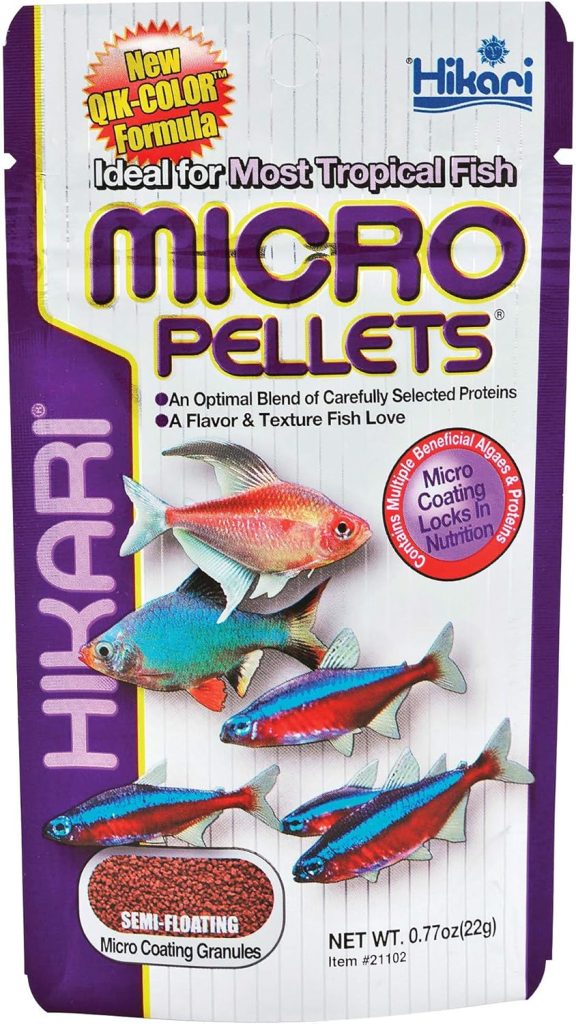
TetraMin Tropical Flake Food (Left)
Tropical Semi-Floating Micro Pellets (Right)
Mickey Mouse Platies need balanced aquarium nutrition to live a healthy life with vibrant skins and cheerful personalities. They’re an omnivorous species that eats both plant and animal foods, although they prefer the former.
Instead of focusing on the herbivorous portion of your Mickey Mouse Platy diet, mix their foods with occasional animal-based meals as treats. Here’s how you can achieve a balanced diet for your Platies.
Author’s Note: For more on feeding your aquatic pets check out The Ultimate Guide to Fish Food: Pros and Cons & Best Choices!
Feeding your Mickey Mouse Platy
Serve this algae-eating fish a rich herbivorous diet of algae wafers, spirulina, peeled peas, and blanched vegetables, as staples, once to twice daily. Ensure you serve them portions they can finish in less than 2 minutes.
Add frozen foods like bloodworms and brine shrimps as treats once to twice weekly. The protein is good for boosting their muscle development, while specialized flakes would also enhance their skin color.
Best Tank Mates for Mickey Mouse Platies
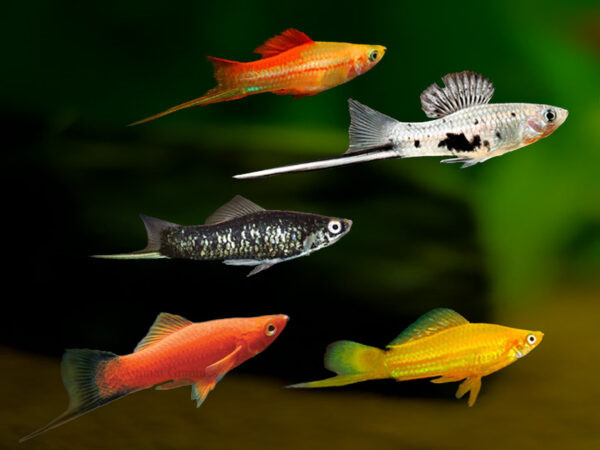
As a peaceful, social community fish, the best Mickey Mouse platy tank mates are species with similar temperaments and water-conditioning needs.
Look out for species that can thrive in communities and join your pets in schooling. Tetras make lovely schoolers for your beginner community aquarium, while Guppies and Mollies would give you a colorful mixed livebearer tank.
To increase diversity in large tanks, add bottom-dwelling species like Corydoras catfish and algae-eaters like Nerite Snails.
Breeding Mickey Mouse Platies & Fry Survival Tips
In this guide, you’ll learn that livebearer fish breeding is different from the system of fish-scatterers because the reproductive cycle isn’t the same. With livebearers like Mickey Mouse Platies, your pets would birth their young alive without going through the egg stage.
Setting up the Breeding Tank
Get a separate Mickey Mouse platy breeding tank, install a mini breeding compartment in the main tank, or use a standalone mini tank. It’ll let you adjust the water conditions to appropriate breeding levels, preparing your chosen Mickey Mouse Platy adults for reproduction.
Increase the water temperature to 75 – 80F, and ensure there’s at least 10 – 20 gallons of water. Add enough live plants to catch the fry after birth and protect them as they grow.
Choosing the Breeding Adults
Choose healthy adult Mickey Mouse Platies that are at least 9 to 12 weeks old for breeding. Remember that females are rounder and larger, while males are slender, smaller, and have a gonopodium (pointed anal fin).
Pair one male Mickey Mouse Platy with two to three females to spread their aggression and reduce the stress on the females. For conditioning, ensure you feed your adult Mickey Mouse Platies more protein as the reproductive season approaches.
Mating, Fertilization, Gestation, and Birth
The male will pursue the females to mate and fertilize them. A single fertilization can lead to several birthing sessions, as your female Platies will drop 20-100 fry in batches.
Upon fertilization, the female Mickey Mouse Platy would develop a boxy belly that darkens and becomes gravid. Within 30-45 days, they’ll deliver their fry.
Fry Care
Immediately after birth, remove the females from the breeding tank to protect the juvenile Platy fry because parents can eat their young. Since there’ll be no parent Platy to care for the new fry, it’ll be your responsibility to feed them.
Feed them with finely crushed fry flakes and infusoria in their early days. As they develop larger mouths, you can add baby brine shrimp to their diets.
During the fry stage, your baby Mickey Mouse Platy would be highly sensitive to poor conditions. So, ensure you make weekly water changes of about 25-35% to maintain pristine water conditions.
Common Problems: Shimmying, Stress & Fin Damage


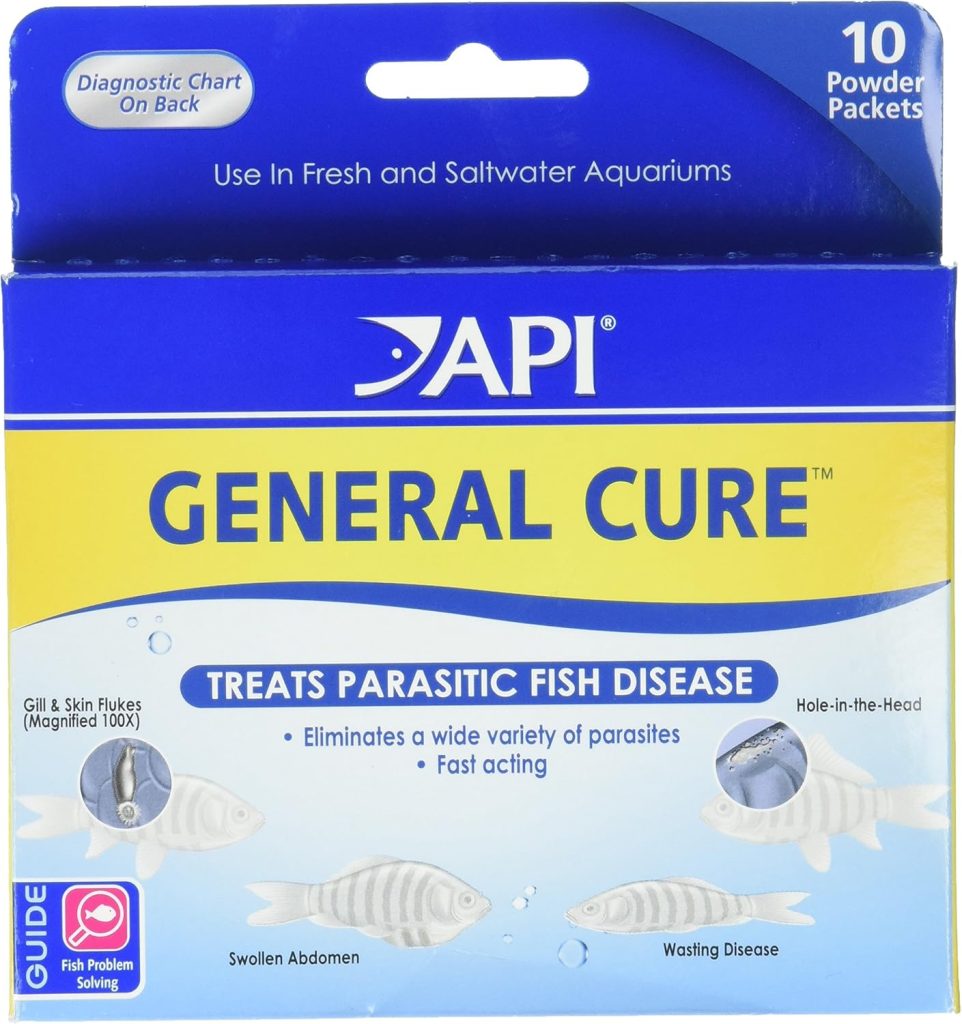
Look out for common livebearer health issues that may plague your Mickey Mouse Platy fish when you slack in providing daily care. Most problems that can make a Mickey Mouse platy sick stem from poor water quality, improper breeding, poor diet, and genetic defects.
Here are some common health problems and how you can manage them:
Swim Bladder Disorder
The most common symptom of poor Platy fish health is swimming struggles. They’ll sink rather than swim and sometimes float upside down in the tank. Swimming bladder disorder is a result of constipation from overfeeding.
So, to treat your pets, start by fasting the fish and reducing their portions.
Ich
White spots on your fish’s body are a result of parasitic infections caused by poor water conditions. Immediately increase the temperature in the water to speed up the parasite’s life cycle and apply anti-ich medication on your pet’s body.
Author’s Note: Check out How to Treat Ich Outbreaks in Your Freshwater Fish for more information on Ich!
Fin Rot
Untreated bacterial infections lead to fin rot. You’ll notice tears, rot, and ragged edges on your fish’s fins if they have this disease. Apply anti-bacterial medication to the affected area and improve your water conditions.
Columnaris
Another common bacterial infection in Mickey Mouse Platies is cottonmouth, also called columnaris. Treat it by increasing the water temperature and ensuring your pet has access to anti-bacterial medication.
Shimmying
Your Mickey Mouse Platy shimmying is the biggest sign of stress and poor water quality. Ensure the water conditions are correct and stable. Change the water and quarantine the affected fish for observation to ensure you provide appropriate treatment.
Conclusion: Is This the Best Beginner Platy?
If you’re a first-time hobbyist, the Mickey Mouse Platy is a suitable beginner Platy. It has minimal care needs and an ornamental appearance that’s sure to turn heads in your tank.
Adding this colorful livebearer species to your community is the secret to elevating your tank from a basic collection of fish to a diverse aquarium. The best part of this peaceful freshwater fish, besides its ease of care, is its calm temperament.
So, you can rest assured that your Mickey Mouse Platy won’t stress you while adding an unexpected, unique charm to your fish community.