Skip to content
A complete guide on basic and advanced Hi-fin Platy maintenance to help you overcome breeding challenges and everyday care routines, including feeding and housing.
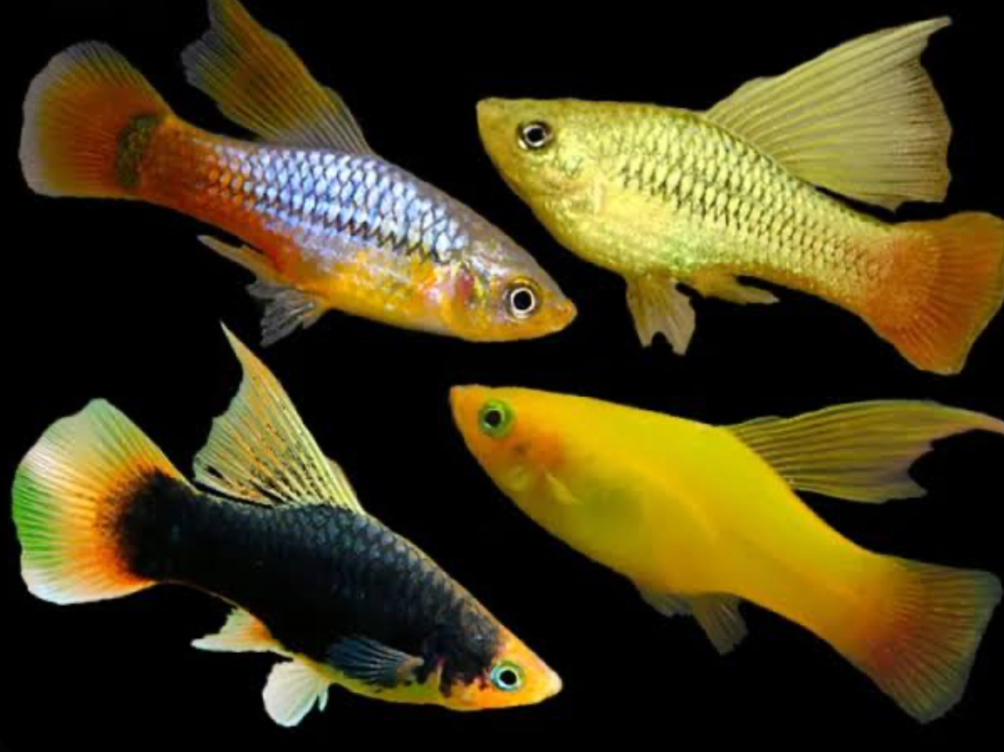
Hi-Fin Platy Care Guide: Elegant Livebearer with a Dramatic Dorsal Fin
Do you love the Platy fish species but wish there was a way to make your aquarium even more unique without losing your favorite species? Then, consider adding the Hi-fin Platy fish into the mix.
This variant is also called high-fin platy because of its distinctive tall dorsal fin, which sets it apart from the regular short-finned variant and other ornamental Platy fish, such as the veiltail and tuxedo variants.
In this guide, hobbyists interested in outstanding subvariants will gain complete insight into hi-fin Platy care, including its unique features, basic maintenance, and potential breeding.
Hi-Fin Platy Scientific Name, Origin & Classification (Xiphophorus maculatus)
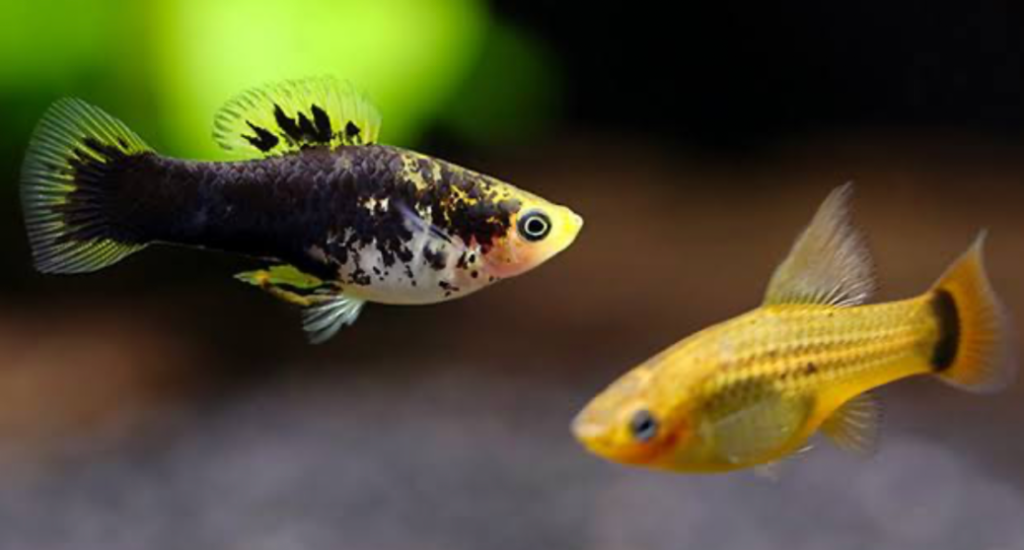
Most Hi-fin Platy fish are direct descendants of the common southern Platy species, Xiphophorus maculatus, but a rare variant descends from the Xiphophorus Variatus strain. Here’s a closer look at the scientific classification and strain development of the Hi-fin Platy fish to show you that it’s not a separate species but a subvariant of the standard Platy that you know and love.
Scientific Name and Classification
Hi-fin Platy fish is a ray-finned species with a backbone, and toothcarps. It also belongs to the group of fish that are livebearers and not egg scatterers.
So, the platy fish classification is as follows:
- Phylum: Chordata
- Class: Actinopterygii
- Order: Cyprinodontiformes
- Family: Poeciliidae
The standard Platy fish is of the Xiphophorus genus and maculatus species, making it X. maculatus, while a subspecies called the Variable Platy is the X. Variatus.
Hi-Fin Platy Origin
All Platy fish from the wild are naturally found in the slow, Central American waters of Veracruz, Mexico, and Guatemala.
In their natural state, Platy fish have short fins and olive green bodies. However, with genetic modification through selective breeding, the high dorsal fin forms create a unique subspecies for ornamental aquariums.
Now that you know the Hi-fin Platy’s scientific name and its origins, let’s review what makes this subvariant different from the standard species.
What Makes a Hi-Fin Platy Different?
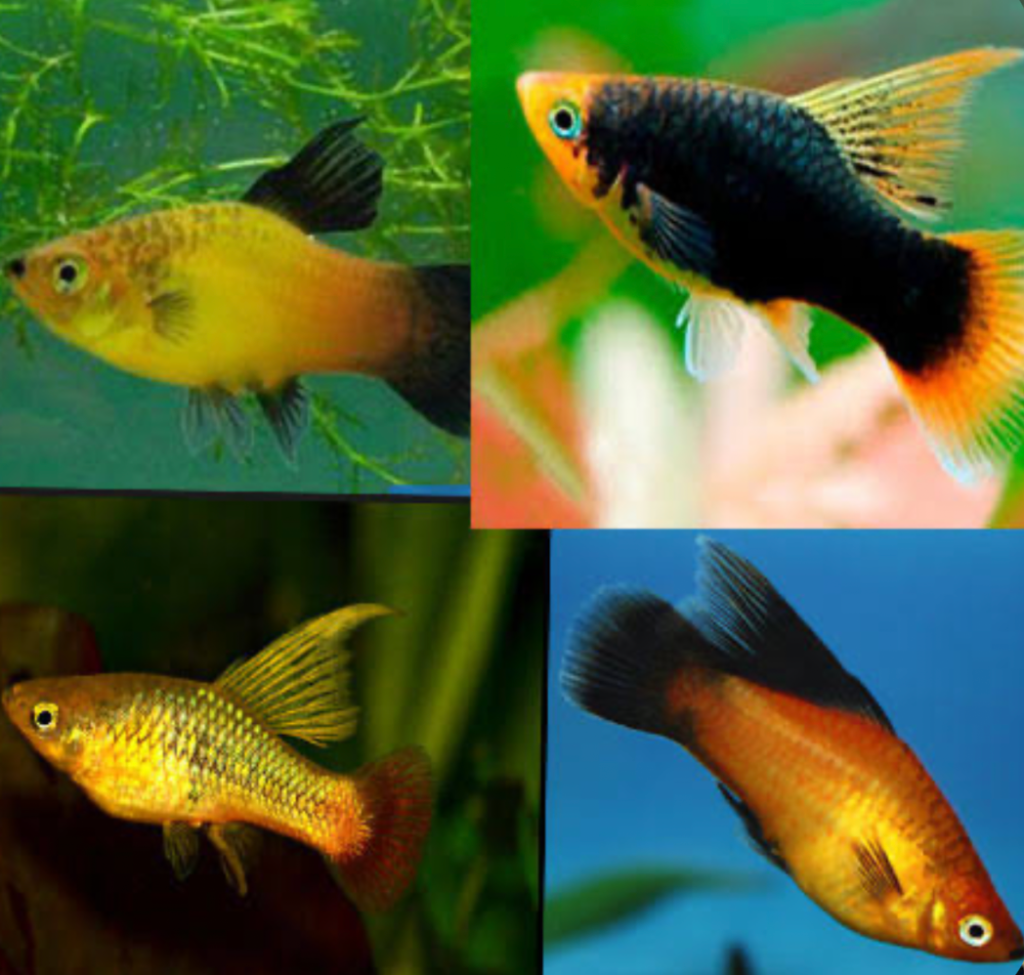
Obviously, the most distinguishing feature of this high-fin platy is its unusually tall dorsal fin development.
As a platy with a large dorsal fin, the height isn’t the only noticeable feature. It also gives it a distinctive shape, swimming habit, and breeding challenges.
Hi-fin Platy fish’s dorsal fin forms a sail-like shape and bends towards the back, which slows this species down a little bit compared to the standard Platy’s fast movement.
This fancy Platy fish also faces breeding challenges during mating. Let’s see a clear comparison of Hi-fin and standard Platy fish.
Hi-Fin vs Standard Platy: Key Differences
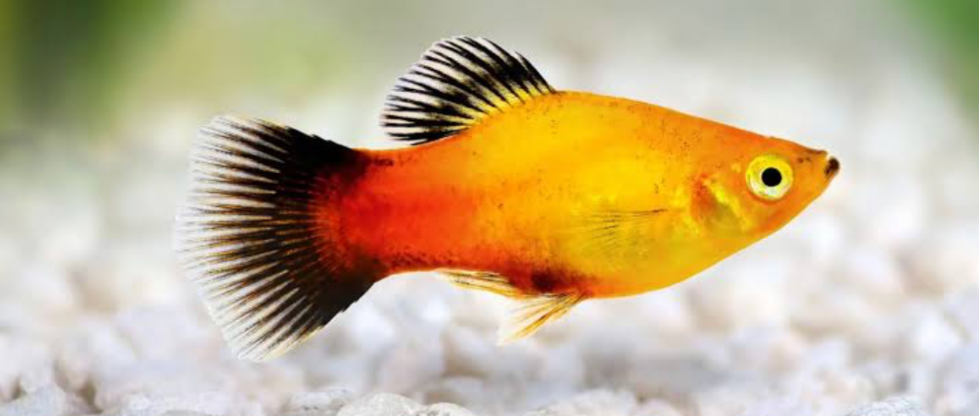
You may not fully appreciate the uniqueness of this ornamental variant until you see a side-by-side comparison of high-fin platy. So, here it is.
Hi-fin Platy vs Regular Platy
| Hi-Fin Platy | Regular Platy |
| Tall sail-like dorsal fin | Short dorsal fin |
| Slow swimmer | Fast swimmer |
| Injury-prone due to high fin | Less sensitivity to poor water conditions |
| Breeding challenges | Normal breeding experience |
| Needs experienced care | Beginner-friendly |
With a clear picture of the differences between the Hi-fin and standard platy, you can now confidently choose your preferred variant. If your choice is the Hi-fin Platy, then keep reading for more useful care details.
Adult Size and Lifespan
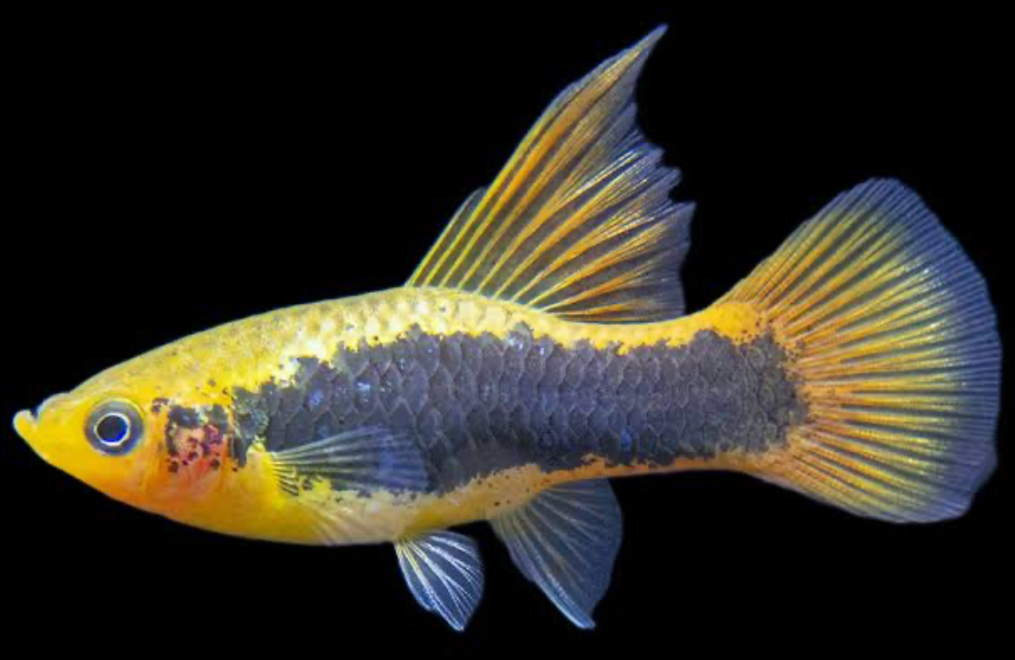
When you keep a Hi-fin Platy as a pet, you should know its growth potential to ensure you have the most suitable enclosure for housing it and how long it’ll live.
Hi-Fin Platy Adult Size
An adult Hi-fin Platy’s size is about 2-3 inches in body length, while the dorsal fin adds an extra 1-2 inches, with the females being larger and taller compared to the males.
Potential Lifespan
Because of its tall dorsal fin, your pet would be more prone to injury and disease than a standard species, and so its overall lifespan automatically decreases.
With excellent care and maintenance, a standard Platy fish’s lifespan extends about 2 – 3 years, with some living even up to 5 years, but the maximum Hi-fin Platy’s lifespan is 4 years.
So, let’s build a suitable tank for your 3-inch long high-fin Platy.
Best Tank Setup for Protecting Long Fins
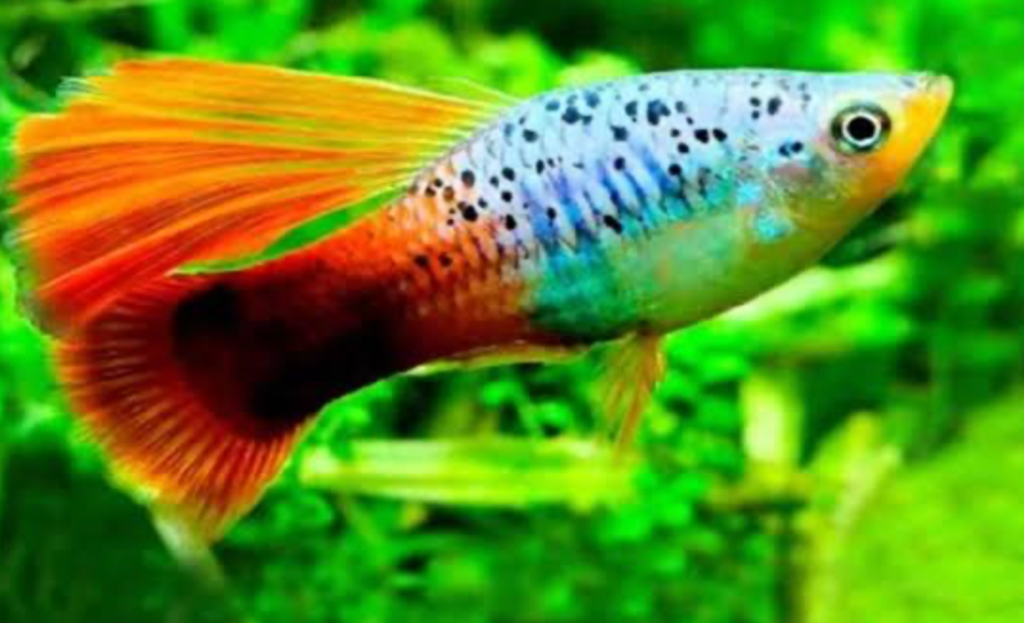
Because of the dorsal fin size in this species, it’s easy to mistakenly assume that a tall tank is a good enclosure, but you’ll be wrong. The ideal hi-fin platy tank setup is a long enclosure with a specialized husbandry section, and here’s how it works.
Tank Size
You’ll need a long platy tank design with enough horizontal swimming space and a separate area for routine bodily maintenance.
Get a tank size of about 20 gallons per small group of four, and add an extra 5 gallons with every new pair of Hi-fin Platy you add to the tank.
Because Hi-fin Platies are prone to fin rot and skin diseases, you must build the tank in such a way that there are resting zones, feeding zones, and non-invasive plants or decor.
Aquascape
You must avoid sharp decor in your high-fin Platy aquarium and instead use smooth substrates, curved surfaces, and gentle aquatic plants such as Java Fern and Amazon Swords. Besides the decor arrangement, for Hi-fin Platies, you also need to ensure a moderate water flow, like that of Central American rivers.
Water Parameters and Maintenance
Standard platy water conditions are suitable for Hi-fin subvariants, since they’re scientifically the same species. However, you must take extra care with the water maintenance schedule due to their hypersensitivity.
Standard Platy Water Parameters
Standard and hi fin platy water parameters are as follows:
- Temperature: 72 – 78F
- pH Level: 7.0 – 8.2
- Hardness: 10 – 25 dGH
- Ammonia: 0ppm
Platies thrive in hard, alkaline waters, which is why the ideal platy pH range is between a neutral 7.0 and alkalinity 8.2.
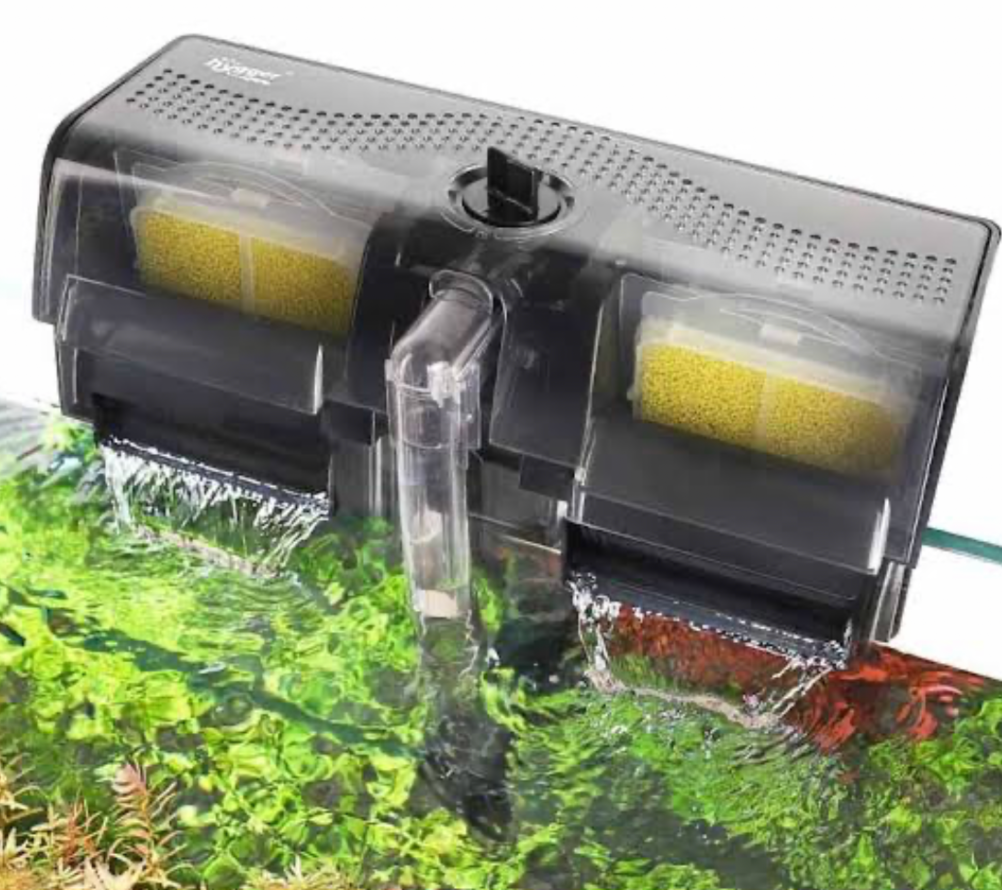
Use a gentle hang-on-back or sponge filter to clean the water after feeding and keep it pristine without stressing your Hi-fin Platy.
Note that keeping stable water conditions not only aids your pet’s health but also protects its fins from diseases and bacteria that cause fin rot.
Diet for Growth and Fin Development
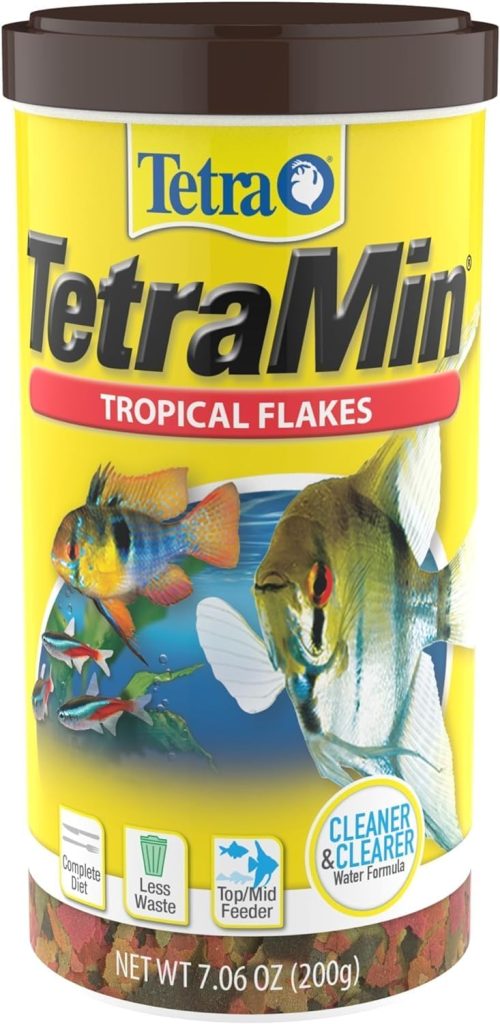
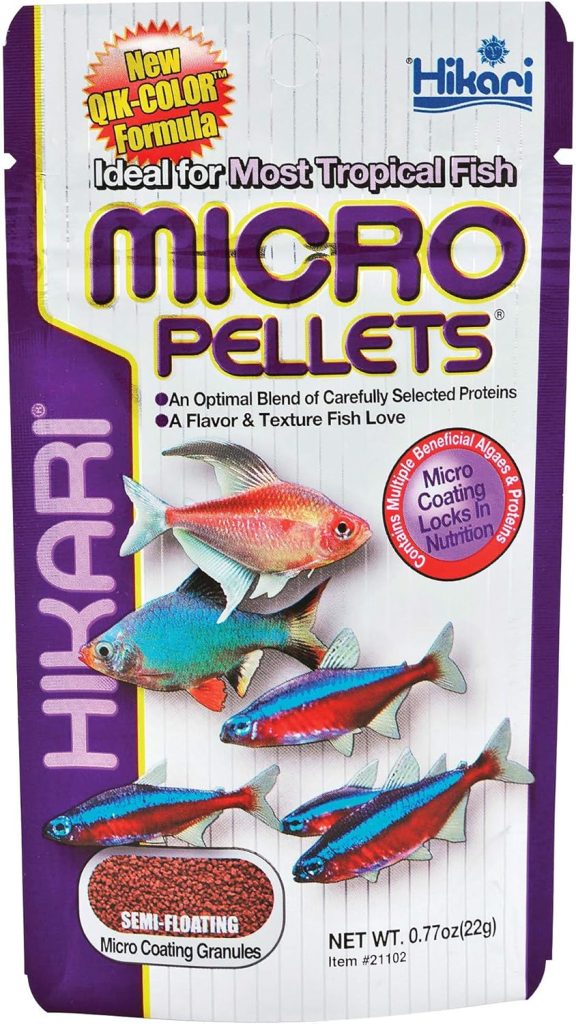
TetraMin Tropical Flake Food (Left)
Tropical Semi-Floating Micro Pellets (Right)
Feeding a Hi-fin Platy requires a stricter nutrition-focused plan than standard species because of its unique characteristics.
Your Hi-fin Platy’s diet should be 45% protein, and 55% chitin, and calcium. They’ll get chitlin from vegetables and high-quality commercial Platy fish food.
Here’s how you can tailor this livebearer’s nutrition to match its requirements without relying on commercial fish food only.
- Staples: Feed them protein-rich pellets or flakes high in amino acids about 4 times a week to build muscle.
- Supplements: Add freeze-dried and frozen foods like mysis shrimp, brine shrimp, or daphnia at least once, and up to twice weekly, to strengthen the fin’s structure.
- Digestive Aids: Include vegetables such as spirulina and algae wafers once a week to aid digestion.
Author’s Note: For more on feeding your aquatic pets check out The Ultimate Guide to Fish Food: Pros and Cons & Best Choices!
Tank Mates: Avoiding Fin Nippers
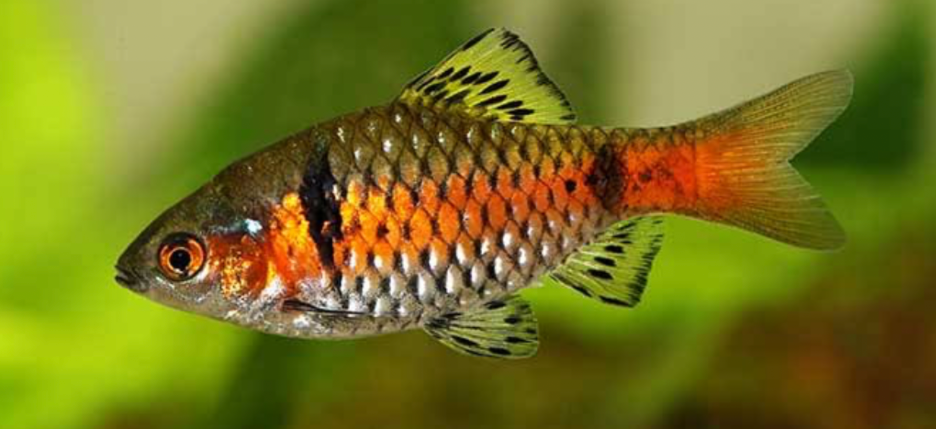
Ideal Hi-fin Platy tankmates are peaceful community fish and other aquatic species without fin-nipping tendencies.
They must be able to survive in the same water conditions, eat similar foods, and not stress or trouble your pets in any way. Compatible fish species must complement your Hi-fin Platy fish instead of becoming prey for being too tiny or predators for being too large.
Fish and species that pass the Platy compatibility test are Guppies, Swordtails, Mollies, Loaches, Corydoras, Amano Snails, and Cherry Shrimps. Avoid Barbs and Tetras because they’re aggressive and can be problematic. Large cichlids are also fin-nippers that’ll frustrate your Hi-fin Platy.
Breeding Hi-Fin Platies and Fin Genetics
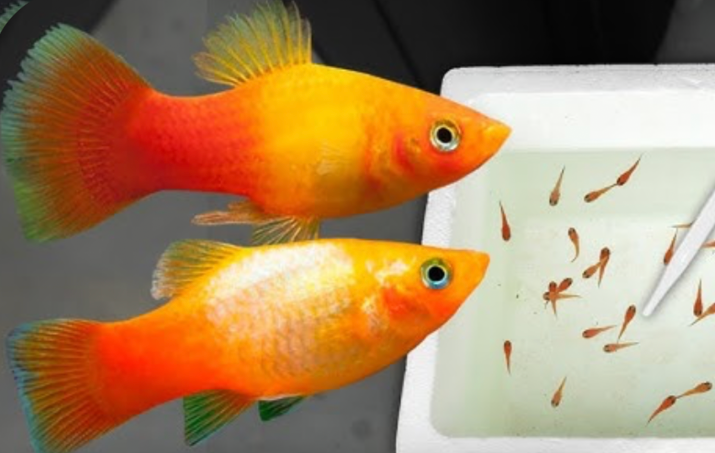
Successfully completing a Hi-fin Platy breeding cycle depends on how well you understand this sunspecies and prepare for the challenges ahead. Hi-fin Platies are homozygous animals, and only embryos with a single dominant High-fin gene survive.
Scientists call the homozygous gene the lethal gene because having two of them in one embryo leads to death. So, to achieve success, you must balance the breeding pair by choosing one parent with the high-fin Platy genetics and the other one as the standard Platy fish. You’ll then get a mix of standard Platies and Hi-fin Platies.
Now, let’s design your Platy fry breeding tank and highlight the breeding cycle. Set up a breeding tank using the same specifications listed above, but increase the vegetation in the tank and raise the temperature to about 80F.
Place your carefully selected breeding pair in the tank and wait for them to mate. Mating may take time because the high-fin makes it awkward for the pair to merge, but after a while, it happens, and fertilization occurs internally.
The female Hi-fin Platy carries her pregnancy for about 24 to 30 days, after which she delivers live, free-swimming fry.
Watch your female Hi-fin Platy in the days after delivery because this species stores sperm from a single fertilization and may deliver more babies in batches.
Fry Care
After delivery, remove the parents from the breeding tank to prevent them from eating their offspring. Then, change about 30-40% of the water daily to keep it pristine while feeding the young fry infusoria and liquid fry food.
Feed the Hi-fin fry immediately after birth and as often as possible, about 3 to 5 times daily. As they grow larger and develop mouths, you can switch their liquid food to finely crushed high-quality fry flakes and baby brine shrimp.
Remember that the fry is hypersensitive to poor water conditions, so always remove uneaten food and keep the environment pristine to support healthy growth and development.
Common Fin Problems and Prevention
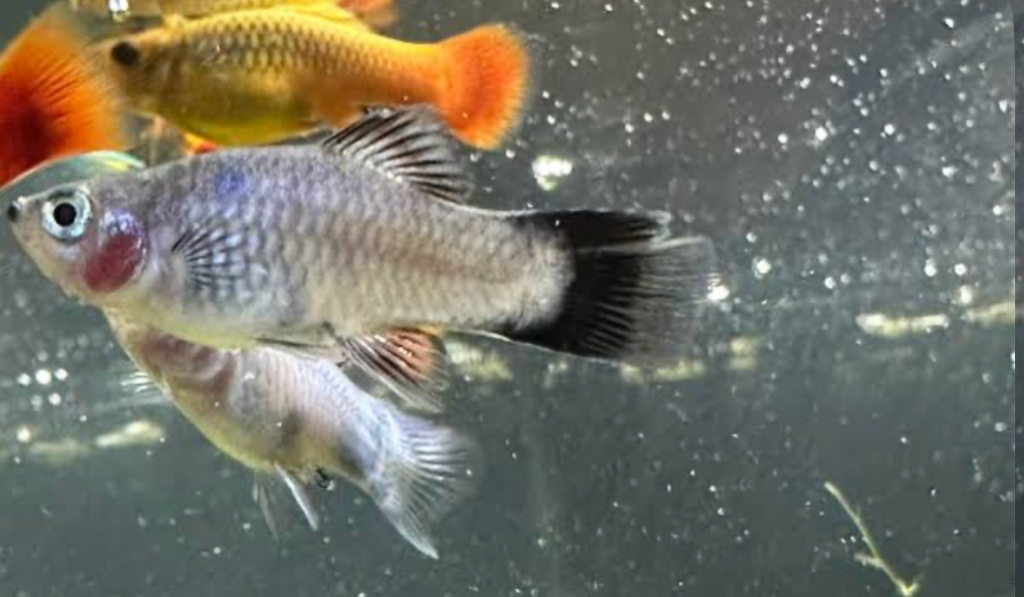
Platy fin damage is a common health challenge unique to this strain because of its physical appearance, despite the standard Platy being a hardy fish. Don’t worry, though, because managing and preventing Hi-fin platy fin rot is easier than you think.
Firstly, understand that fin rot results from bacterial infections caused by untreated injuries. So, to prevent this illness, you must start by creating a safe aquarium environment for your pets. Remove all sharp edges and harmful substances like ammonia and nitrite. Then ensure the water stays pristine by replacing about 20-30% of its volume every other week.
Prevention is a better and smarter fin health care strategy than treatment protocols because diseases and health challenges reduce your pet’s lifespan.
For treatment protocols, always increase the water temperature to speed up the bacteria’s life cycle, apply antibacterial cream or oral medication, and finally consult a professional veterinarian for further assistance if symptoms persist.
Conclusion: Are Hi-Fin Platies Worth It?
Having a fancy platy fish like the Hi-fin species is definitely worth it because it gives you bragging rights. You can boast of its beauty and your ability as a skilled hobbyist because you’re handling intermediate-level care.
Even if it’s your first time, although we won’t recommend starting your journey with this species, this Hi-fin Platy care guide has all the tools and instructions you need to handle its care like a professional.
So, what’s your excuse for missing out on this extremely gorgeous ornamental livebearer fish? Let us know in the comments below.