Skip to content
Add color to your aquarium with the vibrant Orange Molly fish, a beginner-friendly molly hybrid with minimal care needs and a social personality for thriving in community setups.
Orange Molly Care Guide: Vibrant Beginner Livebearer
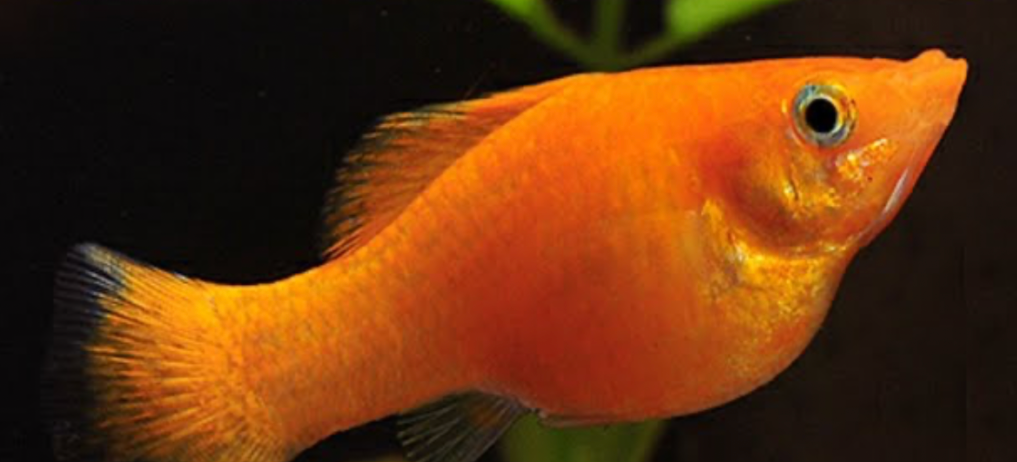
Orange Molly Fish stand out amongst popular aquarium species due to their striking monotone color. Although it doesn’t have a remarkable body structure, its vibrant orange color, which passes for gold in some tanks, works in this species’ favor.
If you’re looking for a colorful, vibrant species as a first-time aquarist, this bright aquarium fish is worth your attention. Its bright coloration adds a striking visual impact to your tank, especially in a planted aquascape.
This comprehensive orange molly care guide would help you set the best foundation for keeping this pet in an aquarium, especially if you want it to be part of a community.
Author’s Note: Check out our post on the 12 Types of Mollies That Make Perfect Beginner Fish for an in-depth overview of the wide variety within this species!
Orange Molly Scientific Name, Origin, and Classification (Poecilia sphenops hybrid)
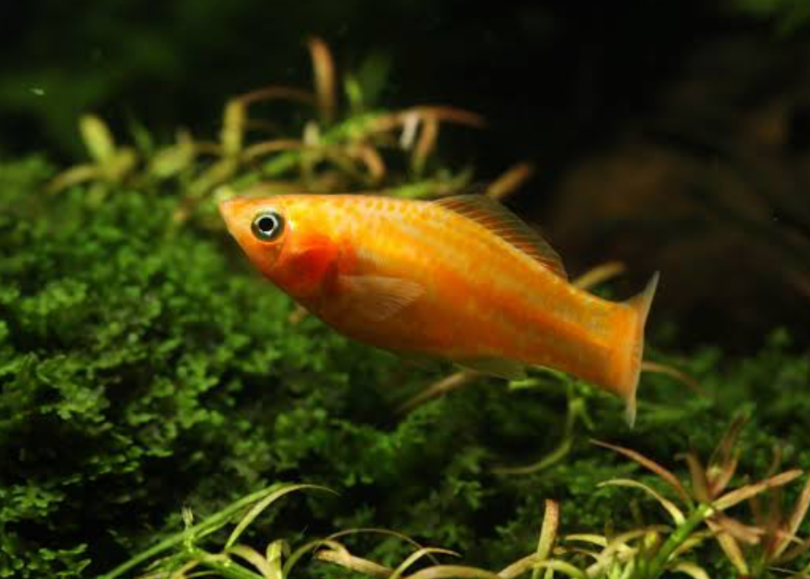
Orange Molly is of a Poecilia sphenops origin, although you won’t naturally find it in the wild. Its ancestor, the common Molly, is a Central and Southeastern American fish that naturally inhabits coastal waters, such as lagoons, estuaries, and rivers, where freshwater and brackish water mix.
Over the years, through selective breeding, aquarists sought to create new color and structural morphs of this beloved estuary freshwater fish, and that’s how they discovered the Orange Molly.
Because it’s a direct descendant of the common Molly, the Orange Molly variant fits in the same scientific classification as its ancestor. More specifically, here’s the breakdown of its scientific classification:
| GROUP | DESIGNATION |
| Kingdom | Animalia |
| Phylum | Chordata |
| Class | Actinoptergyii |
| Order | Cyprinodontiformes (Ray-finned fishes) |
| Family | Poeciliidae |
| Genus | Poecilia |
| Species | P. sphenops, P.latipina (rare) |
With your understanding of the common Molly fish habitat, you can adequately prepare an aquarium environment that’ll be comfortable for your pet. But first, let’s highlight the unique physical characteristics of this hybrid species.
Appearance & Color Patterns
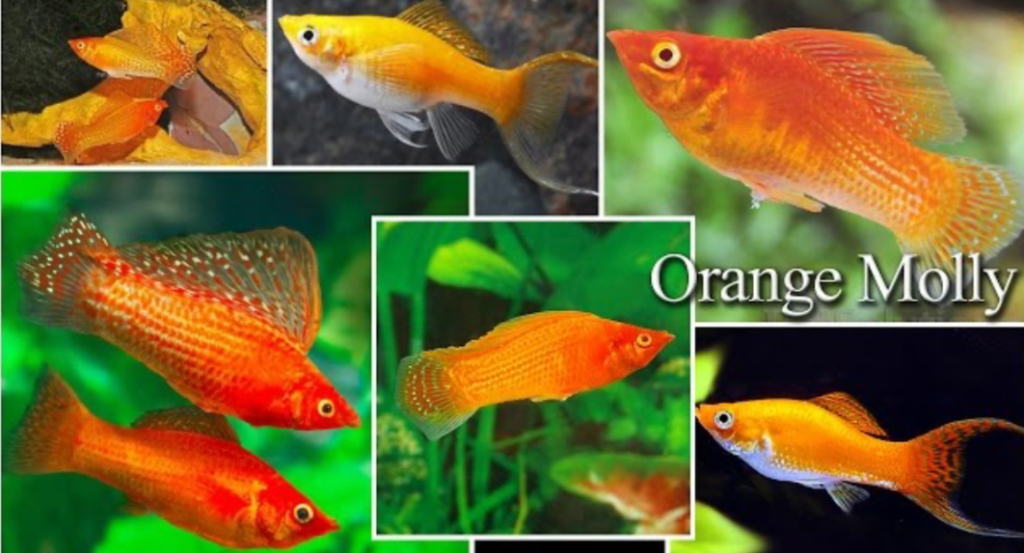
Because this species is called the “Orange Molly”, prepare to see a wide range of orange colors on your pets, as the final shade depends on several factors. Also note that, in general, this bright freshwater fish has the slender, torpedo-shaped Molly form, while rare morphs differ.
Structural Appearance
This colorful aquarium livebearer has an average maximum length of 4 inches in maturity, although females may grow by 1 inch and males may stop growing at 2 inches. Their body shape is slender, compressed, and torpedo-like, with short fins.
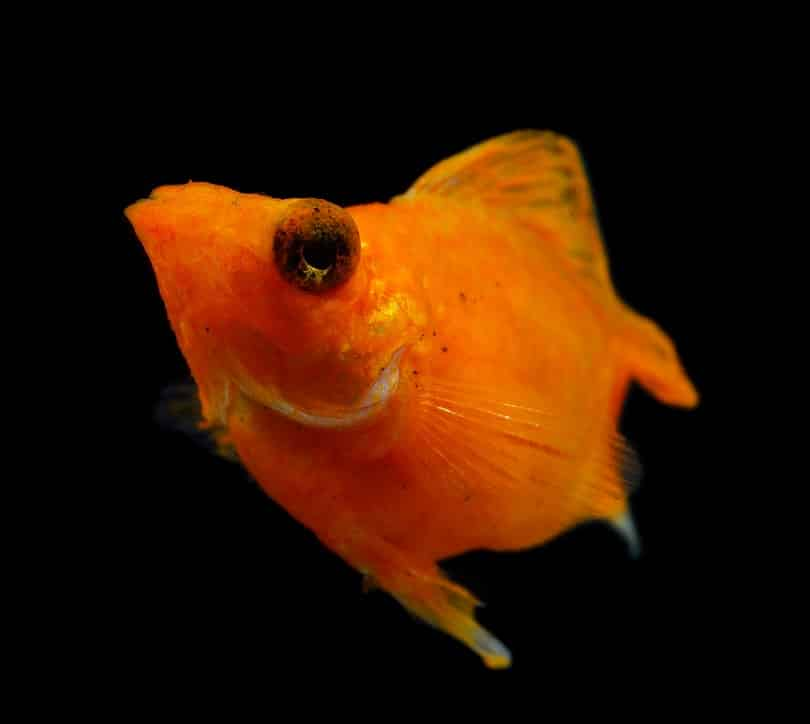
However, rare Orange Molly Hybrids may exhibit large sailfins like the P.latipina, a rounded belly with compressed spine like the Ballon variant, and others may develop a unique forked tail like the Lyretail variant.
Color Patterns on Orange Mollies
Besides the structural difference, though, the real star of the show is the diverse orange molly colors. Because of the variation in orange hue from a pale peach to a deep sunset orange, you can afford to have an Orange Molly only tank and still enjoy visual variety.
Some Orange Molly morphs even develop rare yellow metallic highlights that make the fish appear golden under LED lighting. These color differences are useful when you’re determining your pet’s sex because makes are often more vibrant and colorful than females.
Due to the color morphs on the Orange Molly fish, beginners often mistake it for other livebearers like the Platies and Swordtails. However, you won’t make that mistake after reading this guide and studying the structural differences.
Tank Size & Setup
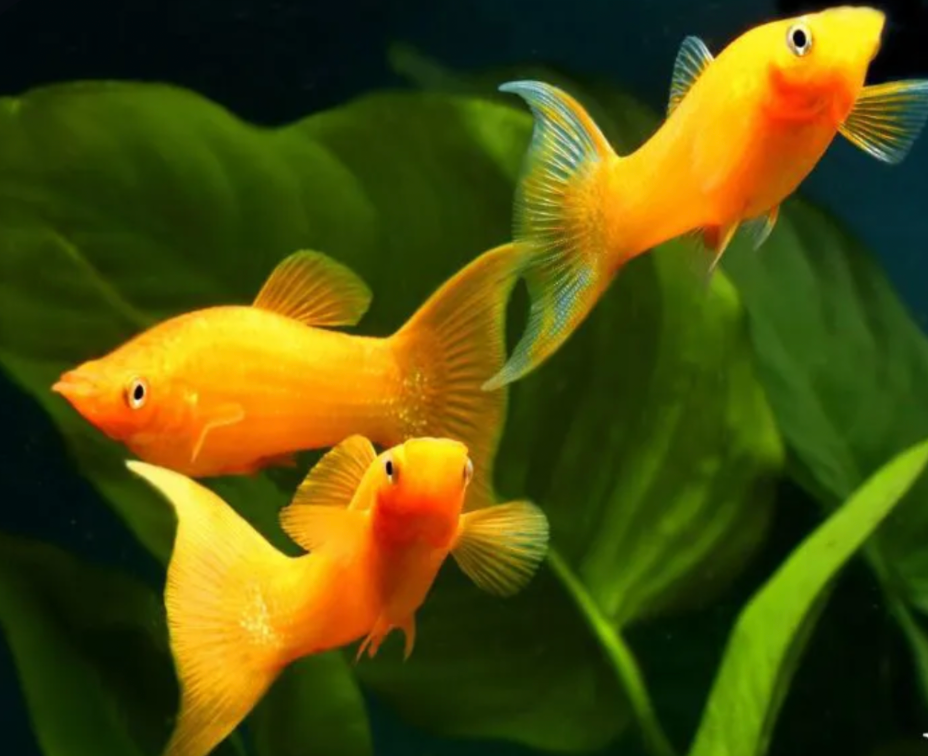
Orange Mollies thrive in small groups of 4-5 fish per tank, so when setting up their aquarium, you must account for swimming space and aquascaping. Let’s set up a suitable aquarium for mollies by focusing on the tank’s size, aquascape, and water conditions.
Ideal Tank Size
An average orange molly tank size should hold about 20 gallons of water per group of 4-5 fish. This will give your pets enough swimming space to explore the tank without bumping into each other or knocking over the aquarium decor.
Aquascape Setup
In its natural habitat, a molly fish has access to tropical regions filled with beneficial live plants for survival, and you must adapt this into your molly tank setup.
Add plants such as Vallisneria, Water Sprite, Java Moss, Java Fern, and Amazon Swords to reduce aggression between male Orange Mollies and provide shelter for the females when they’re overstimulated.
Add driftwood and aquarium rocks, also to deposit minerals into the water and keep it hard for your pets, as they prefer mineral-rich water conditions.
Water Conditions
Due to their natural habitat’s conditions, Orange Mollies are a hard-water aquarium fish. They thrive in high alkaline conditions and may even need boosts from aquarium salt to keep the water tolerable.
Water Conditions
Set the following water conditions to ensure your pet has the best possible health and improve its orange coloration.
Stabilize your molly water temperature between 75–80°F for warmth, increase the pH above neutral to 7.5-8.5 to keep the water alkaline, and harden the condition with aquarium salt and rocks.
The ideal Orange Molly fish hardness will sit between 10 and 25 dGH.
Filtration System
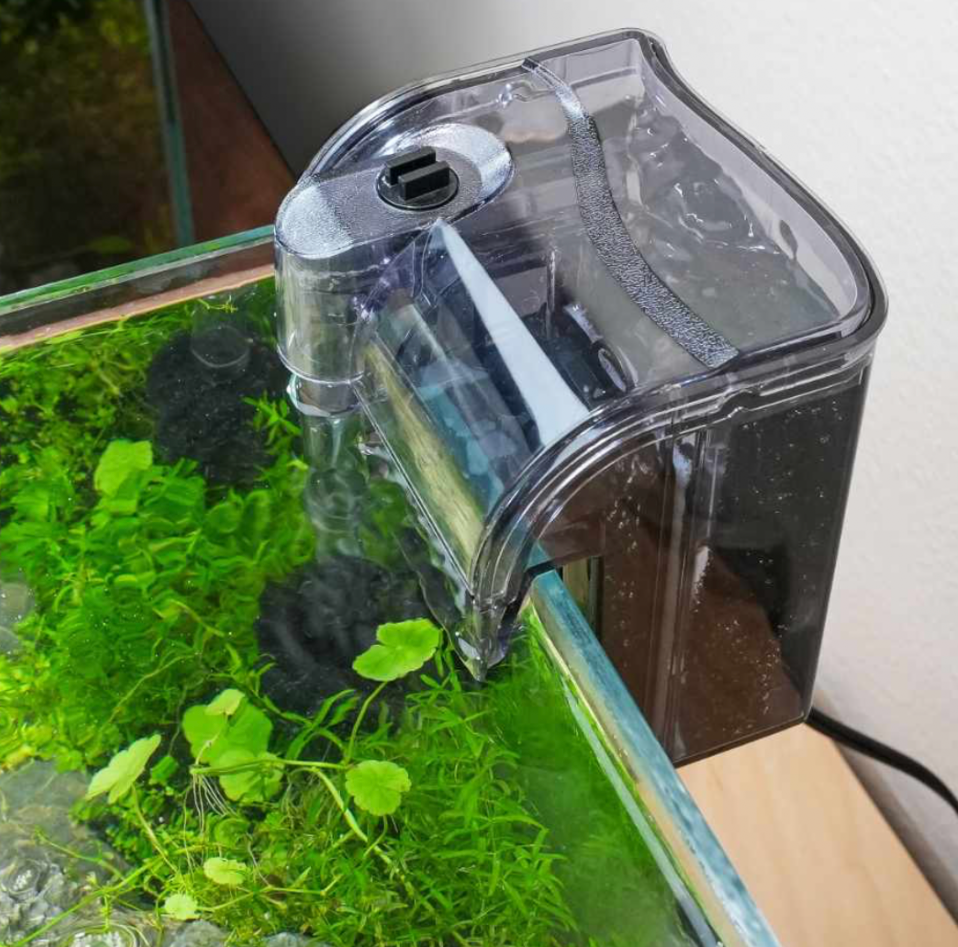
Use a high-quality filtration device, such as a Hang-On-Back model, canister, or sponge filter, for smaller tanks to maintain a stable aquarium environment. The filter will clean the water after feeding sessions and simulate a steady flow without stressing or harming your Orange Molly.
Author’s Note: Check out our post The Best Canister Filters for Each Gallon Tank Capacity for an in depth list of filters to choose form.
Diet & Feeding
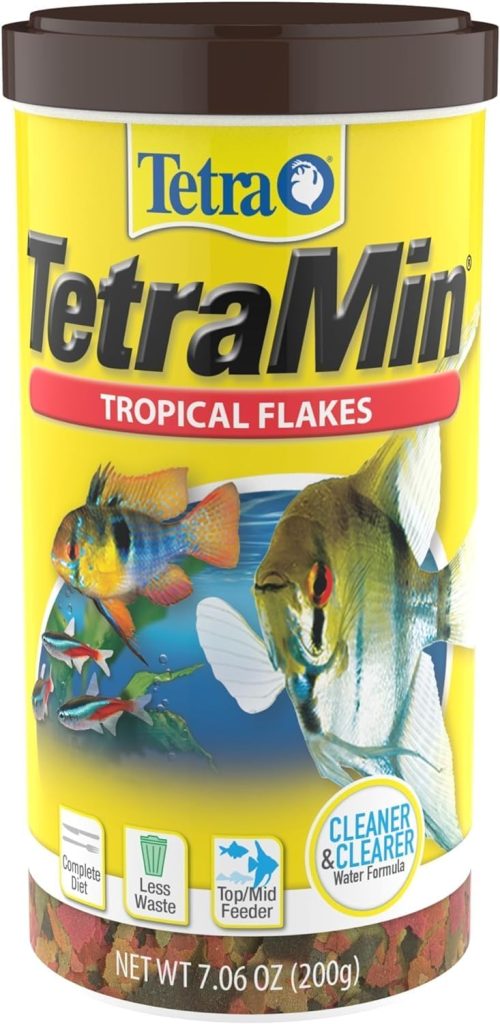
TetraMin Tropical Flake Food (Left)
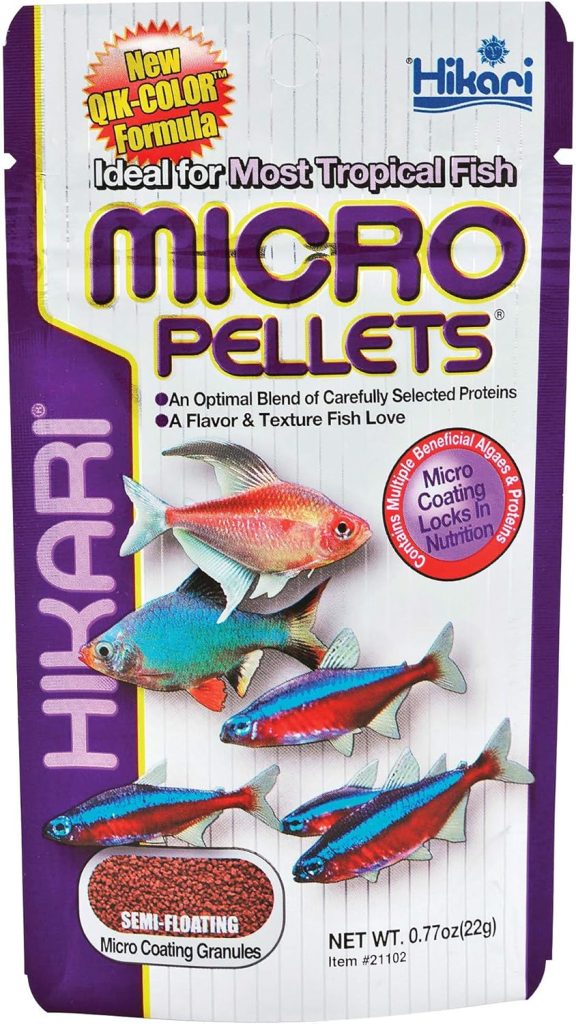
Tropical Semi-Floating Micro Pellets (Right)
Your Orange Molly’s diet is the same as a common Molly’s own because they have the same omnivorous dietary needs. This species would eat both plant and animal foods, even though it prefers the former.
Dietary Needs for Orange Molly
Orange Molly’s preference for plant-based food sources is result of their ancestors’ natural habitat. Living in the tropical regions of Southeastern and Central America gave mollies access to plant foods, so you have to continue that in their aquarium environment.
Some vegetable foods for mollies that you can add to their diet include Spirulina, Algae wafers, peeled peas, and blanched spinach. These vegetable matters will enhance and boost their coloration.
Add protein-rich foods like bloodworms and brine shrimp to their diet to support muscle development and strength.
Curating your pet’s diet is necessary because it ensures they receive a balanced fish nutrition rather than just grazing on their preferred foods.
Feeding your Orange Molly
As a voracious grazer, this algae-eating fish needs close monitoring during feeding hours. You can also control their access to food by limiting their feeding time to twice daily. Use portion control to ensure they only eat what they need.
Serve them portions they can consume in less than 3 minutes, and remove uneaten food from the tank after feeding sessions.
Tank Mates
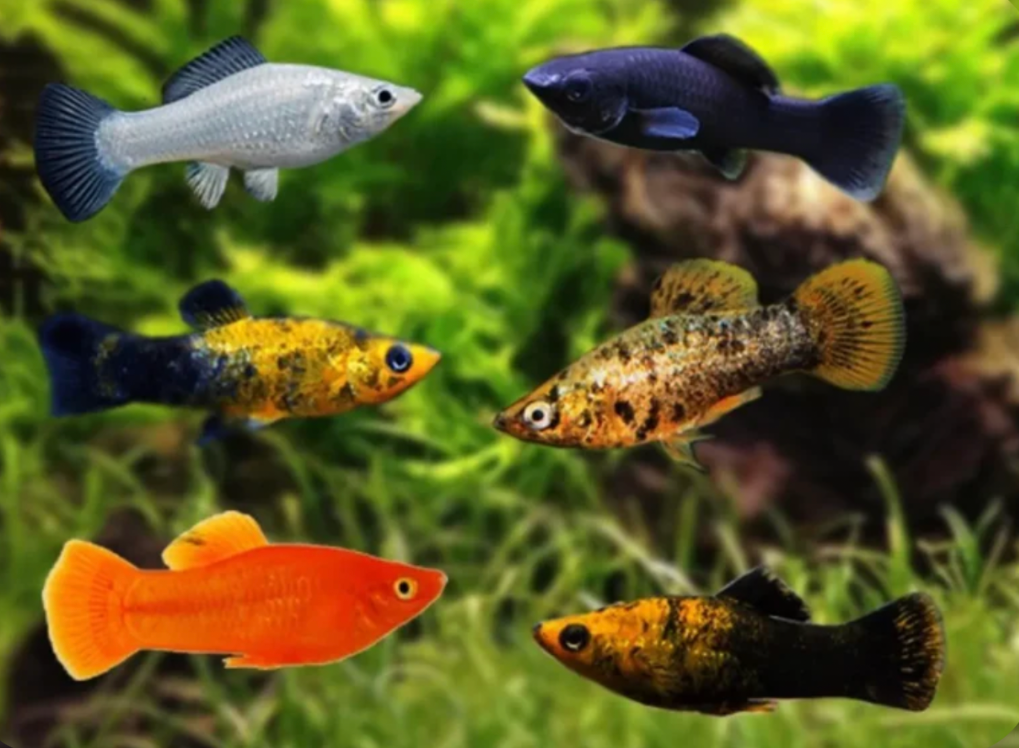
Other livebearers belonging to the Cyprinodontiformes family are ideal orange molly tank mates in a community setup. They’re suitable companions for your Orange Molly fish because they have similar environmental needs, temperaments, and dietary preferences.
These compatible livebearer fish include guppies, swordtails, and platies. However, you can also add egg scatters like Rasboras and Tetras to the mix for variety.
When choosing pets for beginner community aquarium, avoid aggressive cichlids and fin-nippers such as Barbs and Angelfish. They’ll bully your Orange Molly fish and make the community uncomfortable for them.
If you want more of this freshwater community fish in your aquarium, then consider reproducing Orange Mollies in a controlled environment.
Breeding
Multiplying Orange Mollies through reproduction follows the same process as breeding mollies in aquariums. If you’ve never attempted this, don’t worry. It’s a simple process, though it requires care, attention, and dedication for about 4 to 6 months.
Breeding Tank Setup
For a typical livebearer reproduction, it’s best to get a separate breeding tank where you can control the water parameters and monitor your pet’s behavior.
An ideal Molly livebearer breeding tank would be about 10 – 20 gallons in size to house a pair of Orange Molly breeders or a group of one male and two to three females.
Set the temperature between 72 – 78F and add enough plants, including floaters like Hornwort, to provide shelter for the incoming fry. Swap out your canister of HOB filters for a gentler sponge filter device that won’t stress or suck in your juvenile Orange Molly.
Conditioning the Breeding Pair
Prepare your breeding adults for the task ahead by feeding them protein-rich foods about two weeks before they mate. Increase the tank’s temperature to make it warmer and encourage the breeders to mate. Then place your male and female or females into the breeding tank.
Fertilization, Gestation, and Birth
The male Molly will do a mating dance to attract the female and draw them closer for fertilization. After fertilization, the female will become pregnant with a larger belly that turns into a dark, gravid spot around her caudal fin.
Female Orange mollies carry their pregnancy for about 3-5 weeks, after which they deliver their young as free-swimming fry. They can deliver up to 100 fry at once or in batches of dozens over the next week.
Upon delivery, remove the adults from the breeding tank or move the Orange molly fry to a nursery tank. That’s because parent mollies can mistake their fry for food and eat them.
Caring for the Molly Fry
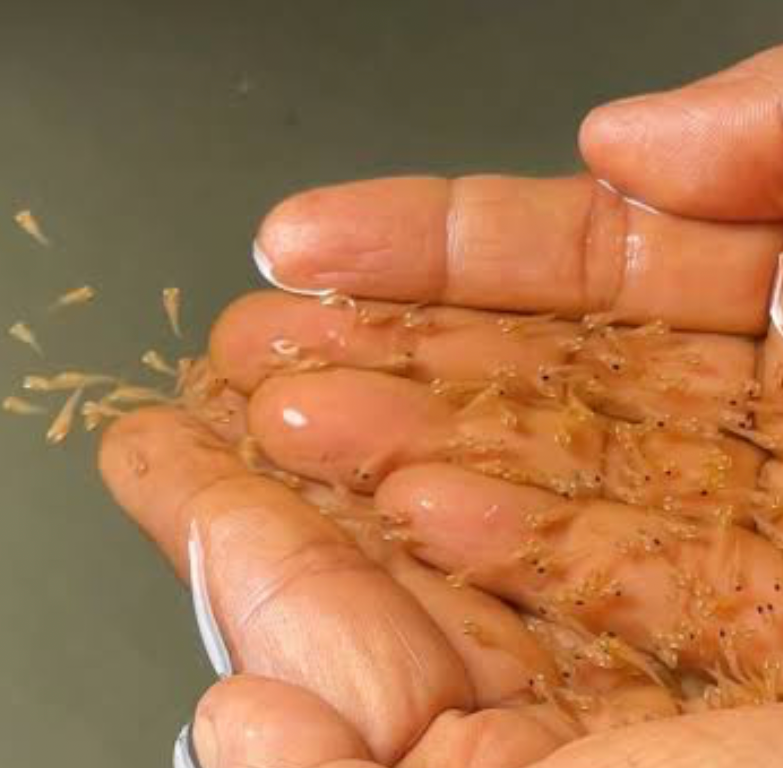
When raising Molly fry, ensure water conditions remain stable and pristine at all times, as they’re sensitive to fluctuations and poor quality.
Feed them specialized fry food and infusoria in their early days, and as they grow into larger fry, you can add crushed baby brine shrimps and crushed flakes to their diet. Unlike adult Orange Mollies, the juveniles need more food, so add a third feeding session to their schedule.
Make 20-50% water changes weekly to keep the water pristine and maintain stable water conditions. When your Molly fry reaches maturity in about 4-6 weeks, you can move them to the main tank. Ensure you quarantine them to first reduce the risk of disease.
Lifespan
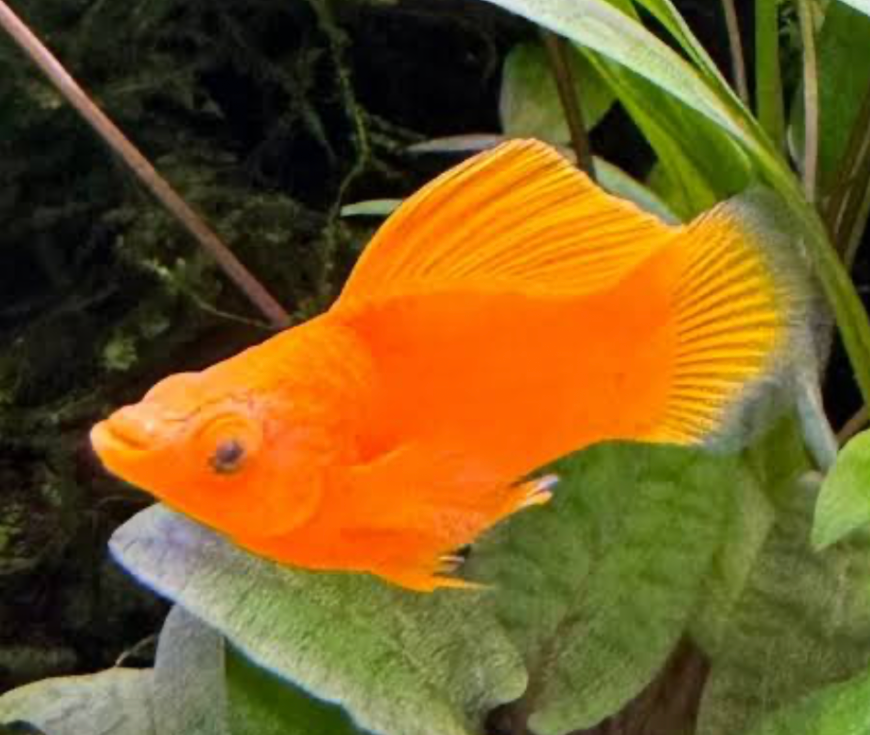
With excellent care, you can enjoy having your pets for up to five years because the average orange molly lifespan is 3 – 5 years. However, it’s not an automatic guarantee. This privilege on how well you provide for healthy aquarium fish care, since most of their illnesses arise from poor environmental conditions.
To ensure and extend freshwater fish longevity, you must keep the aquarium clean, feed your pets a healthy, balanced diet, provide compatible tank mates who won’t reduce their lifespan, and do periodic health and wellness checks.
All these Orange molly health tips are contained in this guide. So, scroll up for details on how you can expand your pet’s lifespan and enjoy up to half a decade with them in your tank.
Conclusion
In the ranks of colorful Molly fish for aquarium keepers, the Orange Molly is one of the best. It has such a vibrant color that makes it a worthy centerpiece in any type of aquascape. As a decorative livebearer fish that you can’t ignore, the Orange Molly deserves the best from you.
The best way to give your pet optimal care is to first study its origin so that you’ll know what it needs. Then, work towards providing everything it needs, from the tank setup to daily feedings and interactions with other tank mates.
Even if it’s your first time keeping an aquatic pet, Orange mollies are an ideal beginner aquarium fish to start your journey.