Skip to content
Combine the beauty of the striking Marble Molly species’ black and white patterns in your tank as a beginner aquarist with a simple care routine for a long lifespan.
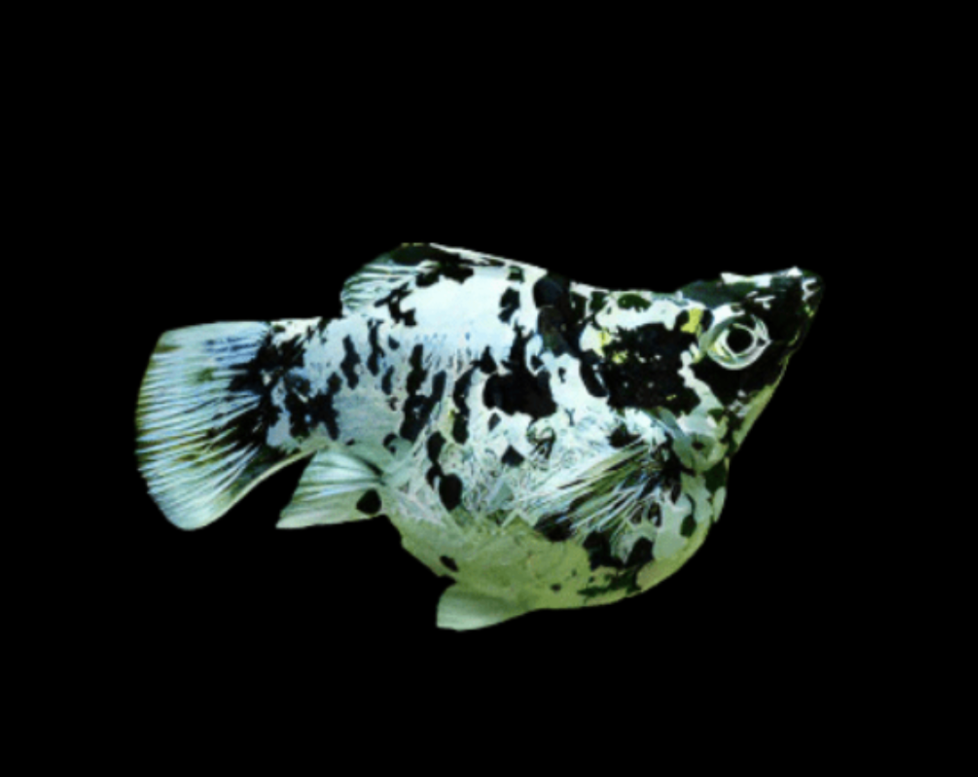
Marble Molly Care Guide: Unique Patterned Livebearer for Community Tanks
Aquarium keeping can be a beginner-friendly hobby when you choose the right kinds of pets for occupancy. Visually stunning, patterned Molly fish, like the Marble Molly, always stand out to hobbyists in the aquarium trade, but choosing them requires a certain level of commitment.
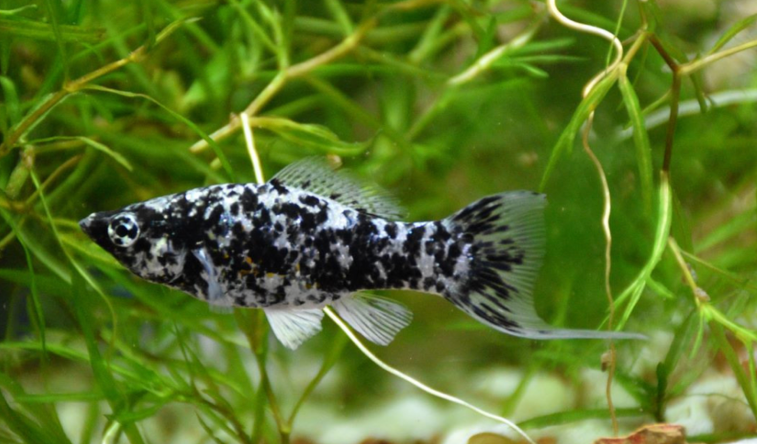
With the marble molly fish, you’ll have a vision of strikingly mottled black-white patterns in your tank.
Beyond its unique variable color pattern, though, there’s more to this beginner molly species. For one, this pattern appears across multiple Molly subvariants, including the Lyretail and Balloon species, and the variables in pattern formation make each fish unique.
No matter the structure of your marbled pet, this complete marble molly care guide is for you.
Author’s Note: Check out our post on the 12 Types of Mollies That Make Perfect Beginner Fish for an in-depth overview of the wide variety within this species!
Marble Molly Scientific Name, Origin, and Classification (Poecilia sphenops hybrid)
Common mollies are found in the waters of Southern and Central America, flowing through Mexico to Colombia.
Marble Molly species, unlike common mollies found in the wild, are creations of specialized hybrid breeding. Like many aquarium molly hybrids with unique patterns and physical appearance, this species descends from cross-breeding common mollies with rare variants.
So, let’s look at the Marble Molly species, originating from the broad family to its specific genus. Marble Mollies belong to the Animalia kingdom, the Chordata phylum, and the Actinopterygii class. They’re part of the Cyprinodontiformes order as a broad group and part of the livebearing Poeciliidae family.
The Poeciliidae family of livebearers includes freshwater and some brackish-tolerant species such as Guppies, Platies, Swordtails, and Mollies.
Mollies are part of the Poecilia genus with different subspecies, including the lyretail, balloon, and sailfin variants.
Because the Marble Molly comes from cross-breeding common mollies (P. sphenops), all of them have a Poecilia sphenops background, whether they’re a sailfin or shortfin species.
Appearance & Color Variations
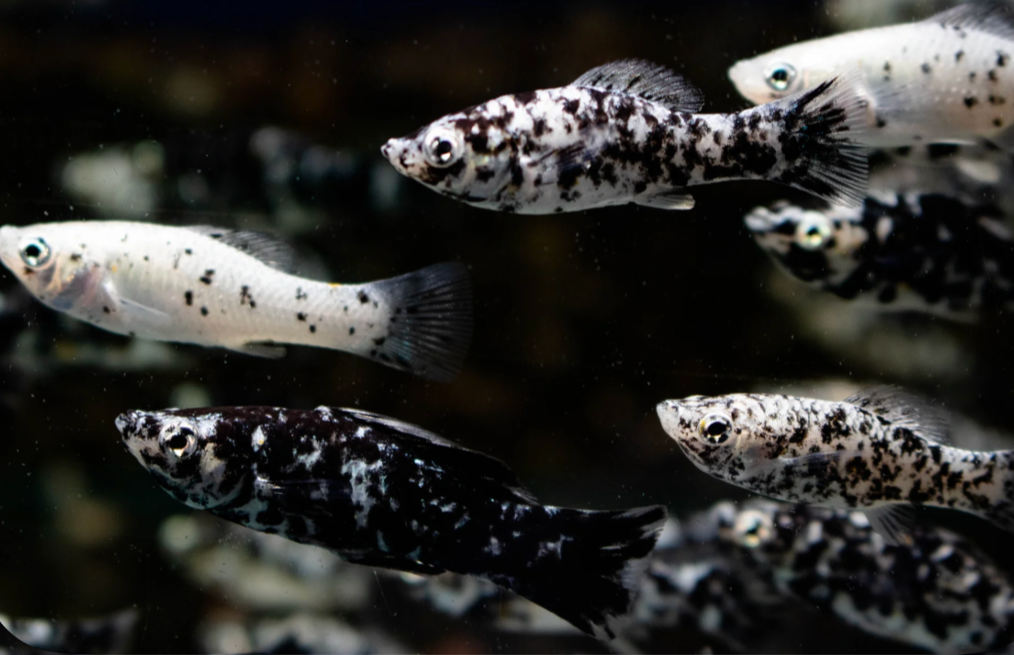
The marble Molly’s appearance is the most striking feature of this fish and the main reason it became a hobbyist favorite.
We’ll look at the marble molly colors, their unique patterns, and common combinations, then review the most likely structures you’ll find in the aquarium trade.
Marble Molly Color Combinations
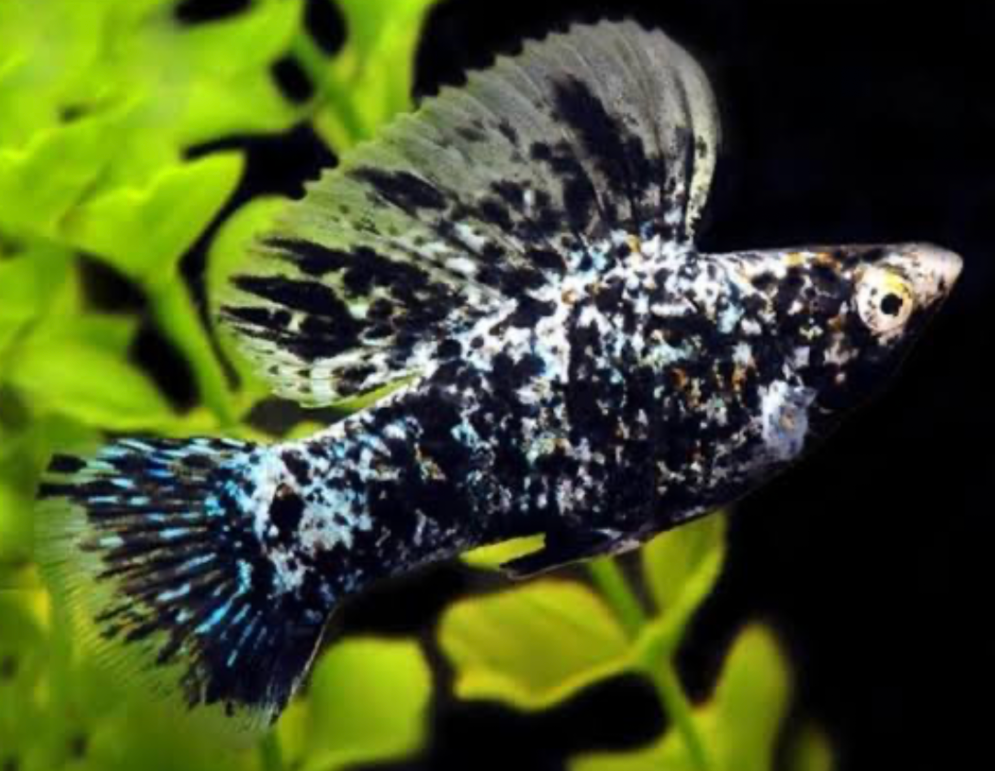
A typical Marble Molly color includes a mottled combination of black, silver, and white patches. Because of this color combination, many beginners mistake the Marble Molly for the Calico and Dalmatian species. But the difference is in the patterns.
With Dalmatian Mollies, you’ll see the fish with a white base color and distinctive black spots, while Calico Molly fish have mottled black and white patterns mixed with golden and orange blotches.
For Marble Mollies, however, there are no distinctions in the spots and patches; instead, it’s a scattered blend of black and white patterns all over their skins. They also don’t have Calico’s unique yellow or gold highlights.
Marble Molly’s Physical Structure
Marble patterns form on various species of Molly, ranging from the balloon type to the lyretail molly.
With the Balloon Marble Molly, the fish features a short, compressed spine, with rounded bodies and small heads, while the Marble Lyretail Molly has a longer torso with flowing, forked fins.
In the aquarium trade, the Marble Lyretail Molly is the more common structure you’ll find, while the defective balloon variant is a rarer version often discovered through selective breeding.
Whether your Marble Molly has a lyretail or a balloon body, though, its essential care needs remain the same.
Tank Size & Aquarium Setup
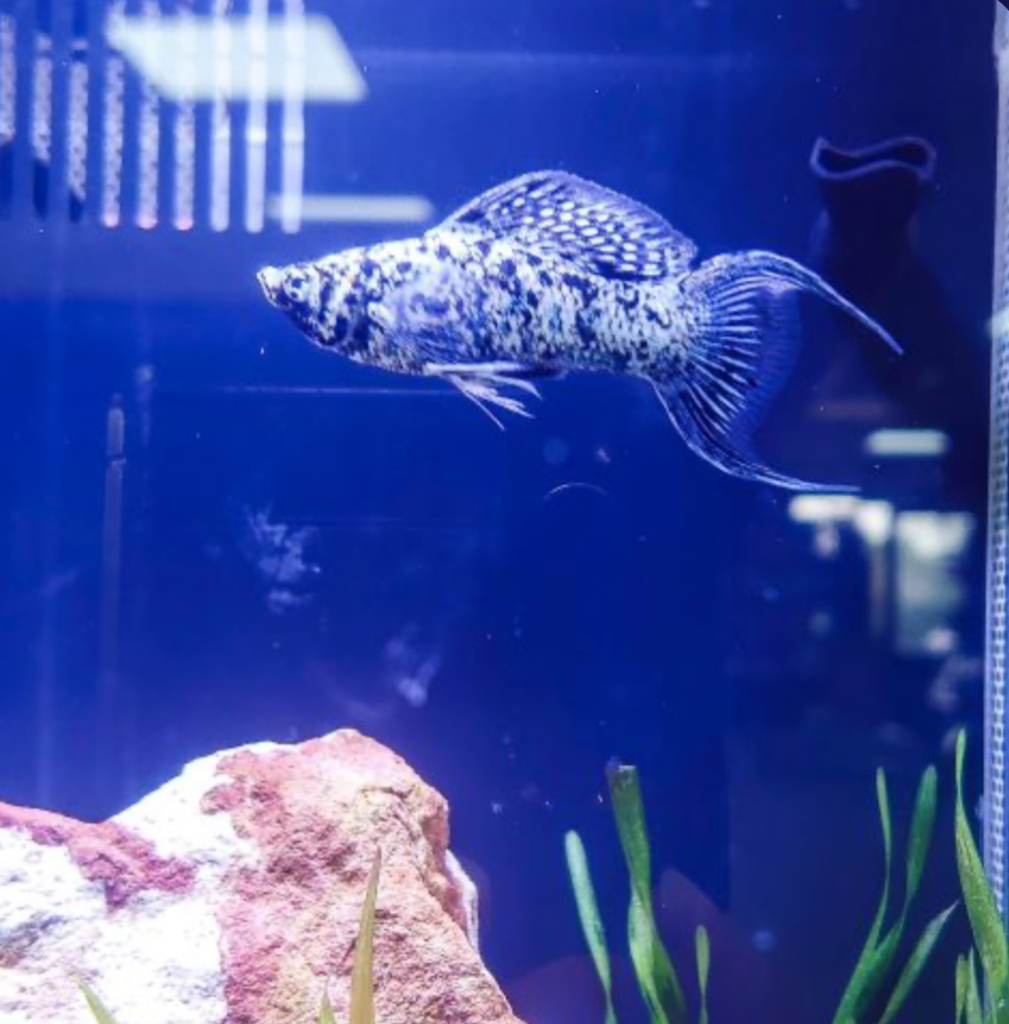
For your Marble Molly aquarium setup, you’ll need an enclosure that can comfortably house a small group, as this species thrives in social groups. You also have to mimic their natural molly habitat, which is a richly planted water region where freshwater and brackish water meet.
Marble Molly Tank Size
An ideal marble molly tank size for a small group of five would hold 20-30 gallons of water, excluding the internal decor. The space is meant to allow your pets to explore the aquarium without restriction or the risk of clashing over territory.
Aquarium Setup for your Marble Molly
When designing your community aquarium layout, you must consider your pet’s natural habitat and behavior. Provide dense vegetation that’ll serve as food, shelter, and comfortable decor while leaving open swimming zones for their active schooling.
Fill the substrate with fine sand or smooth gravel that’ll be gentle on their skin when they sift for food. Use aquarium plants to create a dense canopy and a surrounding. Some species to use include Java Fern, Java Moss, Amazon Sword, Vallisneria, and Water Sprite.
Author’s Note: Check out our post Best LED Aquarium Lighting Units for Your Gallon Tank Capacity for an in-depth review of the best options for lighting!
Water Parameters
Marble Mollies, like common mollies, need hard, alkaline water to thrive in an aquarium environment. Set the following molly water parameters to ensure your pets feel comfortable despite being outside their natural habitat:
- Temperature: 72 – 82°F
- pH Level: 7.5 – 8.5
- Hardness: 10 – 25 dGH
Because Mollies struggle in soft, acidic water if left in there for a long period, you must ensure stable aquarium water conditions using the parameters above.
Keep the water warm and highly alkaline by maintaining a standard molly pH range that’s slightly neutral to highly alkaline. You can add aquarium salt for salinity and mineral rocks for hardness.
Maintaining stable water parameters is also easier when you install a high-quality filter to help with the cleanup after feeding sessions. You can use a canister or a hang-on-back filter, depending on your tank’s size.
Diet & Feeding
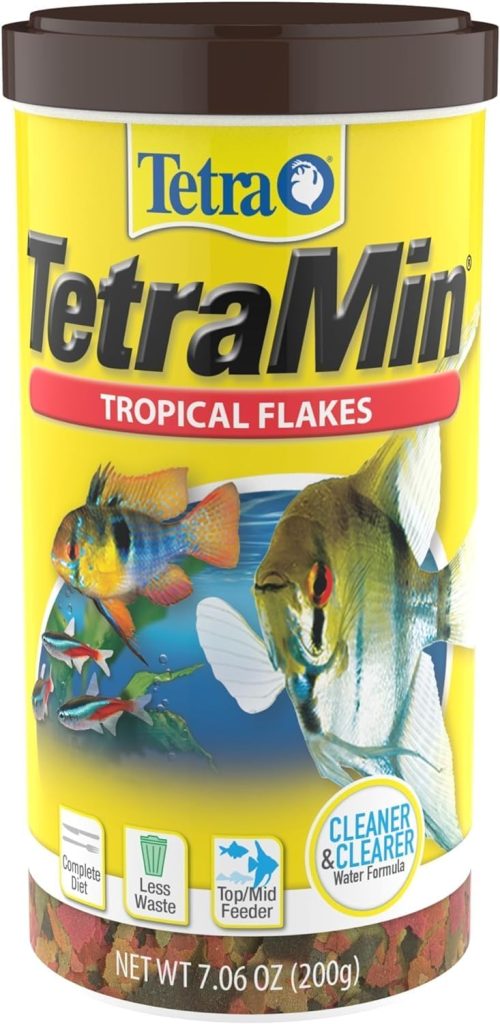
TetraMin Tropical Flake Food (Left)
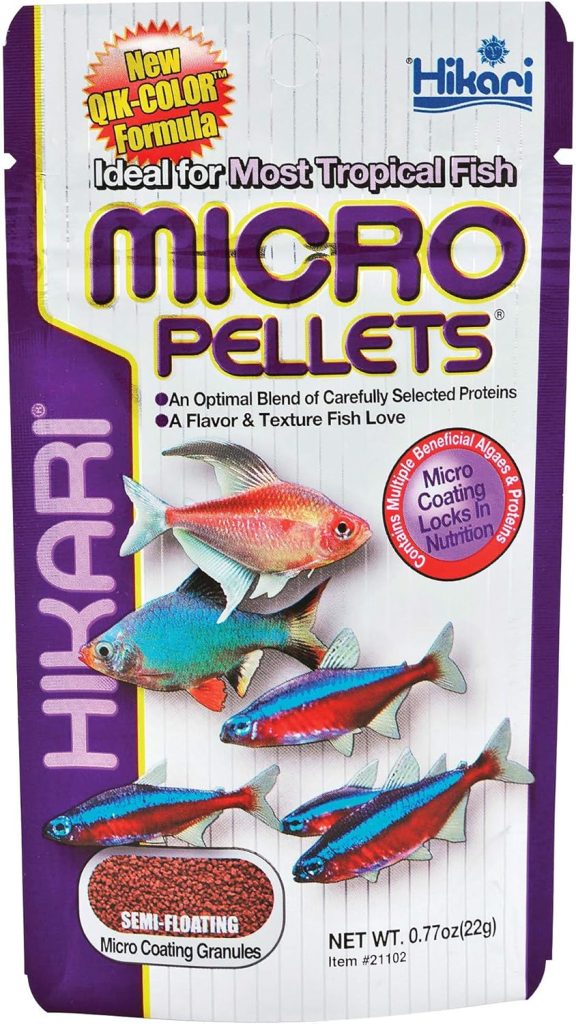
Tropical Semi-Floating Micro Pellets (Right)
Prepare an omnivorous marble molly diet for your pets as they’re able to eat plant and animal-based foods. However, note that they prefer vegetable and plant matter because they’re grazers.
As an algae-eating fish, your Marble Molly would source its own food by grazing on algae growth in your planted tank. But it’s risky to rely on this source of food alone, as it can harm your pet’s health through either malnutrition or overfeeding.
Instead, you can supplement your Marble Molly’s diet by providing balanced nutrition through various food sources in measured portions. Plant matter helps digestion and is their preference, but they also need animal matter for strength.
Serve your Marble Molly with algae wafers, spirulina, high-quality commercial pellets or flakes, and blanched vegetables as daily staples. Then, every other day, add protein-rich foods like bloodworms and brine shrimp to aid their muscle development and keep them strong.
Tailor your Marble Molly fish feeding routine to match your natural schedule, but also ensure they eat adequately. Feed them twice daily in little portions that they’ll finish within 2 minutes. You can make it once at dawn, after you wake up, and once in the evening/night before you sleep.
Tank Mates & Behavior
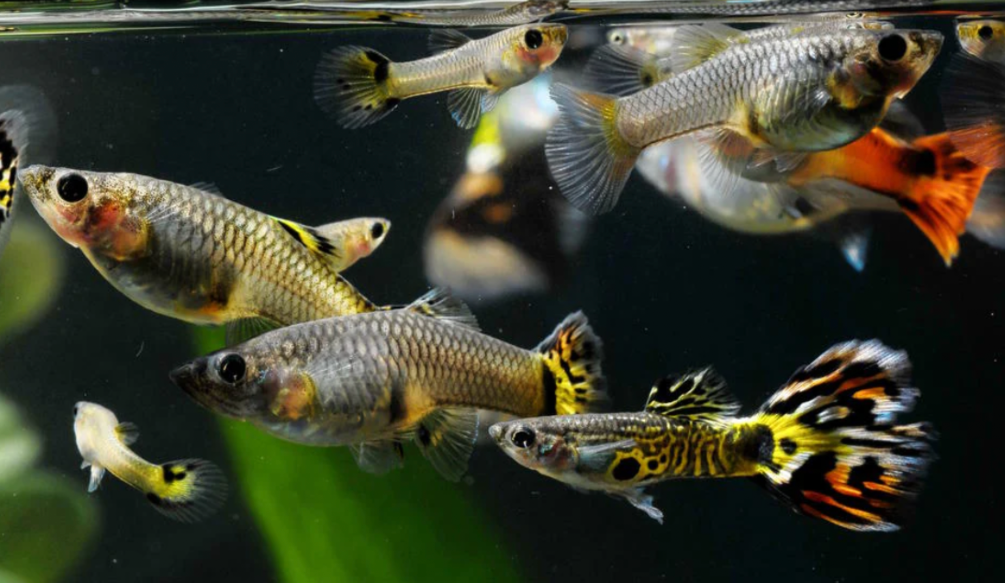
Because Marble Molly is a social species, you can confidently add it to your beginner community aquarium.
But be careful because not all fish can live together in harmony. You’ll need to ensure their compatibility based on environmental needs, diet preferences, and personality. As a rule of thumb, it’s best to look for other compatible livebearer fish belonging to the same family. These compatible marble molly tank mates include platies, swordtails, and guppies. You can also add peaceful tetras for variety or keep a species-only tank with other colorful mollies.
When grouping your mollies in your community aquarium, maintain a ratio of 1 male to 3 females to spread their aggression.
However, avoid fin-nipping species such as Barbs and Angelfish, as they can become aggressive and stress your pets. Also, keep away from slow-moving or extremely fast fish species that may become prey or predators that outcompete your Marble Mollies.
Breeding & Fry Care
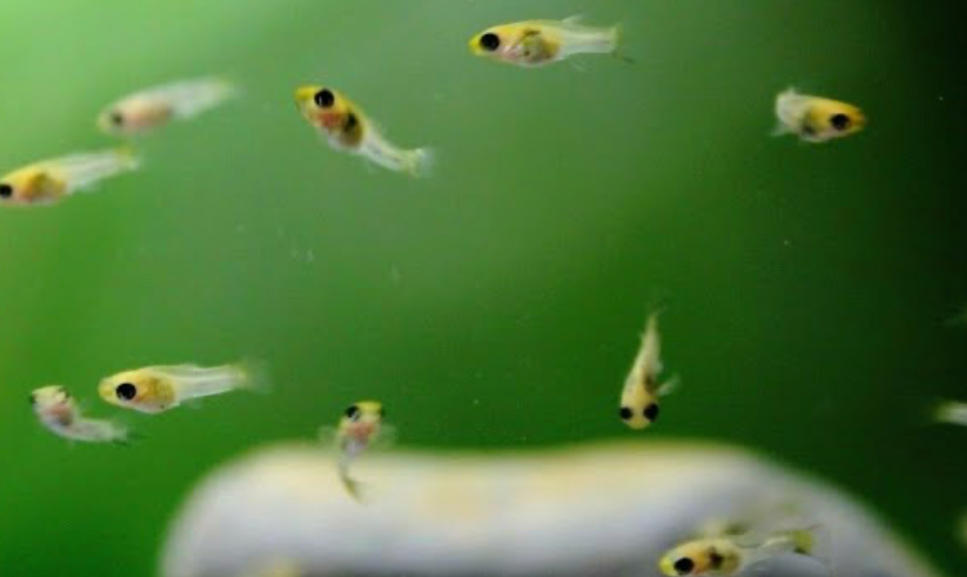
Managing beginner fish breeding care can seem challenging, but with the right guidance, you’ll see that it’s as easy as keeping your pets healthy and alive. For Marble Molly reproduction, you must first understand that this species, unlike most fish, doesn’t have an egg stage.
Instead, Marble Mollies, like all mollies, give birth to their offspring alive, which is why they’re called livebearers. To successfully breed this species, you must secure all aspects of its reproductive cycle, starting with the environment, conditioning, gestation period, and fry care.
So, here’s a comprehensive tip on marble molly breeding as a first-time aquarist.
Prepping the Breeding Tank
Set up a separate breeding tank for reproduction and adjust the conditions to suit breeding. Get a 10 – 20 gallon tank and set the following water parameters:
- Temperature: 78-80°F
- pH Level: 7.5 – 8
Add enough plants to provide shelter for the fry when they come because they’ll need hiding spots.
Conditioning the Breeding Pair/Group
Select the breeding pair or group with more females than males. You’ll notice a sexual dimorphism in your pets if you look closely. The males have pointed fins and are smaller, while the females have wider fins and larger bodies.
Increase their protein intake in the two to three weeks before reproduction. Stabilize the water conditions and place your breeding mollies into the tank.
Fertilization and Gestation
The male Molly will chase the female Molly and mate with her, if she accepts, at dawn. After fertilization, Molly’s belly will become darker, wider, and gravid around her anal fin. She’ll carry her pregnancy for about 4-6 weeks before delivery.
Birth and Fry Care
Typically, these livebearers can produce dozens of fry up to 100 at once or in batches within the next 30 – 60 days. Immediately after delivery, it’s best to remove the females and males from the breeding tank, as they’ll turn on their offspring and eat them if left in the tank.
Raising Molly Fry will then become your responsibility. Watch out for these newborns because they love hiding in plants, but they need monitoring. Feed them specialized fry foods, infusoria, finely crushed flakes, or finely crushed baby brine shrimps about 3 times daily.
They need more food than adults because they’re in the developmental stage. Also, ensure your sponge filter is working effectively to keep the water pristine, as Molly Fry is sensitive to poor water conditions. Support filtration cleaning by changing 30-50% of the water weekly.
Once your fry are large enough and mature at about 5 weeks or more, you can transfer them to the main tank.
Lifespan & Health
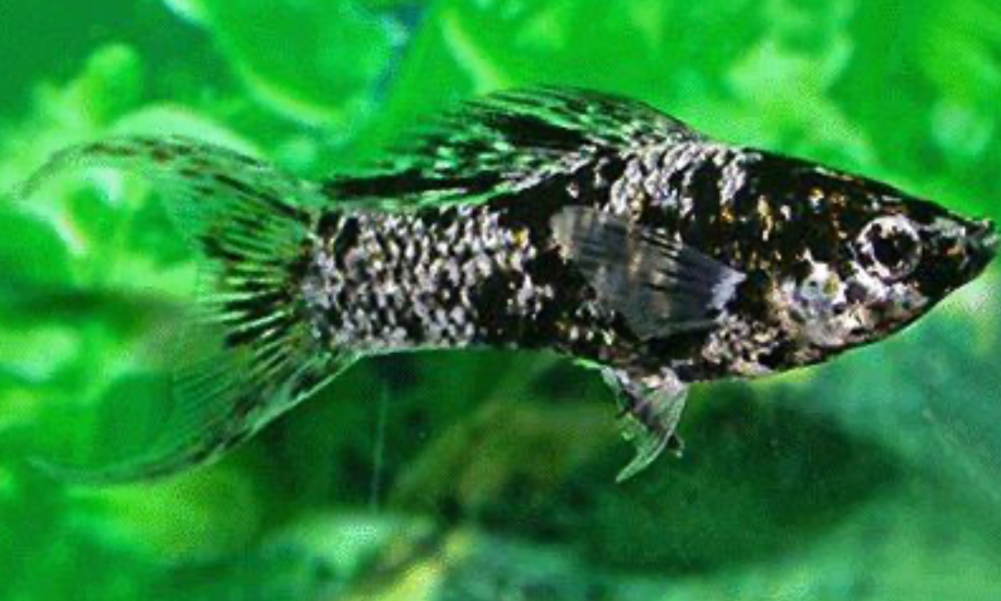
You can enjoy the company of your new pet for up to five years, as the average marble molly lifespan is 3 – 5 years. But note that the Balloon species live shorter lives due to their compressed spines, with a maximum lifespan of 3 years.
Don’t worry, though, because with healthy aquarium fish care practices such as keeping the tank clean, maintaining stable conditions, feeding your pets with a balanced diet, and pairing them with compatible tank mates, you can extend their lifespan.
The care tips in this guide are certified for Molly disease prevention, but keep an eye out for signs of illness just in case. Watch your pets for signs of stress by noting unusual behaviors and treating them immediately.
Quarantine the affected fish, improve the water conditions, and apply appropriate medication based on the disease type.
If you can’t determine the cause of the disease, you can visit a fish vet for help.
Conclusion
Marble Mollies are ideal beginner aquarium fish because they offer an exotic species with minimal care requirements. You can even keep a Marble Molly-only tank because of how diverse and distinct each fish’s pattern appears.
If you’re ready to add this patterned Molly fish as the centerpiece in your tank, then ensure you follow all the tips in this guide. Provide your pets with an ideal environment, feed them appropriately and on time for healthy growth, development, and overall well-being.
Dedicate yourself to providing optimal care and enjoy the visually stunning pattern variety of this