Skip to content
A comprehensive guide with insights on providing optimal care for all subvariants of the distinctive and elegant ornamental Platinum Molly fish species in your home aquarium, plus breeding tips and much more.
Platinum Molly Care Guide: Shimmering Silver Beginner Fish
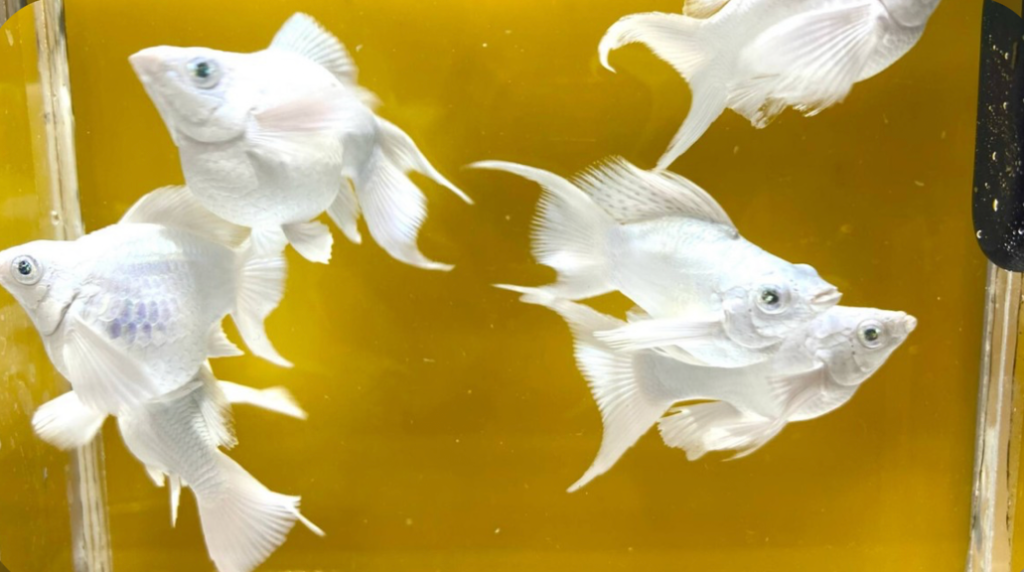
An ornamental molly variety like the Platinum Molly is often the first choice for an aquarium centerpiece, but you won’t find them naturally in the wild. This fancy molly variant, with its unique, eye-catching metallic silver color, is surprisingly a beginner molly species.
It still has all the classic Poecilia sphenops needs, including specialized platinum molly care requirements that cater to its appearance.
As you’ll learn in this guide, there’s no singular form for this silver livebearer fish, although all its physical morphs have the same reflective scales that stand out under aquarium lighting.
No matter the kind of Platinum Molly you have, here’s a detailed guide on keeping them in your home aquarium.
Author’s Note: Check out our post on the 12 Types of Mollies That Make Perfect Beginner Fish for an in-depth overview of the wide variety within this species!
Platinum Molly Scientific Name, Origin, and Classification (Poecilia sphenops hybrid)
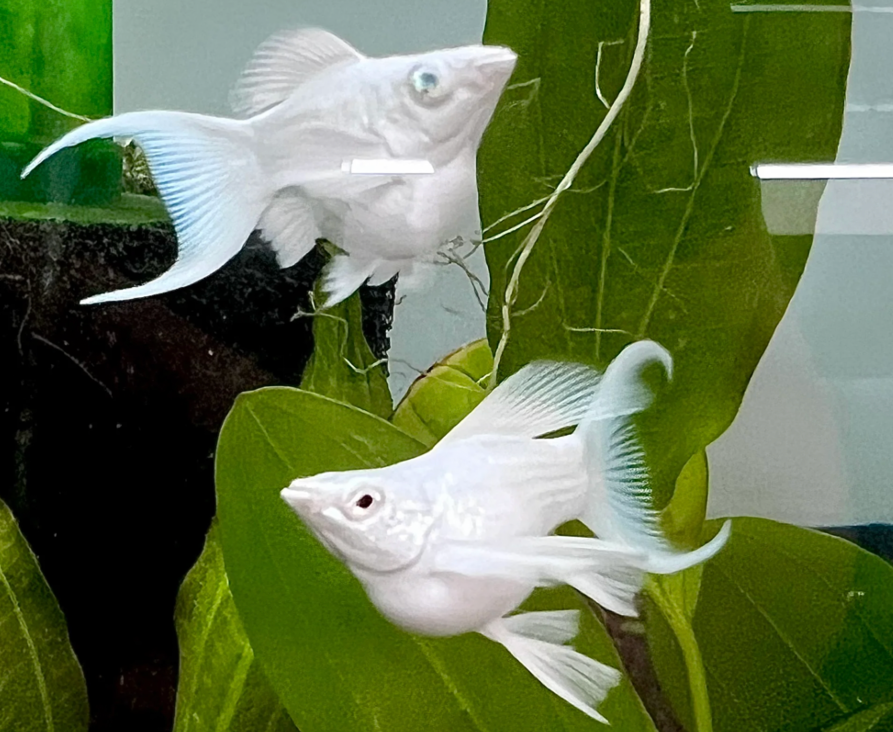
Platinum Molly color morph is a result of molly hybrid breeding, specifically by pairing the Sailfin Molly with the rare Mexican Sailfin Molly. The original parents found in the wild inhabit the Southern US waters that flow into Central America.
Platinum Mollies belong to the broad Animalia kingdom in the Chordata Phylum and the Ray-finned fish class of Actinopterygii. But a more niche classification relevant to beginner aquarists is their family, genus, and species.
This variant belongs to the Poeciliidae family, specifically the Poecilia genus.
However, their diverse structural appearance means that your Platinum Molly can belong to any of the molly species, including P. latipinna (Sailfin), P. velifera (Mexican Sailfin Molly), and P. sphenops (common molly).
Selectively breeding aquarium fish is more common in the trade than you’ll expect because that’s the only way you can get exotic and unusual pets. Besides the outstanding metallic color of this livebearer fish species, there are subvariants with distinctive bodies.
Platinum Mollies can also be Lyretail, Balloon, and the ultra-rare Platinum King Balloon Molly. If you don’t know the difference between these mollies, here’s a breakdown of their unique features for easy identification.
Appearance & Identification
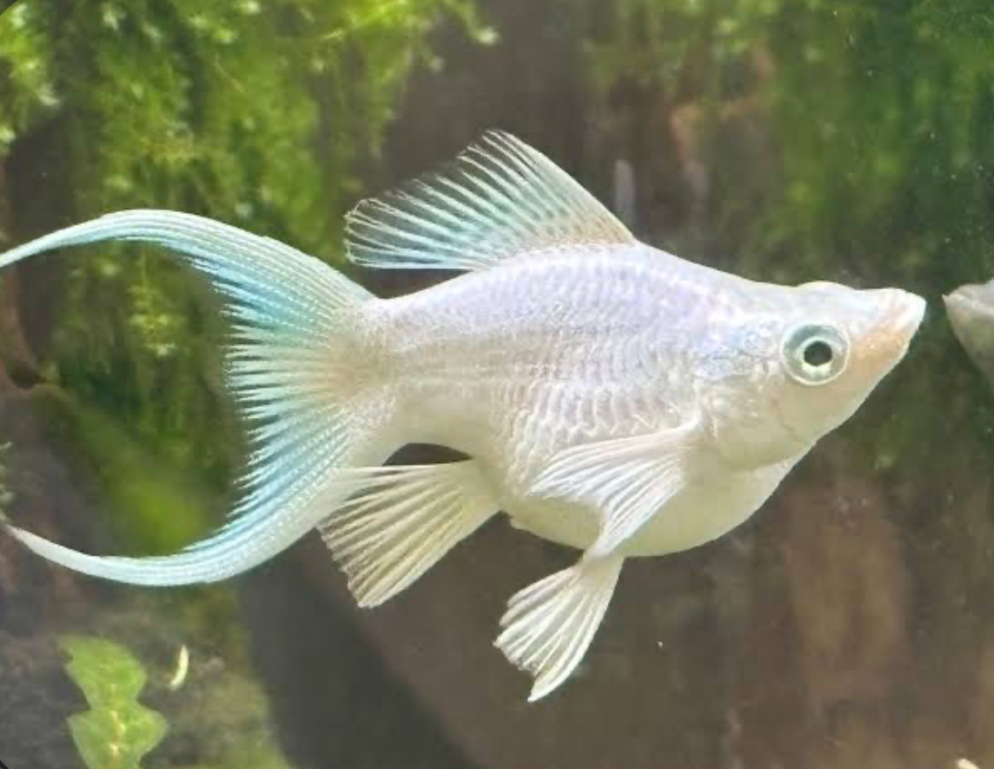
You cannot miss the vibrant, bright silver-platinum molly color, with its reflective sheen under light. This reflection may show your pet with subtle gold or blue undertones when displayed under LED lighting.
But beyond the striking metallic sheen, there are other aspects of your platinum molly appearance worth noticing.
Platinum Mollies grow between 2 and 4 inches in length, depending on their structural development. With common Platinum Mollies, you’d typically have a small pet, but for the fancier Sailfin, Lyretail, and Balloon variants, the sizing differs.
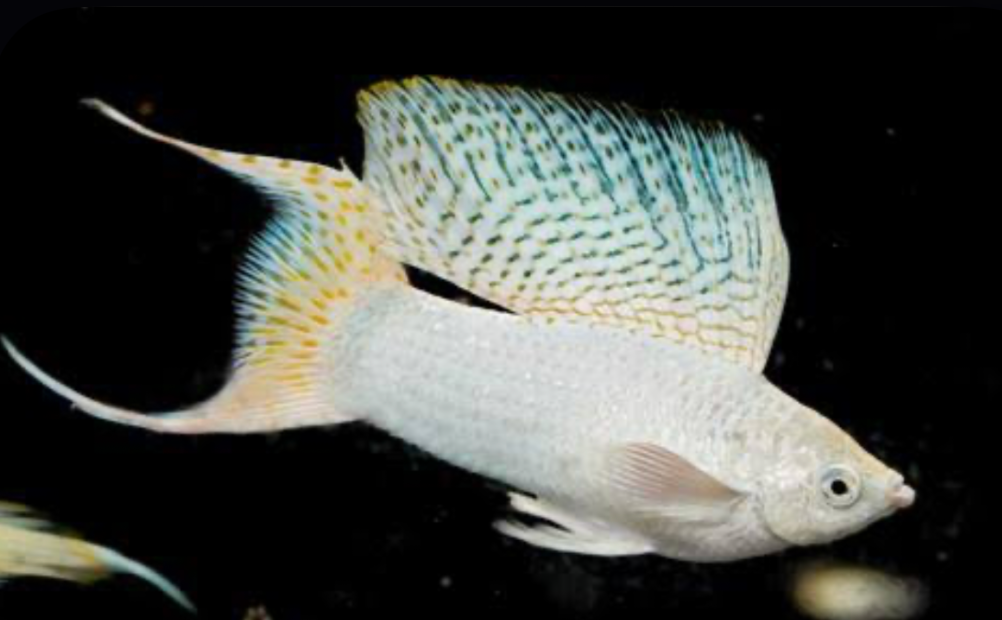
| Platinum Molly Type | Distinctive Appearance |
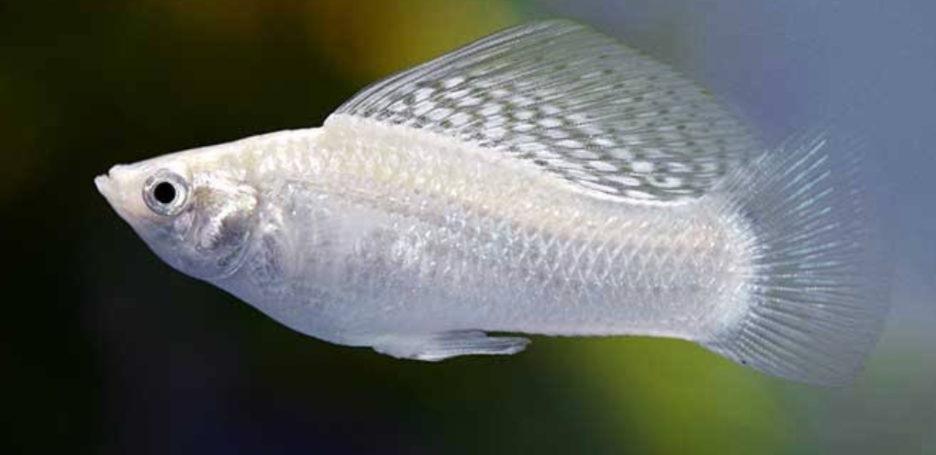
| Lyretail | Forked caudal fin and a long body |
| Sailfin | Sail-like dorsal fin |
| Mexican Sailfin | Sail-like dorsal fin with wide Caudal Fin |
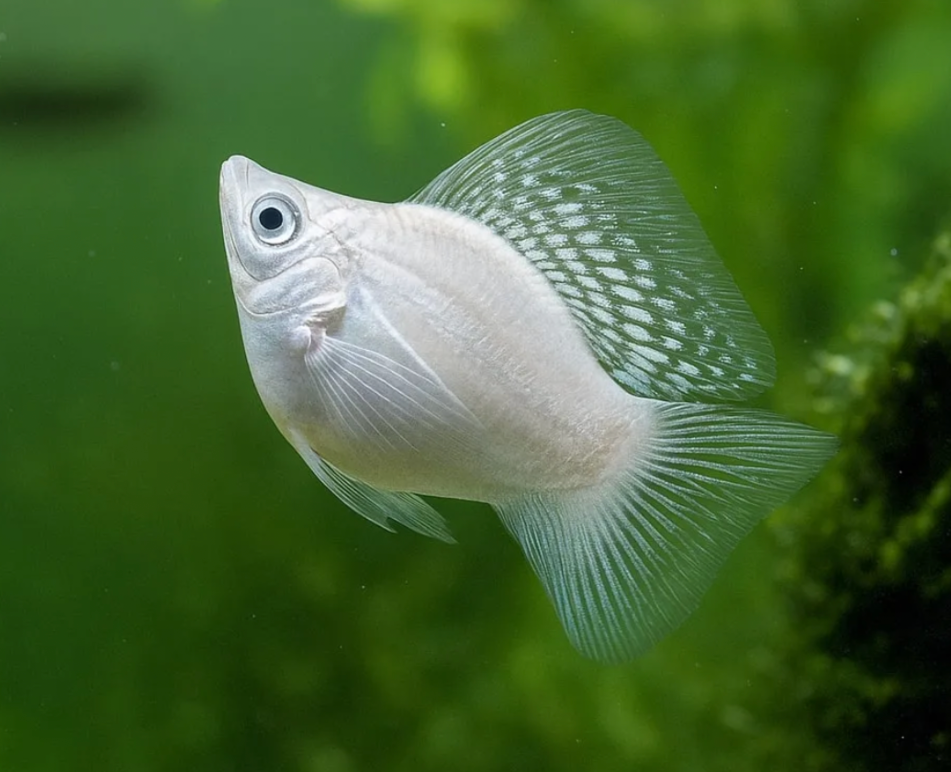
| Balloon | Compressed spine with a rounder body and a small head |
| King Balloon | Short, rounded body with intense white color |
There are other subvariants of this silver molly fish born from continued experimenting, such as the Ribbon-fin with its flowing veiltails and the Red Tail Big Ear variant with its reddish tint and oversized pectoral fins.
Correctly identifying the type of Platinum Molly fish in your aquarium will determine the ideal setup to ensure your pet is comfortable. However, there are general rules to follow.
Tank Size & Setup
When setting up your platinum molly tank, you must first consider the number of fish that’ll live in the enclosure. It’ll determine the tank’s ideal size before you even begin to decorate it with aquascaping and other aquatic tools.
Ideal Tank Size
For a small group of about 5 Platinum Mollies, a 20 – 30 gallon tank is suitable. But the moment your community exceeds five, you must increase the tank’s capacity at a ratio of 10 gallons for each new pair of fish.
Having a spacious tank reduces the risk of bullying and encourages your pets to display their vibrant metallic silver bodies.
Decorating the Tank
Mapping out an optimal community aquarium layout depends on how well you design your aquascape to accommodate your pets’ activity levels and curious habits.
Layer the tank’s base with fine sand or smooth gravel that’s gentle on your pets’ bodies and mimics their natural environment. To really recreate the aesthetics of Southern and Central American waters, though, you must have dense vegetation.
For your planted molly tank, use hardy live plants such as Java Fern, Vallisneria, Hornwort, and Anubias. But the plants won’t be enough to complete the theme. You’ll also need aquarium decor, like driftwood and smooth rocks, for caves.
Ensure that your beginner fish tank design provides enough swimming space amid your dense vegetation. You can set up the plants in such a way that there’ll be multiple tank regions to guide your pets’ movements.
Water Parameters
Another benefit of proper aquascaping is the ability to add minerals to your water, creating a hard, alkaline-rich environment for your brackish-tolerant fish.
Creating ideal conditions is only the first part of setting up your pet’s environment; the second, and more taxing, aspect is maintaining stable aquarium water conditions.
Firstly, note that the Platinum Molly fish, like the common molly, thrive in a healthy mix of freshwater and brackish water. So, here’s how you can provide the same environment for this alkaline freshwater fish.
- Temperature: 75 – 80°F
- pH Level: 7.5- 8.5
- Hardness: 10 – 25 dGH
To maintain your Platinum molly pH and hardness, add aquarium salt periodically at a rate of 1 teaspoon per gallon. So, for an average 20 – 30 gallon tank, you’ll need 7 – 10 tablespoons of aquarium salt.
Install a high-quality, hang-on-back or canister filter in your aquarium to keep the water pristine after feeding sessions.
Diet & Nutrition

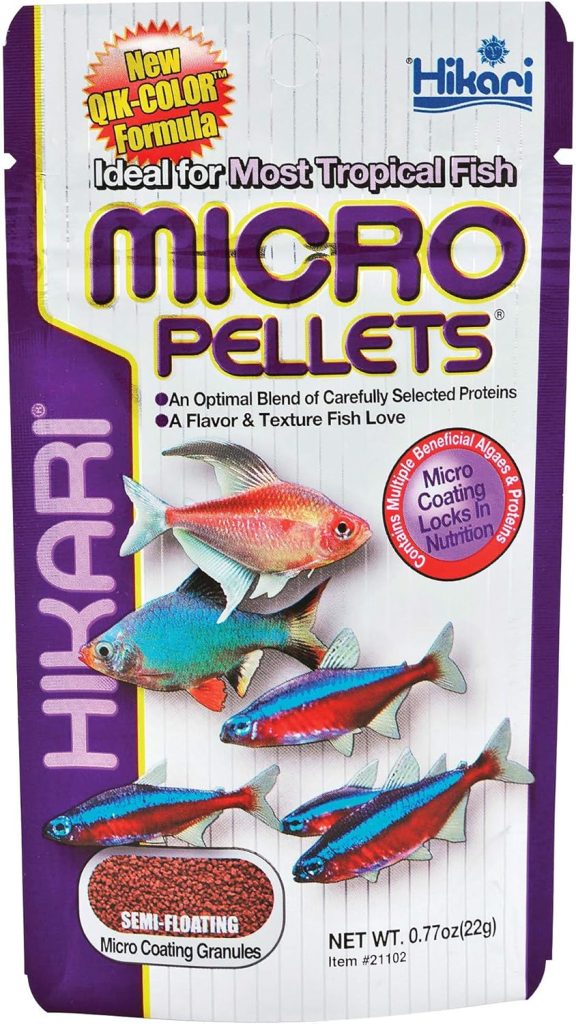
TetraMin Tropical Flake Food (Left)
Tropical Semi-Floating Micro Pellets (Right)
Your Platinum Molly pet needs a balanced fish nutrition plan for healthy growth, development, and overall well-being. They’re an omnivorous species that eats all types of food but prefer vegetable matter since they’re grazers.
To feed this algae-eating fish with a healthy plant-based diet, you must ensure that whatever staples you give them are specifically made for mollies. Get them high-quality commercial flakes and pellets that’ll enhance their colorful scales for everyday meals.
However, to create balance in your platinum molly feeding schedule, you must supplement their meals with animal matter such as bloodworms and brine-shrimps, but also include vegetables other than algae, such as blanched spinach and cucumber.
Serve them twice daily in small portions that they can finish within 2 minutes. To help Platinum Molly fish grow, increase feeding frequency to 3 times daily for proper development.
Use this livebearer feeding guide to ensure your pet gets all the nutrients it needs without overfeeding.
Tank Mates
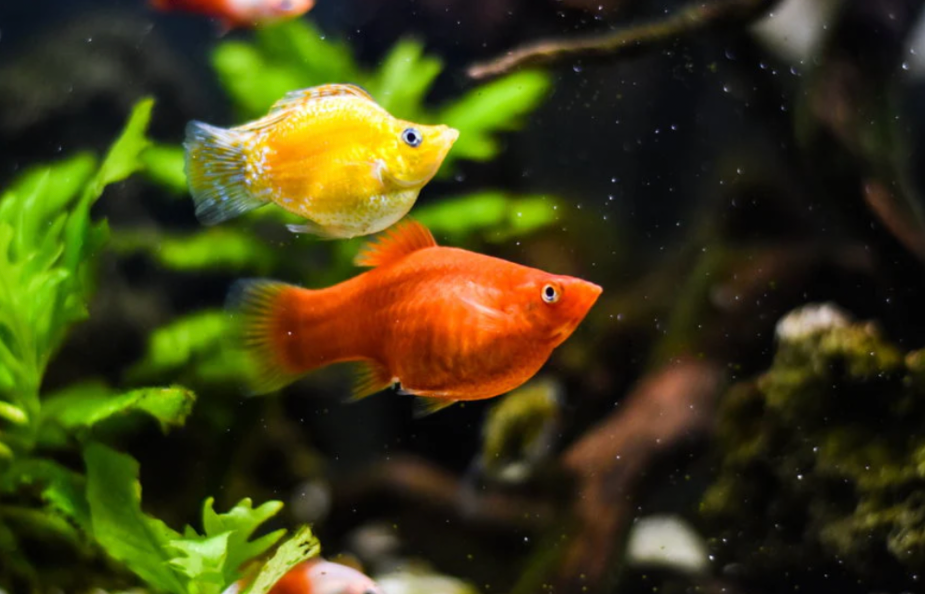
At this point, there’s no question of whether your Platinum Molly is a worthy addition to your beginner community aquarium. However, you must carefully select its companions to avoid competition and unhealthy behaviors.
To start, understand that choosing a compatible group of freshwater community fish depends on their compatibility with one another. Can they thrive in the same environment? To answer that question, you must consider their temperaments, environmental needs, feeding habits, and social patterns.
So, using this metric, some compatible livebearer fish for your pets include Platies, Swordtails, and Guppies. They’re peaceful and won’t stress your pets. Other compatible Platinum Molly tank mates include Corydoras Catfish and Tetras.
Avoid aggressive tankmates such as Barbs and Angelfish, which are known fin-nippers. Also, avoid keeping slow-moving or smaller fish in the same aquarium with your Platinum Molly, as this can trigger predatory behavior and bullying.
Breeding
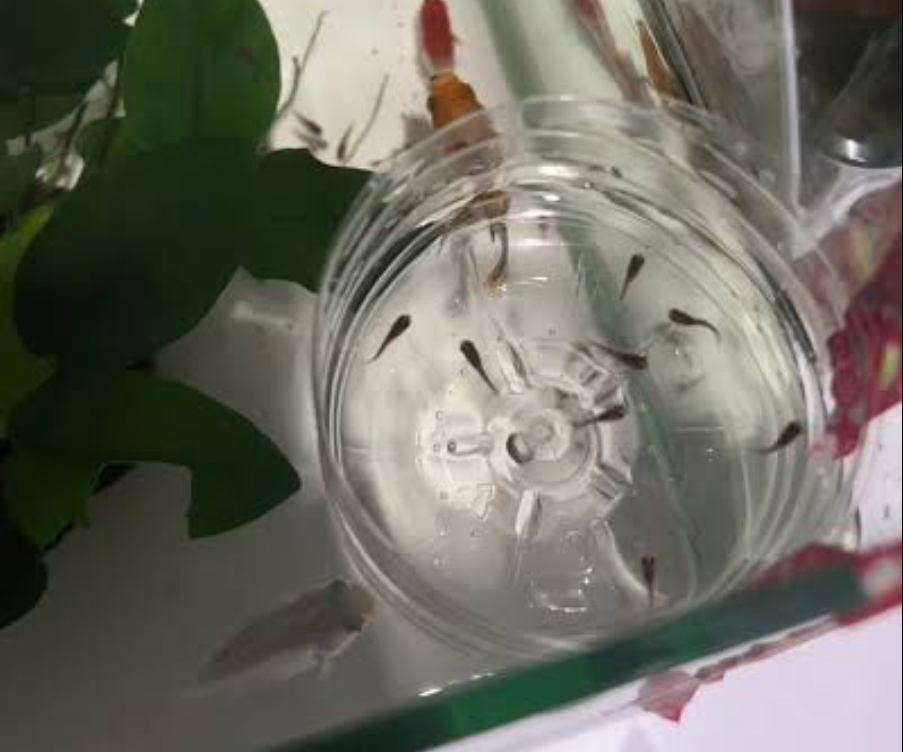
Breeding mollies in aquarium tanks requires skill and determination because they’re livebearers. They’ll give birth to their young alive without going through the egg stage. So, there’s no chance for do-overs or makeup if you make a fundamental mistake.
However, the good news is that the requirements are straightforward and any beginner aquarist can handle it from setting up the breeding tank to raising molly fry.
All mollies look alike and go through the same developmental stage as fry before they mature and begin to develop unique features.
A typical livebearer reproductive cycle lasts about 3 months, including the conditioning stage and the aftercare period. Here’s a beginner fish breeding guide for reproducing mollies in your home aquarium.
Setting up the Breeding Tank
You must have a separate breeding tank because it’ll be easier and healthier to manage specific breeding conditions that won’t affect other non-breeding fish. Get a 20 – 30 gallon tank for your breeding group or pair, depending on your preference.
Set the temperature to 75-80°F and reduce the alkalinity to a more neutral level of 7.0-8.5. Add enough vegetation to provide cover for the newborn fry upon arrival.
You can have two mollies or a male molly with a maximum of three female mollies to spread their aggression.
Conditioning the Breeding Pair
Adult Platinum Molly fish need high-protein nutrients to handle the birth of their fry. So, increase their protein intake at least 2-3 weeks before the breeding period. Also, make the temperature warmer to prepare their bodies for fertilization.
When they’re ready to mate, the male molly will flash its fins at the females to draw her attention, after which mating will occur.
Fertilization and Gestation
After fertilization, the female will become pregnant and carry her young fry for about 60 days before delivery. During this period, you’ll notice that her belly will become squared with a dark gravid spot around the anal area.
Birthing and Raising the Fry
When her gestation cycle is complete, the female molly will birth live, free-swimming fry. She can deliver 40-100 fry at once, or in batches, from a single fertilization. After delivery, you must remove the parent mollies immediately to prevent them from eating their own offspring.
Convert your breeding tank to a fry nursery by adding a gentle sponge filter to keep the water pristine.
Clean water is essential at this stage because Molly fry are sensitive to poor water conditions. Feed the juvenile fry with crushed flakes, baby brine shrimp, and infusoria for healthy growth and development.
As they mature, do well to separate the stronger, larger Platinum Molly fish from the weaker, smaller ones to ensure survival.
After about 4-6 weeks of care, the juvenile Platinum Molly fry will mature and be ready to join your main tank community.
Lifespan
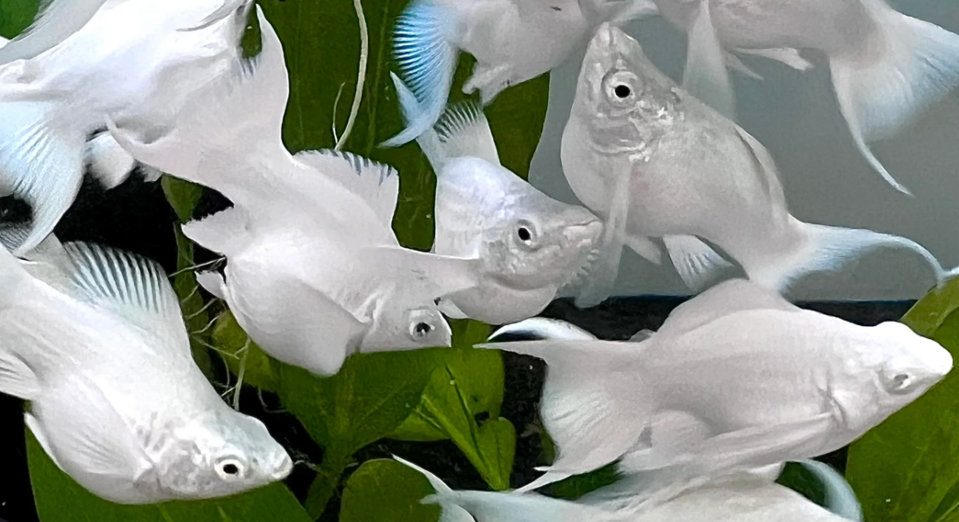
With excellent care, your platinum molly’s lifespan can stretch for 3–5 years unless it’s a balloon variant, which has a 1 – 3 year lifespan because of its structural defect.
You can, however, ensure your freshwater fish’s longevity with a good filtration system that keeps the water pristine at all times. This way, you’ll reduce the risk of diseases and long-term illnesses.
Scroll up to see how you can provide healthy aquarium fish care for your pets, including giving them the best environment, diet, and companionship for a healthy life.
Conclusion
Platinum Mollies are striking beginner aquarium fish with easy care needs worth your attention. If you’re looking for an excellent addition to an aquarium with a modern aquascape, then you’re in the right place for answers.
With this metallic Molly fish, your tank will always look exquisite, but you must also do your part. Luckily, this comprehensive platinum molly guide contains all the essentials you need, including tips for breeding more of this variant.
Are you ready to add this gorgeous decorative livebearer to your aquarium community? Share your thoughts with us in the comment box below.