Skip to content
A complete guide on providing delicate care for this uniquely spotted molly fish variant in a community tank, plus breeding insights and fry care tips for reproduction.
Dalmatian Molly Care Guide: Unique Spotted Molly for Beginners
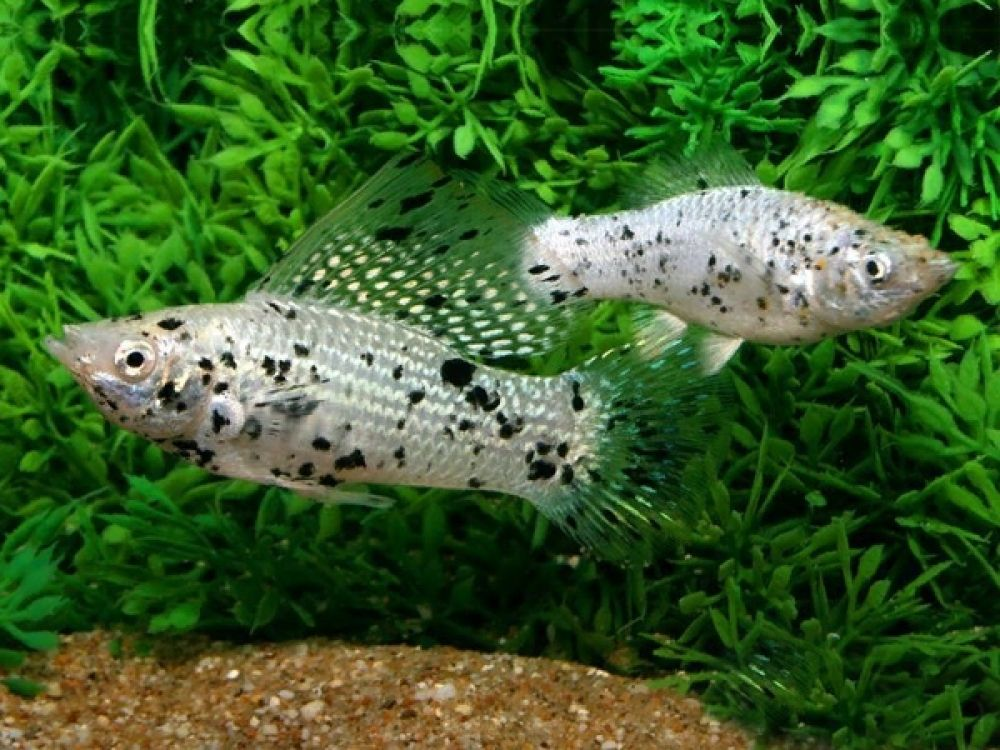
Dalmatian Molly is an ornamental molly variety popular for its iconic spotted color morph. As a selectively bred species, the Dalmatian molly comes in different shapes and sizes, as you’ll learn further in this guide.
Regardless of its physical appearance, though, essential dalmatian molly care is the same for every subvariant with slight tweaks for unique features. If you’re looking for a beginner livebearer fish to beautify your aquarium, then consider this polka-dotted variant.
Dalmatian morphs also make for great tank companions as a community aquarium molly for group setups. So, let’s review basic details that’ll help you give this pet a fantastic life outside its natural habitat.
Author’s Note: Check out our post on the 12 Types of Mollies That Make Perfect Beginner Fish for an in-depth overview of the wide variety within this species!
Dalmatian Molly Scientific Name, Origin, and Classification (Poecilia sphenops hybrid)
Starting with this species’ origin story helps you understand its background and prepare a suitable environment to match its basic environmental, health, and social needs.
Scientific Name
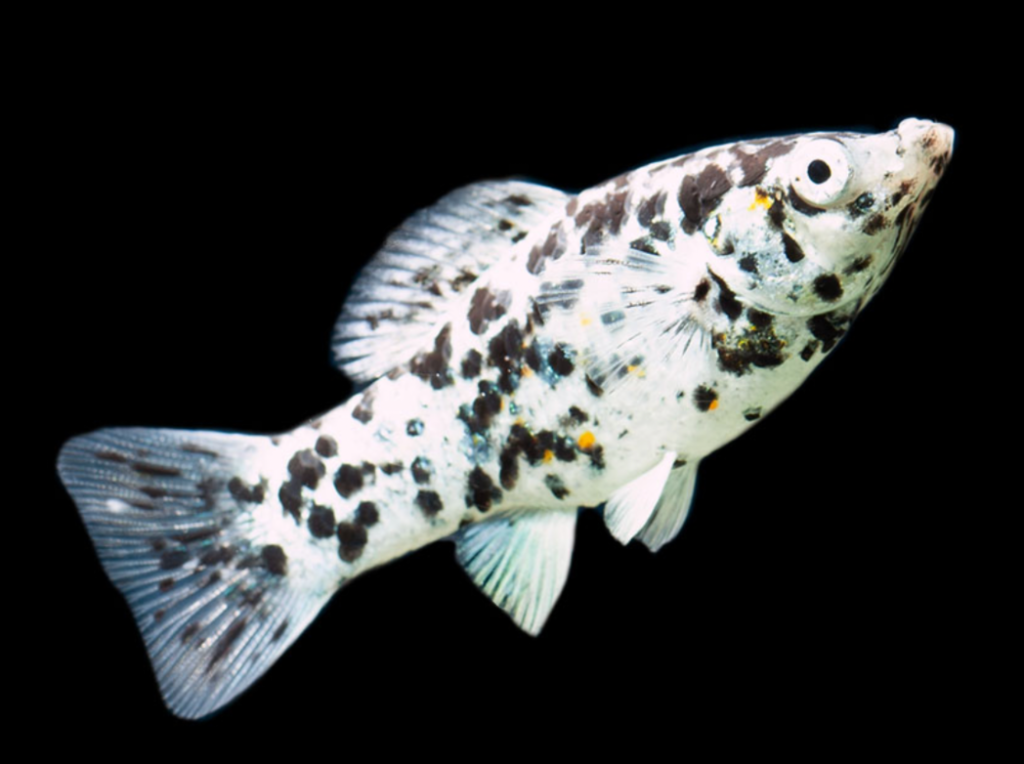
Dalmatian Molly’s scientific name is Poecilia sphenops, which is the same as the common Molly, although this morph is the result of breeding common mollies with sailfin mollies.
So, don’t let the shared scientific name confuse you. Dalmatian Molly is quite different from the common Molly found in the wild. They share the name because, like many other aquarium species, they originate from the natural wild mollies found in brackish waters.
Origin
To truly understand these ornamental molly hybrids, you must figure out where wild mollies naturally reside, and that’s in coastal waters. You’ll find common mollies in the Southeastern waters of the United States of America that flow through Mexico into Colombia.
These livebearer fish species in their natural habitat swim in slow-moving streams, such as ponds, lakes, or even brackish coastal waters.
For aquarium-bred mollies, however, you’ll find the cross-bred morphs with distinctive patterns like the Dalmatian Molly and sailfin subvariant. Because the parents are also a variety of common mollies, your Dalmatian Mollies won’t have a single black-and-white scale pattern.
Appearance and Color Pattern
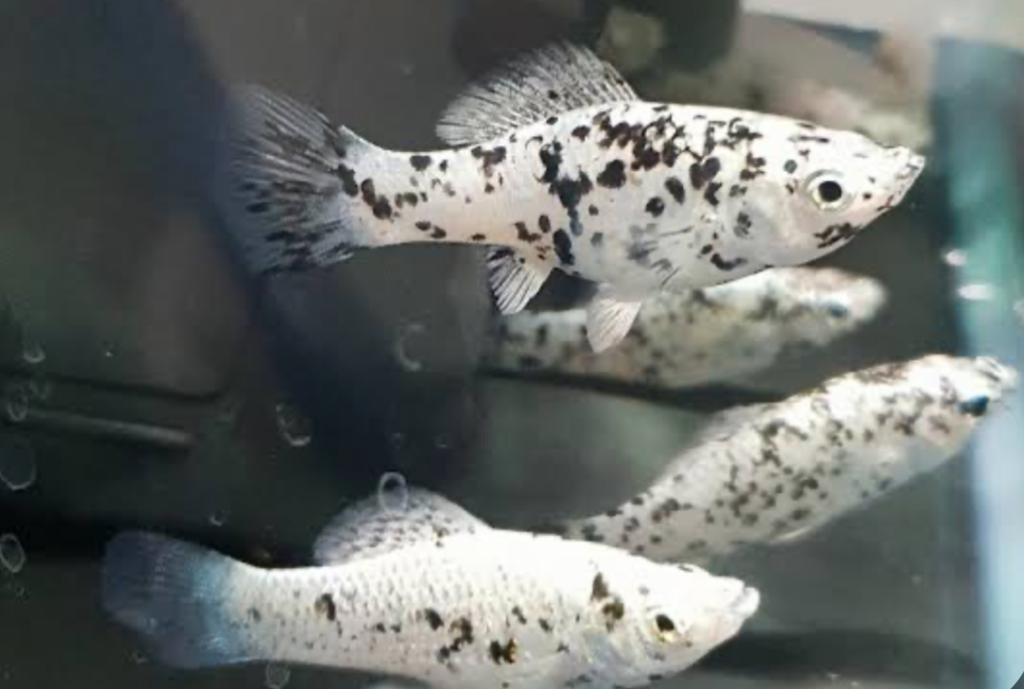
Identifying this ornamental spotted fish through its scale patterns can be tricky because there’s no singular pattern.
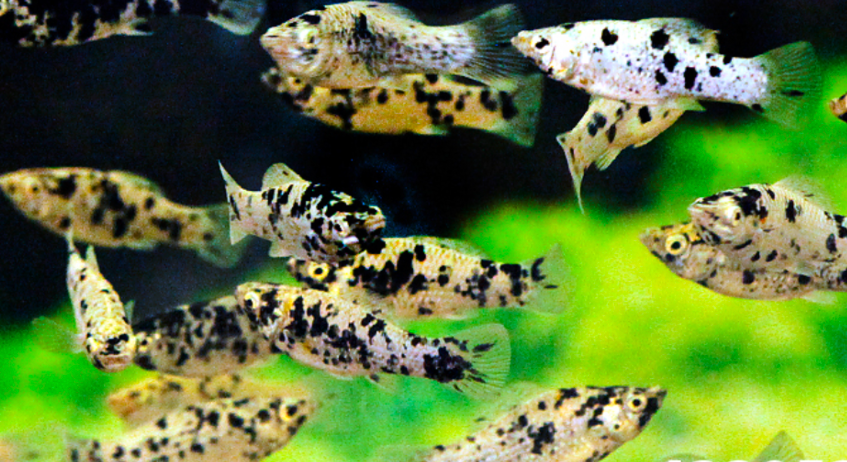
However, the black-and-white combination is constant despite differences in the pattern. And because no two Dalmatian Mollies have identical patterns, a group of them in your tank creates a visually stunning display of black and white.
Appearance
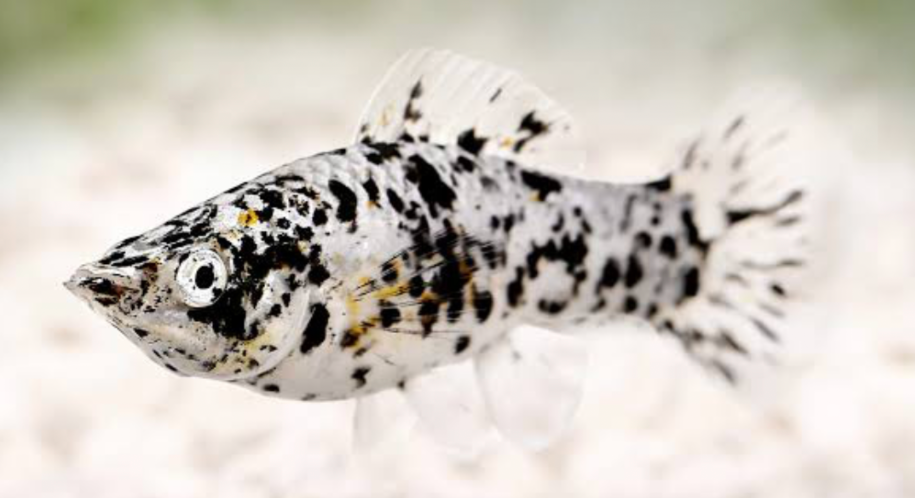
This black-and-white aquarium fish often has a slender, torpedo-like body that stretches between 2½and and 5 inches. The females are larger and rounder, with an average body size of 3½-5 inches, while the males are smaller, with a maximum body size of 3½ inches.
Most Dalmatian Mollies have standard fin shapes and sizes, but rare breeds have uniquely long fins, such as the sailfin and lyretail.
Color Pattern
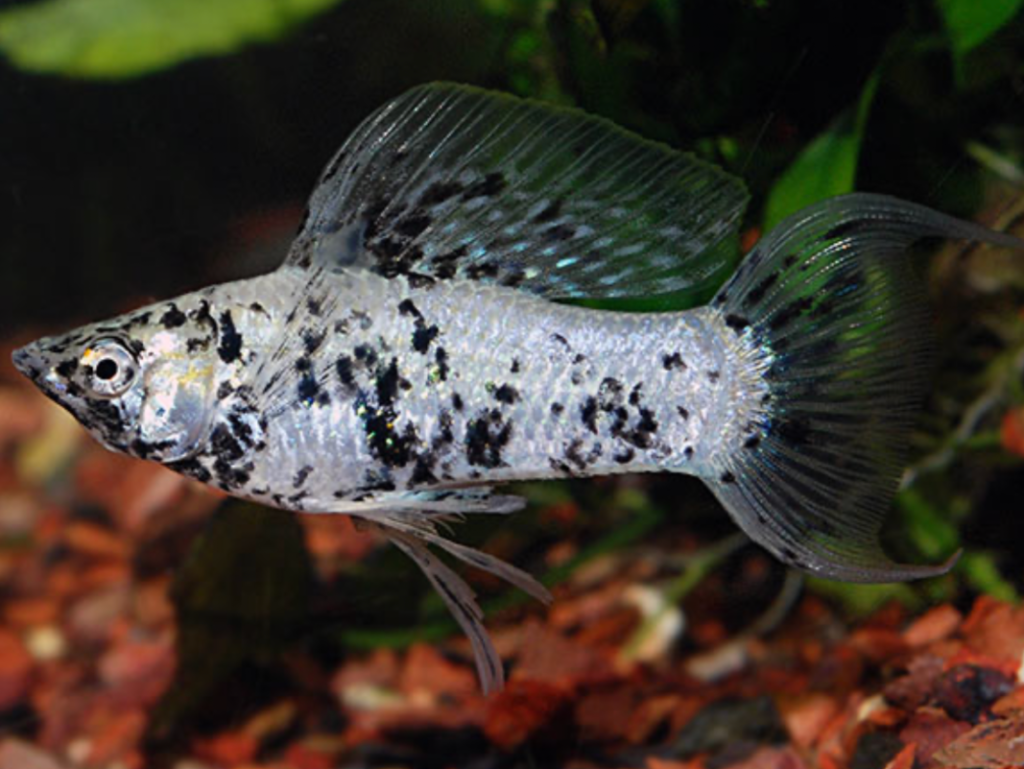
Now, let’s look at the different morphs of this patterned freshwater fish. Some common dalmatian molly patterns you’ll see include spots, specks, marbles, and splotches.
There’s no telling exactly what pattern you’ll get when you cross-breed your common molly for a Dalmatian morph, but whichever one appears would turn out beautiful.
One recurrent pattern you’ll notice, though, is your Dalmatian molly having a white head with large black and white eyes, although there are rare breeds with more black skin and less white spots.
Also, you’ll notice the interlocking black and white patterns on your pet’s fins with no specific design.
Tank Size and Setup
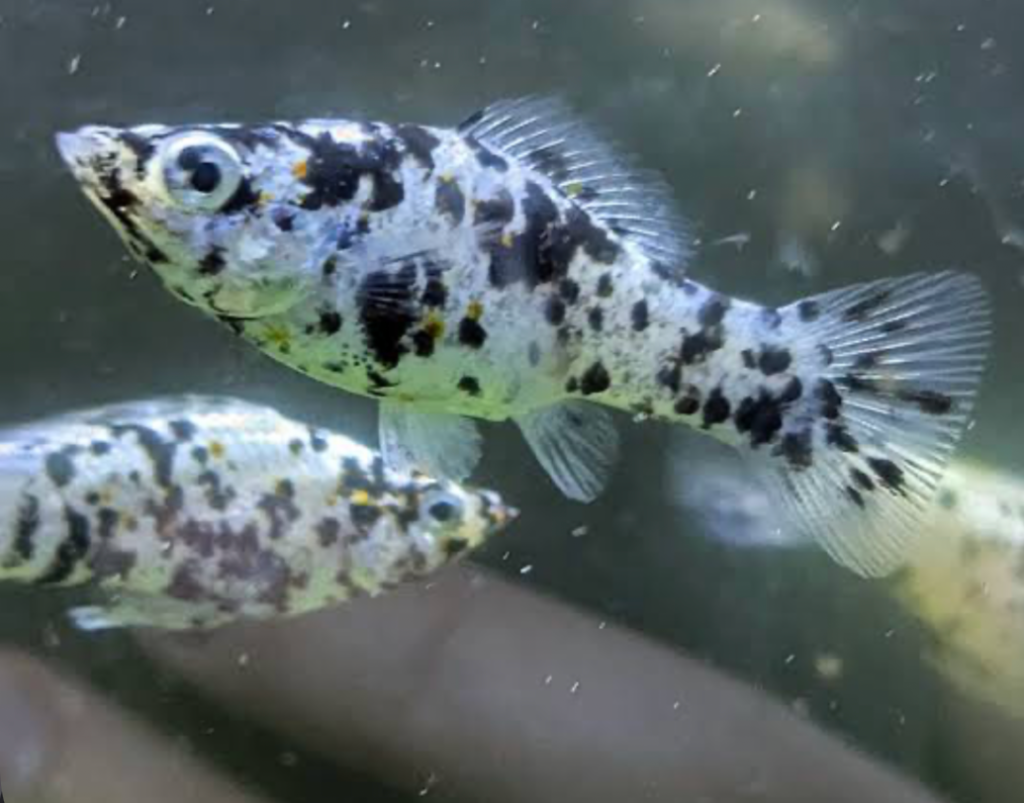
Due to the average body size of the male and female sexes of this pet, a suitable dalmatian molly tank would be about 20 – 30 gallons per small group.
But you must also consider how the aquascaping fits in this community aquarium layout without taking up so much space that there’s not enough swimming area for your pets.
Plants help reduce aggression.
Tank Size
Although a 20-gallon tank is suitable, it’s better to go bigger when you can. So, for your beginner fish tank setup, get a wide enclosure with about 30 gallons of water per small group of 4 Dalmatian mollies.
And if you add more similar-sized species into the tank, ensure you increase the enclosure’s capacity. Use a standard ratio of 5 gallons per new 3.5-inch fish as a metric for expanding the aquarium.
Setting up the Decor
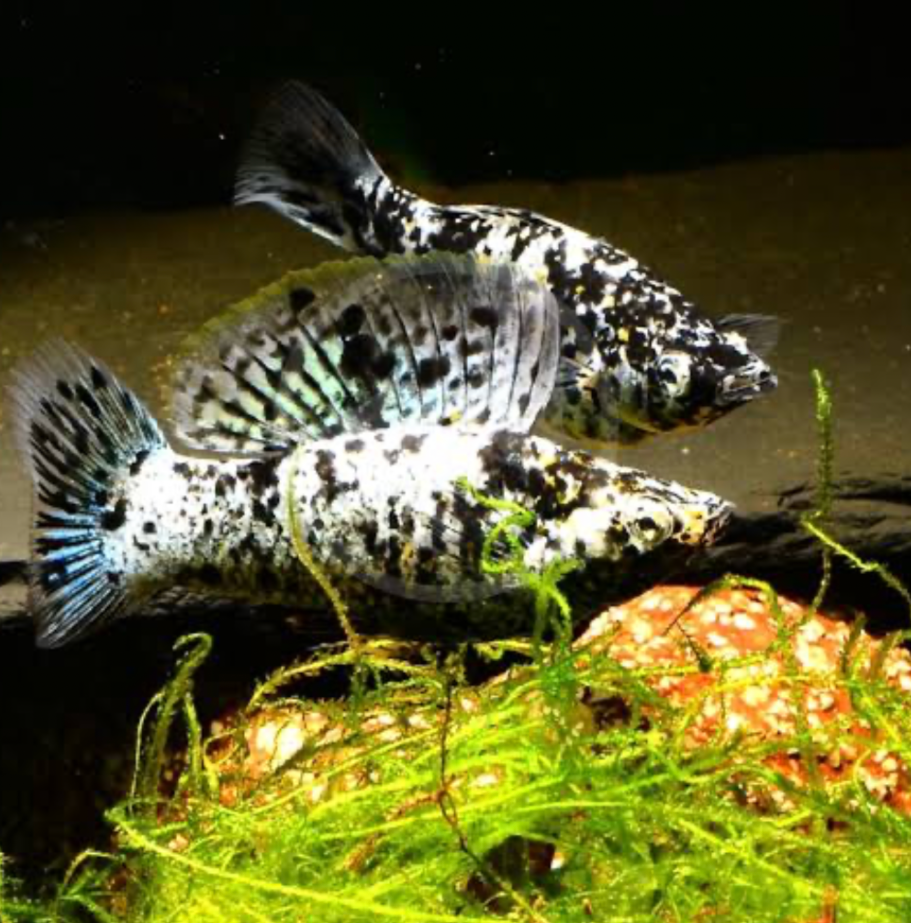
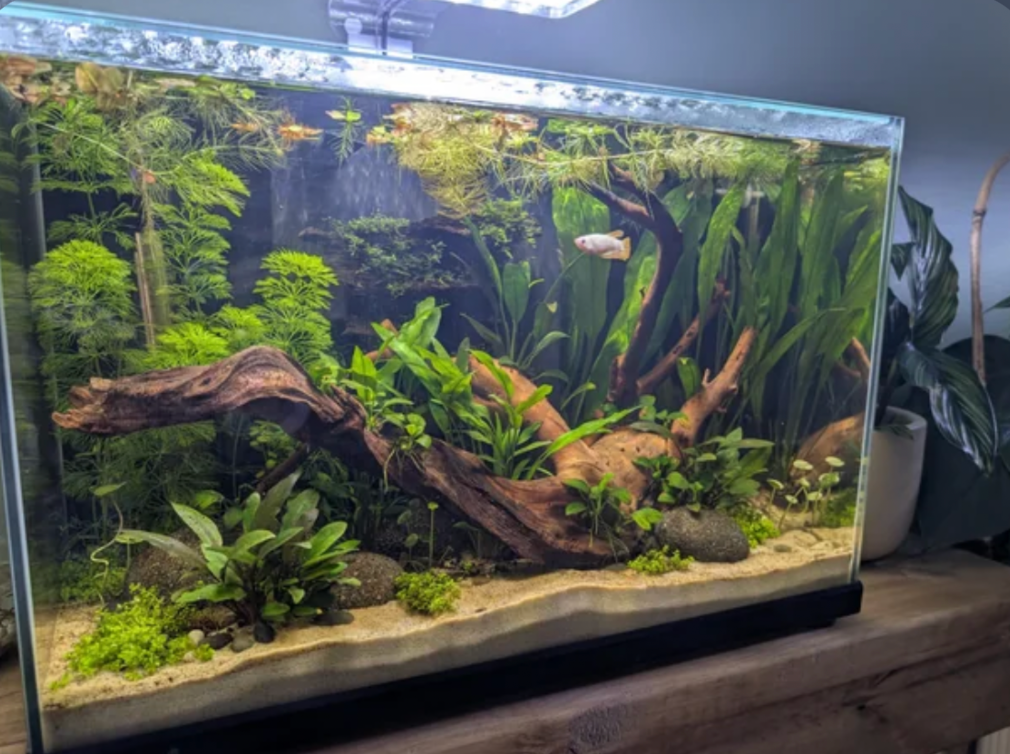
Once you set up your enclosure, you can fill it with decorations, from substrates and live plants to caves, rocks, driftwood, and other items that can transform a basic water tank into a Southeastern American brackish-water stream.
To make a planted livebearer tank, do the following:
Layer the tank with a dark and safe substrate such as fine sand, pebbles, or smooth gravel. It’ll highlight your pet’s vibrant two-toned colors.
Add enough fine, live plants to create a dense vegetation while still leaving an open swimming area. Use aquatic plants like Java Fern, Amazon Swords, Anubias, and Vallisneria as a base, while Hornworts and Wisteria are perfect cover for your top-swimming pets.
Finally, add some hardscaping with smooth rocks and driftwood to give the decor some character and help create natural boundaries for your pets.
Water Parameters
Dalmatian Molly water conditions are similar to those of common mollies. They thrive in hard, alkaline water, unlike freshwater fish that need soft, acidic water for survival.
Here’s how to create a comfortable environment for your brackish-tolerant aquarium fish:
- Temperature: 75 – 82°F
- pH Level: 7.5 – 8.5
- Hardness: 12 – 25dGH
Lighting Needs
Dalmatian Mollies aren’t an albino species, so they don’t suffer from light sensitivity, but that’s not an excuse to blind them with too much lighting.
You can provide an adjustable LED light for 8-10 hours of daily light. It’ll improve photosynthesis in the tank while accentuating the two-toned body patterns of this alkaline freshwater fish.
Filtration
Maintain a stable aquarium environment by using a high-quality filter to clean the water after feeding and to regulate water flow. Filters are necessary because spikes in water quality can lead to health issues, ranging from mild discomfort to severe illness.
Diet and Feeding
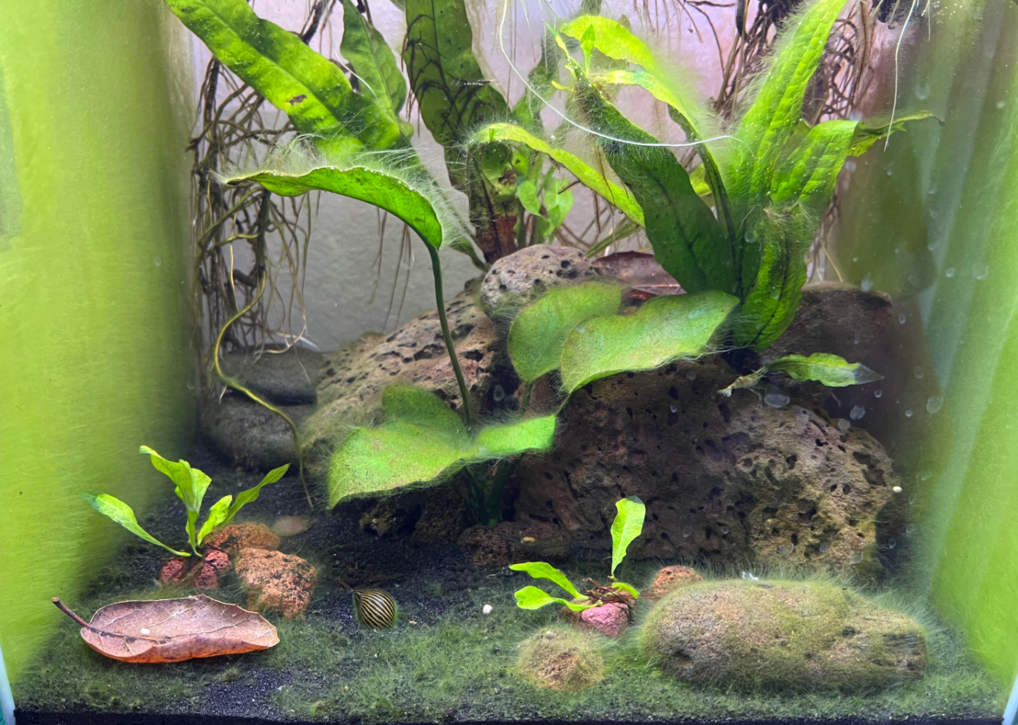
Dalmatian Mollies are everything eaters, meaning they’re omnivorous pets that eat plant and animal matter. And although your pets can manage on their own in planted tanks as algae-eating fish, it’s your duty to provide them with balanced fish nutrition.
Dietary Needs
As algae-grazers, the Dalmatian Molly diet is heavily plant-focused with live animal-based foods as supplements. Serve your pets high-quality commercial flakes or pellets made specifically for livebearers as staples.
Feed them algae wafers or natural growth from planted tanks and include vegetables such as blanched spinach, zucchini, cucumber, and peeled peas to improve their fiber intake.
Feeding Strategy
Make the vegetable diet for mollies part of their staple by feeding it to them about 3 times weekly, while protein foods should be treats. Served your Dalmatian, Molly, live foods such as brine shrimp a maximum of 2 times weekly.
Be careful, though, because as grazers, Dalmatian Mollies are prone to overeating. Serve only adult portions that they can finish within 2 minutes, and limit feeding to once or twice daily. The rules are different for Dalmatian Molly Fry, though, and you’ll learn why in a bit.
Tank Mates
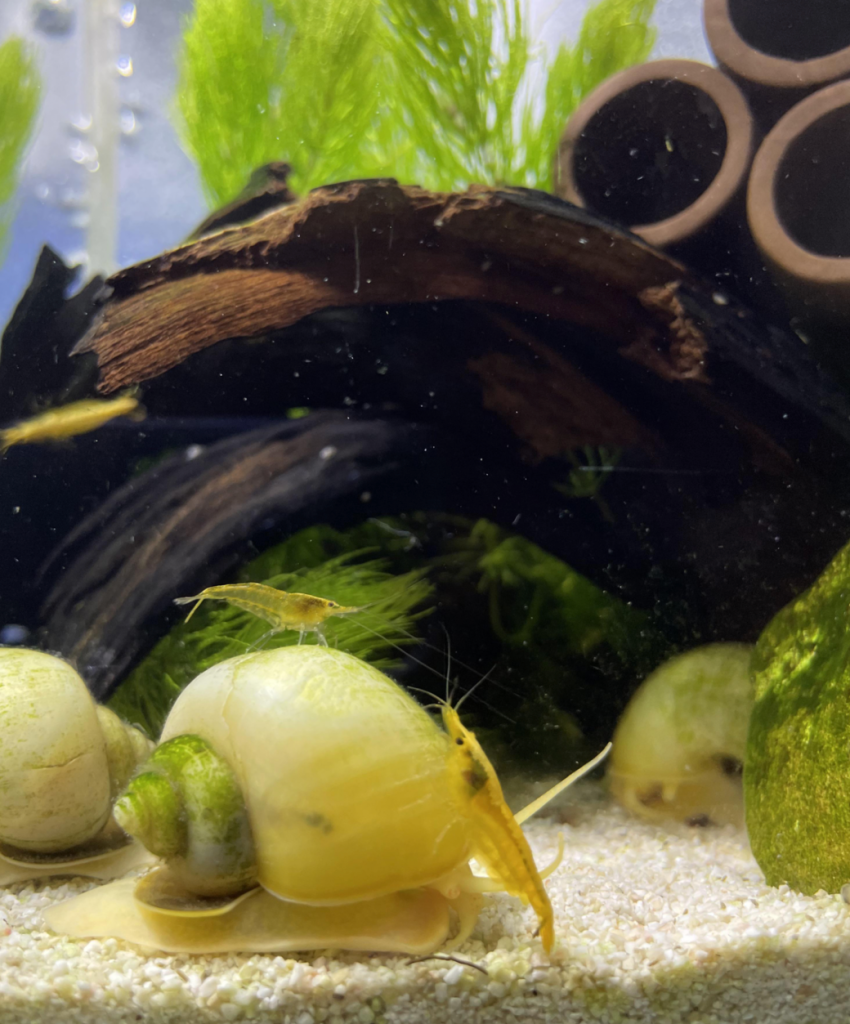
Dwarf and Honey Gouramis, Amano Shrimps, Platies, Guppies, Swordtails, Corydoras Catfish, Kuhli Loaches, Danios, Barbs, Tetras, and Apple Snails are some of the best dalmatian molly tank mates.
“What do they have in common?” and “Why do they qualify as compatible freshwater fish?”, you may wonder. Let’s look at them by group.
Other livebearers, such as Platies, Guppies, and Swordtails, have similar water requirements and are peaceful pets, while Gouramis are popular beginner aquarium companions because they are a calm species.
When you add bottom dwellers like Loaches and Catfish, you won’t have to worry about cleaning the algae at the bottom of the tank, since they’ll help keep that area clean.
With active schoolers like your Tetras, Barbs, and Danios, your livebearer community tank stays buzzing.
Finally, note that adding invertebrates like Shrimps and Snails to your Dalmatian Molly tank is a high-maintenance choice. You must monitor your pets daily to keep them from eating the tiny aquatic species.
In all that you do, avoid aggressive species such as Bettas and Cichlids that are notorious fin-nippers and predators. Goldfish are also incompatible because they have different water requirements, and slow-moving fish will become prey to your Dalmatian Mollies.
Breeding
If you want to reproduce this spotted species, here’s everything you need to know about breeding mollies in aquarium environments. Firstly, all mollies are livebearers, meaning they give birth to their young alive without undergoing egg spawning.
Before breeding, set up a separate Dalmatian Molly breeding tank for your pets. Maintain the same water conditions, but increase the tank’s vegetation to provide shelter and cover for your newborn fry.
Secondly, a single mating session can result in 20 to 100 fry being born at once or in batches. The female molly carries her young for 25-40 days before delivering. You’ll notice pregnant Dalmatian Mollies by their swollen belly around the anal fin.
After birthing their young, remove the female Dalmatian Molly from the breeding tank and take over raising the Molly fry.
You can convert your former breeding tank into a fry nursery tank for optimal results. Add a sponge filter to the tank to keep it clean, as Dalmatian molly juveniles are sensitive to waste and inconsistent water conditions. Change 10-15% of the water weekly to keep it pristine.
Dalmatian Molly Fry eats more food than adults because they’re in the developmental stage. They eat about 3-5 times daily for rapid, healthy growth. Observe them closely for the next couple of weeks until they hit maturity between the 3rd and 4th month of life.
Lifespan and Health
An average Dalmatian Molly lifespan is 3 to 5 years with the best care. Ensure you’re providing your pets with healthy aquarium care on all fronts, from their environment to the food they eat and their tankmates.
Invest in high-quality filters, airstones, and LED lighting to maintain stable tank conditions and avoid agitating your pets. Scroll up for details on caring for the Dalmatian Molly species so that you can enjoy having a long-lived freshwater fish in your aquarium community.
Conclusion
Are you ready to make Dalmatian Molly your community aquarium centerpiece? It’s a no-brainer choice if you’re looking to combine easy care with eye-catching patterns in a beginner aquarium fish.
Let’s go over the reasons why this colorful livebearer species deserves your attention as a first-time hobbyist.
- Dalmatian Mollies are omnivorous
- They thrive in hardy water conditions
- They are peaceful community mates
- Their black-and-white skin makes for beautiful tank displays.
So, would you give this spotted molly fish a chance to dazzle in your aquarium?