Skip to content
This detailed post teaches you everything you need to know about maintaining a Sailfin Molly fish in your community tank, including fin care, dietary needs, breeding guidelines, and compatible tank mates.
Sailfin Molly Care Guide: Large Elegant Molly for Community Tanks
You may know the common Molly fish species, but not the unique, ornamental Sailfin Molly fish, and that’s alright.
Like other common Mollies, this variant is a loveable livebearer. However, it has additional care needs due to its distinctive, larger dorsal fin.
Introduce sailfin mollies as larger ornamental livebearers.
Beloved ornamental molly species are famous aquarium dwellers for their fancy appearance, vibrant colors, and intricate scale patterns. But keeping this centerpiece-worthy variant in your tank requires more than basic attention.
In this guide, you’ll learn the essentials of sailfin molly care necessary for keeping this large, elegant variant in your home tank.
Author’s Note: Check out our post on the 12 Types of Mollies That Make Perfect Beginner Fish for an in-depth overview of the wide variety within this species!
Sailfin Molly Scientific Name, Origin, and Classification (Poecilia latipinna)
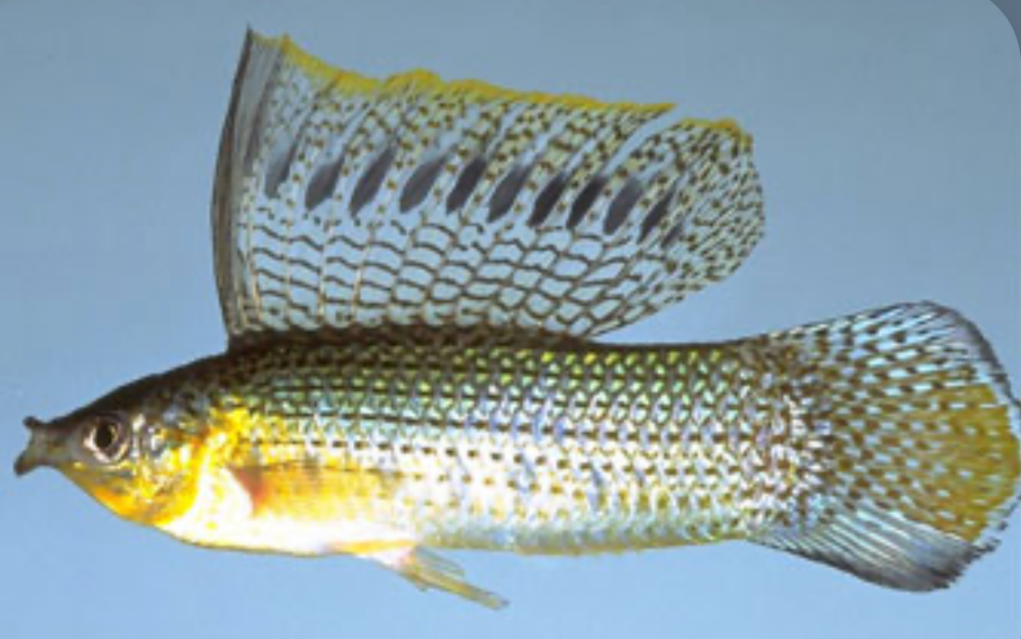
Sailfin molly fish belong to the Poeciliidae family, which has its natural range in the southeastern United States and Mexican coastal waters. However, its genus is Poecilia, so its scientific name is Poecilia latipinna or P. latipinna.
As native to coastal Southeastern waters, Sailfin Mollies tolerate brackish and freshwater environments, though they prefer brackish water. In their natural habitat, you’d often find Sailfin mollies on the edge of oceans in smaller bodies like estuaries, deltas, and lagoons.
Due to the ornamental fish trade, Sailfin Mollies have established populations in countries like Iraq and Iran, but their presence threatens native species there, such as killifish and desert pupfish.
So, keeping a Sailfin Molly in your aquarium is about conserving other species and goes beyond just satisfying a hobby. But if its appearance is your only reason for gaining interest in this species, that’s also fine. These fish are beautiful!
What distinguishes the Sailfin variant from other ornamental molly species, like the balloon and lyretail mollies, is its large dorsal fin.
Appearance and Size
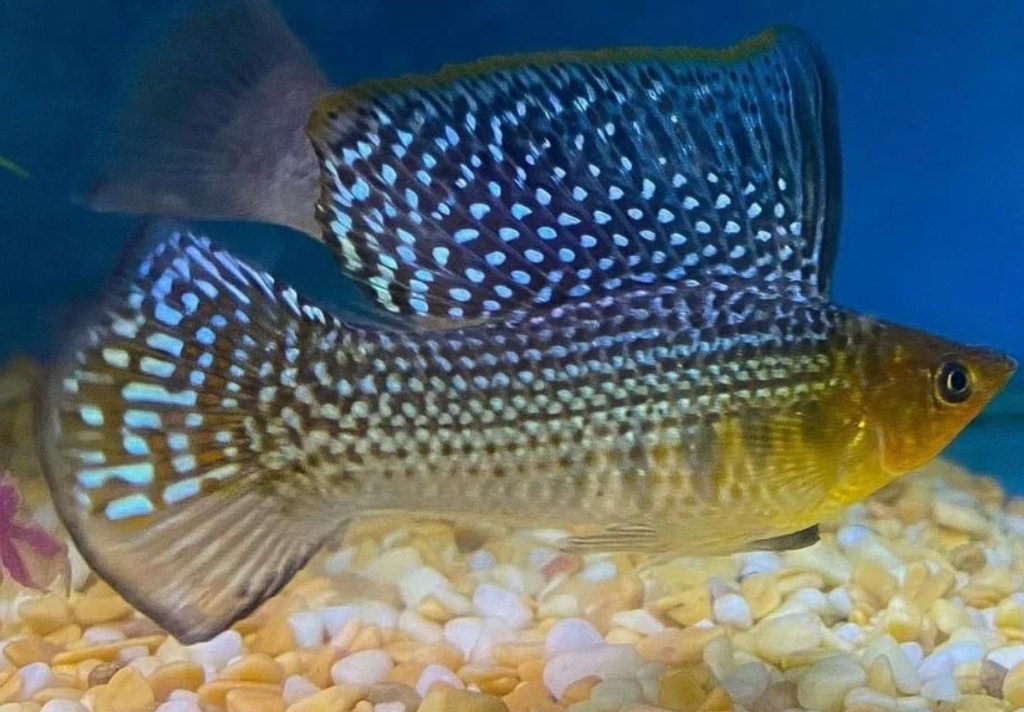
A Sailfin Molly’s most distinguishing feature lies in its appearance. Besides the distinctive body structure, this large molly fish also has vibrant color morphs that stand out in any aquascape.
Size and Structure
Sailfins are one of the largest Molly species you’ll ever find as they grow up to 6 inches in maturity.
You can use a sailfin Molly’s size to determine its gender. Females are typically larger, growing to 5-6 inches, while males peak at 3.5 inches. Meanwhile, aquarium-bred Sailfin Mollies rarely reach their full size due to limited space.
Sailfin Mollies also have an unusually longer body with small heads, short tailfins, and the sail-like dorsal fin, but that’s not the only attractive thing about a sailfin molly’s appearance.
Coloration
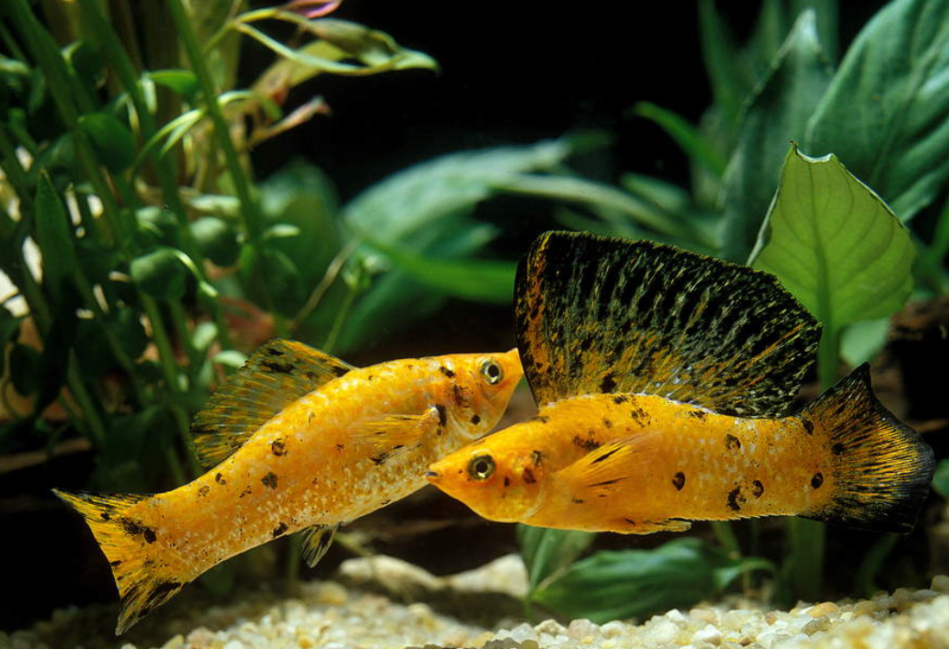
Sailfin Mollies, like wild mollies, have diverse color morphs. Natural Sailfin Mollies have a grey-like color, but through selective breeding, there are so many more hues.
Some male Sailfin Mollies have a green-blue color with striking markings that form striped spots on their scales, while others range from pale albino tints to speckled patterns and deep black monochrome shades.
Although many beginners and even some experts mistake the Sailfin Molly with the Yucatan Molly variant, they’re not the same. The easiest way to distinguish them is by the prominent sail-like caudal fin in P. latipinna and the knowledge that the Yucatan species are larger.
Tank Size and Setup
To manage your Sailfin Molly’s large dorsal fin and elongate body, the tank requirements in terms of structure and aquascape are different from those of a common molly tank setup.
Tank Size
As a rule of thumb, your sailfin molly tank should be larger than normal, so if the regular wild Molly thrives in a 20 – 30 gallon tank per small group of about 5 fish, you’ll need double this capacity to comfortably house your Sailfin.
The minimum gallonage for active, Sailfin Mollies engaged in horizontal swimming is a wide enclosure of 40-50 gallons of water per small group. However, long, wide tanks better accommodate their body structure and swimming pattern, unlike long tanks
Setting up the Aquascape
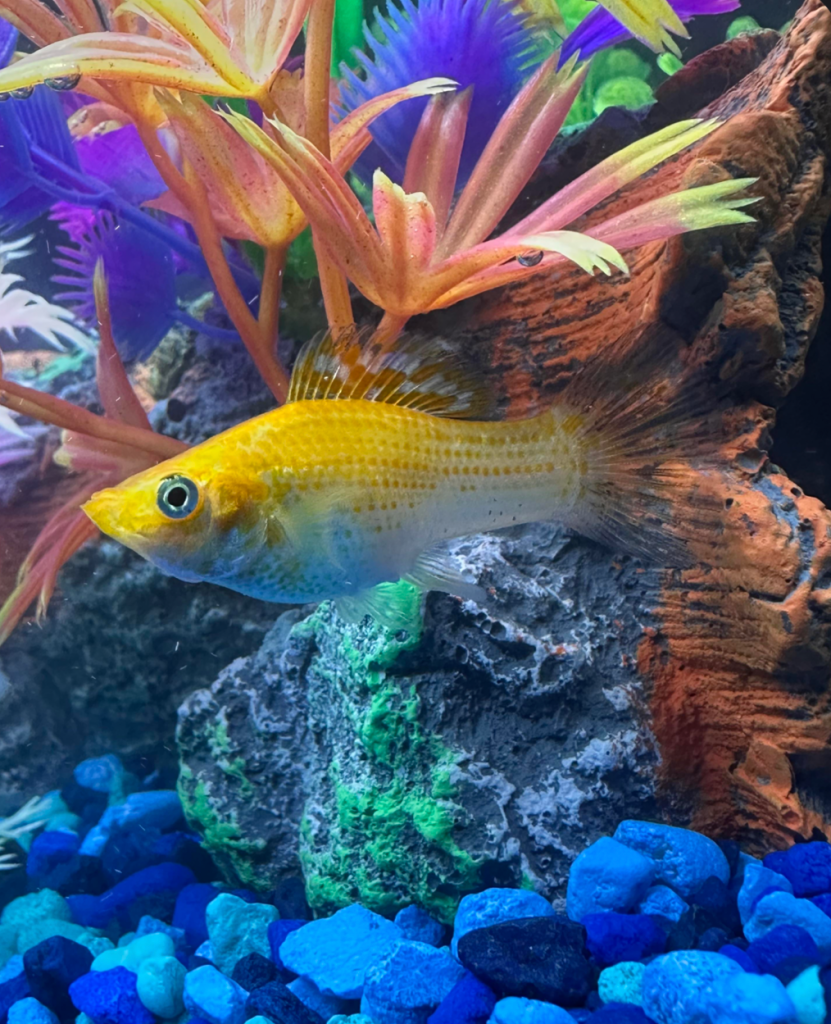
Once you choose a suitable enclosure, you must also customize the interior of your aquarium for large mollies.
Start by layering the tank’s floor with smooth substrates such as fine sand, smooth gravel, or rounded pebbles that’ll be gentle on their skin. To keep the water hard with minerals, you can add crushed coral and limestone, but this is optional.
Add live aquatic plants such as hornwort, Java Fern, Java Moss, and Anacharis to your aquascape. They’ll provide shelter and serve as alternative food sources for your Sailfin Molly while beautifying the aquascape and reducing nitrate levels.
Arrange these plants so that a large open area remains for swimming. You can then include other aesthetically pleasing and functional aquascaping decor, such as driftwood, rocks, and caves, as decent hiding spots.
Author’s Note: Check out our post Best LED Aquarium Lighting Units for Your Gallon Tank Capacity for an in-depth review of the best options for lighting!
If you skipped crushed coral and limestone in your substrate, you can add coral reefs (optionally, if homing in brackish/salt water environments) to your rockwork and hardscaping to provide more minerals to the aquarium water. More on water parameters up next!
Water Parameters
Sailfin Mollies, like other variants, are a hard water fish that thrive in alkaline, mineral-rich waters like the brackish-freshwater mix they have in their natural habitat. To match this natural molly water parameters, ensure you stabilize the following conditions within your aquarium:
- Temperature: 75 – 82°F
- pH Level: 7.5 – 8.5
- Hardness: 12 – 25 dGH
- Salinity: 1.002 – 1.008 ppt. (Optional)
Optionally, add aquarium salt to maintain salinity and make the water brackish. This however is not needed as they are perfectly adapted to live happily in freshwater setups.
Filtration Needs
Use a strong filter to keep your sailfin molly water clean, as this variant is highly sensitive to poor conditions and fluctuations. Make weekly changes of about 10-20% in medium-sized tanks of less than 50 gallons, and 30-40% bi-weekly in larger tanks of more than 50 gallons.
It’s best to use a hang-on-back or single-canister filter to avoid stressing your pets during water cleaning. Filtration will prevent nitrate build-up and ensure your pet’s environment is always safe, even after feeding sessions.
Diet
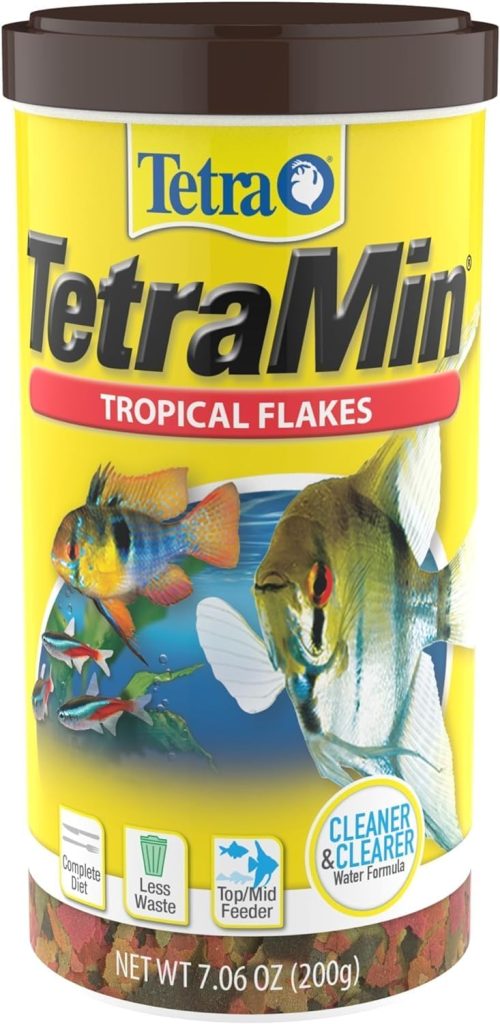
TetraMin Tropical Flake Food (Left)
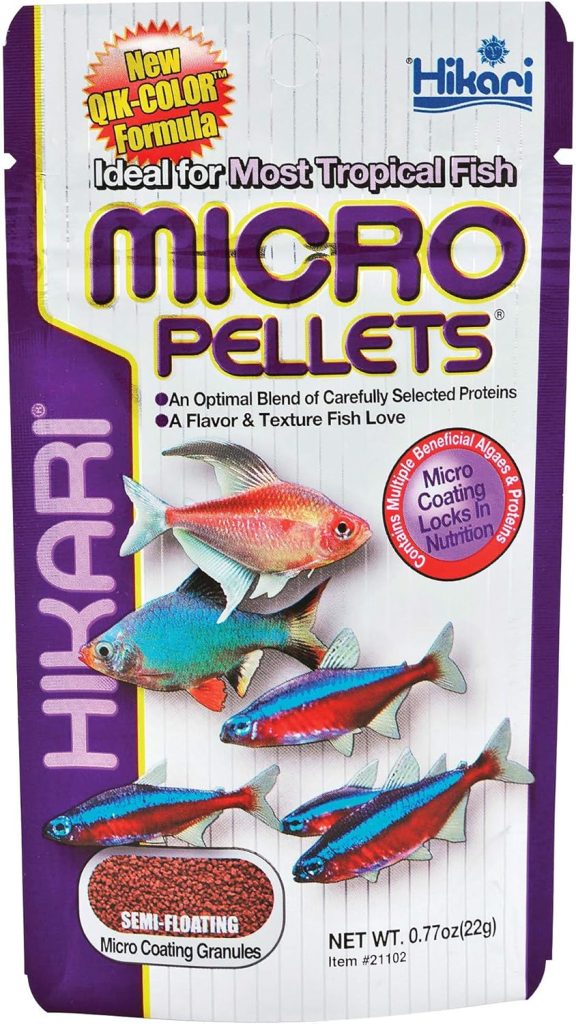
Tropical Semi-Floating Micro Pellets (Right)
Sailfin Molly is an omnivorous aquarium fish species that prefers vegetable foods, specifically algae. So, to ensure they always have healthy and balanced meals, curate a sailfin molly diet rich in algae and plant materials as staples, while animal sources would be supplementary.
Serve your Sailfin Molly with high-quality commercial pellets or flakes, algae wafers, blanched vegetables such as zucchini, spirulina, or peeled peas daily. Supplement their vegetable intake with live or frozen foods such as aquatic invertebrates like mosquito larvae every other day.
Author’s Note: For more on feeding your aquatic pets check out The Ultimate Guide to Fish Food: Pros and Cons & Best Choices!
Recommended Feeding Schedule
Because Sailfin Mollies are algae-grazers, you must limit their access to algae growth in the tank to avoid overfeeding. Use these recommended Sailfin molly fish feeding tips to achieve success.
- Feed your pets twice daily
- Serve portions they can finish in under 2 minutes
- Remove uneaten food after feeding sessions.
- Scrape off excess algae from the walls and aquascape.
You can also add other algae-eating species to large communities to help your Sailfin Mollies clean the planted tank.
Tank Mates
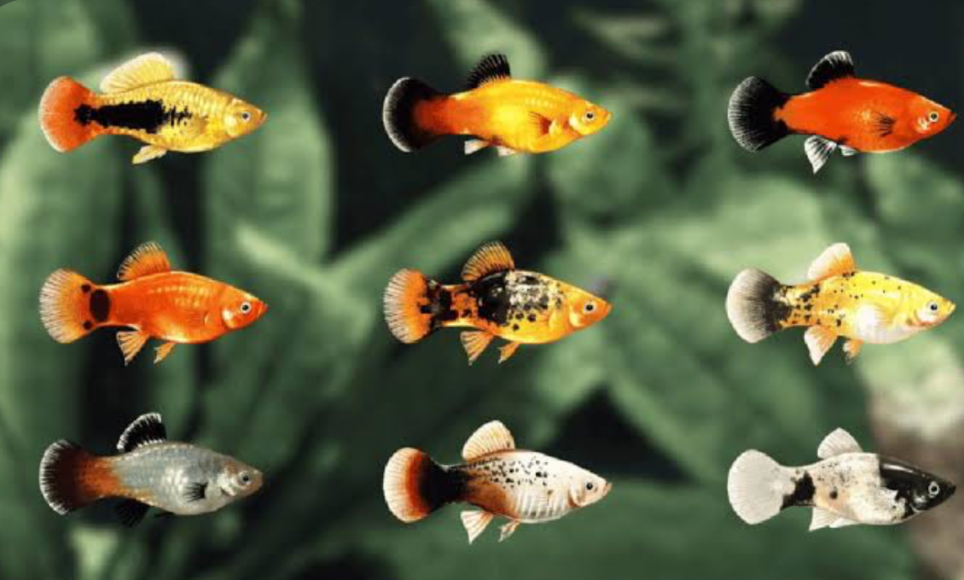
Although this species is a friendly pet, you must carefully select your sailfin molly tankmates to create a thriving, harmonious aquarium community. As a species, Sailfin Mollies thrive in groups of four with a ratio of one male to three females.
To diversify your community, you can add other peaceful aquarium fish with similar physical size, water environment requirements, and feeding habits, such as Platies, Swordtails, Corydoras, and Gouramis, which are also livebearers.
Avoid fin-nipping species as they’re not compatible with molly community fish due to their aggressive tendency to nip at your pet’s large dorsal fin.
Breeding
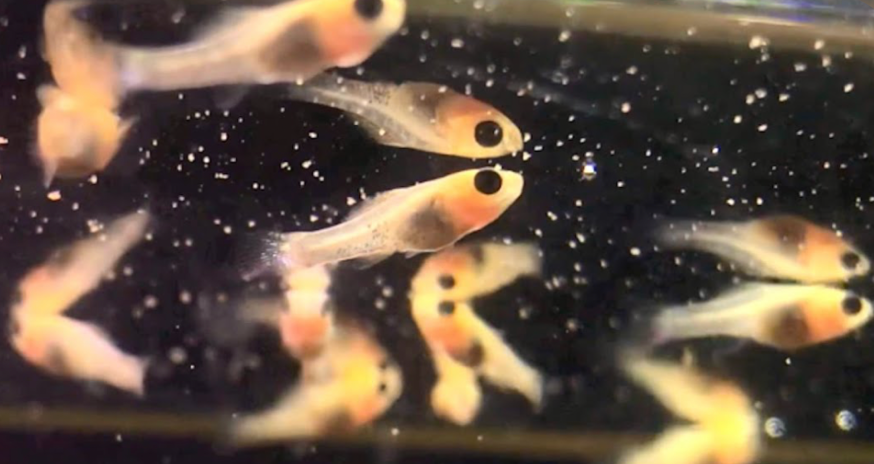
As a livebearing species, reproducing Sailfin Molly is easy because you skip the egg stage and go straight to Molly fry care after delivery. But that also means this species is sensitive and at risk of natal mortality if you make a mistake.
This guide contains detailed livebearer fish breeding tips, starting with the tank setup, sexing and selection, conditioning, fry care, and reintroduction into the main tank.
Let’s get into the nitty-gritty of sailfin molly breeding:
Setting up the Breeding Tank
You need a separate tank for breeding and raising your juvenile Sailfin Molly so that you can condition the environment for reproduction. Most of the breeding tank requirements are similar to regular living conditions, with a few additions.
Increase live plants within the aquascape if you don’t have any, because they’ll serve as hiding spots for your newborn Sailfin Mollies. Switch the canister filters for a gentler sponge filter that won’t suck in your tiny Sailfin Molly fry.
Sexing and Selection
Remember that you can distinguish your Sailfin Molly’s sex by their appearance. Here’s where the skill comes in handy.
Generally, females are larger and have duller colors than males. However, you can also identify the male Sailfin Molly by its sharp and large anal fin, also called a gonopodium, which is different from the female’s round anal fin.
Pair at least one male with two or three females to spread its aggression and reduce the risk of territoriality.
Conditioning
Improve your pet’s diet in the weeks before reproduction. Although they’re natural algae-grazers, they’ll need more protein to strengthen their muscles and prepare them for delivery. Make the water warmer by increasing the temperature to the highest range, 82°F.
Birth and Fry Care
After fertilization, the female Sailfin Molly will carry her young for about 3 – 4 weeks, during which her belly will grow larger. You’ll notice that the spot around her anal fin becomes darker and gravid.
Once she completes her gestation period, she’ll give birth to live fry in large batches of 20-100.
Within the first week of their life, the young Sailfin Molly fry will already be free-swimming but vulnerable. Remove the parents from the breeding tank, or move the young fry to a breeding nursery, to prevent them from eating their young.
Feed the young fry infusoria for the first few days, then add high-protein fry foods like crushed flakes, crushed baby brine shrimps, and other special fry foods at least 2-3 times daily. They eat more than adults because they’re in the development stage.
Reintroduction
Within four to six weeks, the juvenile fry would mature and be ready to rejoin the main tank. Quarantine them in a separate plastic bag filled with brackish water, and gently acclimate them before reintroducing your Sailfin Molly into the main tank. Doing this will reduce the risk of diseases and sickness.
Lifespan
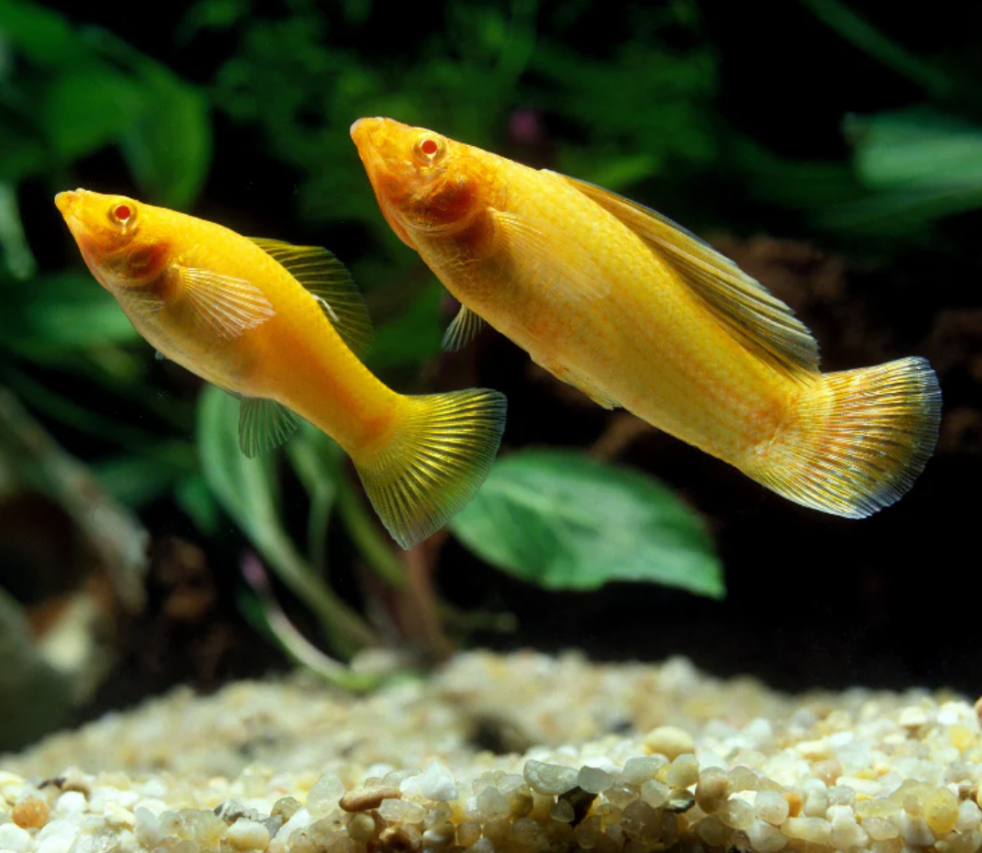
Typical sailfin molly lifespan expectations span between 3 and 5 years with the best possible care in an aquarium, although they may live longer in the wild.
But when you’re keeping this species outside its natural habitat, its lifespan then depends on the quality of livebearer fish care that you provide. Scroll up for details on providing optimal care for your Sailfin Molly, including recommended tank setup, diet, tank mates, and water conditions.
Note that freshwater fish longevity will improve in larger tanks because they allow for better growth and development and reduce aggression toward tank mates.
Conclusion
If you want a unique ornamental molly fish as the centerpiece for your beginner aquarium, then consider the Sailfin variety. It’s an ideal choice for a community setup due to its distinctive large and vibrant dorsal fin.
You can follow the rules and recommendations in this sailfin molly guide as a beginner, and rest assured that you’ll achieve success even with reproducing this species.
Most beginners will shy away from keeping a large molly fish like the Sailfin, but they don’t know what they’re missing. The beauty alone is enough motivation to add this pet to your community tank, but when you factor in the ease of care, it becomes a no-brainer.