Skip to content
Green Tiger Barb is a unique twist to a classic beginner-friendly aquarium fish species that adds a vibrant and aesthetically pleasing vibe with the same basic barb care needs detailed throughout this post!
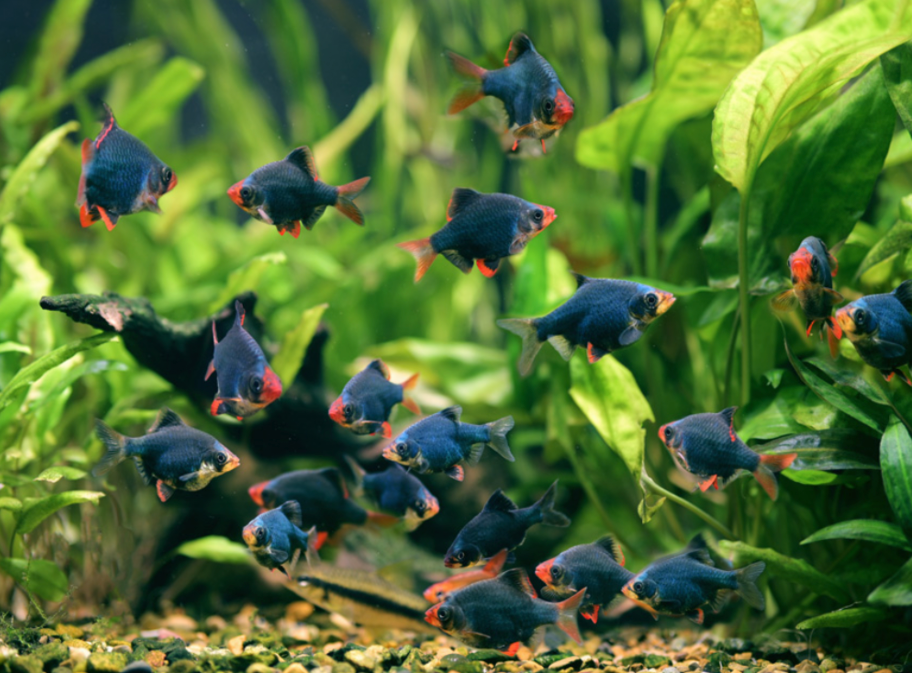
Green Tiger Barb: Metallic Shine on a Classic
As a budding aquarium hobbyist, you’ll learn that barbs are one of the easiest species to keep as pets for beginners. When you do, you’ll discover a whole new world of barb varieties, including the tiger barb variant.
Tiger Barbs (Puntigrus tetrazona) are a Barb variant native to the Eastern Indonesian waters, particularly the Sumatra River region. They’re known for being average-sized with vibrant and unique colorations, as you’ll see in the genetically modified metallic tiger barb variants like the Green, Gold, and Albino species.
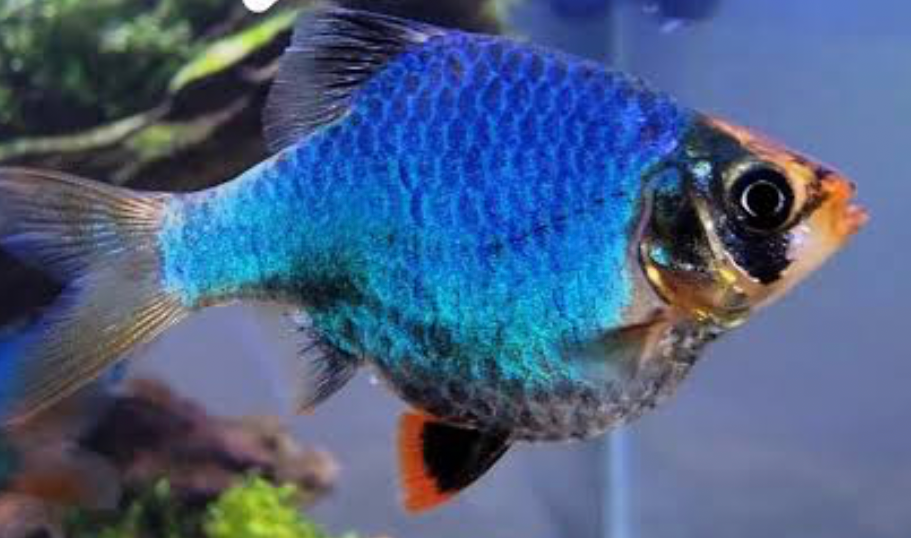
This green barb fish stands out for its shiny metallic sheen despite having the same behavior as typical tiger barbs.
If you’re looking for a visual upgrade in your aquarium but want the same husbandry and schooling needs of easygoing tiger barbs, then the Green Tiger Barb is for you.
In this guide, you’ll learn the basics of green tiger barb care from tank setup to companion selection, behavior management, healthcare, and breeding techniques.
Author’s Note: Check out our post 13 Types of Barbs That Are Perfect for Colorful Beginner Nano Tanks which includes details on even more barbs to choose from!
Identification & Color Notes
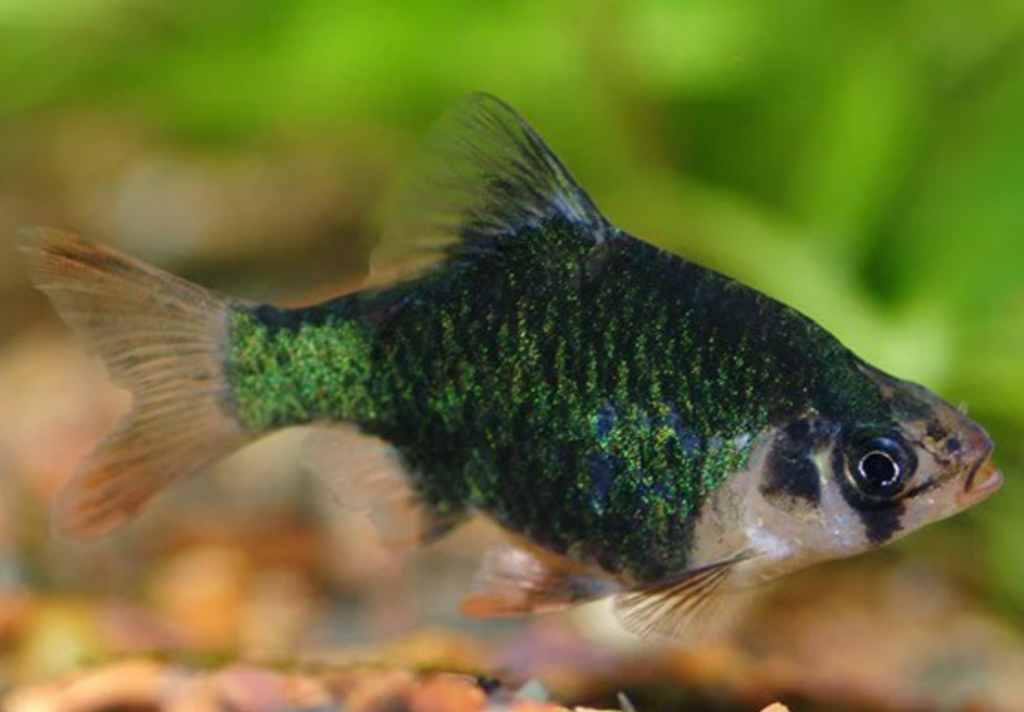
Before we get to the essentials of this tiger barb variant’s care, let’s start with easy ways to identify green tiger barb species anywhere. This identification is important for distinguishing between your desired pet and other similar-looking fish species.
Identifying Green Tiger Barbs
You can identify a green tiger barb through its appearance and unique characteristics. Like other tiger barbs, this variant grows between 2.8 and 3.9 inches in length and is about 1.2 and 1.6 inches tall, which makes it an average-sized fish.
With extra care and attention, however, your green tiger barb can add an extra 2.5 inches to its maturity length.
Color Notes
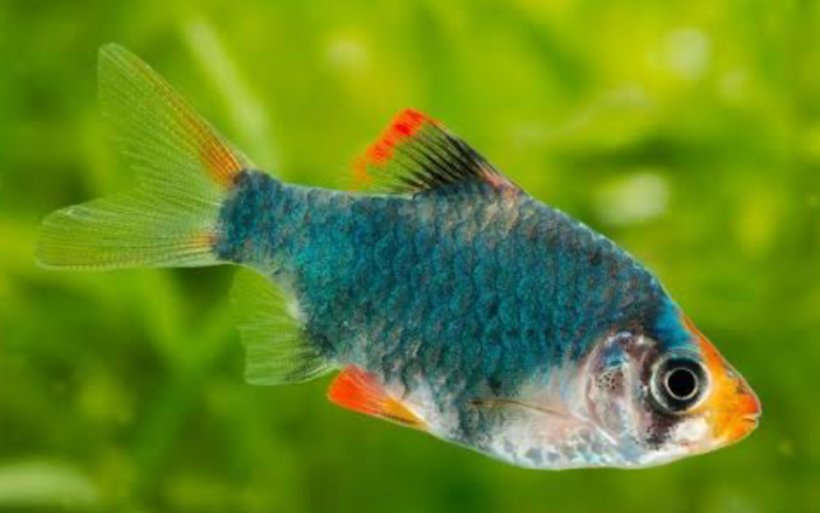
Because it has a similar size and shape to other barbs, the green barb’s colors are the true distinguishing features. Your green tiger barb would have emerald/green metallic scales with unique black striping like a tiger across its body.
Sometimes the green sheen on this striped barb fish appears so dark that some people think it’s a black-colored version. That’s why it’s best to keep your green tiger barb in a mature tank with balanced lighting and a contrasting background that highlights its metallic sheen.
Tank & Grouping
When preparing an aquarium for your Green Tiger Barb, you must consider its personality, health needs, and physical characteristics.
Ideal Tank for Green Tiger Barbs
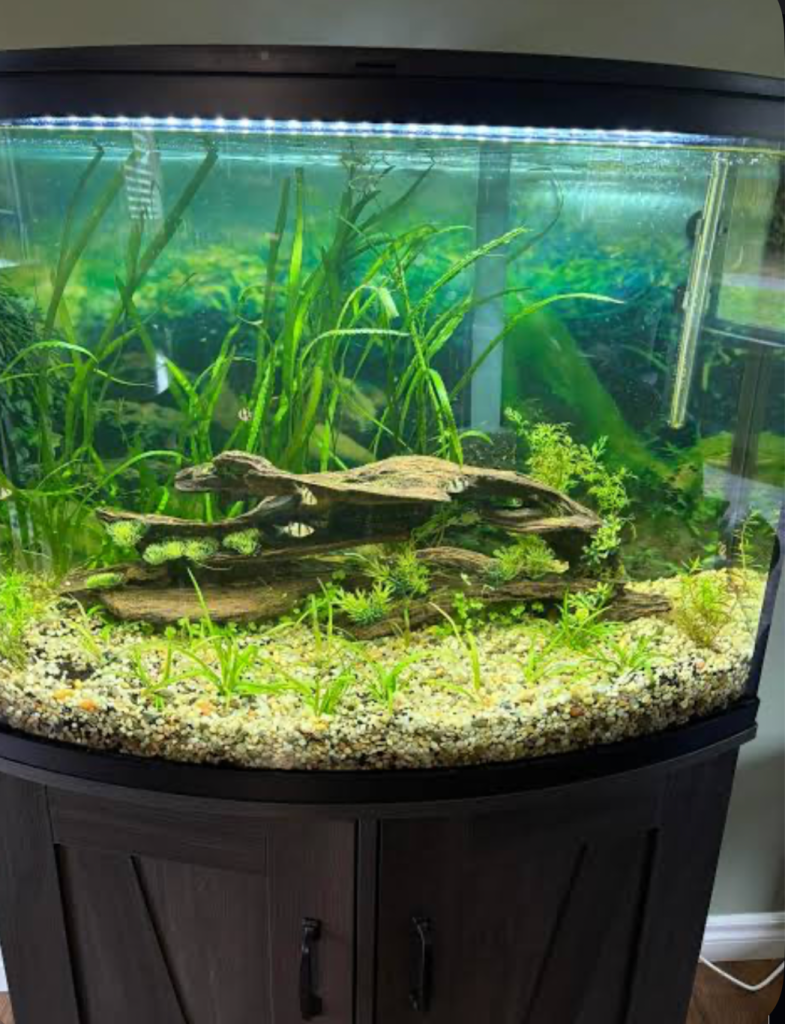
An ideal green tiger barb tank size is a minimum of 30 gallons per schooling group of six. You can have a tall or a wide tank, but wider rectangular tanks are better at accommodating your pet’s natural body shape.
Install adjustable LED lighting inside the tank to highlight the metallic sheen and boost photosynthesis in live plants. Designing a planted tank with soft but dense vegetation, including moss, Java Fern, and Amazon Sword, creates an environment that resembles the Barb’s natural habitat.
However, leave enough space in the center for swimming and interaction because Green Tiger Barbs are an active shoaling species.
Author’s Note: Check out our post Best LED Aquarium Lighting Units for Your Gallon Tank Capacity for an in-depth review of the best options for lighting!
Grouping Green Tiger Barbs
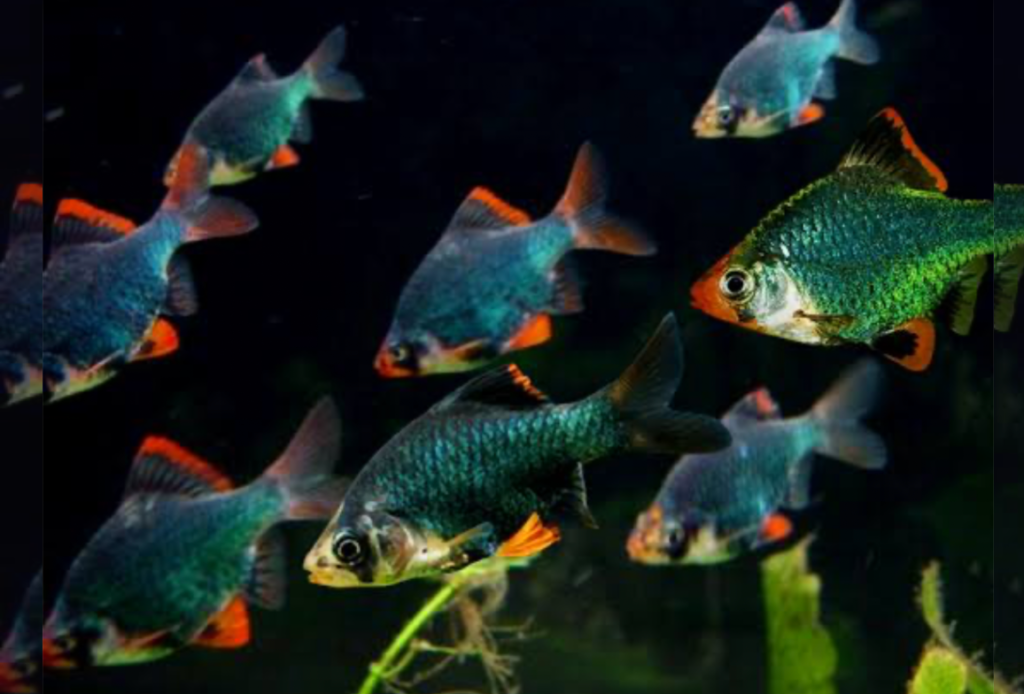
An average of six fish per aquarium is a proper barb group size to encourage activity without risking territoriality. That’s also why you must have a spacious tank of at least 30 gallons to fit these mid-level swimmers.
You must also be careful not to group green tiger barb fish with aggressive species or other voracious eaters because they’re veracious eaters.
Before looking at recommendations for compatible tank mates in a community aquarium, let’s fill your green tiger barb tank with water and feed them properly.
Water & Diet
You must first understand that Green Tiger Barbs thrive in soft and slightly acidic water conditions.
Water Conditions
To maintain stable water parameters, set the following levels and use the appropriate equipment to monitor them daily.
Keep the water temperature between 72–80°F with a pH level of 6.0 – 7.5, and a general hardness of 4 – 12 dGH.
Stabilizing your green tiger barb’s water conditions is one part, while maintaining its quality is the other. Schedule water changes of about 25-50% weekly and monthly, depending on your tank size. Smaller water change cycles per week work for small and medium tanks, while monthly changes are better for larger aquariums.
Dietary Needs

Freeze-Dried Tetra BloodWorms
Because of their unique green and black metallic scales, Green Tiger Barbs need to feed for color enhancement alongside their growth and development.
They’ll eat regular omnivorous foods like other barbs, but need a healthy mix of plant-based and protein-rich food sources with color-boosting properties.
Give your Green Tiger Barbs high-quality commercial foods, such as tropical flakes and pellets, as daily staples, but watch portions. Serve quantities they can finish within 2 minutes to manage their greed.
Author’s Note: For more on feeding your aquatic pets check out The Ultimate Guide to Fish Food: Pros and Cons & Best Choices!
Also, supplement the staple diet with live and frozen treats like brine shrimp, bloodworms, and daphnia every other day of the week.
Blanch their vegetables and peel the peas before feeding your pets, and immediately remove any uneaten portions after each session. If not, your Green Tiger Barbs will overeat and get sick.
Behavior & Compatibility
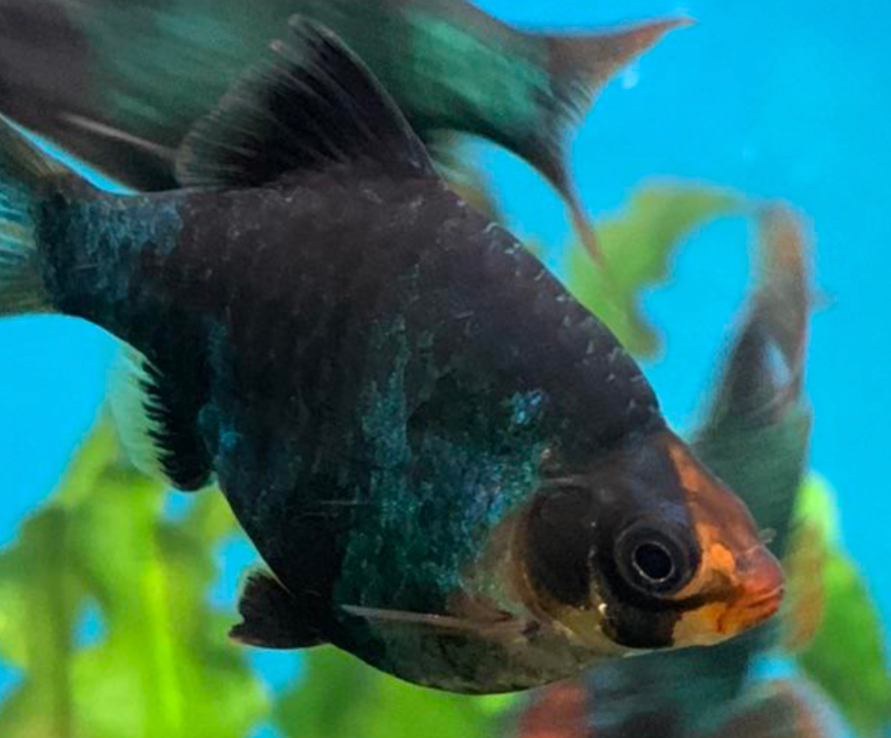
Greedy feeding and active swimming aren’t the only identifiable traits of this content Barb species. Even though they’re naturally calm, they can get aggressive under terrible conditions. So, watch out for abnormal behavior by curating a community with compatible Barb tank mates.
Green Tiger Barb Behaviors
Green Tiger Barbs are active schooling fish species known for being mid-level swimmers. They’re highly social and interactive, which makes them an interesting beginner fish because there’s never a dull moment with even the smallest school group.
They’re curious about their environment, so you must fill your aquarium with soft plants and gentle decor, such as driftwood and smooth caves.
Be careful not to keep fewer than six Green Tiger Barbs together, as this can trigger their aggressive behavior.
Compatible Tank Mates for your Green Tiger Barb
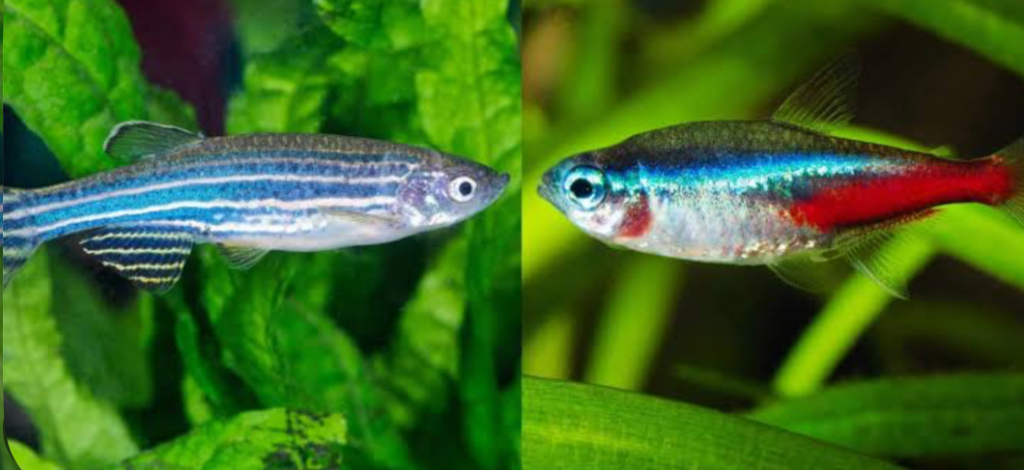
Suitable green tiger barb tankmates that can survive similar water conditions, eat the same foods without competing, and school peacefully with your pets include other barbs, danios, and tetras.
Other barbs, like the Albino Tiger Barb and Gold Barb, create a visually stunning barb-only tank, but for a high-activity community, introduce fast-swimming species like Danios and Tetras.
Avoid slower species like Guppies or long-finned fish types like Angelfish and Bettas. Their presence will stress your Green Tiger Barbs because they’ll nip at their fine and outswim them for resources every time.
Health & Breeding
If you can take care of a tiger barb, you can manage this variant’s health because they have the same requirements, but if you’re a beginner, here’s an essential barb health guide.
Health Maintenance and Lifespan Extension


Did you know that with proper care, your Green Tiger Barb can live up to 5 to 7 years? The first step to giving your pets a healthy life is setting up a suitable environment, then choosing the right companions and feeding them a balanced omnivorous diet.
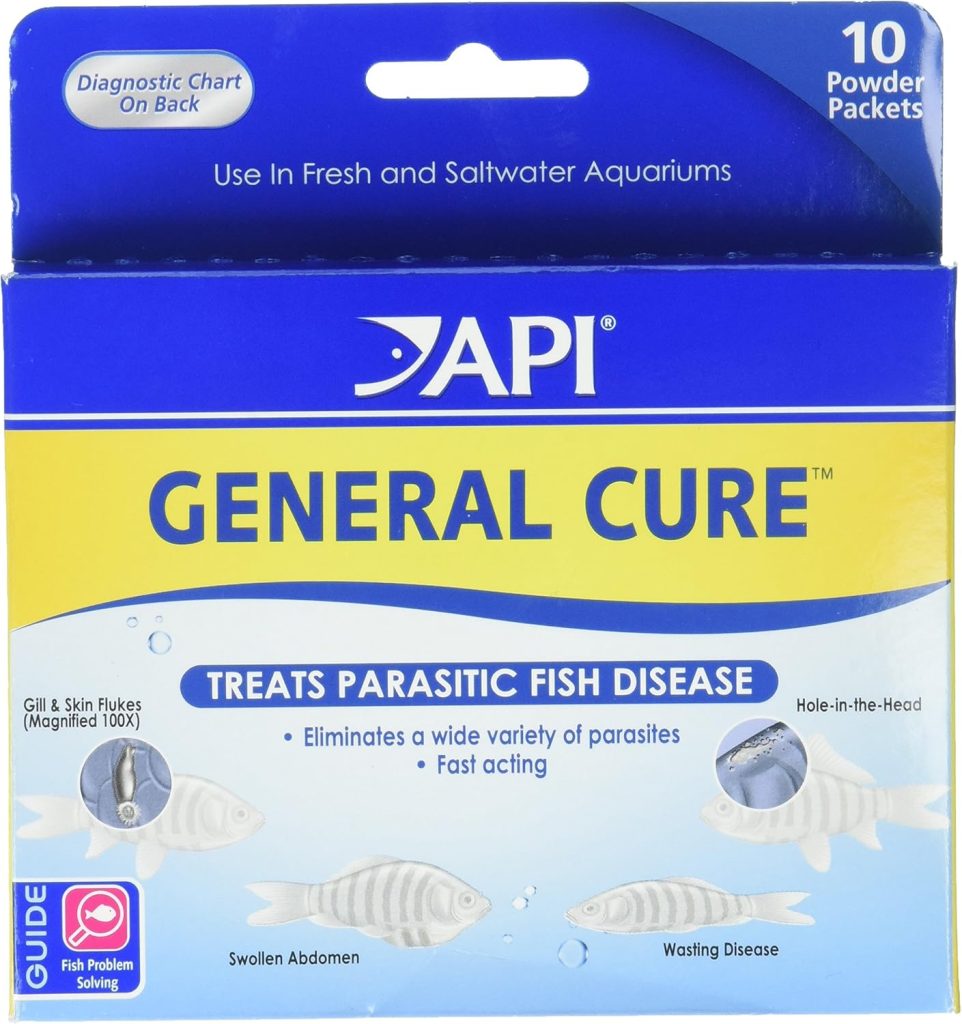
Here’s a list of common tiger Barb illnesses and how you can treat and prevent them.
Common Health Challenges and Diseases
- Ich: This is a white-spot disease caused by stress and unstable aquarium temperatures.
Check out How to Treat Ich Outbreaks in Your Freshwater Fish for more information on Ich! - Velvet: A parasitic disease that causes velvety gold or copper dust to appear on your pet’s scales and skin.
- Columnaris: This is also called cottonmouth disease, and it’s a bacterial infection that manifests as a whitish cotton growth around your Barb’s mouth.
- Obesity, Indigestion, and Food-Related illnesses are caused by overfeeding.
Prevention and Treatment
Make periodic water changes and use a filter to keep the water pristine.
Stabilize the water conditions daily and always quarantine new or sick fish. For new fish, observe their health in quarantine before introduction, while sick fish need treatment in isolation to prevent infecting other healthy fish in the aquarium.
Breeding Green Tiger Barbs
Most beginner breeding projects fail because of a lack of information, but with adequate training and resources, you’ll achieve success.
Preparing the Breeding Tank
Get a separate breeding tank for your green tiger barbs and set it up for breeding. Layer the substrate with dense vegetation and spawning mops or grids to catch eggs and keep them safe from the parents.
Aerate the breeding tank with a gentle sponge filter and raise the water temperature to the upper end of the range.
Breeding Green Tiger Barbs
Choose only Green Tiger Barbs that are at least 1 inch long with six to eight weeks of maturity. Look out for their sexual dimorphism to differentiate females from males.
Female Green Tiger Barbs are bigger with rounder bellies and duller green sheens, while the males are smaller with slender bodies and vibrant colors.
Condition your barb pair or group of one male to two/three females by feeding them high protein at least two weeks before the green tiger barb breeding starts.
Egg Production
After conditioning your pets, move them to the breeding tank and wait for dawn.
The male green tiger Barb will chase the females until they’re ready to spawn their eggs. They’ll spawn at least 300 eggs in clumps of hundreds onto the plants or the spawning mop.
Remove the parents to prevent them from eating the eggs, and monitor egg development for 24 to 48 hours until they hatch.
Protecting the Fry
Once the hatched Green Tiger Barb eggs become free-swimming fry, you must protect them from disease and malformation. Feed them infusoria and high-quality fry food until they develop mouths to chew on finely crushed food, such as baby brine shrimp.
As they develop and mature, separate the larger Green Tiger Barbs from the smaller ones to avoid bullying. Once they hit maturity between 4 and 5 weeks, you can reintroduce your juveniles into the main tank.
Conclusion
Keeping this bright schooling fish as a beginner is as easy as walking in the park. The Green Tiger Barb, as a fish species, is a showy take on a classic that requires the same care but would pop more under lights.
Let’s go over the essential metallic barb care needs for housing a small group of Green Tiger Barbs in a medium tank.
- Get 30+ gallons with a dense plantation.
- Keep a minimum group of six schooling fish.
- Avoid slow and fin-nipping fish.
- Feed them portion-controlled omnivorous foods.
- Use a separate breeding tank for reproduction.
So, as an aquarium hobbyist who wants a brighter palette, you should consider keeping green tiger barb variants.