Skip to content
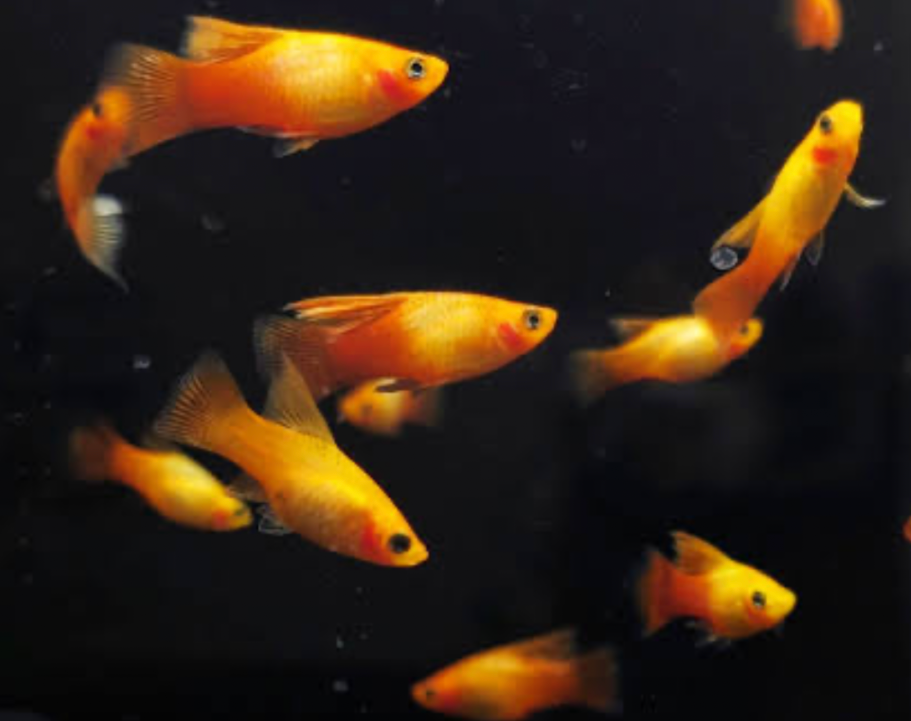
Add warm colors to your beginner community aquarium with Sunburst Platy, a popular yellow-orange-red ornamental fish suitable for first-time hobbyists.
Sunburst Platy Care Guide: Bright Orange Livebearer That Beginners Love
Did you know that your fish’s appearance and temperament can affect your mood positively?
When you have an easy-to-care-for community fish with a vibrant appearance and a social personality, keeping an aquarium can become the best, unexpected daily mood booster. The Sunburst Platys can fulfill this need for you if you give them a chance.
Sunburst Platy is a bright freshwater aquarium fish with a striking orange body color and contrasting black highlights on its tail fins and lower body.
This guide provides essential Sunburst Platy care details for aspiring aquarium keepers with little or no experience.
Author’s Note: Check out our post on the 13 Types of Platies That Are Perfect for Beginner Aquarists for an in-depth overview of the wide variety within this species!
Sunburst Platy Scientific Name & Strain Background (Xiphophorus maculatus)
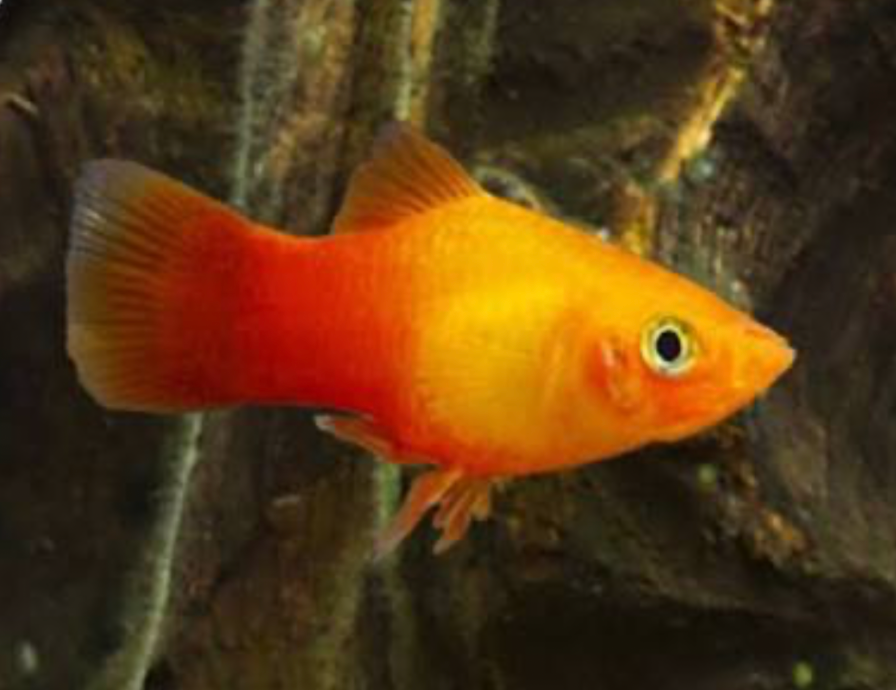
Sunburst Platy is a color morph of the famous beginner aquarium species, Platyfish. It’s not a separate species or breed but a variant of the Platy breed.
A closer look at this livebearer’s taxonomy will better illuminate the position of the Sunburst Platy within the aquatic system.
Sunburst Platy’s Taxonomy
The Sunburst Platys’ scientific name is Xiphophorus maculatus, which refers to its specific species. Its grand genus is Xiphophorus, which includes the swordtail fish species due to its unique anal fin shape.
Sunburst Platys are also a ray-finned fish from the Actinopterygii class and fall under the Livebearer order of Cyprinodontiformes.
Knowing this taxonomy comes in handy when you’re choosing suitable companions for your Sunburst Platy’s community.
Sunburst Platys Origins
Sunburst Platys are selectively bred descendants of common green swordtails and a Variable Platy, producing their distinctive fiery colors.
That’s why you’ll notice similarities between Sunburst Platys and Sunburst Swordtails, but certain physical characteristics distinguish each species from the other.
Sunburst Platy Colors: Why They Stand Out
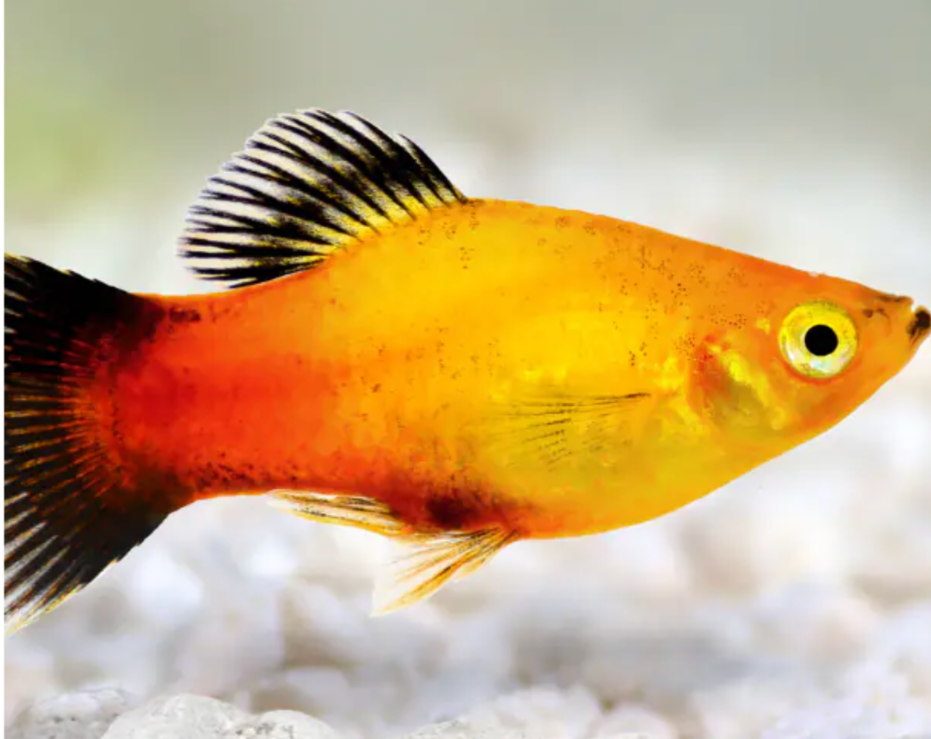
The most distinguishing feature of this typically orange platy fish is its vibrant, warm colors. It commonly comes in a bold orange shade, but rare subvariants can have yellow or gold bodies, or a gradient of all warm tones.
With the gradient Sunburst Platy, the fish has a multi-toned body that starts with a bright yellow base on the upper body, deepening into a deep gold and turning orange around the mid-riff. In contrast, the lower body and tail fin are a rich orange that fades into a reddish hue.
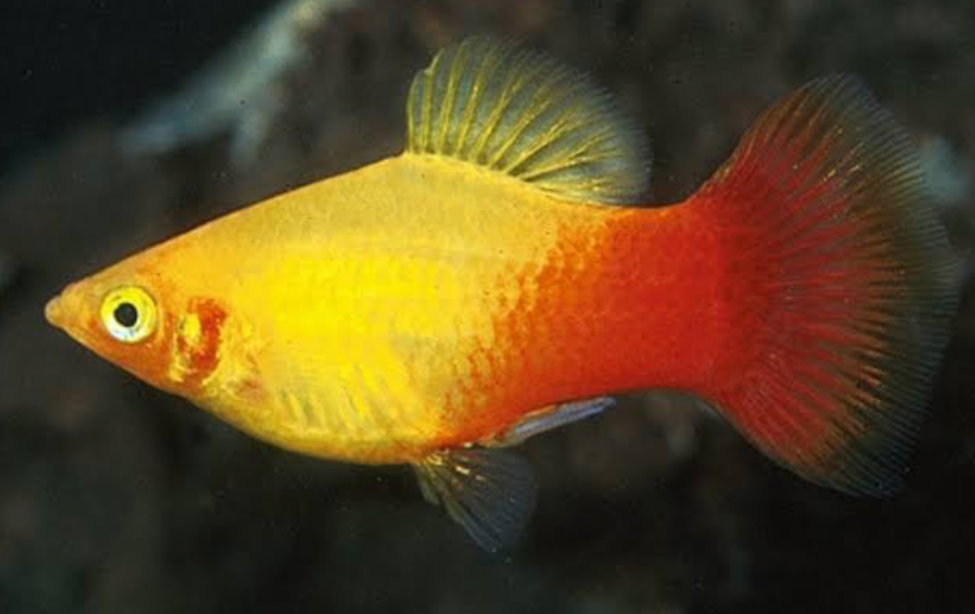
These Sunburst Platy colors provide the perfect sunset or sunrise effect in your aquarium, and they look even better with the deep black wag tints on the fins to tone down the bold body hues. If you use the right LED lighting in your aquarium, the reflection will reveal an unexpected iridescent silver or translucent pearl tone.
Author’s Note: Check out our post Best LED Aquarium Lighting Units for Your Gallon Tank Capacity for an in-depth review of the best options for lighting!
So, whether you want a yellow platy fish, a full gradient, or the classic orange platy fish, the Sunburst variant is the best option for a visually stunning aquarium.
Adult Size and Lifespan
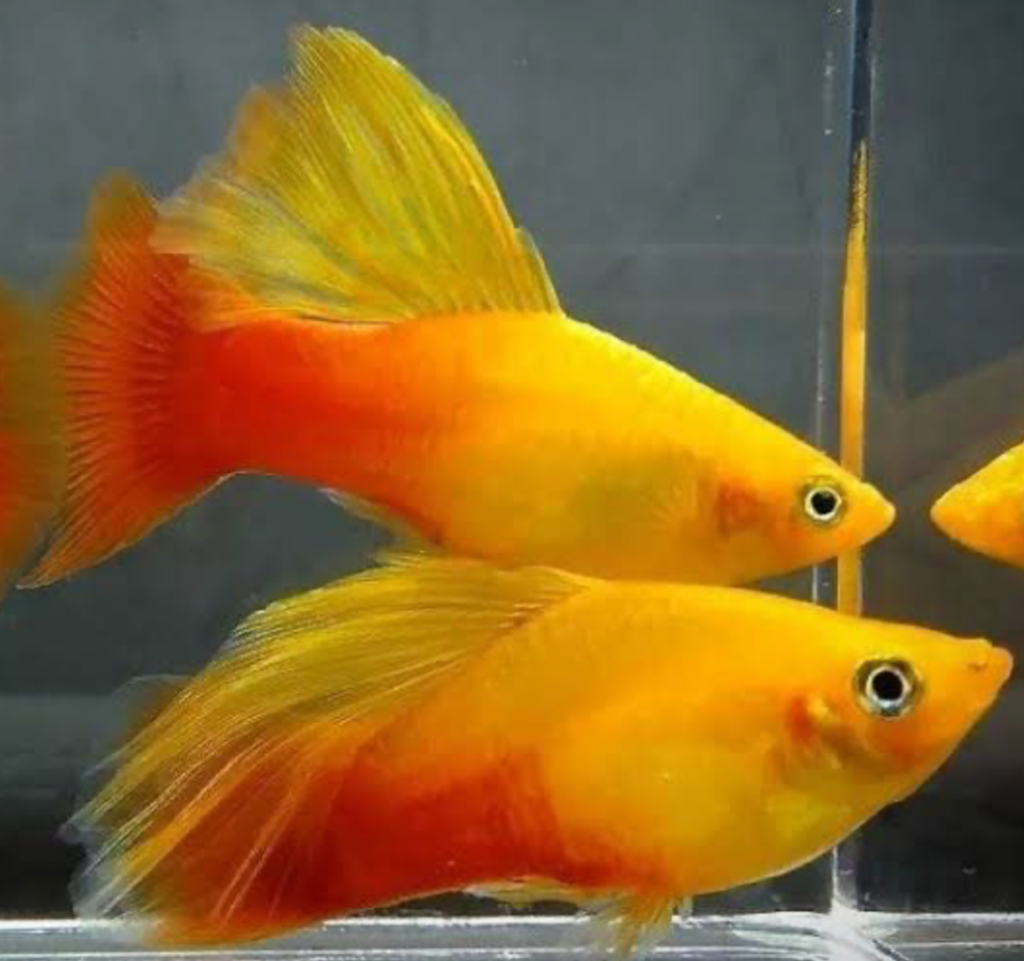
You should care about the Sunburst Platys’ size because it helps you determine your pet’s health status and predict its lifespan. That’s right, an abnormally sized Sunburst Platy would not survive long enough to reach its maximum potential.
Sunburst Platy Size
Here are the key facts about your sunburst platy’s size and lifespan.
Adult Sunburst Platys grow to 2-3 inches long, with females larger and rounder than males.
Sunburst Platy Lifespan
If you provide an appropriate enclosure for this pet to grow to its maximum length and feed it a healthy, balanced diet, the Sunburst Platy lifespan can extend to 3 – 5 years.
Best Tank Size for Sunburst Platies
Most beginners struggle to choose a suitable Sunburst Platy tank size because every guide says 10 to 20 gallons is the ideal minimum, but they don’t explain why. Here’s a detailed livebearer tank guide to help you make your choice.
For Single Sunburst Platy Fish
A 10-gallon enclosure is perfect for a planted aquarium starter tank housing a single Sunburst Platy fish.
It’s large enough to encourage your pet’s mid-level swimming behavior, provide necessary live plants for safety and aesthetics, and include hardscaping without clustering the space.
For a Small Community
However, if you want to keep a small group of Sunburst Platys with other species, a 20-gallon tank is a better minimum size option. It would house about four to five Sunburst Platys comfortably, and for every additional fish you add to the tank, increase the enclosure size by 5 gallons.
Aquascaping and Hardscaping
Use live plants like Java Moss and Java Fern to create dense vegetation around the tank, a smooth gravel or fine-to-medium sand substrate, and minimal driftwood to boost algae growth without dropping the tank’s alkaline levels.
Water Conditions for Healthy Sunburst Platies
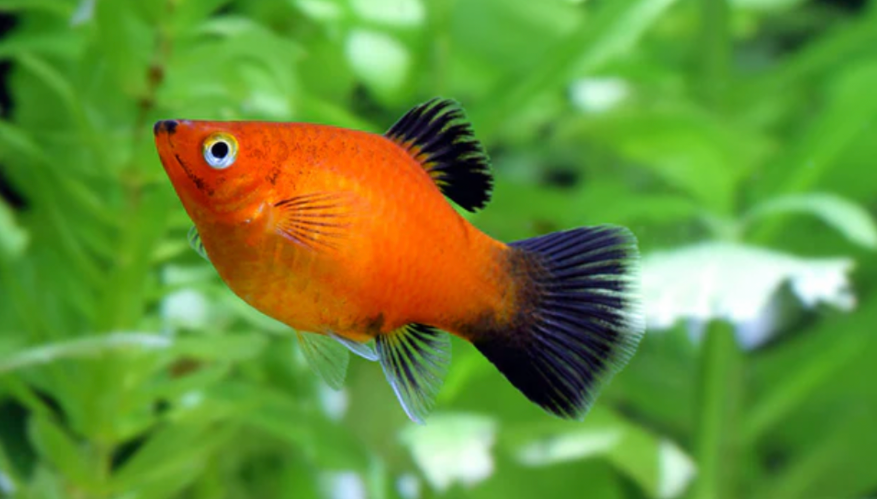
Sunburst Platys are hardy fish that thrive in highly alkaline water conditions. So, set the following parameters to ensure they exist in a safe environment.
Ideal Sunburst Platy Water Parameters
Test your pet’s water for its acidity level and maintain a standard platy pH range between 7.5, which is slightly alkaline, and 8.5, which is highly alkaline. To stabilize pH levels, set the tank’s carbonate hardness to 5-15 dKH.
For the water temperature, ensure the environment is warm by setting a range of 70 – 82F and finally keep the water moderately hard at 15 to 25 dGH.
Filter System
Stabilize these Sunburst Platy water conditions with a high-quality filter system that cleans the tank after feeding and simulates a slow, moderate flow like the Central American rivers.
Your aquarium’s ammonia and nitrite levels should always be at a baseline of 0 ppm, even after feeding your pets.
Meanwhile, the ideal nitrate level is no more than 20 ppm, and you can maintain this baseline by changing 25-40% of the aquarium water weekly.
If you fail to maintain pristine water quality and allow ammonia and nitrite levels to drop as low as 1 ppm, you risk your pets becoming ill and developing diseases like fin rot and shimmying.
Best Diet for Color Enhancement
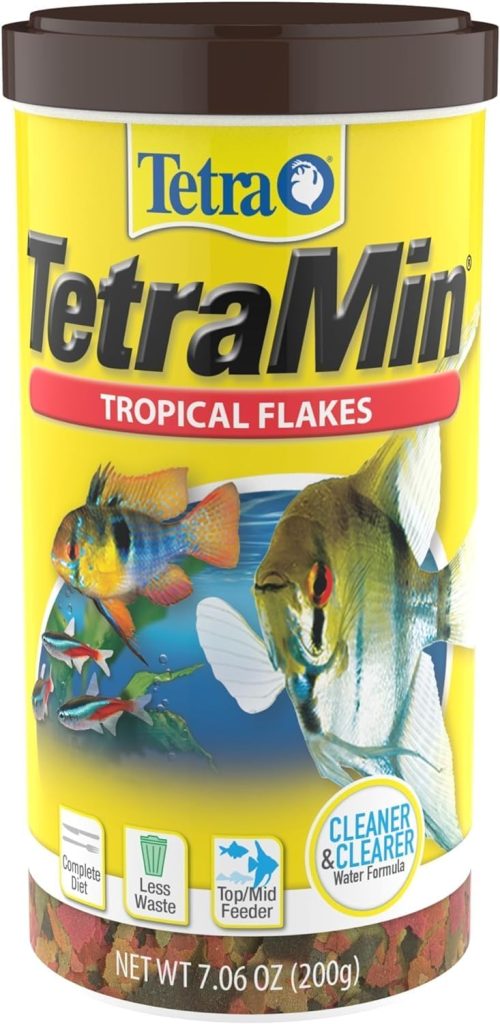
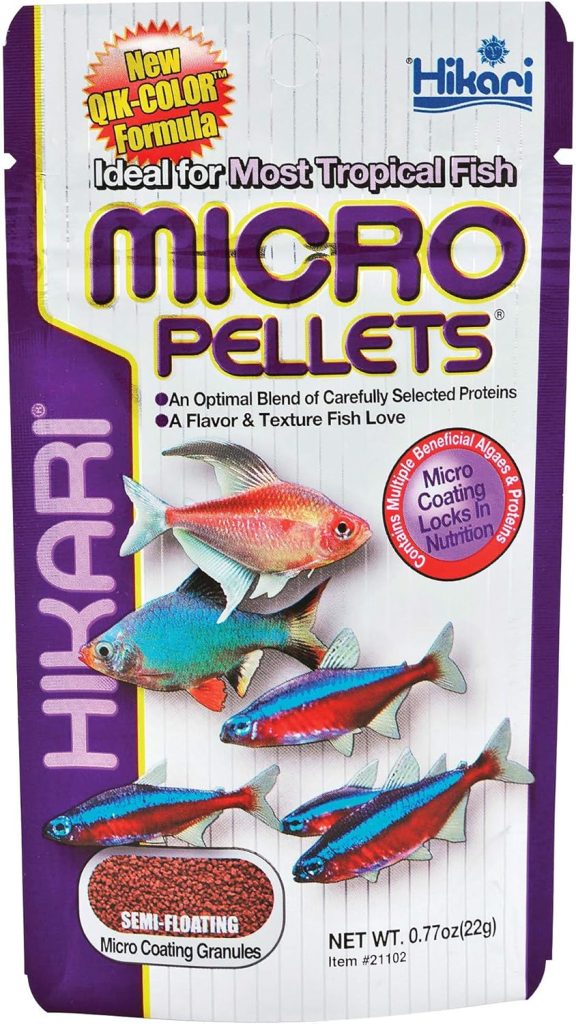
TetraMin Tropical Flake Food (Left)
Tropical Semi-Floating Micro Pellets (Right)
Sunburst Platys need regular omnivorous foods, but specifically color-enhancing fish food to maintain their vibrant sunset skin color. As an omnivore, this species will eat both animal- and plant-based foods, though it prefers herbivorous foods.
Filling your Sunburst Platy food plan with carotenoid-rich foods because, on its own, this species cannot maintain its vibrant, fiery color.
Carotenoid-Rich Foods for Sunburst Platys
To boost the yellow, gold, and light tones on your pet’s body, feed them beta-carotenes from foods like Marigold extract, Spirulina, and Krill as staples.
You must still ensure a balanced platy fish diet to avoid malnutrition or deficiency in other aspects of your pet’s development, so add live foods like brine shrimps and daphnia to their meals.
You can also supplement their weekly meals with quality flakes and blanched vegetables, such as spinach and red bell peppers, as a source of beta-carotene.
Author’s Note: For more on feeding your aquatic pets check out The Ultimate Guide to Fish Food: Pros and Cons & Best Choices!
Feeding your Sunburst Platy
As you prepare a rainbow plate filled with diverse food groups for your pets, ensure you don’t overfeed them, as overfeeding can lead to excess waste and other health problems, such as obesity.
Serve your Sunburst Platys food portions that they can consume in less than 2 minutes, and feed them no more than twice daily.
Tank Mates for Orange Platies
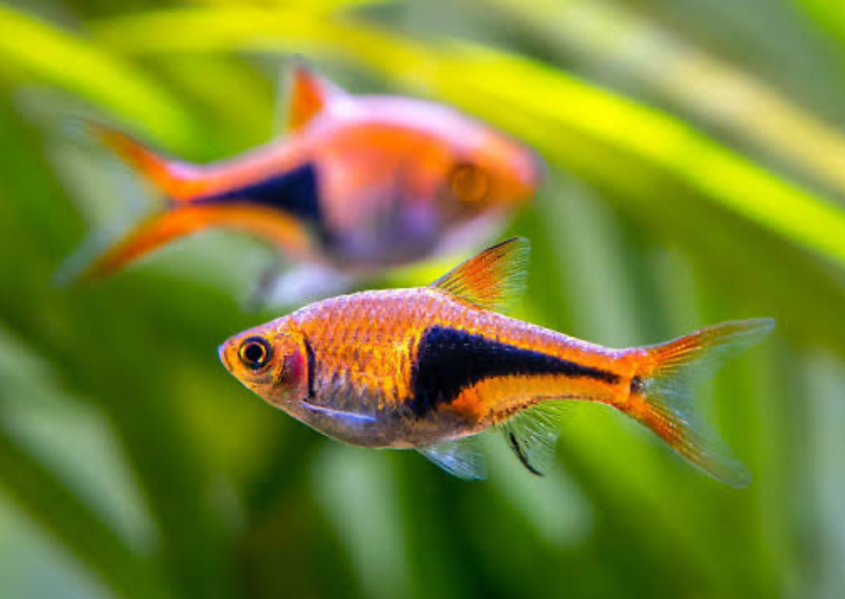
Maintaining a peaceful beginner aquarium with your Sunburst Platy as the centerpiece requires careful selection of companions. Start by choosing compatible tank mates. Choose species that won’t outcompete your pets for resources like food and shelter.
Also, avoid troublesome species that’ll stress your Sunburst Platy by becoming territorial, predatory, or fin-nippers.
Ideal Sunburst Platy tankmates include Mollies, Guppies, and Rasboras. Scroll back up to see this species’ taxonomy so that you’ll understand why other livebearers make suitable companions.
If you successfully curate a mixed livebearer tank with a diverse variety of fish and other species, you’ll add color and character to your aquarium.
Breeding Sunburst Platies
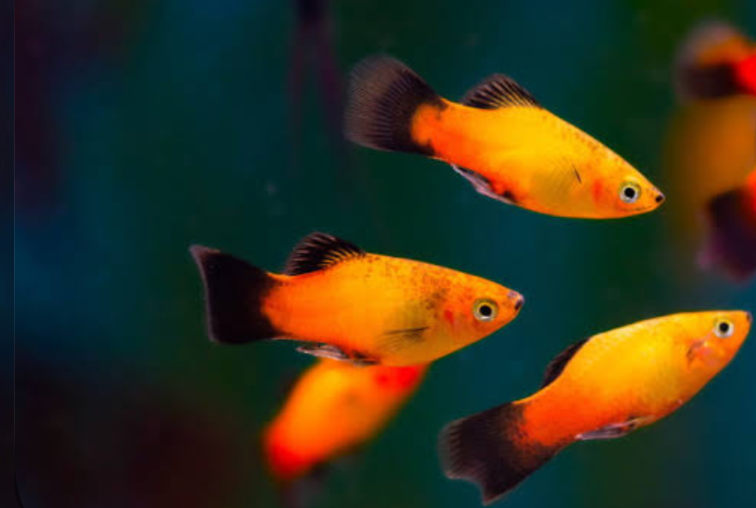
If you’ve seen any common beginner fish breeding guide, you’d notice that fish reproduce in two ways – egg scattering and livebearing. The Sunburst Platy fish belongs to the livebearing group, which delivers its young as live, free-swimming fry.
So, the care practices for Sunburst Platy breeding require a little more attention and experience than for regular egg-scattered species.
Preparing the Breeding Tank
Start by prepping a separate breeding tank that’s at least 10 to 20 gallons large. Add a gentle sponge filter to the tank and use the same setup as you have in the regular living tank.
Your Sunburst Platy fry would need dense vegetation for shelter, while the adults would need a warm environment during the mating stage.
Choosing the Breeding Pair
Select healthy and mature Sunburst Platys as breeders for a pure breed of juveniles. Choose one male to two or three females to spread its aggression across the mates.
You can distinguish the sexes of your Sunburst Platy by their physical appearance. Males are smaller, brighter, and slender, and have a pointed anal fin called a gonopodium. Meanwhile, the females are larger, duller, and rounder, and lack a gonopodium.
Conditioning your Sunburst Platy
Feed your Sunburst Platy with highly proteinous foods in the weeks leading up to reproduction to build their muscular strength. Also, increase the tank temperature and send them into the heat.
Fertilization and Gestation
Upon mating, the male Sunburst Platy fertilizes the female or females, and they become pregnant. Gestation can last between 30 and 45 days. During pregnancy, your female Sunburst Platys would develop a boxy belly that turns dark and gravid.
Fry Production and Care
When the gestation period ends, your female Sunburst Platy will give birth to live fry. This fry production can be so frequent and come in batches that a single fertilization process can produce up to 100 fry.
After birth, separate the parents from the juveniles to prevent them from eating their young. That means aquarium fry care is your responsibility.
Sunburst Platy fry eat more often than adults because they’re developing. Feed them three to four times daily, starting with infusoria and liquid fry food. As they grow older, add finely crushed baby brine shrimps and specialized fry flakes to their diets.
When they become old enough to live in the main community, you can move your juvenile fish fry.
Why Is My Sunburst Platy Losing Color?
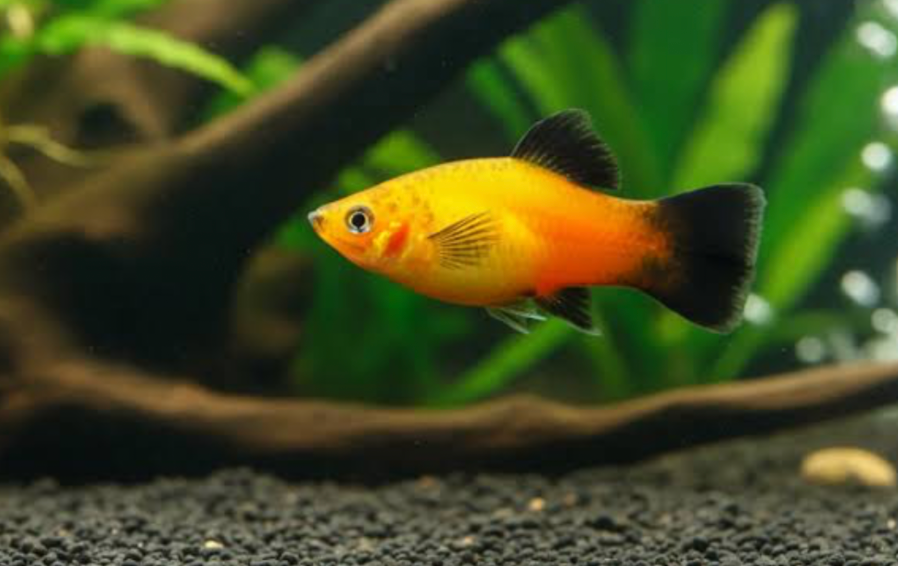
If you notice a Sunburst platy losing color, three things are most likely the reason:
- Stress
- Poor food
- Illness.
Loss of color and an abnormal appearance are the most obvious aquarium health warning signs you’ll get if you pay attention to your pets. Immediately quarantine the affected fish and improve your aquarium conditions as a first aid treatment.
Change 25% of the water, adjust the temperature, check the hardness and pH levels, then observe your pets. Some common stressed livebearer symptoms include shimmying, lethargy, upside-down swimming, and abnormal hiding.
If, after improving the water quality, they’re still stressed, check the tank mates and remove troublesome species. Also, adjust their diets and ensure they’re always eating a balanced meal. Scroll up for details on ideal tank setup and dieting for your Sunburst Platy.
If these symptoms persist, it could be a sign of a deeper illness. Visit a qualified fish vet for immediate diagnosis and treatment.
Conclusion
It’s easy to keep this colorful beginner fish in a single, species-only Sunburst Platy planted tank or as the centerpiece of your community, no matter how small. However, you would only enjoy this vibrant livebearer species if you provide it with excellent care.
Prepare a suitable habitat for your pets outside their natural environment, but drawing inspiration from their home rivers. Also, in community setups, pair your Sunburst Platy with other peaceful freshwater fish.
Scroll to the beginning of this guide for tips on suitable tank mates for your Sunburst Platy and start your journey to curating a colorful tank.