Skip to content
Beginner-friendly tips and care guide for beautifying your aquarium with a school of the unique Snakeskin Barb alongside peaceful tank mates!
Snakeskin Barb: Patterned, Peaceful, and Nano-Friendly
A patterned nano fish like the Snakeskin Barb is not often the first choice for dimly lit planted tanks, but it should be. Naturally, you may think this species’ unique patterns make it blend into the background; however, with the right aquascape theme, snakeskin can be a centerpiece.
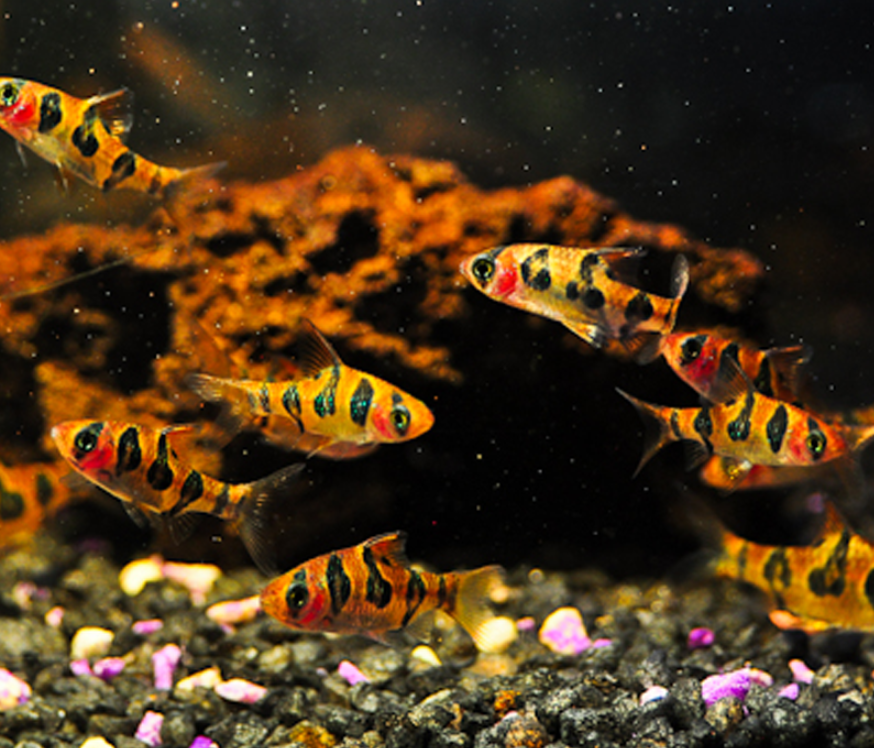
Snakeskin Barb (Desmopuntius rhomboocellatus) is a calm barb variant with a unique appearance and peaceful nature suitable for community tanks.
Although its appearance is similar to that of Tiger Barb, the Snakeskin subvariant is calmer and thrives in larger schooling groups of at least 10 fish. Due to their nature and physical appearance, beginners can easily manage Snakeskin barb care.
This guide contains essential Desmopuntius rhomboocellatuscare tips, including setting up an ideal aquarium environment, feeding, choosing tankmates, breeding, and maintaining health for a long lifespan.
Author’s Note: Check out our post 13 Types of Barbs That Are Perfect for Colorful Beginner Nano Tanks which includes details on even more barbs to choose from!
So, let’s start from the beginning.
Natural Habitat & Tank Mimicry
To properly acclimate your pets in a home tank or outdoor pond, you must understand and mimic their natural habitat.
Natural Habitat and Origins
Snakeskin Barbs originated in the peat swamps of Borneo, Indonesia. This snakeskin barb habitat is popular for its heavily shaded blackwater streams. Their dark, reticulated pattern helps them blend into the shaded, tannin-rich, and dimly lit waters they naturally inhabit.
Setting up an Ideal Tank
Due to the slow-moving, sometimes still, soft waters in this region, to replicate a blackwater tank setup, you must simulate this flow with specific aquarium decor.
Use leaf litter, such as Indian Almond Leaves, and driftwood to stabilize pH levels and boost natural coloration and behavior in your Snakeskin barb.
A naturalistic barb tank is the best environment you can give your Snakeskin variant outside their natural ecosystem. The driftwood and leaf litter releases tannins that turn the water brown and cause your pets to exhibit normal traits as though they’re still out in the wild.
Before we continue with your biotope aquarium setup, let’s identify a Snakeskin Barb. Proper identification helps you make informed choices when choosing your tank size and eventual aquascape theme.
Identification & Color Notes
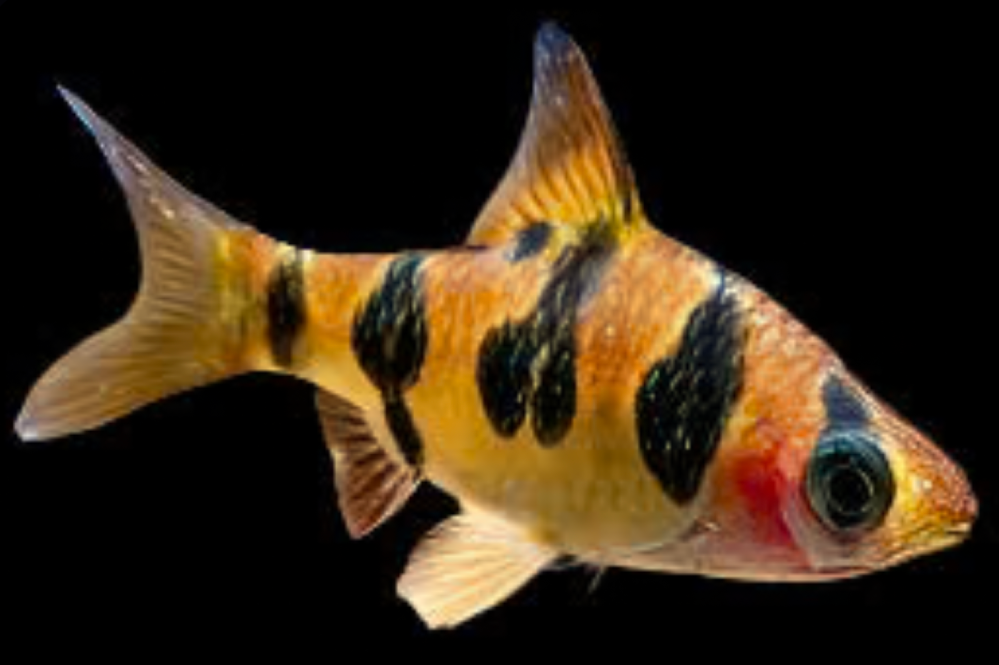
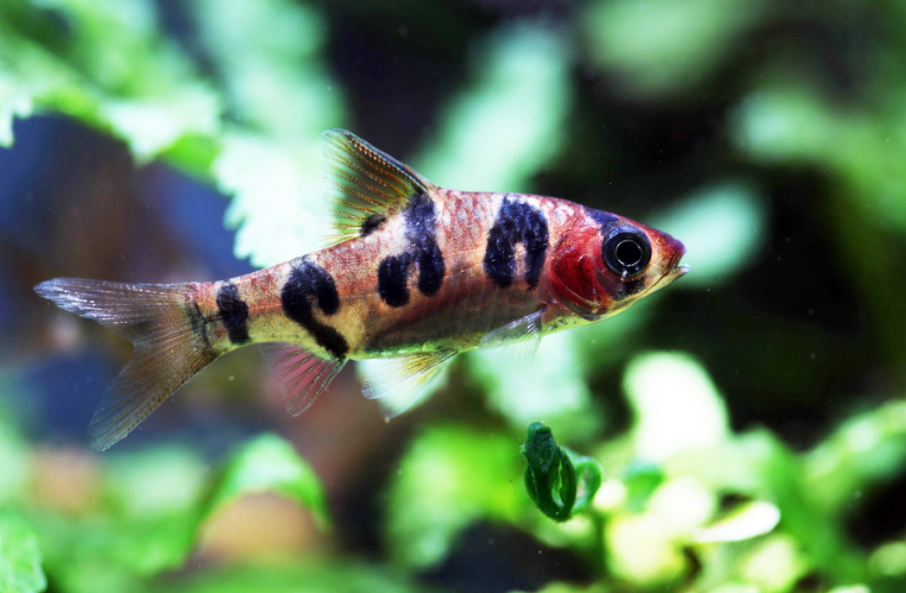
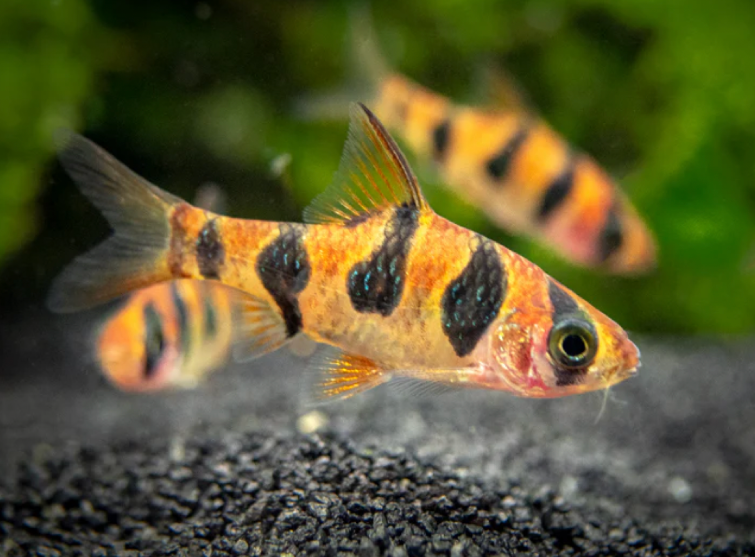
You can identify Snakeskin barb fish through their patterned skin, which appears like a reptile’s scales. Some color morphs form a black diamond splotch pattern on their orange-tan to reddish-gold bodies, while others form a chain.
No matter the shape the black splotches on this nano-patterned fish take, their fins remain the color of their base skin.
As your pet ages, however, this pattern will break up and fade because its body stretches from less than an inch to about 1.5-2.5 inches, or even 3.5 inches less often.
Be careful, though, because beginners often mistake the Snakeskin variant with other barb pattern fish in the Desmopuntius family. What makes this one unique is its slender body and splotchy patterns, unlike the others, which have visibly vertical bands.
You can also use the color notes and size to distinguish sexes. Female Snakeskin barbs are rounder, with tannish-orange bases, while the males have an intense reddish-orange base color and smaller bodies.
Now that you can properly identify your Snakeskin Barb, let’s return to setting up the ideal tank environment for your pet.
Tank Size & Plants
Found On Amazon
Your tank size would depend on the minimum number of Snakeskin Barbs in your aquarium school. You’ll also need dense plantations with low-lighting to create enough shade that mimics the blackwater environment of the Borneo rivers in Indonesia.
Tank Size
For a group of 6-10, a 10–20-gallon tank is suitable, while schools with 10+ fish need at least 20-25 gallons of water. Ensure the tank is wide to encourage natural swimming movements, although a tall tank with enough swimming room is also fine.
Once you lock down your snakeskin barb tank size, you can now decorate it with plants and other aquarium accessories. But leave enough swimming area in the center for your pets to move comfortably.
Author’s Note: Check out our post Best LED Aquarium Lighting Units for Your Gallon Tank Capacity for an in-depth review of the best options for lighting!
Plant and Decor
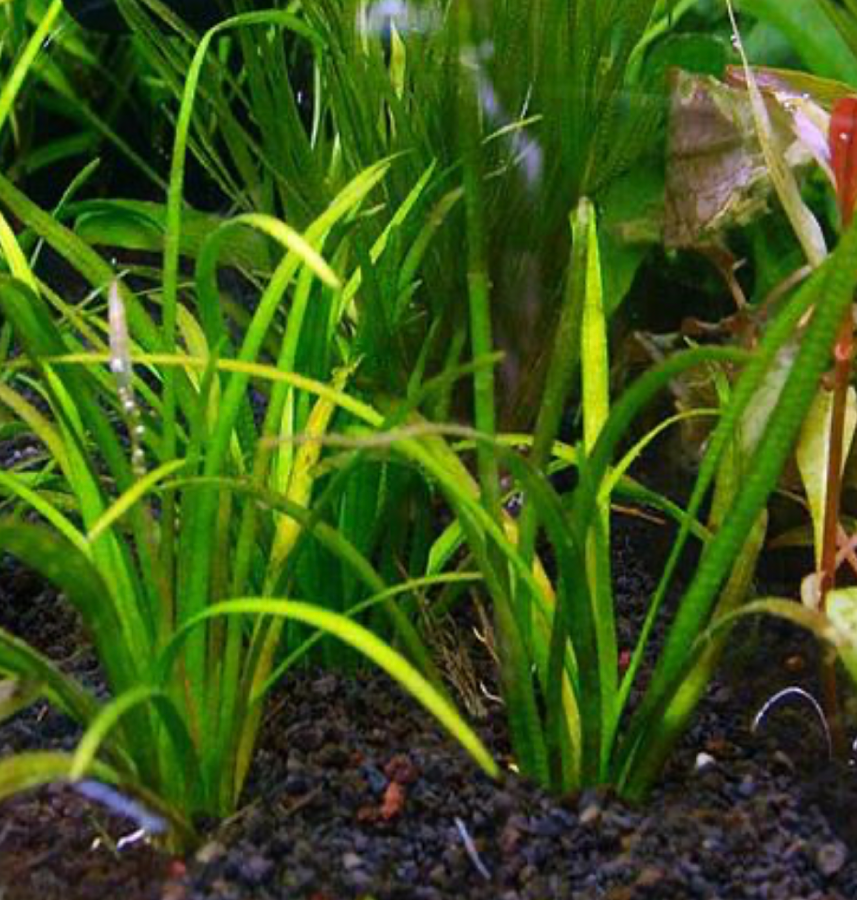
As a certified planted nano fish, Snakeskin Barbs need as many aquatic plants in their tank as possible. First, layer the base with a dark substrate, such as smooth gravel or fine black sand. Then, arrange your plants along the tank’s walls and edges.
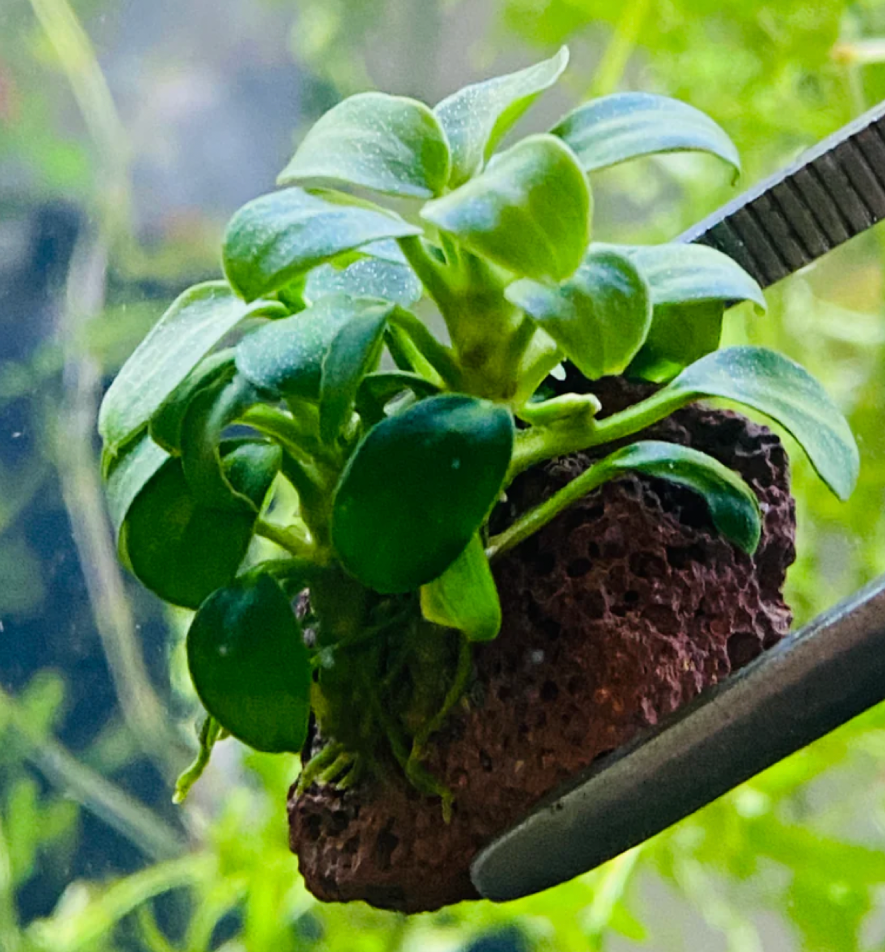
Use species such as Cryptocoryne, Barclaya, Anubias, Java Fern, Java Moss, Frogbits, Salvinia, Amazon Swords, and Sagittaria. The mixture of rooted plants, cover plants, and attachable plants creates a shaded density that provides comfort for your Snakeskin Barbs.
And if you’re wondering about other small aquatic species in your tank, don’t worry, because Snakeskin morphs are shrimp-safe barbs.
Water Parameters & Filtration

Found on Amazon
Are you also worried about creating softness in your water environment while maintaining a healthy plantation? The key is to stabilize your snakeskin barb’s water condition and keep it clean using an efficient filtration system.
Water Parameters
As soft water barbs, your Snakeskin species needs the following parameters to thrive:
- Acidity – 5.5 – 7.0 pH.
- Temperature – 72–78°F
- Hardness – 2 – 9 dGH, 4 – 10 dKH
Filtration System
Use a low-flow aquarium filter to keep the water clean after feeding your pets, without stressing them further or risking suction-related death. A sponge filter set to a low current is suitable for a small or nano tank, while a single canister filter is ideal for larger setups.
Diet & Feeding

Freeze-Dried Tetra BloodWorms (Left)
Tropical Semi-Floating Micro Pellets (Right)
Snakeskin Barbs eat everything from animal matter to plant-based foods because they’re omnivorous. But be careful because they’re micropredators, meaning they can become aggressive with extremely small fish and turn them into food.
Dietary Needs
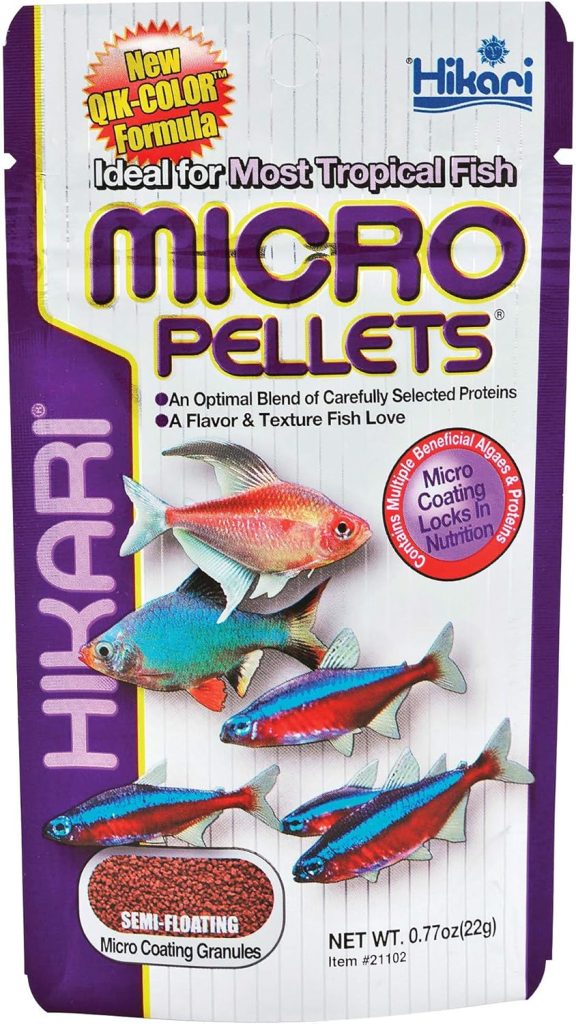
Feed your Snakeskin Barb a balanced micro fish diet of high-quality flakes and pellets as staples, while supplementing with live or frozen foods such as daphnia, bloodworms, and brine shrimp.
Author’s Note: For more on feeding your aquatic pets check out The Ultimate Guide to Fish Food: Pros and Cons & Best Choices!
Feeding Schedule and Portion Control
Unlike regular-sized fish, Snakeskin barbs have small mouths, so they always crush their food for easy chewing and digestion. Your snakeskin barb’s feeding schedule should be at least once to twice daily for staples and every other day for treats.
Using micro foods for barbs also helps with portion control, as you can monitor the amount of food they consume daily to avoid overfeeding or competition within the tank.
Behavior & Tankmates
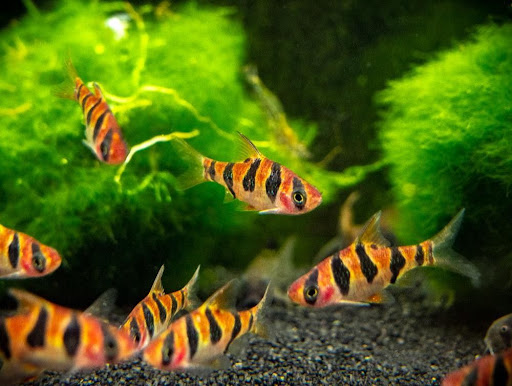
Snakeskin Barbs are ideal for peaceful nano community setups because they’re naturally calm and shy. They won’t disturb other tank mates unless there’s a disruption in their established hierarchy.
Behavioral Patterns
Your Snakeskin Barb would typically swim around the mid- to low-levels of your tank because they enjoy exploring the dense vegetation around the base.
Keep this micro schooling fish in groups of 6+ to encourage confidence, but ensure a balance between males and females using a 1:3 ratio to avoid territoriality.
Compatible Tankmates
Suitable Snakeskin barb tank mates for your community setup include rasboras, small tetras, micro rasboras, and shrimps. They also pair well with bottom dwellers like loaches and corydoras.
Avoid aggressive fish such as tetras and cichlids because they’re fin nippers, and Oscars and angelfish because they’re larger and can become predatory.
Health & Common Issues


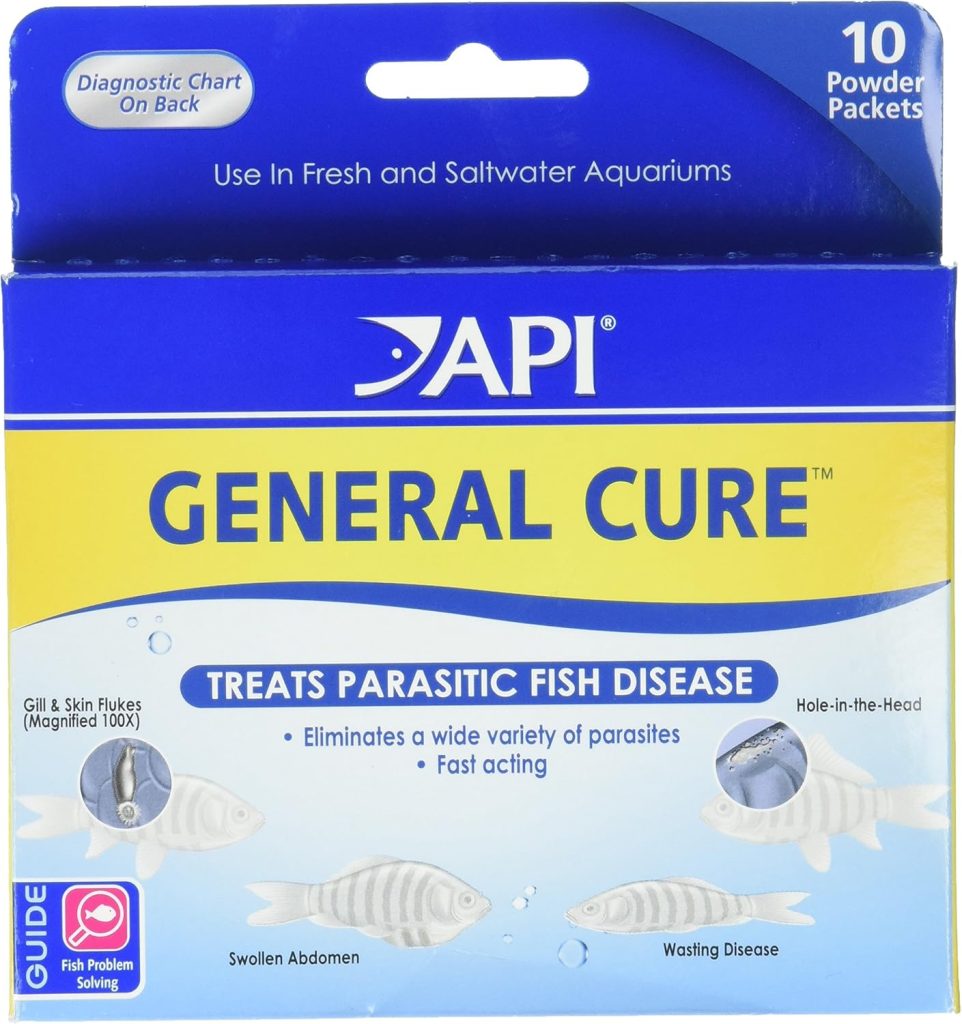
Snakeskin barbs are hardy and would thrive in an adequately set-up, healthy, planted aquarium, but they’re sensitive to certain conditions, such as poor water and sudden parameter swings.
Health Care
If you maintain soft water conditions and stable parameters, you may prevent your Snakeskin Barb from disease forever. Make regular small water changes of 20-40% weekly to keep the water pristine, and add leaf litter consistently to boost their wellbeing.
Periodic checks using a Master Test Kit ensures stable water parameters and avoids sudden swings benefiting your pets. But in case of disease, here are some symptoms and treatments.
Common Diseases and Treatment
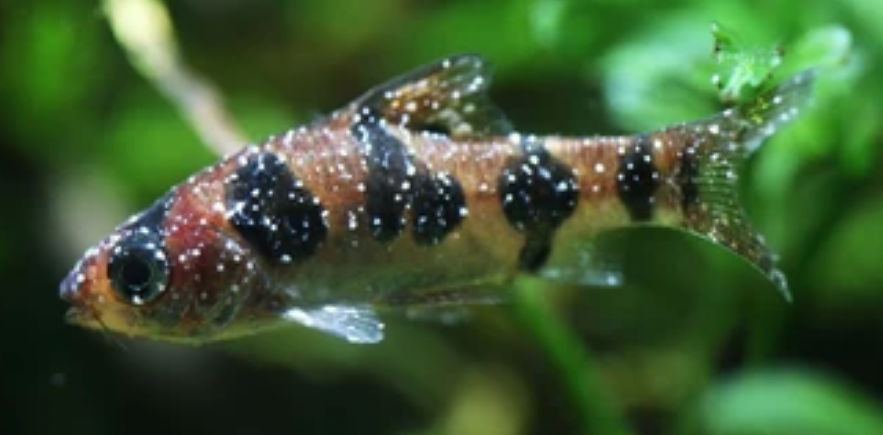
Common Snakeskin barb diseases include:
- Velvet disease: A parasitic infection that causes flashing, clamped fins, and rapid gill movement. You can treat it by increasing the water temperature to speed up the parasite’s life cycle.
- Ich: A stress-related disease often triggered by unstable water conditions that causes white, salty, and grainy spots on your pet’s body and fins. You can treat it by improving the water conditions. Quarantine the affected fish, drain about 20-40% of the water, increase the temperature, and apply anti-ich medication.
- Fin Rot: A bacterial infection from untreated fin injuries that causes rotting fins. Poor water conditions and fin-nipping tank mates trigger it.
Always quarantine affected fish and improve water conditions as first aid treatment, but if the illness persists, visit a veterinarian for professional treatment.
Author’s Note: Check out How to Treat Ich Outbreaks in Your Freshwater Fish for more information on Ich!
Breeding Notes
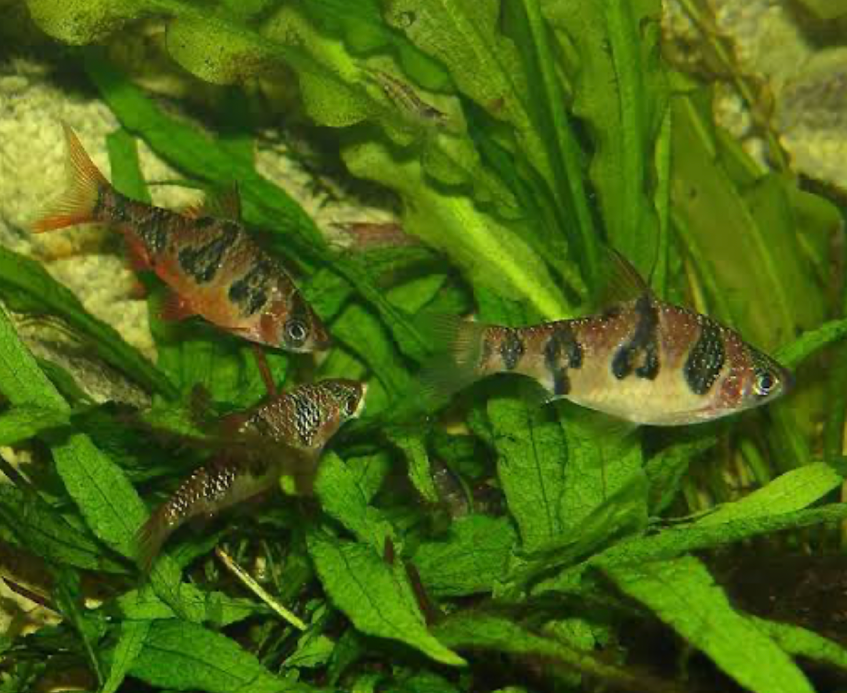
Snakeskin Barbs are egg scatterers, and they get highly sensitive during breeding seasons, so you need to carefully curate their environment and monitor the eggs throughout the period. Spawns in cover; eggs are adhesive to leaf litter and plant surfaces.
Breeding Tank Setup
A small tank of 5-10 gallons of water for two adults is suitable for breeding Snakeskin barbs. Set the water temperature to the upper range of 76 – 78°F, ensure there’s a dense plantation, and place some spawning mops or ceramics to catch the eggs after release.
Conditioning Your Fish
Prepare your breeding pair for the task ahead. Increase their protein intake about 2 – 3 weeks before spawning, and when they’re ready, place the male and female Snakeskin barbs into the breeding tank.
Spawning
Females spawn Snakeskin Barb eggs at dawn, and they stick together in clusters of about 100 eggs onto the spawning mop or ceramic saucer.
Egg and Fry Care
After spawning, remove the adults from the breeding tank to prevent them from eating their eggs. Within 24-36 hours, the eggs will hatch and begin to develop. By the fourth to fifth day of life, your hatched eggs will become free-swimming, and it’ll be time to raise the fry.
Feed your Snakeskin barb fry with liquid fry food and advance to crushed baby brine shrimp as they grow into adults. Once they reach maturity at about four weeks, you can add them back to the main tank.
Lifespan & Hobby Fit
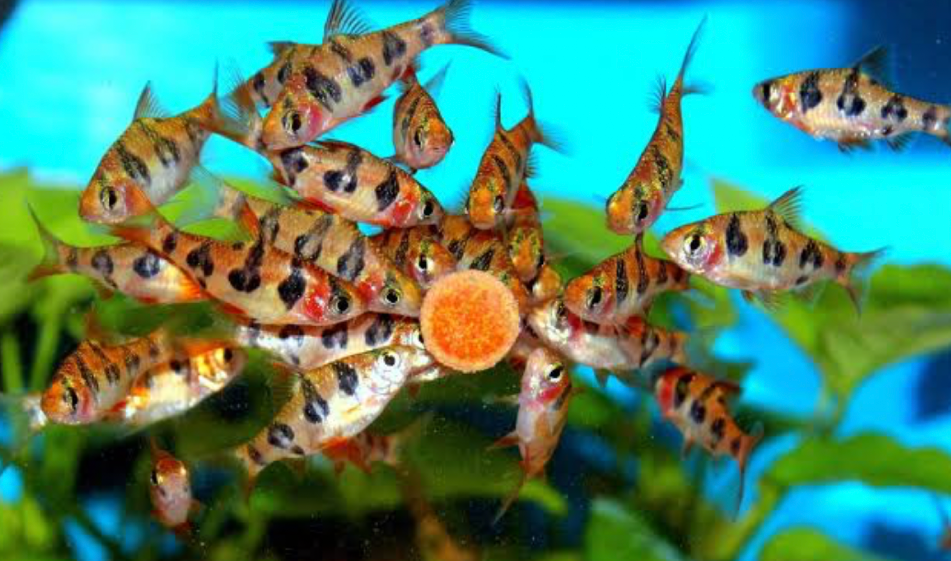
Because of its easy care needs, this variant is a suitable beginner blackwater fish for a peaceful community setup.
Despite its minimal care needs, your Snakeskin Barb’s lifespan can be 3–6 years in an optimal environment, making it an excellent choice for hobbyists interested in naturalistic blackwater biotopes.
Get this planted-tank nano fish if you want to build a quiet and stunning display.
Conclusion
If you’re still thinking of reasons to keep Snakeskin barb fish as pets, here’s a summary:
- This species offers a subtle yet visually stunning pattern in your aquarium community.
- It’s a peaceful schooler suitable for large groups.
- Essential Desmopuntius care is easy for beginners to handle.
Once you provide an optimal environment with soft, acidic water and dense plantations for a shaded aquascape, your pets will love a long and healthy life. It all depends on how dedicated you are to following the rules in this patterned barb guide.