
Enjoy the charm of this golden schooling nano fish with these low effort care practices. This complete guide on setting up the ideal planted tank for your Golden Dwarf Barb will teach you all that is needed.
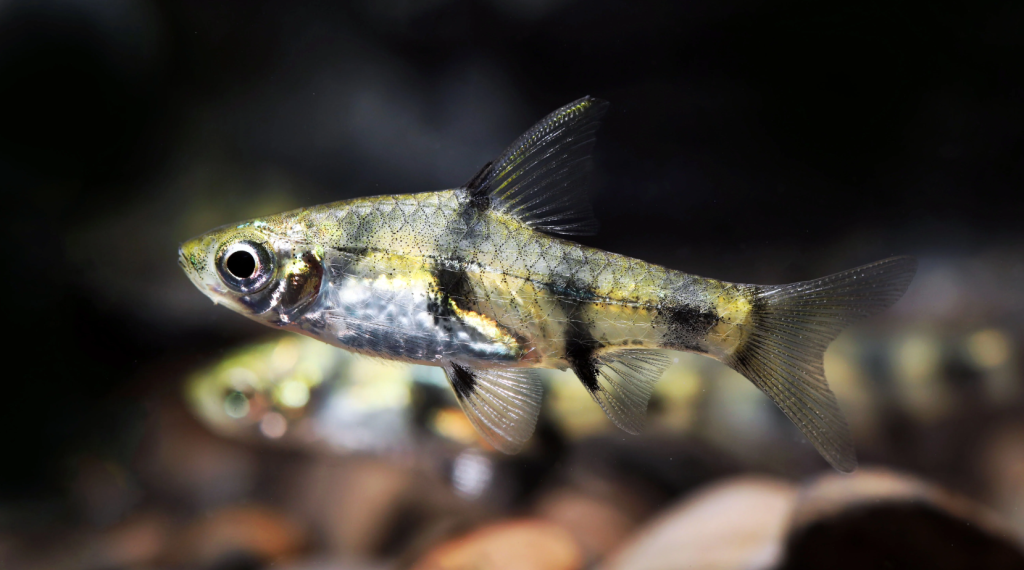
Golden Dwarf Barb: Tiny, Golden, and Perfect for True Nanos
Do you want to upgrade your planted tank with a true schooling nano barb? Would you consider a tiny barb variant if it’s visually appealing and has the right personality?
Golden Dwarf Barbs (Pethia gelius) are a tiny barb variant with a vibrant golden color, a gentle temperament, and a social personality, making them suitable for a planted tank setup.
With a standard 10–20-gallon planted tank, the right diet, tank mates, and water conditions, you can provide optimal golden dwarf barb care. In this guide, you’ll learn the basics of Pethia gelius care to start your journey as a beginner aquarist and evolve into a pro.
Author’s Note: Check out our post 13 Types of Barbs That Are Perfect for Colorful Beginner Nano Tanks which includes details on even more barbs to choose from!
Natural Habitat & Size
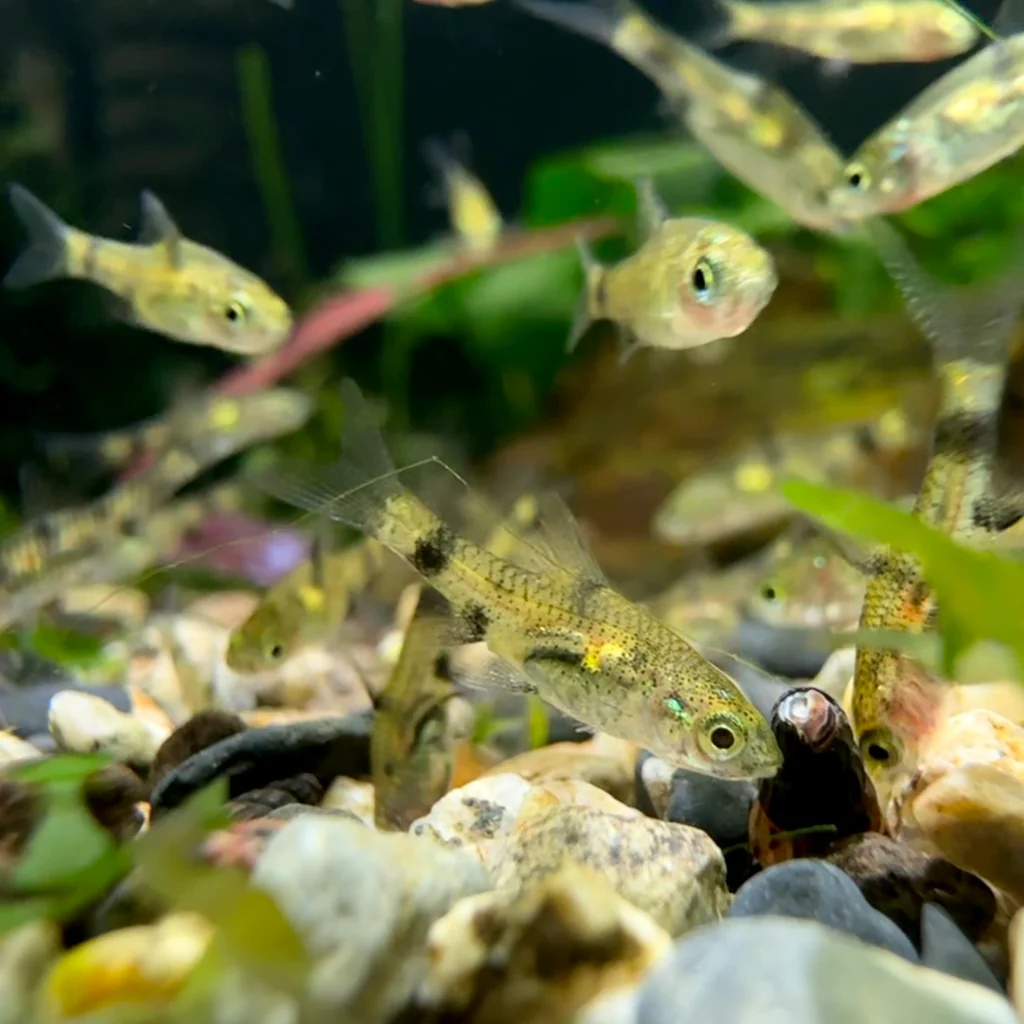
Golden Dwarf Barbs are South Asian natives, but they don’t come from the Borneo river in Indonesia like most barbs. Also, hobbyists consider this tiny barb fish to be a truer nano than other small barbs because of its size.
Natural Habitat
Instead, the golden dwarf barb habitat lies deep in the waters of Pakistan, India, and Bangladesh in the Southern region of Asia. This region is famous for its dense vegetation, which provides shade for the fish in the water.
When building an aquarium for your Golden Dwarf Barb, you must provide dense leaves to create a shaded water environment.
Sizing your Golden Dwarf Barb
This South Asian native fish qualifies as a small schooling barb because it grows to approximately 1 – 1.5 inches in maturity. Due to this small size, Golden Dwarf barbs hide in the bottom silts and plants when in the wild.
With this tiny size and hiding habit, it can be difficult to identify this species in the wild, but when you know what to look for, you’ll notice your pet easily, whether out in its natural habitat or in a group.
Identification & Coloration
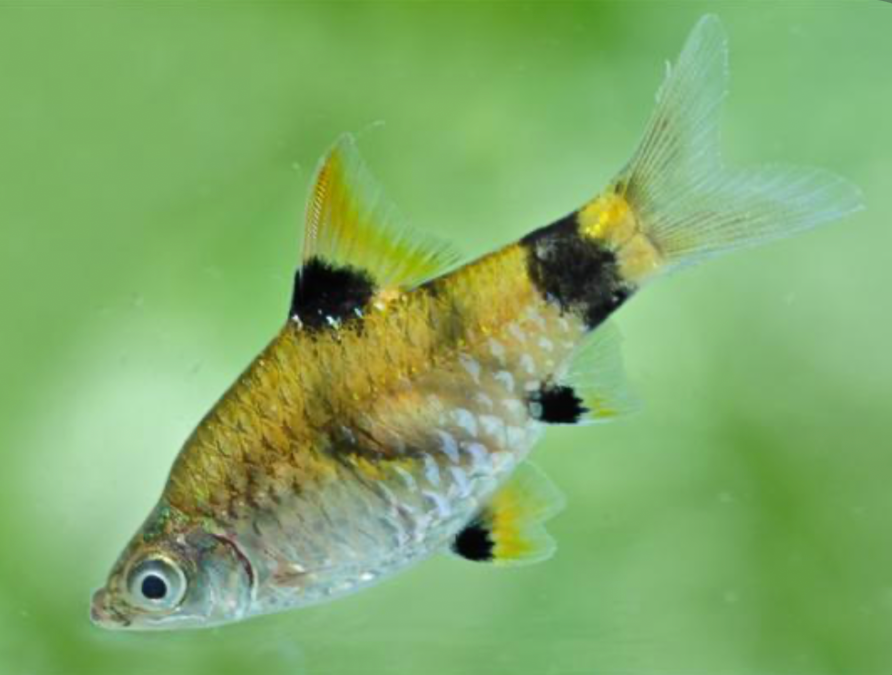
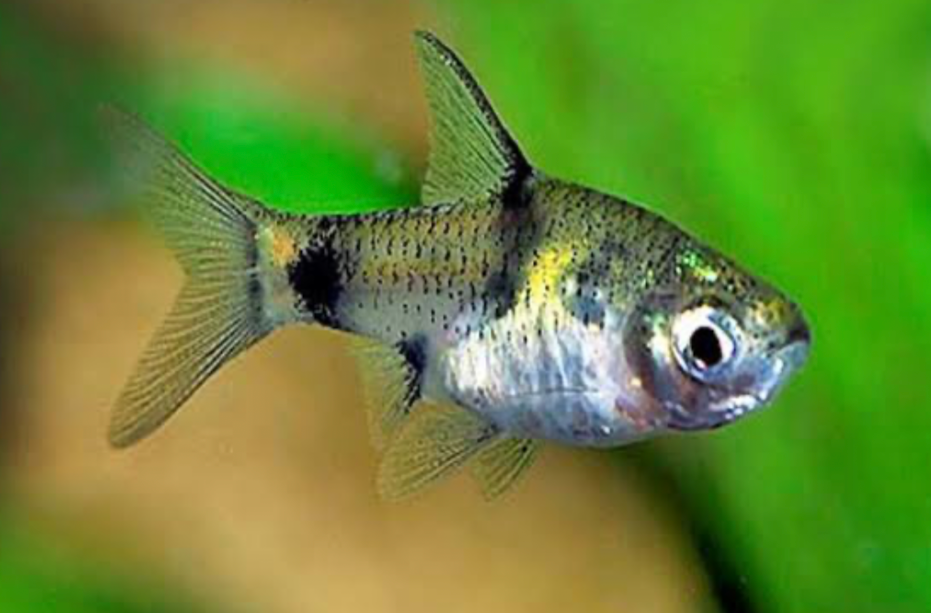
You can identify a golden dwarf barb through its physical appearance and personality traits. Despite being a tiny species, this pet has striking physical features that stand out when placed in groups of five or more.
Identifying a Golden Dwarf Barb
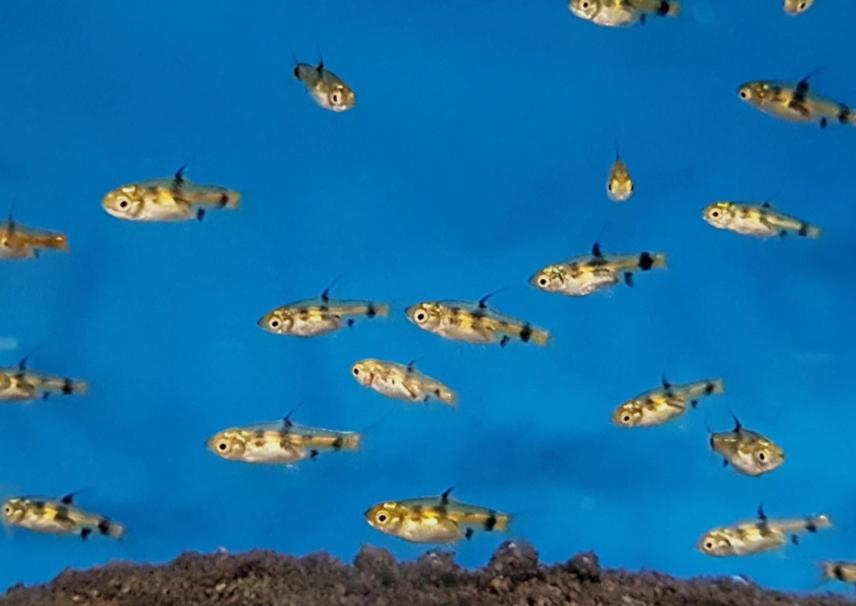
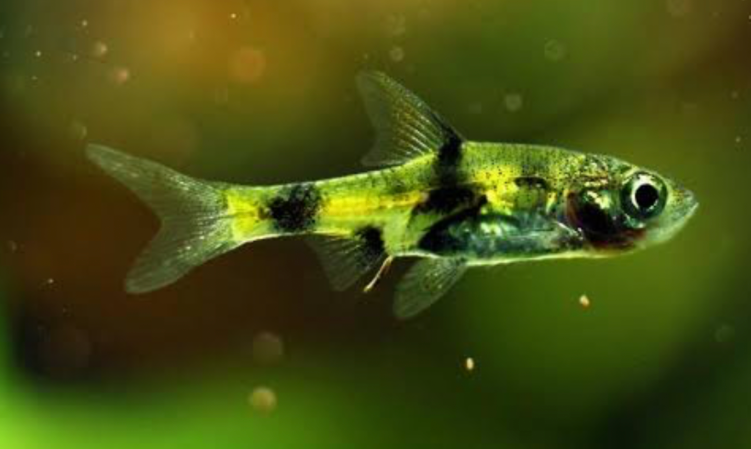
This one-inch pet has short fins and large black eyes. Its fins are translucent, so they are almost invisible in clear water, but you can still see them in certain conditions.
Unique Coloration
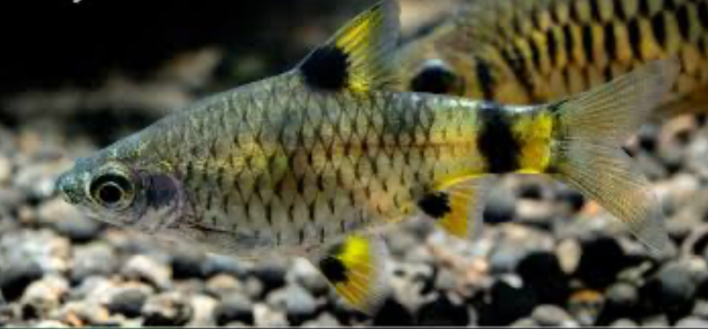
Golden Dwarf barb is a yellow nano fish with a metallic sheen that turns golden under bright light. Its golden skin has black spots and vertical lines forming a combination that stands out against darker backgrounds.
Here’s how to make this small, elegant pet comfortable in a tank.
Tank Size & Aquascape
To create an environment where your Golden Dwarf Barb thrives and stands out, you must get the perfect tank size, aquascape, and water conditions.
Ideal Tank Size for Golden Dwarf Barbs
A 10 – 20 gallon tank will house a small group of five Golden Dwarf Barbs comfortably. It’s the ideal golden dwarf barb tank size if you’re only interested in keeping a small group.
For every extra fish pair you add to the community, add five more gallons of water to the tank, and when the water becomes too much, get a bigger enclosure.
Aquascapes for Golden Dwarf Barb
Golden Dwarf Barbs thrive in a planted nano setup with slow, gentle flow like the rivers in Southern Asia. When setting up their aquascape, ensure enough fine-leaved plants are lining the tank walls to separate them for their comfort.
Add driftwood and fine sand substrates to give the atmosphere a visual similarity to your Golden Dwarf Barb’s natural habitat.
Author’s Note: Check out our post Best LED Aquarium Lighting Units for Your Gallon Tank Capacity for an in-depth review of the best options for lighting!
Water & Filtration Needs
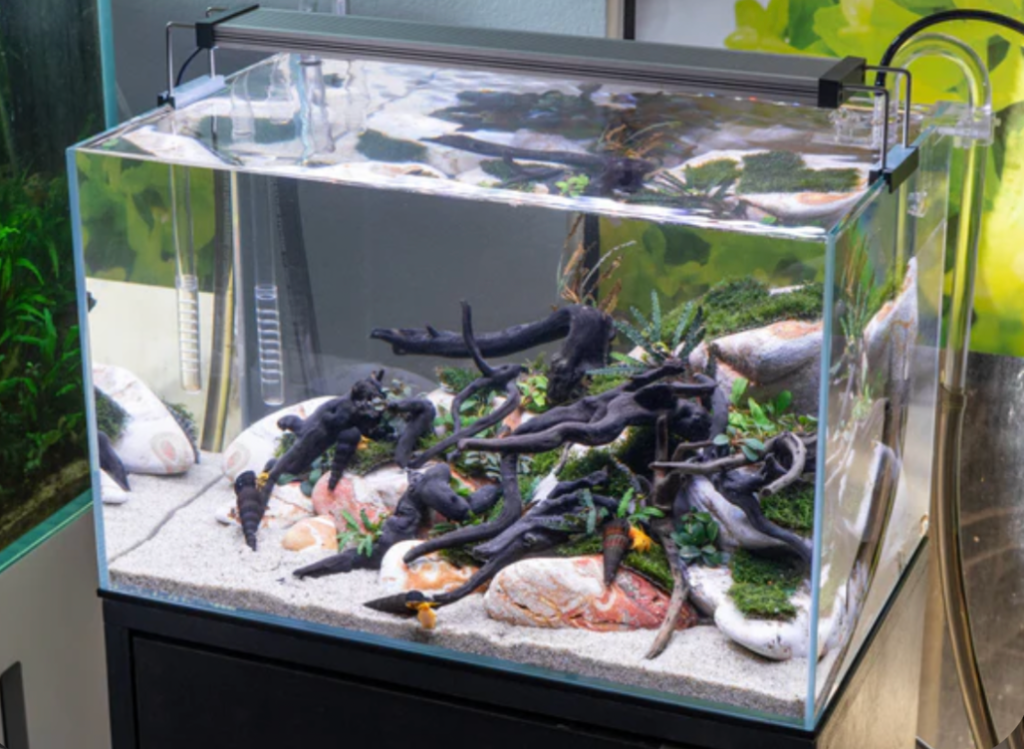
This species prefers soft, slightly acidic water, as do other barb variants. Here’s how you can stabilize and provide soft-water nano care to keep your pet’s environment pristine and healthy.
Water Conditions
Set the following parameters to provide soft, slightly acidic water conditions:
- Temperature: 68 – 77°F
- pH Level: 6 – 6.5
- Hardness: 8 – 15dGH
When it comes to water hardness, it’s always better to stick to the lower end of the acceptable range for the utmost comfort.
Filtration Needs
Keeping your golden dwarf barbs’ water environment clean is a full-time task, but you can automate it or follow a steady routine for periodic changes. Make small water changes of 20-30% weekly in mid-sized tanks and 10-20% weekly in nano tanks to avoid large swings in condition.
Use a gentle filter, such as a sponge filter or a single-canister low-flow filter, to clean the water after feeding your pets.
Diet & Feeding
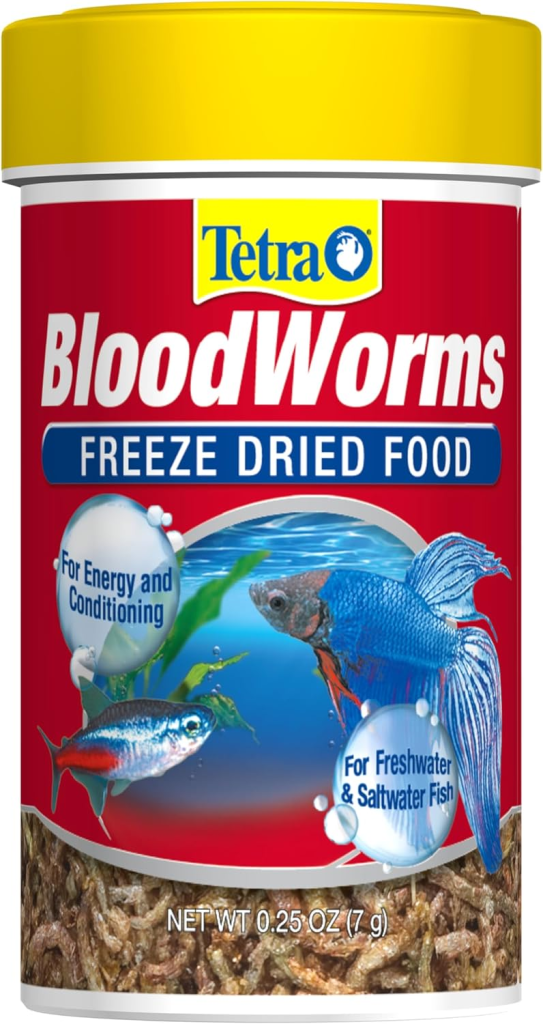
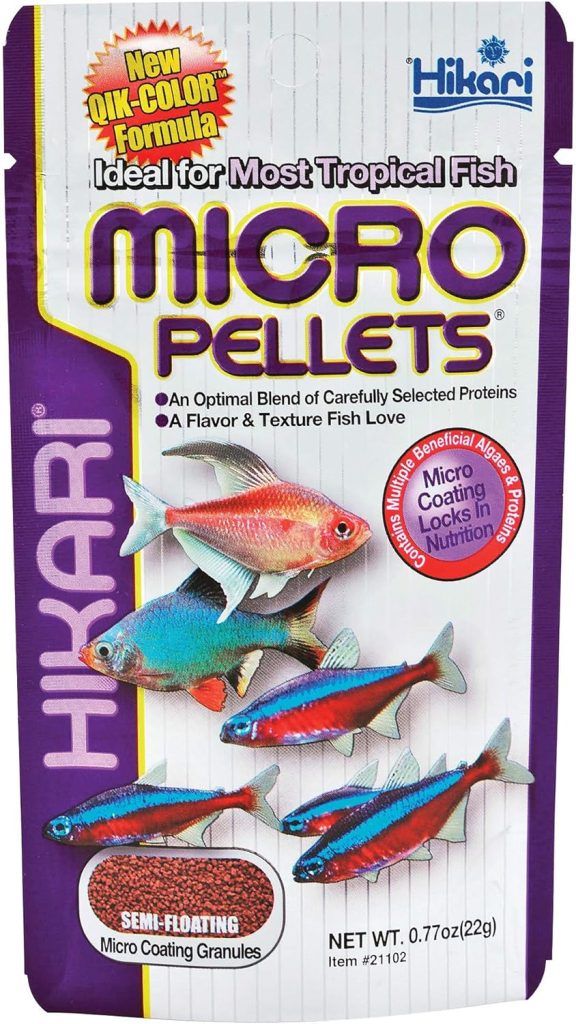
Freeze-Dried Tetra BloodWorms (Left)
Tropical Semi-Floating Micro Pellets (Right)
When feeding Golden Dwarf Barbs, you must first understand that this species is an omnivore. It’ll eat any food you give it, so monitor their intake to ensure it has a balanced diet.
Dietary Needs of Golden Dwarf Barbs
The right kind of food for this tiny species is micro foods for nano fish. They’re the right size for their small mouths and contain all the nutrients they need to grow and develop. You can get them tiny flakes, micro pellets, microworms, and infusoria for juvenile fry.
Author’s Note: For more on feeding your aquatic pets check out The Ultimate Guide to Fish Food: Pros and Cons & Best Choices!
Feeding your Golden Dwarf Barb
Once you sort out your pet’s food, the next step is to create a schedule that regulates your golden dwarf barb’s feeding routine. Frequent small feedings will support growth and help prevent overeating or bloating.
Behavior & Tank Mates
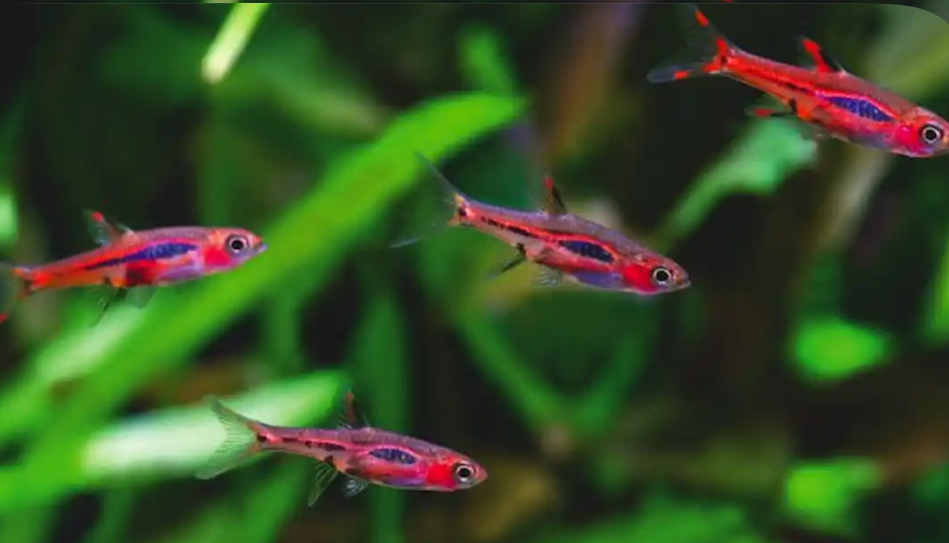
Golden Dwarf Barbs are naturally peaceful pets, making them a shrimp-safe fish. However, pairing them with the wrong tank mates would disturb this peace and pose health risks.
Behavioral Traits
As a nano schooling fish, Golden Dwarf Barbs thrive in groups of 6–10, where they can make a confident display as they interact with other fish in the group.
Ideal Tank Mates
To ensure this peaceful schooling continues, choose golden dwarf barb tank mates that are similar in size and temperament, and that share the same environmental needs. Some species that fit this description include small rasboras, small tetras, and shrimps.
Health & Quarantine
Golden Dwarf Barbs are sensitive to sudden water changes and poor environmental conditions. So, always quarantine newcomers before adding them to the main tank to prevent the introduction of parasites. Here’s how you can preserve your golden dwarf barb’s health.
Maintaining Optimal Health
Start by providing an ideal aquarium environment for your pet by using the tips in this guide. Get them an optimal tank size based on the community capacity, set up the aquascape for comfort, create and follow a strict feeding routine, and pair them with compatible tank mates.
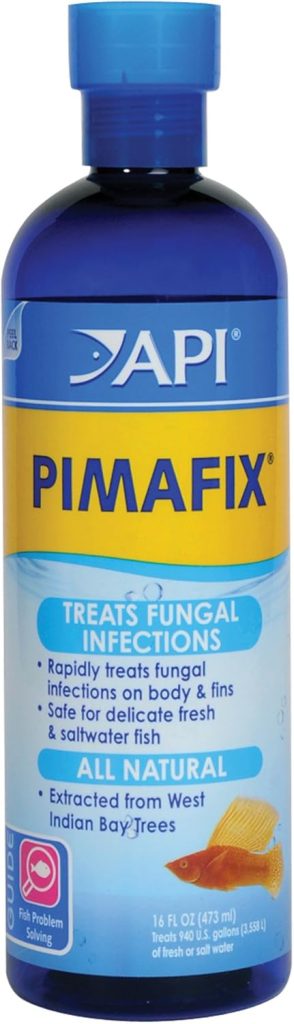
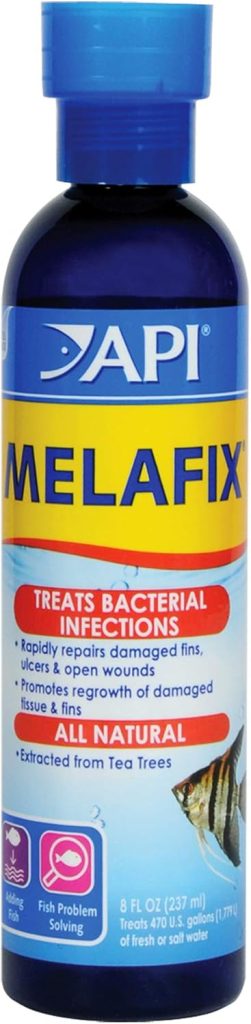
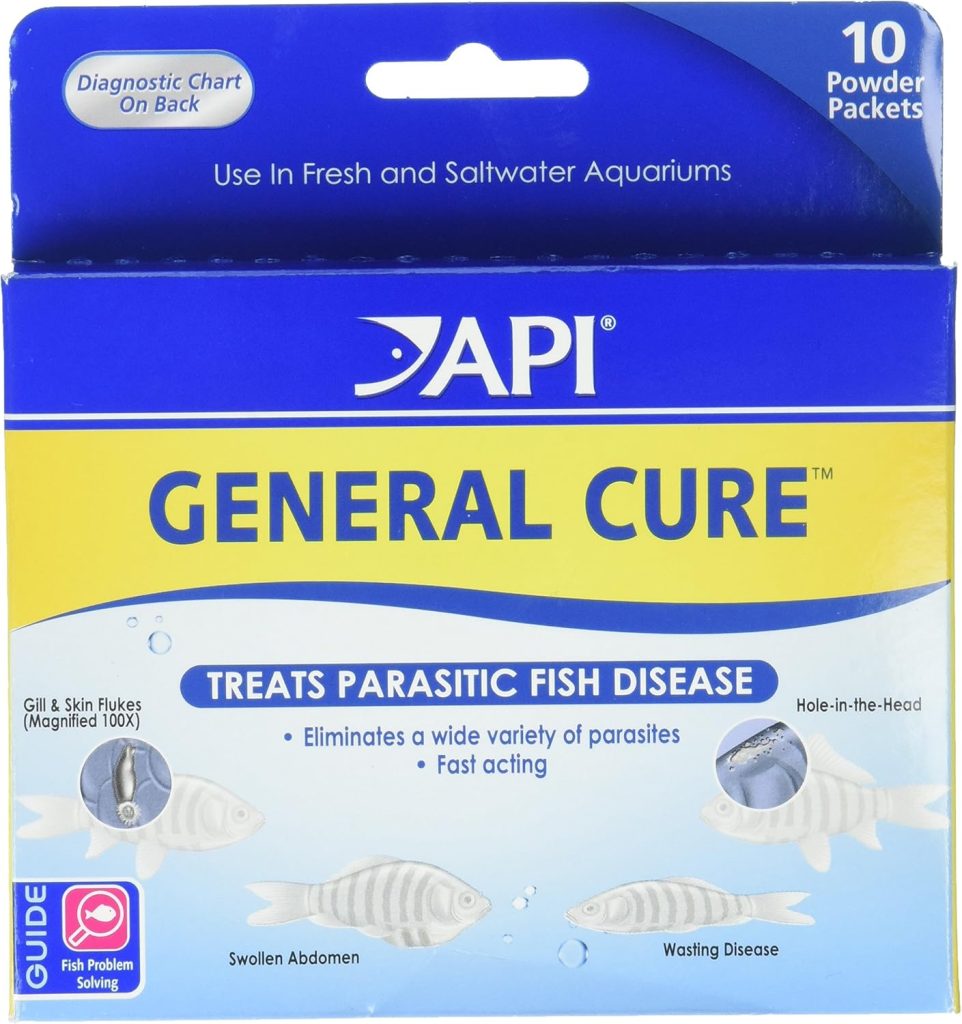
Look out for signs of ill health, such as poor breathing, reluctance to swim, unusual shyness, damaged fins, white spots or velvet dust on the body, and redness.
Immediately quarantine the affected fish and start treatment. First aid includes improving water conditions and administering medication to the affected fish based on its symptoms.
Quarantining Needs and Benefits
Other reasons to quarantine nano fish include ensuring proper acclimation to prevent shock and keeping your other fish safe from infection. Here are some gentle acclimation tips for new stock.
- Place the new fish in a plastic bag filled with water.
- Ensure the water conditions are suitable for your pet. Scroll up for details on water conditions for Golden Dwarf Barbs.
- Place the bag of water containing your new fish inside your main tank for about 12 hours to acclimate it.
- Gently release the bag and let your new fish join the main tank.
During quarantine, observe your new fish to ensure it’s healthy before allowing it to mingle with your other pets.
Breeding & Fry Care
If you’re interested in reproducing more Golden Dwarf Barbs, here are some practical breeding tips for you. Spawns in fine plants; fry start on infusoria and microworms.
Breeding your Golden Dwarf Barb (Conditioning)
Step one of golden dwarf barb breeding is conditioning. That’s the process of preparing your breeding pair for the task ahead by improving their diet and environmental conditions. Increase the water temperature to the highest range and feed them more live foods about two weeks prior.
Breeding Tank
Set up a breeding tank separate from the main tank to ensure proper care for your reproducing pets. Add a spawning mop, large fine leaves, or a smooth ceramic saucer to catch the eggs when the females scatter them.
Keep the water in the breeding tank shallow, as Golden Dwarf Barbs prefer to scatter their eggs in shallow water. Add tall and dense plants as cover to help your pet’s eggs survive the first few days.
Spawning
Female Golden Dwarf Barbs spawn their cluster of 100 – 300 eggs in the early morning. Immediately after spawning, remove the parents from the tank and leave only the eggs in the tank to prevent the adults from eating them.
Egg & Fry Care
Eggs would hatch within a day or two, while the fry would develop and become free-swimming within 4 days. To successfully raise dwarf barb fry, ensure you have infusoria food available for their first few weeks before upgrading them to crushed baby brine shrimps.
For their environment, perform mild water changes every other day, as juveniles are sensitive to poor water quality. Within four weeks of development, they’ll be ready to join the main tank as adult Golden Dwarf Barbs.
Lifespan & Hobby Fit
Your golden dwarf barb’s lifespan is 3–6 years with stable care. That’s why it’s important to provide your pets with the best possible lifestyle you can afford while in your aquarium. Perfect first nano schooling fish for beginners.
Hobby Fit
If it’s your first time choosing a fish as a pet, don’t worry. The details in this Pethia gelius guide are enough to help you achieve success with this species. If you have a small urban apartment, a nano tank, or a desktop display that requires little space, then this beginner nano fish is the best choice for you.
It doesn’t require much maintenance and can survive in small tanks with a group of five.
Conclusion
Golden dwarf barbs are the quintessential beginner planted nano tank species for urban homes with limited display space. This small schooling fish is bright, peaceful, and yet has a bold presence in any tank.
If you choose to keep golden dwarf barb fish in your nano tank, you must use dense plants and pair them with a group of at least four other tiny fish for the best results. They can live alone, but it’s not ideal for their energy and activity levels.
And because nano barb care is easy, adding extra Golden Dwarf Barbs and other compatible fish to your aquarium community would not be a hassle.


