
This is a detailed care guide for the Five-Banded Barb, a calmer and smaller alternative to the popular Tiger Barb fish species, suitable for planted nano tanks and community setups.
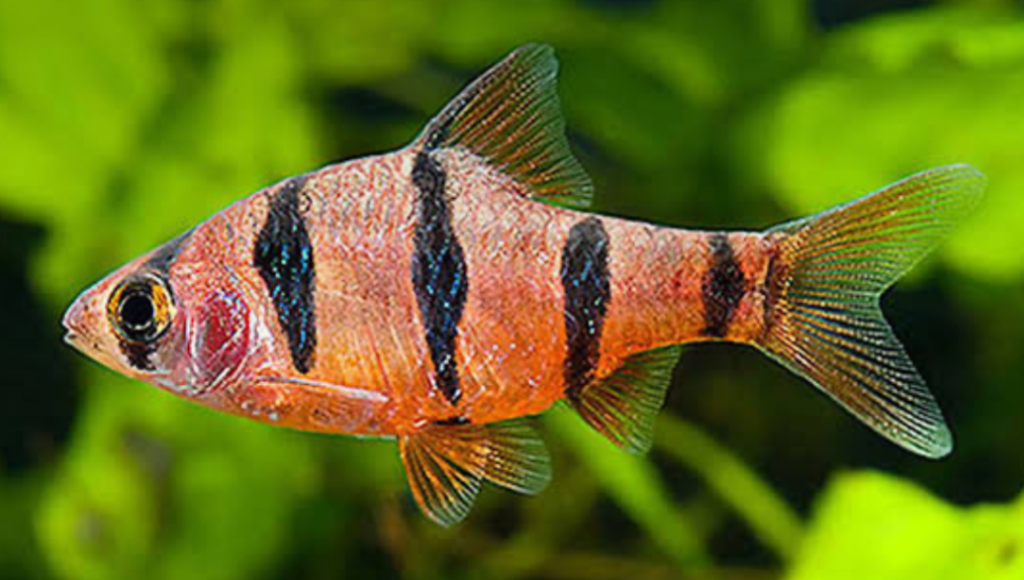
Five-Banded Barb: Striped but Subtler Than Tiger Barbs
If you love Tiger Barbs but don’t care for their spunk and energy, then this calm tiger alternative is a suitable choice. Five-Banded Barbs, also called Demopuntius pentazona, are a smaller species with a calmer temperament than the popular Tiger Barb, although they share a similar appearance.
Because they’re calmer and less nippy, managing the five-banded Barb’s care routine is easier. They eat a wide range of omnivorous foods and thrive in an average tank with a simple planted aquascape.
Author’s Note: Check out our post 13 Types of Barbs That Are Perfect for Colorful Beginner Nano Tanks which includes details on even more barbs to choose from!
Keep reading for tips on essential pentazona care routines that’ll keep your pets healthy and make them good community tank companions.
Natural Habitat & Range
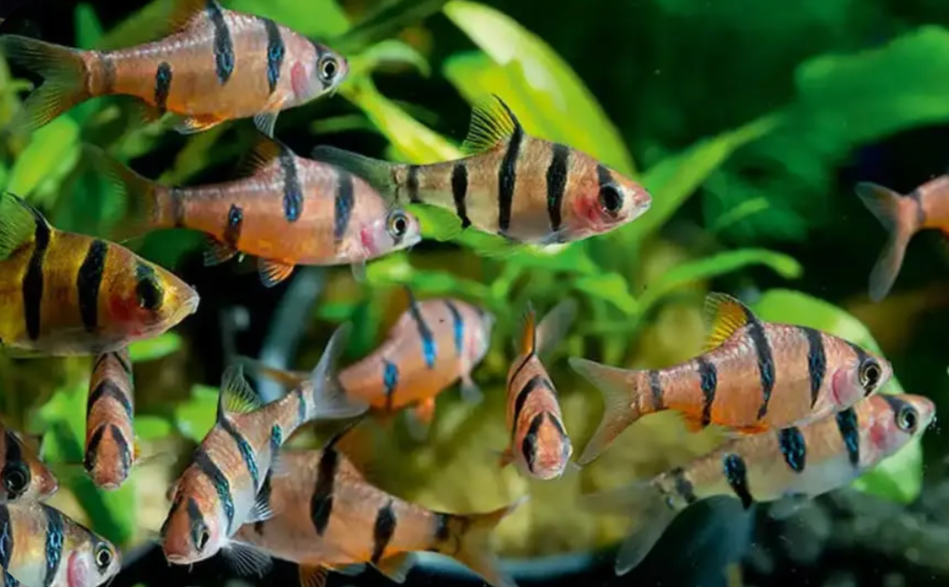
Five-banded barbs originate from the Southeast Asian forest streams of Borneo but have migrated over time to Sumatra, Malaysia, Thailand, and Indonesia. Due to their natural five-banded Barb’s habitat, this pet prefers shaded, planted waters when kept in aquariums.
As a forest stream fish, you have to keep your five-banded Barb in swampy waters covered with blackwater from tannin dissolution and peat.
To create this effect, it’s best to include leaf litter in your substrate or aquascape and regulate your water current to a gentle flow like the slow streams of the Southeast Asian forest.
Because this leaf-litter Barb looks like the Tiger Barb, beginners and even some intermediate hobbyists may mistake it for the other during identification.
So, here’s a detailed description to help you identify a Five-Banded Barb like a pro.
Identification & Size
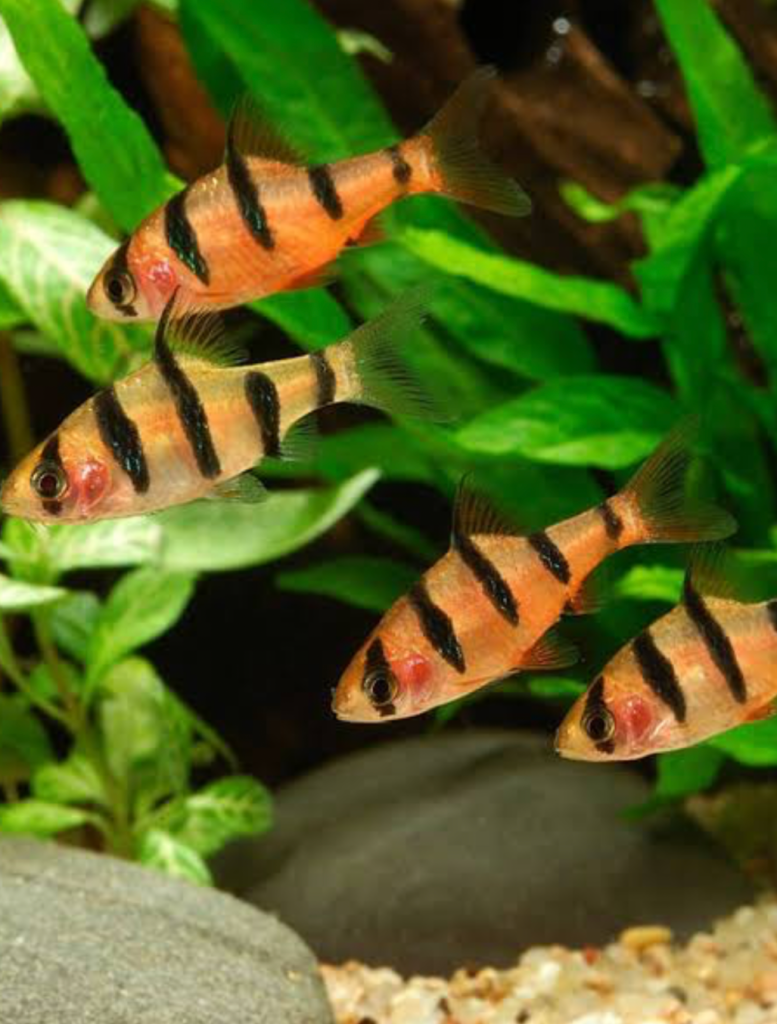
You can first identify the five-banded barb species through its physical features, such as coloration and size. Later on, you’ll be able to distinguish this pet by its temperament and personality.
Unique Coloration
Five-banded barbs are orange fish with five distinctive black vertical bands along their bodies. They’re a small species that grows only a maximum of 2 inches in maturity.
Being a small striped barb doesn’t reduce its aquatic appeal, though. Hobbyists still enjoy its attractive patterning and prefer its calm nature and small body, especially if they intend to keep nano tanks.
Even if you want a small or medium-sized tank, adding a Five-Banded Barb to the community would elevate your aquarium.
Tank Size & Setup
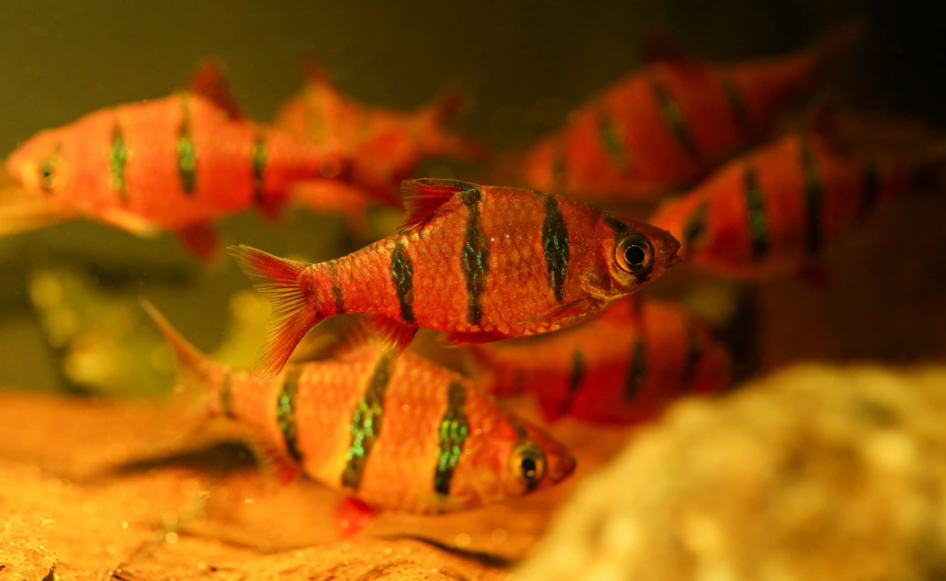
Setting up a tank for your five-banded Barb requires attention to detail, from tank size and aquascaping to essential tools and community mates.
Five-Banded Barb Tank Size
The trick to getting a perfect five-banded barb tank size is to choose an enclosure that’s large enough for your pets to move without them getting lost in its size. So, for a 2” sized fish, a tank that holds 10 – 20 gallons of water is ideal.
As for the shape, you can choose between a long, tall, round, or wide tank depending on the size of your aquatic community. For small communities of less than five small fish species, use a tall tank; for singles or pairs, choose a round tank; and for large communities exceeding five fish, a wide tank is best.
Aquascaping
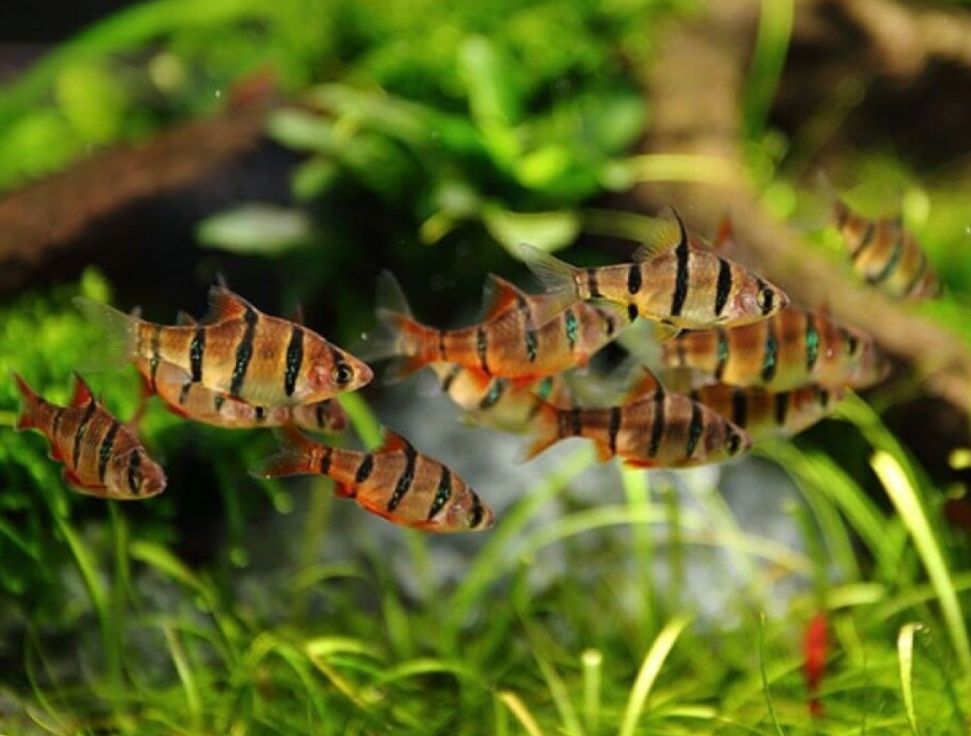
Remember that this species originated from forest swamps, so you must build a planted nano setup for them to thrive. While lining your tank corners with fine, live plants, leave an open swimming space for mobility around the tank.
Use plants such as Amazon Swords, Java Moss, and Java Fern for your aquascape. Add Indian Almond Leaves as litter to release brown tannins and create a backwater environment.
Author’s Note: Check out our post Best LED Aquarium Lighting Units for Your Gallon Tank Capacity for an in-depth review of the best options for lighting!
Community Living
Because Five-Banded Barbs are a tiny species, you must pair them with similar small community fish species and tank mates for peaceful living. Strategically place smooth-surfaced rocks and caves as hiding spots throughout the tank for your pets to rest when needed. Keep reading for recommendations on suitable tank companions.
Water & Filtration
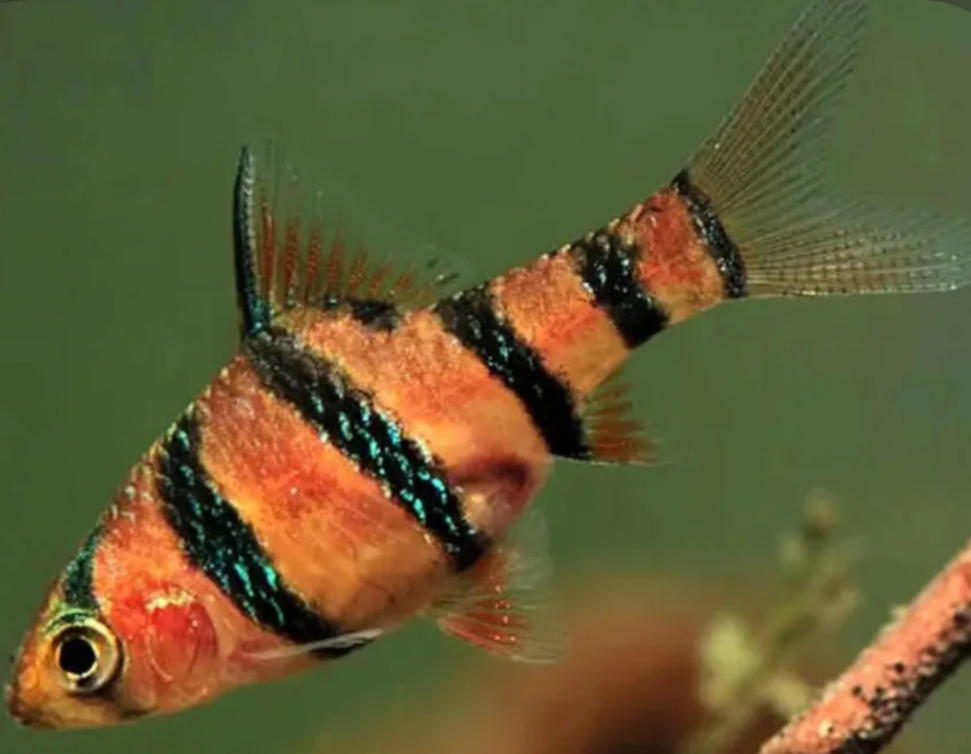
Your five-banded barb water should be soft, slightly acidic, and moderately filtered for maximum comfort.
To keep your water soft, maintain a pH between 5 and 6, which is slightly more neutral than in the wild, where pH is often 3-4.
To accommodate these soft-water barbs, keep the nitrate level low by performing regular small water changes of 20-30%. Maintain a hardness of 5-10 dKH and a temperature of 72-76°F.
Filtration System
Filtration in nano tanks must be moderate, keeping the water clean without stressing your five-banded barb fish or sucking them into the filter.
Using a filter is necessary to clean the water after feeding sessions, keeping it healthy for your pet.
Diet & Feeding

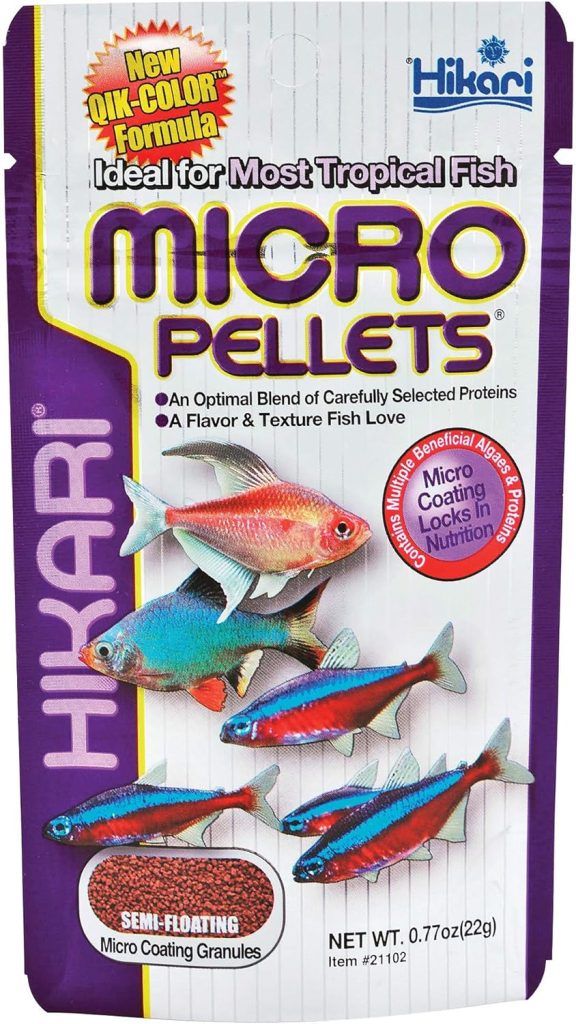
Freeze-Dried Tetra BloodWorms (Left)
Tropical Semi-Floating Micro Pellets (Right)
Five-Banded Barbs are omnivores. They’ll eat anything made of animal and plant matter, but it has to come in chewable sizes. Omnivore prefers small pellets, flakes, and frozen microfoods.
Nano Fish Diet
Prepare a micro food barb diet for this small fish, starting with micro pellets and flakes as staples. Then supplement their daily commercial food intake with frozen microfoods such as bloodworms and brine shrimp.
Author’s Note: For more on feeding your aquatic pets check out The Ultimate Guide to Fish Food: Pros and Cons & Best Choices!
Feeding your Five-Banded Barbs
You must also regulate your five-banded Barb’s feeding habits because they eat a lot. Start by confining their feeding to their natural swimming areas in the mid to bottom level with sinking foods.
Then regulate their food intake so they can finish within 2 minutes. And finally, ensure a feeding routine of no more than 2 times daily to reduce the risk of overeating and obesity.
Behavior & Compatibility
Did you know that you can keep your Five-Banded Barb in a peaceful nano community with other species?
Although, as nano-tank pets, many hobbyists keep Five-Banded Barbs alone or in pairs, they thrive in groups of six or more. Being in a group encourages this species to interact and display its unique colors without worrying about its temperament.
There’s a catch, though. You must choose suitable tank mates for this community, as the wrong pairings can lead to problems and chaos in your aquarium.
Compatibility for Community Tanks
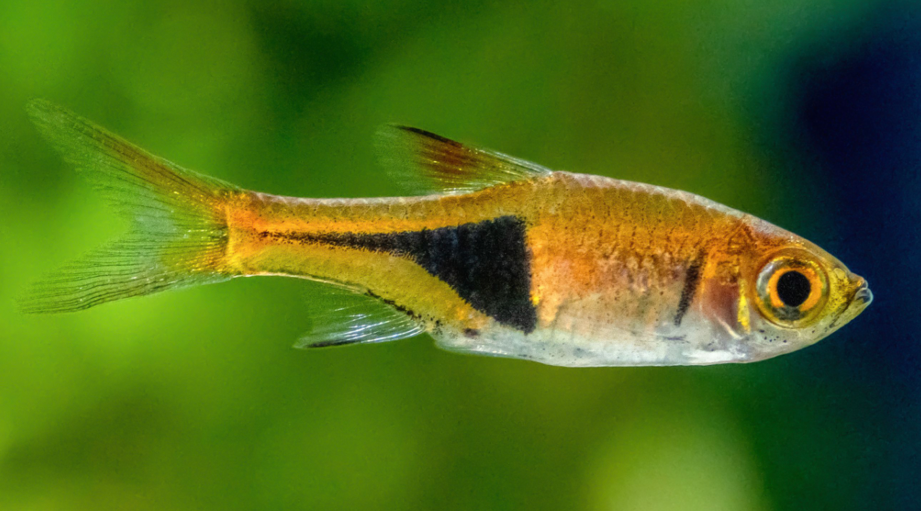
Compatible five-banded barb tank mates for a diverse community would have similar small bodies, peaceful natures, similar water temperature requirements, and similar food preferences. Using these qualities as a guide, tetras and Rasboras lead the list for most compatible mates for your Five-Banded Barbs.
You can even diversify your aquatic community and include shrimps in the mix without worrying about upsetting your Five-Banded Barb.
Health & Common Conditions
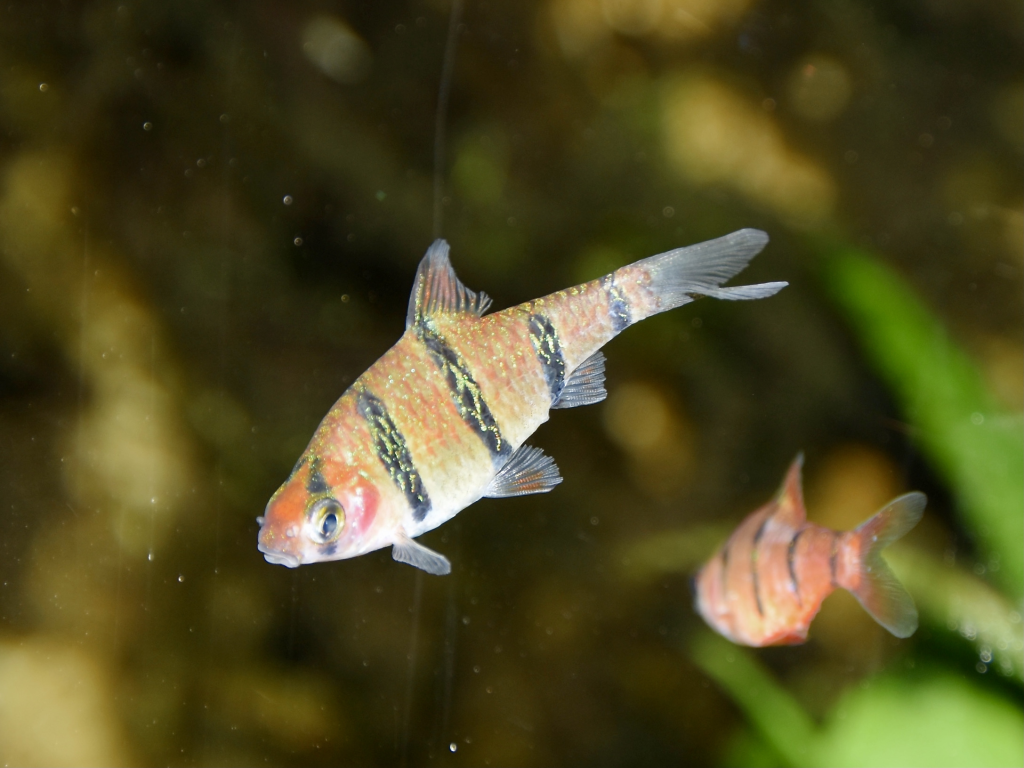
Despite being a tiny fish, nano Five-Banded Barbs are resilient and can withstand harsh conditions. However, they prefer stable, soft water with peaceful tank mates. To ensure optimal five-banded barb health, you must provide stable water care and avoid stressful conditions.
Here’s a summary of how your pets can avoid stress, and in case that fails, there’s a list of common conditions and how to treat them.
Avoiding Stress
Two of the most common stress triggers for your five-banded Barbs are unstable water conditions and incompatible tank mates.
Consistent large water changes with heavy currents lead to unstable water conditions. So, avoid making large changes weekly. Instead, pace your pets by changing only 20-30% of the water once a week, or every other week if you have a medium-sized tank.
Select only peaceful, compatible tank mates for a diverse community, or stick to a species-only tank setup. Avoid large and long-finned species as they’ll cause fin nipping. Scroll up for recommendations on suitable tank mates.
Common Health Conditions, Symptoms, and Treatment
Your Five-Banded Barb is prone to typical aquarium illnesses such as:
- Ich (white spot diseases): This is caused by a parasitic infection.
- Fluke: This parasitic infection causes excess mucus and itching.
- Columnaris: This is a skin disease caused by bacterial infections in poor water environments.
- Lethargy: This is caused by stress.
Author’s Note: Check out How to Treat Ich Outbreaks in Your Freshwater Fish for more information on Ich!
Once you identify the illness, treating the affected fish is easy. Immediately quarantine your pet so that it doesn’t affect the other healthy pets in the aquarium.
During quarantine, improve your tank conditions by changing 20-30% of the water, removing the stress factor (whether it’s a troublesome tank mate or poor aquascaping), and stabilizing water conditions.
Breeding Notes
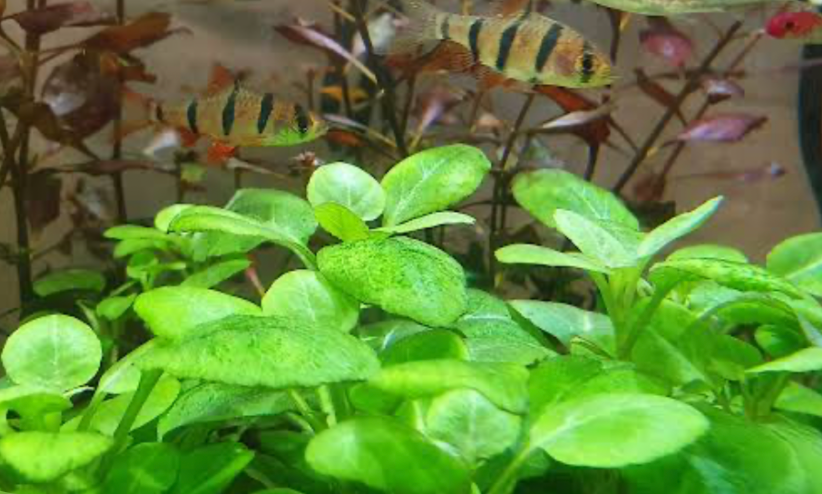
Five-banded barb breeding steps are straightforward, as this species is an egg-scatterer. The process starts when you set up a separate breeding tank and condition your pets ahead of the upcoming task.
Prepping the Breeding Tank
Set up a separate tank for breeding your juvenile Five-Banded Barb fish species. You can get a 5 – 10 gallon tank layered with a spawning mop to catch eggs and set it to the right water conditions as stated above.
If you don’t have spawning mops, you can use dense plants like Java Moss to catch the eggs.
Conditioning Your Pet
Increase the water temperature to the highest level (about 76-80°F) and increase your pets’ protein intake. Do this about two weeks before breeding, then place the breeding pair into the designated tank.
Spawning
Female barbs will spawn pentazona eggs at dawn, and the spawning mop or dense plant would catch the eggs. Remove the parents immediately to prevent them from eating their eggs.
Egg and Fry Care
Watch your pets’ eggs for 12 – 24 hours, within which they’ll hatch, and after about 3 – 4 days, they’ll start free swimming. You must raise the fry yourself by feeding them tiny starter food, such as infusoria, until they’re large enough to chew crushed food.
Lifespan & Keeper Fit
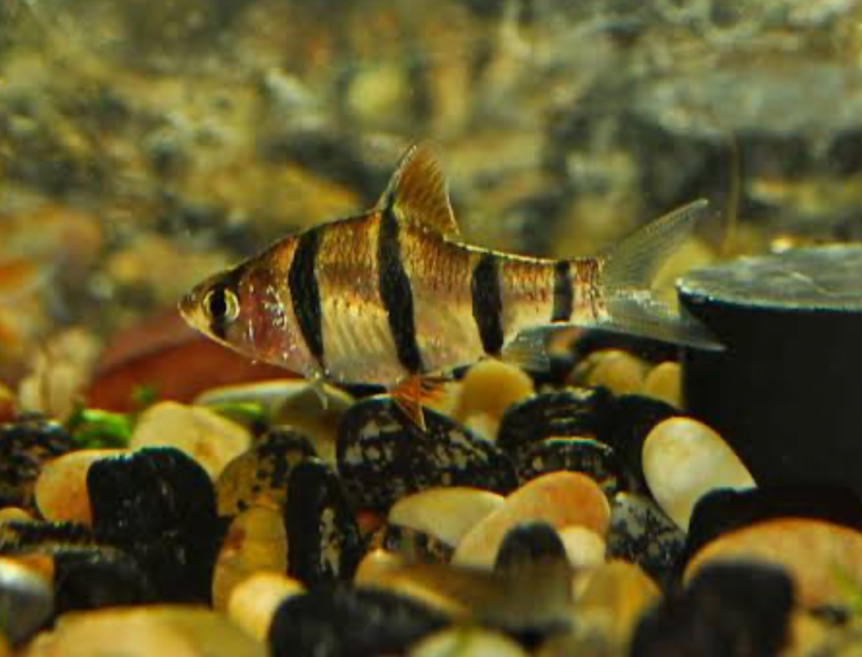
With excellent care, your five-banded barb’s lifespan can be 3–6 years. That makes this species a lovely beginner’s choice, especially if you want a calm schooling fish that’s a looker. It has the beauty of the Tiger Barb without the aggressive nature.
So, are you ready to add this beginner-patterned Barb to your community tank?
Conclusion
You can now successfully keep five-banded barb species for 3 to 5 years.
This patterned nano fish gives the same striped appeal as the classic tiger barb, but with calmer community behavior, making it suitable for a diverse tank environment.
For optimal Desmopuntius care, fill your tank with soft, live plants, driftwood, and leaf litter for tannin. And if you place your pets in groups and maintain soft water conditions, you’ll get the best behavior out of your Five-Banded Barb.


1 thought on “Five-Banded Barb Care: Peaceful Striped Barbs for Community Tanks”