
Get detailed insight into the best healthcare for the uniquely formed Balloon Molly species, a selectively bred molly fish that stands out as a centerpiece in any aquarium.
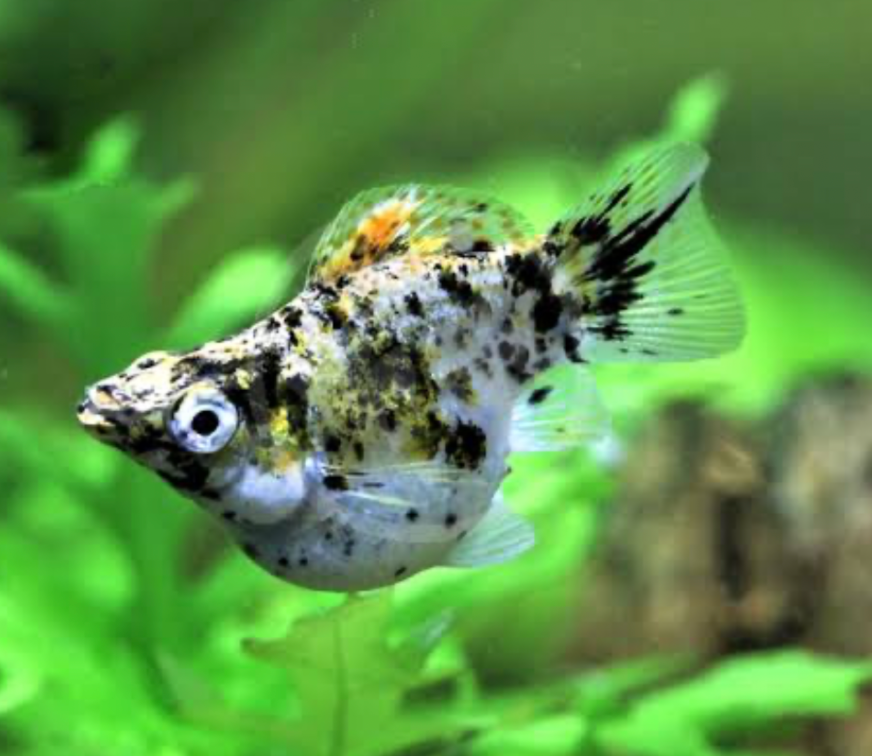
Balloon Molly Care Guide: Unique Round-Bodied Molly for Community Tanks
The Balloon Molly fish species is an ornamental variant of the common Molly, scientifically known as Poecilia sphenops. Because of its unique, round body, many beginners often mistake this fancy molly fish for a pregnant common variant, but they’re wrong.
In the world of selectively bred ornamental mollies, the balloon shape stands out because you’ll get all the classic personality traits of your common Molly in a fancier body shape. Because of this morphology, though, you’ll need to modify your balloon molly care routine, especially its dietary and environmental needs. These modifications are easy to follow as you’ll learn in this guide. So, here’s a highlight of all the best parts of this beginner livebearer fish.
Author’s Note: Check out our post on the 12 Types of Mollies That Make Perfect Beginner Fish for an in-depth overview of the wide variety within this species!
Balloon Molly Scientific Name, Origin, and Classification (Poecilia sphenops variant)
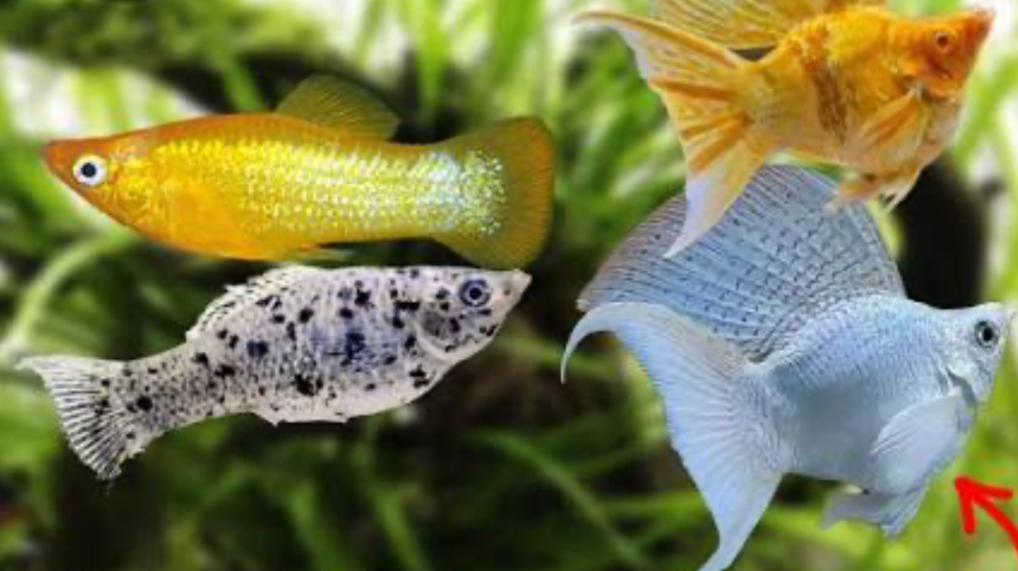
As a beginner, learning the difference between the scientific name, origin, and classification of this Poecilia sphenops variant will help you to better understand its uniqueness.
Through its classification, you can correctly identify the parent species needed for selectively breeding the Ballon variant, while the origin story tells you more about its natural habitat.
Classification of the Balloon Molly
Knowing the scientific classification of Molly fish will help you better understand the origins of the Balloon variant.
It’s from the Poeciliidae family, but specifically the Poecilia genus. Under this genus, there’s the subgenus of Mollies with various species based on their physical appearance.
You may know the common Molly as Poecilia sphenops (P. sphenops). There are also selectively bred sub-variants, including the Sailfin, Shortfin, and P. Velifera.
Natural Habitat of the Balloon Molly
You won’t find the balloon molly fish in the wild, but you can find its predecessors in the Mexican rivers that flow all the way to Venezuela.
Genetic Origin of the Balloon Molly
Balloon Mollies are a hybrid of the common Molly and Shortfin Molly, which is why Poecilia sphenops is the typical balloon molly scientific name. But the variant bred from the Sailfin Molly is called the Poecilia latipinna.
With the Sailfin Molly and Common Molly breeds, you’ll get a balloon shape with high dorsal fins. At the same time, the Common Molly and Poecilia velifera cross-breed creates a larger balloon molly variant.
Appearance
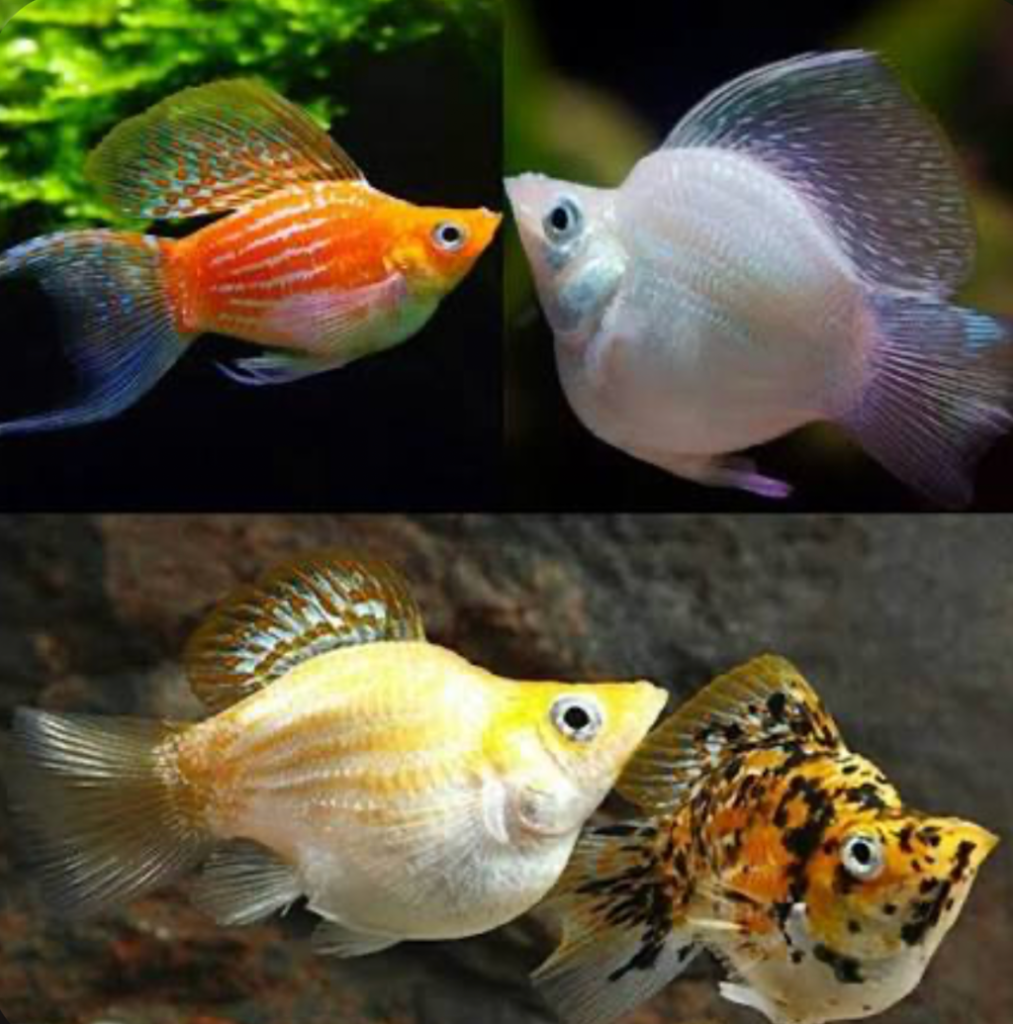
As you understand by now, the Balloon Molly’s appeal lies in its unique, rounded appearance, which is actually a developmental defect. So, let’s dissect this Balloon Molly appearance and what makes it different from other Molly variants.
Spinal Compression
Balloon Mollies have a spinal compression that shortens their bodies compared to regular Mollies. That’s why their lower bodies are rounder and thicker despite their heads being smaller.
And this compression doesn’t affect their fin structure, because this rounded molly fish can have different fin shapes, from lyretail to veiltail to regular short fins.
Size and Color
An average balloon molly size in maturity stretches between 3.3 and 3.9 inches and can signify sexual dimorphism because females are often larger than males. But the sizing isn’t the only difference between the Balloon Molly sexes.
This short-bodied aquarium fish has a variety of color morphs that appear duller or brighter based on their sex. The males are often more vibrant and colorful, while the females appear duller and muted but have larger bodies.
They inherited these color morphs from their original parents, so you can have a Balloon Molly in any color or pattern as long as it exists in its natural form.
Tank Setup
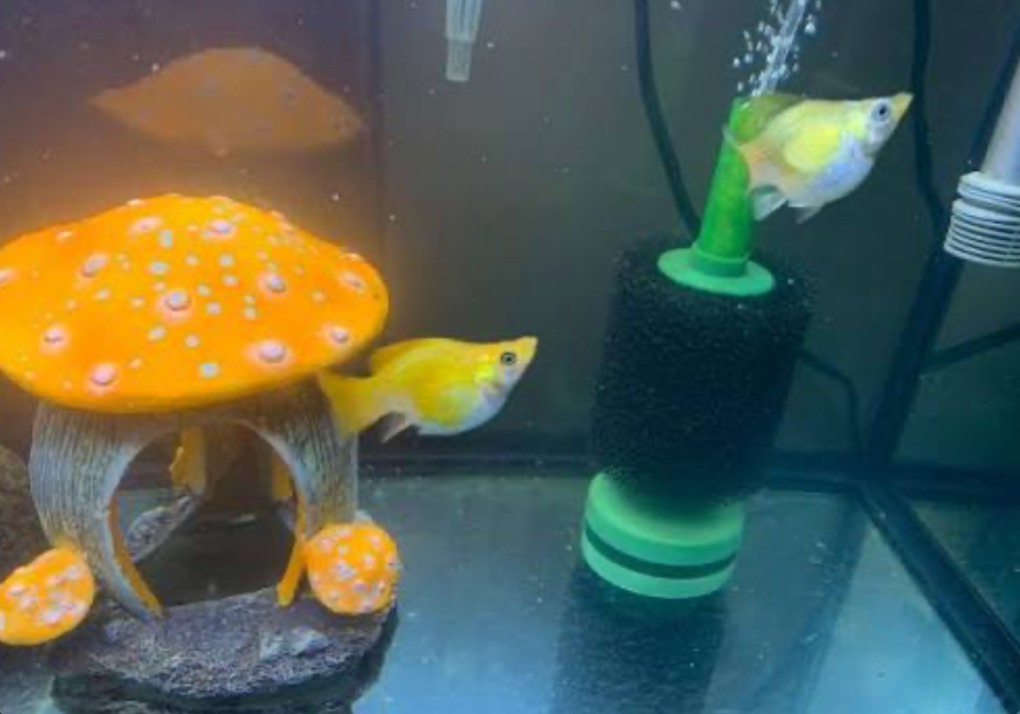
If you know how to set up an aquarium for mollies, then you’re halfway through prepping the ideal environment for your Balloon variant. But if you don’t, it’s also alright. This guide contains a step-by-step process for setting up the ideal aquarium for your Balloon Molly.
Enclosure Type and Size
Because this variant is smaller than most of the other ornamental mollies, your balloon molly tank can be about 10 – 20 gallons per small group of four to five.
You may choose a tall or wide tank depending on your preference and available size, but it’s best to go for the wide shape. Wider tanks allow for comfortable horizontal swimming in ways that a tall tank may not accommodate.
Aquascaping
Your aquascape will make or break your molly tank setup because it sets the tone for the overall theme and comfort level. Due to their natural parents’ origins, Balloon Mollies thrive in gentle, flowing waters with dense plantations.
Fill your tank with muddy, clay, or silt substrates that are no more than 1m deep. Then add fine-leaved vegetation such as Sagittaria, Nasturtium, and Lemna.
You can also add aquarium rocks for their mineral content and driftwood to boost algae growth for them to graze.
Building your Community
Once you set up your planted livebearer tank, you’ll have to decide whether you want a species-only tank or a diverse community. But note that whatever you choose must not include aggressive tankmates that’ll stress and frustrate your Balloon Molly fish.
Water Conditions
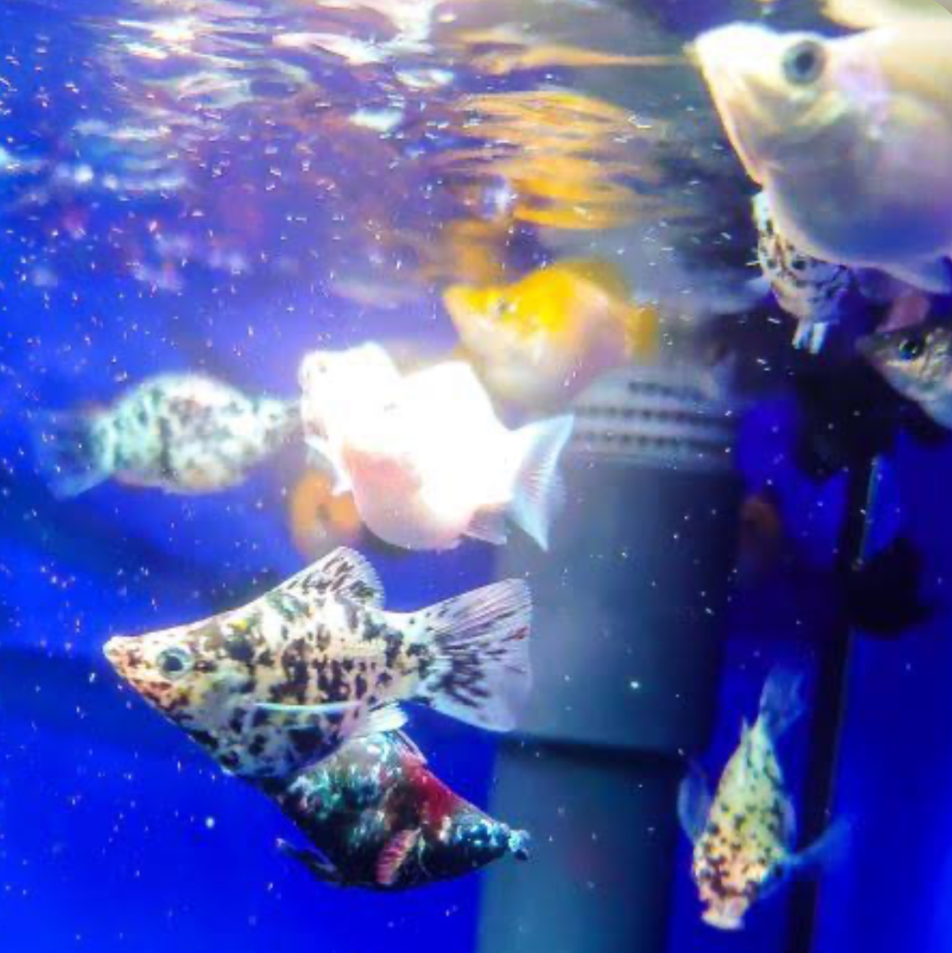
Balloon Mollies are a hard-water fish species with a preference for alkalinity. To achieve warm alkalinity in your balloon molly water environment, here’s what you need to do:
Set a temperature between 72 – 78°F, a pH balance of 7.5 – 8.5, and a general mineral hardness between 10 – 25dGH.
Note that Balloon Mollies are sensitive to sudden spikes and fluctuations in water conditions. So, use a high-quality, gentle filter, such as a sponge filter, to stabilize your molly water parameters within acceptable conditions.
This filter would also keep the water clean after feeding sessions, so you won’t have to worry about uneaten food contaminating the aquarium.
Diet
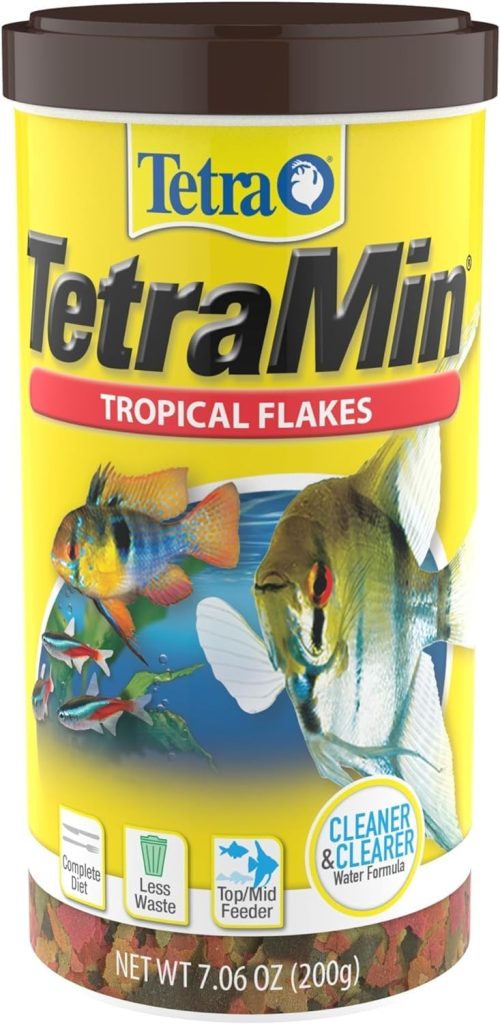
TetraMin Tropical Flake Food (Left)
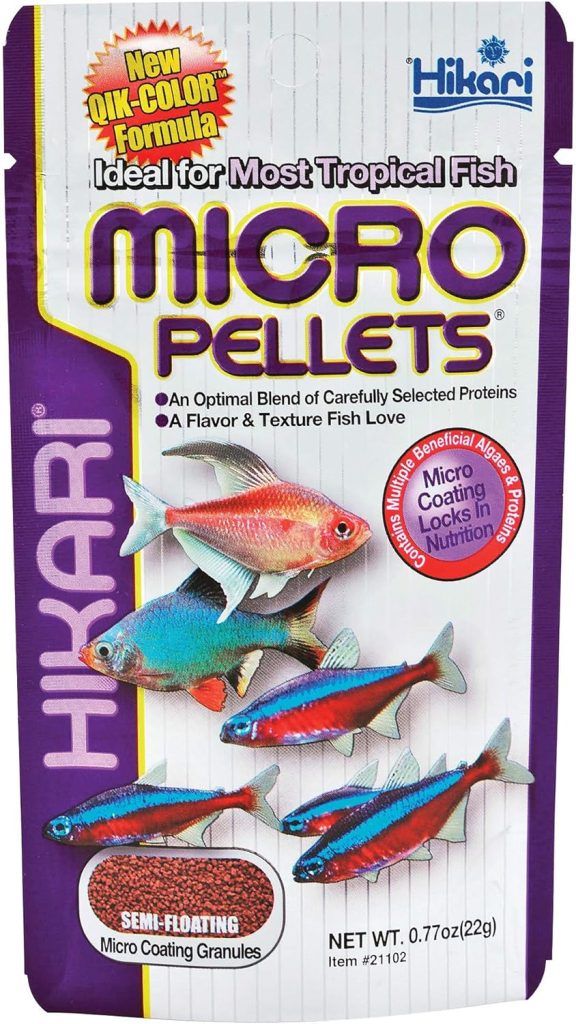
Tropical Semi-Floating Micro Pellets (Right)
Balloon Mollies, like their ancestors, are omnivorous aquarium fish, meaning they eat a variety of foods, including animal matter and plant matter.
However, they have a preference for plant-based foods over animal-based sources because they’re natural grazers.
To balance their love for plant foods with their need for protein-rich foods for healthy development, you must curate a Molly fish diet that combines all these sources.
Balancing your Balloon Molly’s Diet
As an algae-eating fish, a Balloon Molly needs a variety of vegetables, including algae wafers, high-quality commercial flakes, pellets, and spirulina, in its daily diet. These vegetable matters would aid their digestion and boost their gut health.
Meanwhile, they need supplementary animal food sources, such as frozen or freeze-dried bloodworms and brine shrimp, to enhance their colors and build their muscles. They can even eat insect larvae, such as mosquitoes, as occasional treats every other day.
Author’s Note: For more on feeding your aquatic pets check out The Ultimate Guide to Fish Food: Pros and Cons & Best Choices!
Feeding your Balloon Molly
Small but frequent balloon molly feeding schedules work best for this species. Give them their staples twice to three times daily, but in small portions that they’ll finish within 1 – 2 minutes.
Because of their grazing habits, you must remove uneaten food after every feeding session. Or to aid the algae clean-up, you can add other algae-eating livebearer species.
Tank Mates
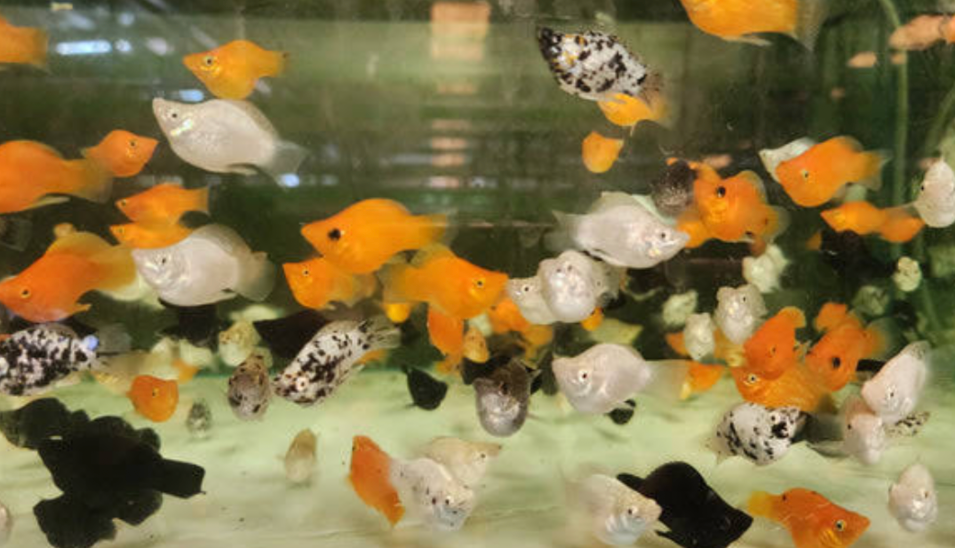
Ideal balloon molly tank mates are species that can thrive in the same freshwater-brackish water conditions with the hard alkalinity. Choose species that eat the same kinds of food so that feeding sessions would be easy, and at the same time.
They should also be peaceful and similar in size to your pet to avoid fin-nipping and other aggressive behaviors.
Some of these peaceful aquarium fish include other livebearers such as Platies, Guppies, and Swordtails. You can add Corydoras Catfish as peaceful bottom dwellers, while egg-scattering species like small Tetras, Danios, and Loaches would increase tank diversity.
When choosing your Molly community fish, you can decide to have a species-only tank and diversify your aquarium with other Molly variants like common mollies, P. latipinna, and P.vilifera.
Avoid fin-nipping barbs, long-finned species, and fast fish that’ll taunt your slow-moving Balloon Mollies.
Breeding
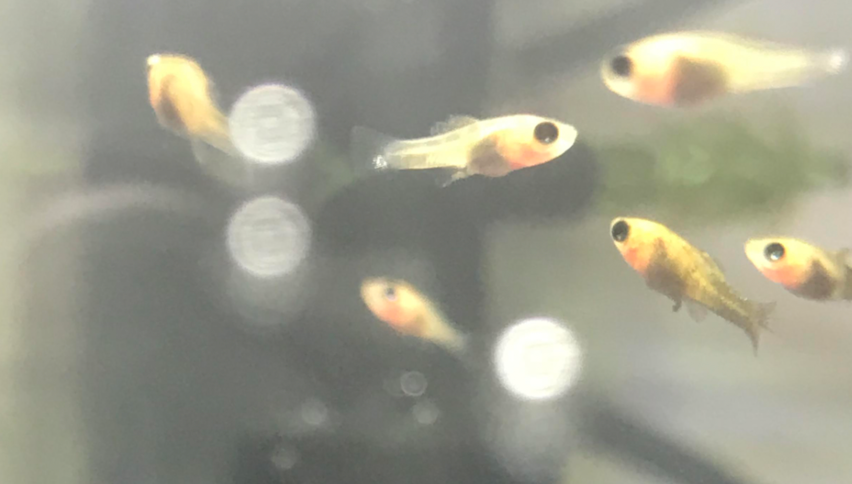
Because the livebearer fish breeding cycle skips the egg stage, you must be extra cautious during reproduction. The juvenile free-swimming fry would be born directly into whatever environment you set up, so you can’t afford to make mistakes.
Setting up the Breeding Tank
Firstly, you must get a separate balloon molly breeding tank for your pets, as they need slightly different water conditions and an environment.
They’ll still survive in a 10 -20-gallon tank, but you must increase the water temperature to 78 – 80°F, while the pH level should stabilize between 7.5 – 8.0. Add enough vegetation to serve as hiding spots for the fry after birth, and prepare your breeding pair or group for reproduction.
Some vegetation you can add includes Wisteria and Water Sprite for safety.
Conditioning the Breeding Pair
Select your breeding pair if you’re choosing a single male and female or a group with more than one female. The optimal breeding ratio for healthy reproduction is 3 females per male.
Ensure the breeding females are older than six months and the males are at least eight months old. You can mix a common Molly with a Sailfin or Shortfin variant, depending on your preference.
Feed your breeding pair or group more protein-rich foods in the weeks leading up to reproduction to strengthen them for the task. Once they’re ready to reproduce, you can place your breeders in the breeding tank.
Gestation Period
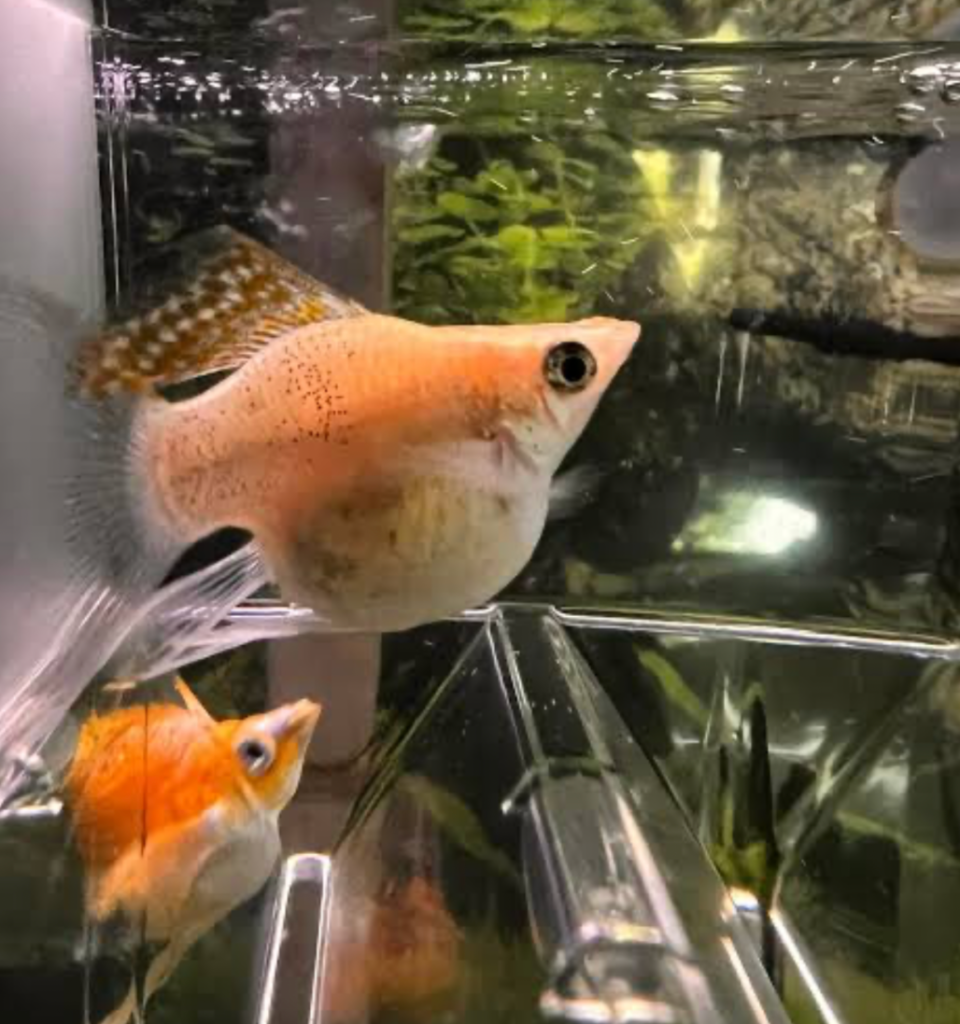
Male mollies will chase female mollies and mate with them until fertilization occurs. After fertilization, the females will start growing larger as their bellies will become darker and gravid.
They’ll carry their pregnancy for about 4-6 weeks, after which the female Molly will give birth to free-swimming fry.
Delivery and Fry Care
Your female Molly will typically give birth to 20-60 fry from a single fertilization, and it’s not always at once. Sometimes she may give birth in batches from a single mating session.
After birth, Molly Fry’s care will become your responsibility, as parents can’t live in the same tank as their young. Separate the adult mollies from their newborns by either moving the new fry into a nursery tank or removing the parents from the breeding tank to the main tank.
All Molly Fry look the same, no matter the variant, and they have the same needs. When raising Molly Fry, you must increase their food intake.
Give them specialized fish fry food, such as powdered flakes and pellets. As they develop larger, you can add crushed brine shrimps and bloodworms or finely crushed mosquito larvae to their diets.
Also, increase their tank maintenance, as they’re sensitive to poor water quality during this stage. Make large water changes of about 20-30% weekly to keep the aquarium pristine.
Reintroduction into the Main Tank
Within 3-4 months, your Balloon Molly will reach maturity. You’ll notice their balloon features appear around 1-2 months into their growth. Once they reach sexual maturity, you can quarantine your new Balloon Molly and gently acclimate them to the main tank.
Lifespan
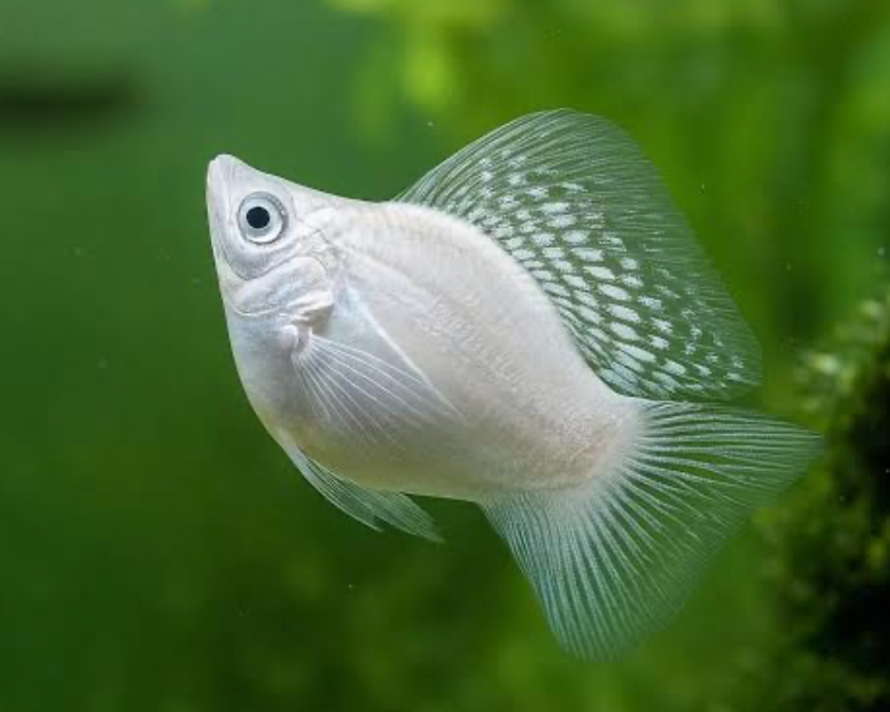
Unfortunately, because of the spinal defect in this species, the average balloon molly lifespan is shorter than that of standard mollies. With optimal health care, your Balloon Molly will live up to 3 years, which is the shortest lifespan for other standard mollies.
In rare cases, they may live the full 5-year molly fish lifespan, but Balloon Mollies typically live 1 to 3 years.
To improve their chances of longevity, you must provide the best livebearer fish care for your pets. Also, incorporate basic Molly health management practices into their daily routine, including feeding them a balanced diet, quarantining sick fish, and maintaining a pristine environment.
Conclusion
Balloon mollies are visually unique, fancy Molly fish with specific care needs. So, if you choose this beginner aquarium fish as your pet, prepare to have fun for 1 – 3 years.
They’re an ideal community aquarium Molly species, whether in a diverse or species-only tank with other peaceful companions. They’ll mind their business and give you peace of mind while beautifying your tank.
So, if you want a sign on whether or not to add this decorative livebearer fish to your tank, this guide is your answer.


