Skip to content
A complete guide showing tips and aquarium-keeping secrets that beginners can use when keeping hardy, social, and active Rosy Barb fish species indoors in tanks or outdoors in ponds.
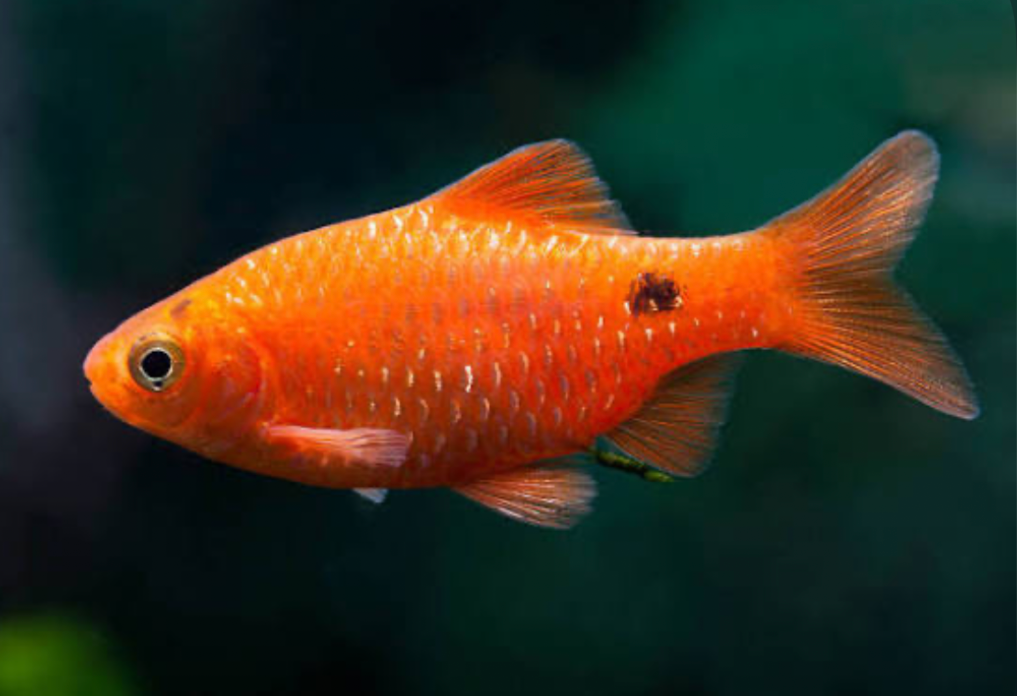
Rosy Barb: Larger, Hardy, and Colorful
Are you looking for a beginner community fish to join your variety of aquarium pets? Then, you’ll love this active and hardy barb that grows no larger than classic nano variants, the Rosy Barb.
Rosy Barbs are ideal for keepers with unheated rooms because they tolerate cooler water temperatures than most barbs. As a beginner, you’ll appreciate the simple rosy barb care routine and enjoy their schooling nature.
If you’re ready to learn what it takes to provide this red barb with care in a home tank, then keep reading for tips starting with basic knowledge on its origins.
Author’s Note: Check out our post 13 Types of Barbs That Are Perfect for Colorful Beginner Nano Tanks which includes details on even more barbs to choose from!
Natural Habitat & Distribution
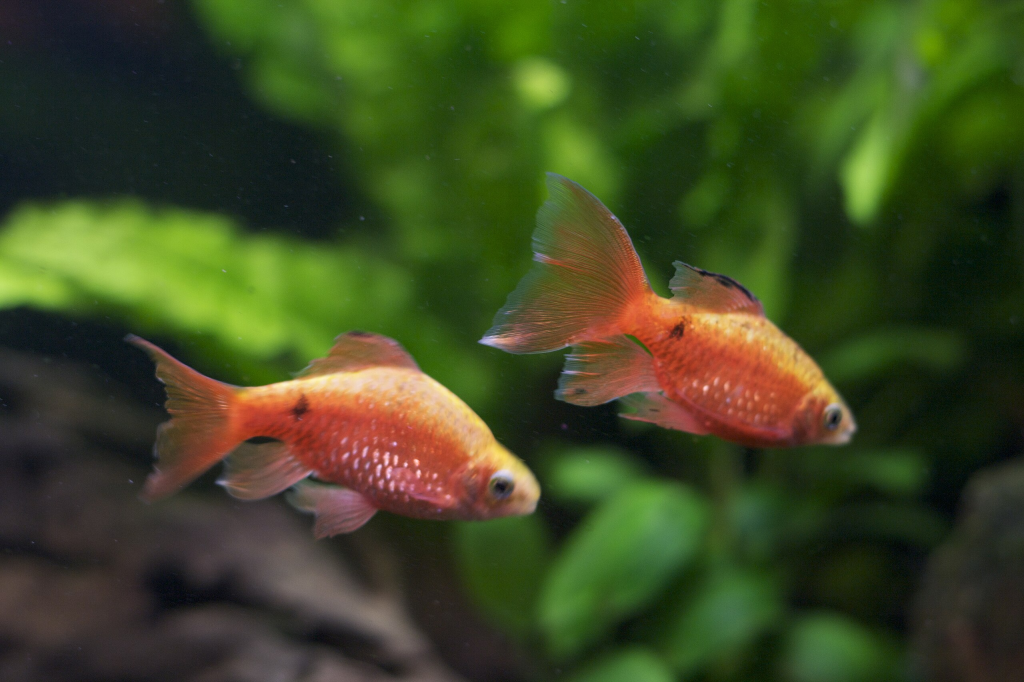
Wondering where rosy barbs come from is a normal question, considering that this species has established feral populations in multiple regions all over the Earth.
You’ll find this rosy barb’s habitat in South Asian rivers flowing from Bangladesh to Afghanistan. Like all other variants of this species, this South Asian freshwater fish moves in large schools, migrating in groups.
Here are some tips on identifying this wild rosy barb, whether it’s in its natural habitat or part of an aquarium community.
Appearance & Sexual Dimorphism
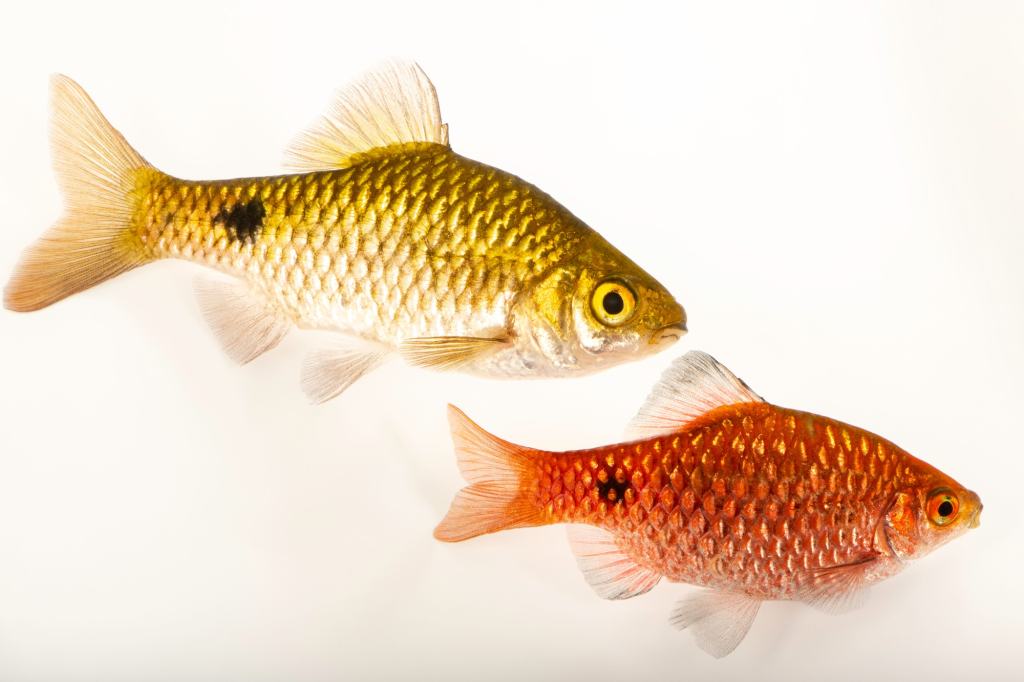
It’s easy to identify the rosy barb fish species by their vibrant rose-pink color and sexual dimorphism.
This species grows up to 6 inches, with females larger and males smaller, but both can stretch an extra inch if kept in large tanks.
The rosy barb male color is typically a vibrant red, while the females have golden or olive skin. This pet has black eyes with visible dark patches on the tail fin and part of the tail.
So, even though the rosy barb size is small, it still stays highly visible in open swimming areas, and here’s how you can successfully create one.
Tank Size & Aquascape
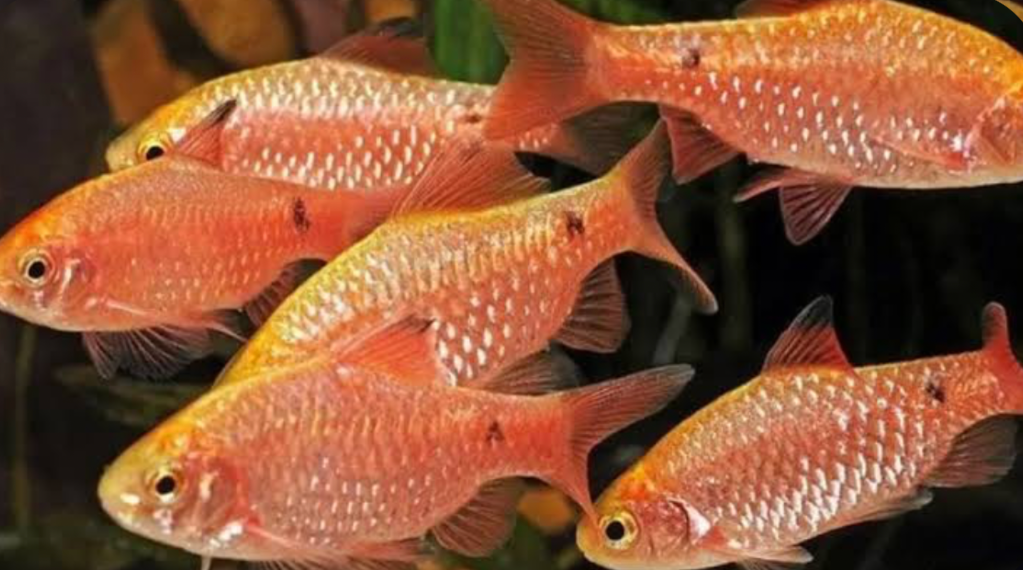
To create an ideal habitat for your pets, start by choosing the right rosy barb tank size. Since the maximum length for an adult Rosy Barb is 6 to 7 inches, an average rectangular tank that holds about 30+ gallons of water is suitable for a small group of 5.
One peculiar trait you may not know about Rosy Barbs is that they’re midwater swimmers, and so you must create an environment that accommodates their movement patterns, temperament, and activity levels.
Here’s how you can design an ideal tank setup for rosy barb fish:
- Lay the tank’s base with fine sand or smooth gravel.
- Decorate the tank with aquarium decor such as driftwood and rockwork.
- Add some aquatic plants like Amazon Sword and Java Fern for dense borders, and leave an open swimming area in the center.
Feel free to express your creativity with your tank design, but avoid making cramped tanks, as that’ll mess with your pet’s activity level.
Water Parameters & Flow
After setting up the tank’s structure, fill it with water. However, ensure you set the right water parameters for rosy barbs, mimicking their natural environment and providing an optimal living environment.
Unlike most barbs, the rosy barb is a cold-tolerant aquarium fish that’ll thrive at 64–75°F with a pH of 6.5-7.5. Keep a moderate flow for a stable community tank, as heavy currents can stress your pets and low currents can cause inactivity.
Luckily for beginners, Rosy Barbs’ high tolerance for cool temperatures makes them flexible and adaptable to changing conditions. But be careful, because environmental factors aren’t the only triggers of stress or health issues. A poor diet can also cause serious damage.
Diet & Nutrition

Freeze-Dried Tetra BloodWorms
Rosy Barbs are omnivores, so they eat all types of food, from plant matter to animal-based diets. As a beginner, you can easily provide the best foods for rosy barbs, as they’re affordable and readily available.
Get them high-quality commercial flakes and pellets as staples, then support them with blanched veggies and occasional live foods such as bloodworms and brine shrimps.
Rosy Barbs are also an algae-grazing fish species, so keeping them in planted tanks would complement their diet since they can help themselves. Also, moderate your rosy barb feeding schedule to twice daily in small portions to avoid overfeeding or malnutrition.
If you notice your pet struggles with bloating from overfeeding it’s time to fast them for a day or two until they dispose off that waste.
Author’s Note: For more on feeding your aquatic pets check out The Ultimate Guide to Fish Food: Pros and Cons & Best Choices!
Before we address health concerns, let’s look at potential tank mates for your pets.
Rosy Barbs are very social pets, so your priority when choosing tank mates should be schooling-fish compatibility between the new community members and your Rosy Barbs.
Would the other varieties complement your Rosy Barb? Can they survive in the same environmental conditions? Do they eat the same food?
Following this logic, the most compatible rosy barb tank mates are Barb-safe Danios, Gouramis, and Mid-Sized Tetras. Keep tiny, delicate, nano-fish species and larger fish like Angelfish and Guppies away from your community tank barbs.
Health & Common Issues
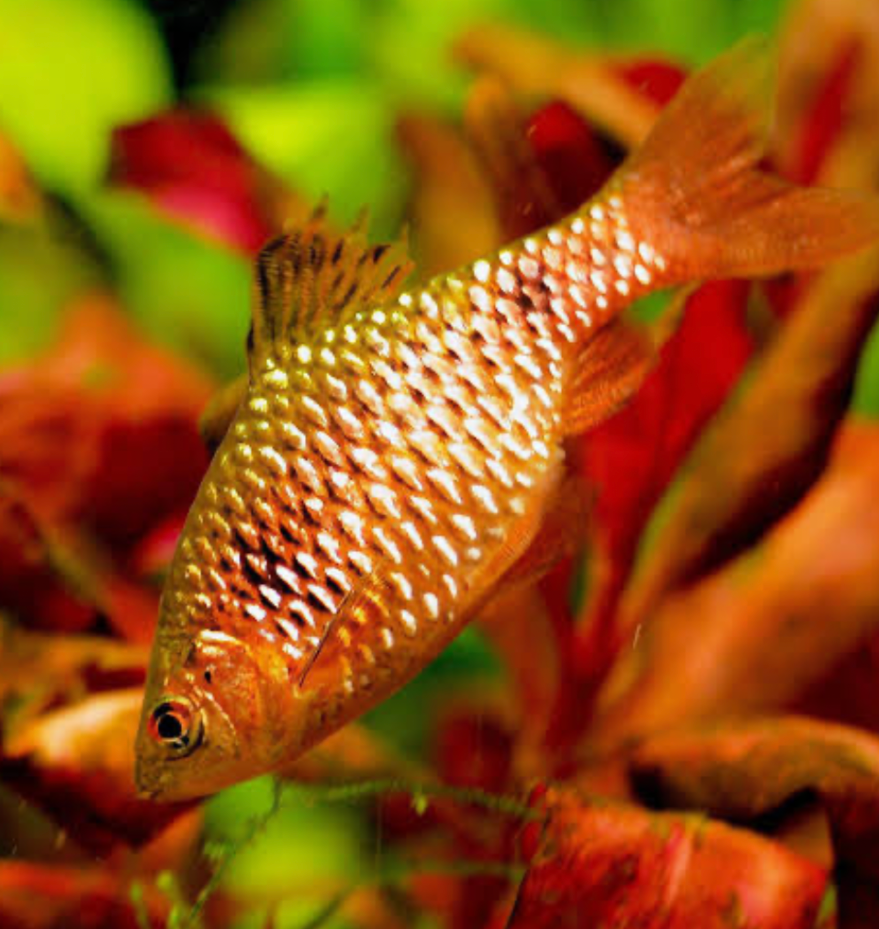
Now let’s discuss health and safety to ensure a long life for your Rosy Barb because it’s a hardy species, but still prone to illness. Some common rosy barb diseases to watch for include:
- Fin Rot: Injured and untreated fin damages which causes breaker and infected wounds.
- Ich: white spots on your Rosy Barb’s skin.
- Bacterial infection: Typically caused by poor water conditions and so increasing the water temperature to sped up the lifecycle of the bacteria is important.
- Parasitic infection
- Fungal Infection
Fin rot is a result of untreated fin damage, so work on ways to prevent injuries. You can prevent fin damage by injury-proofing your tank, with soft corners over sharp edges and choosing only compatible tank mates.
Improve your tank conditions by using the parameters set up above, including setting the ideal water temperature, performing about 30% water changes periodically, using a sponge filter to keep the water clean, feeding them a balanced diet, and avoiding stressful situations.
Other stress-prevention aquarium-keeping tactics include moderate maintenance schedules, periodic checks for aggression in the tank, and health checks at the veterinary clinic.
Breeding & Fry Care
Rosy Barb fish species are easy to breed once you set the conditions right and prepare your selected breeders.
Here are rosy barb breeding tips to guide you through the process of raising juveniles.

Preparation/Conditioning Stage
Start by choosing your breeding pair or group, but ensure you keep a ratio of one male to two or three females to avoid competition.
Ensure you select only healthy male and females to keep a line of healthy pets from your parent pets. Then, separate the breeders.
While in their individual tanks, begin conditioning your Rosy Barb breeders for the task ahead. Increase their protein intake and watch out for color changes on their scales.
The male Rosy Barb would turn a bright shade of red, indicating he’s ready to mate with the female.
Setup the breeding tank with 10 to 20 gallons of shallow water, a spawning mop at the base, and some live plants like Java Moss.
Spawning Stage
Place your ready Rosy Barb fish breeders into the breeding tank and watch the male chase the females until dawn, when they finally spawn. Rosy Barbs are egg scattered, which is why you need the spawning mop to collect the adhesive eggs in one spot.
Instead of a spawning mop you can also use a mesh net.
Egg – Fry Stage
Immediately after spawning, separate the adults from the eggs to prevent them from eating their young. Increase the tank’s temperature to the highest recommended level to speed up egg hatching. Then, prepare to raise the rosy barb fry within the next 24 to 48 hours.
After hatching, the Rosy Barb fry would become a free-swimming juvenile within 4 – 5 days. At this stage, they’re sensitive and prone to disease and death, so be careful. Keep the water pristine and watch their diet.
Crush commercial fry food for easy consumption and digestion, and supplement it with infusoria. As your juveniles develop and become mature, you can add baby brine shrimp and other small proteins to their meals.
If you follow these step-by-step rosy barb breeding tips, you’ll record success even on your first attempt.
Lifespan & Keeper Fit
When you give your pets a high-quality lifestyle, you’ll extend the rosy barb lifespan to 5 – 7 years. So, don’t worry if it’s your first experience with a small fish or any type of fish ever.
This beginner rosy barb guide contains the secrets to maintaining this active yet peaceful beginner species in small or large aquariums. And if you’re a hobbyist looking to transition from nano to medium setups, you can enjoy the experience with this long-lived barb species.
So, why not spend long and meaningful years with your parody Barb pets.
Conclusion
Have you now made the big decision to keep rosy barbs in your home aquarium? If you choose yes, let’s make a rosy barb beginner checklist showing the essentials you need to navigate this new hobby like a pro.
- Identify your pets correctly
- Prepare a suitable habitat
- Buy enough quality food and make a feeding schedule
- Decide on your tank type, whether it’s a species-only or community tank
- Do periodic health checks
Although this relatively large schooling fish is hardy and would survive in cooler temperatures, prepare to move to a pond or drop the temperature during warmer months to keep them warm.
The seasonal pond-keeping routine would ensure your pets are always swimming in the right temperature.