A detailed guide for beginner aquarists to start their first schooling fish species in a nano tank or community aquarium, including breeding and disease prevention tips.
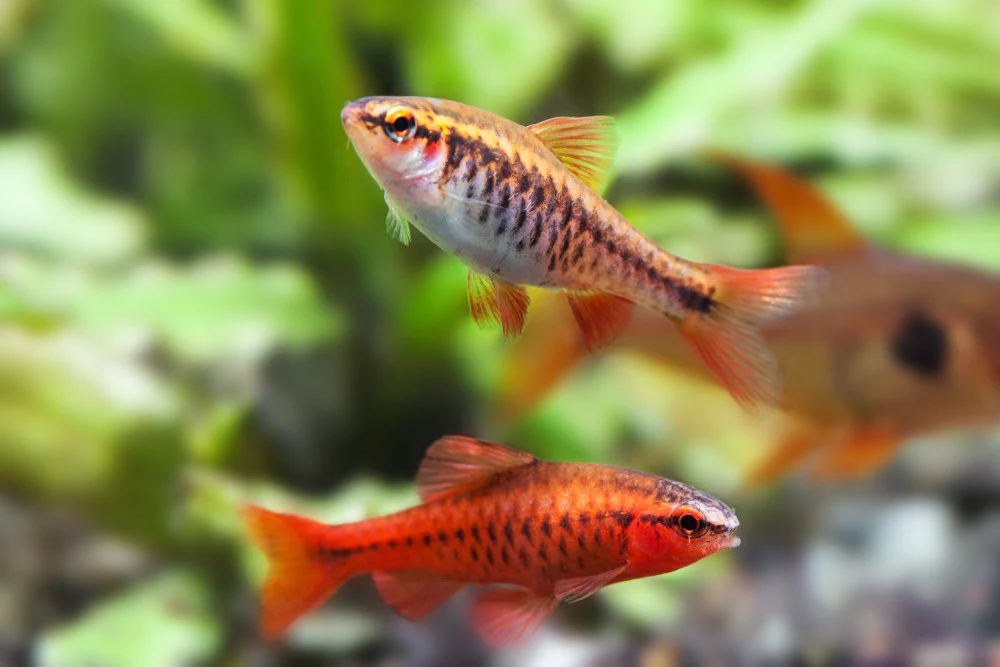
Cherry Barb: Small, Peaceful, and Beginner-Friendly
Are you searching for an interactive but peaceful schooling fish to beautify your planted tank? Then, you’ll love this vibrant red Cherry Barb species, scientifically called Puntius tittenya, which is one of the most popular planted tank barbs.
This small schooling fish is one of the calmest variants of the species, and it thrives in nano tanks with dense plantings, making it an ideal beginner barb.
Even if you’re not building a nano tank and you just want a simple schooling fish for your aquarium, the easy cherry barb care requirements are beginner-friendly. Read this guide for basic and advanced tips on professional Puntiustitteya care.
Author’s Note: Check out our post 13 Types of Barbs That Are Perfect for Colorful Beginner Nano Tanks which includes details on even more barbs to choose from!
Natural Range & Wild Habitat
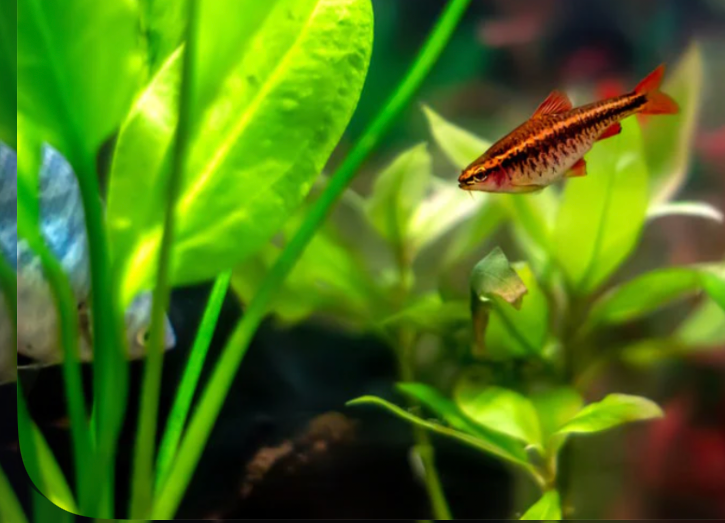
Cherry Barbs come from native Sri Lankan streams, known for their shaded, heavily planted, slow-moving water. This natural barb environment is easy to recreate in an aquarium once you have all the parameters set up.
Because of the seasonal monsoons in the natural cherry barb habitat, this species tolerates a wide range of parameters. If you want to keep a wild cherry barb in an aquarium or nano tank, you must set up a heavy planted cover to ensure your pet thrives.
Keep reading to see how to identify a Sri Lanka barb and choose the right schooling variant for your aquarium.
Identification & Sexual Dimorphism
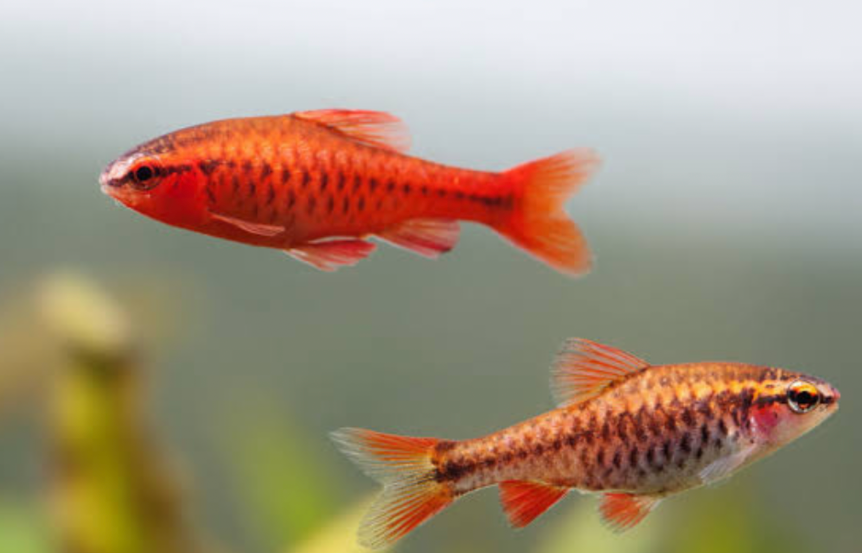
The cherry barb’s color is one of its most distinguishing features, and as they mature, it intensifies or pales based on their sexes. This sexual dimorphism makes identification in the wild easier for enthusiasts, and you can learn it too.
All cherry barbs grow to a maximum length of 5cm, although the males are often smaller.
See this cherry barb male vs female table for each sex’s unique traits.
| Male Cherry Barb | Female Cherry Barb |
| Deep crimson with lateral green sheen on the side. Slender | Fawn-colored top with lateral green or rosy pink sheen across the side. Rounder bodies, especially in breeding season. |
Be careful, though, because sometimes a deep crimson color on your male cherry barb could be a stress or breeding indicator. In such circumstances, female cherry barbs become paler.
You have to interpret each color change in light of unique environmental and health factors, since good diets give cherry barbs brighter scales, and they shine more brightly in groups.
Besides sexual dimorphism, there are other mature cherry barb traits you can use for identification, such as their social yet peaceful nature, shyness, active swimming, and male territoriality during breeding.
Here’s how to keep your pet happy outside the wild.
Minimum Tank Size & Setup
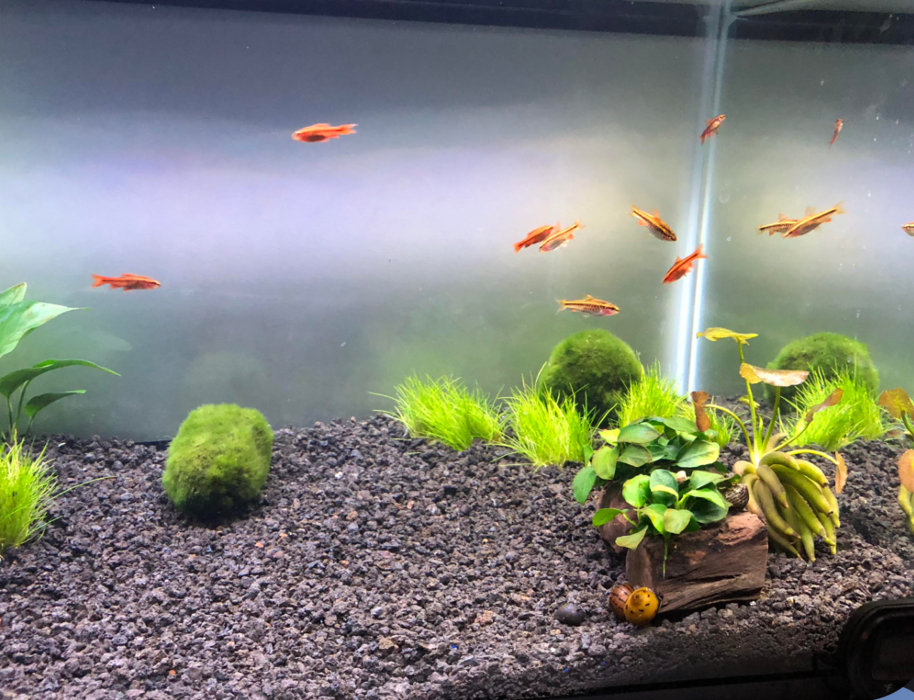
Since this pet is a small fish, you can get an average cherry barb tank size of 15 – 20 gallons of water to accommodate a small school of 5 – 6.
Keeping them in groups is necessary for their social life and temperament, but that doesn’t mean you can’t have a 10-gallon nano tank if you want.
Once you’ve decided on your tank size, it’s time to prepare your planted aquarium setup. Remember that cherry barbs in the wild live in vegetation-dense streams, so you must keep their tanks as natural as possible to help them feel comfortable.
Placing medium-height plants like Java fern on the edges, cryptocoryne on the sides, and floating Amazon frogbit will provide cover and reduce stress for your pets. Set up the plants so that an open swimming area remains in the center for them to explore their active nature.
To highlight your pet’s vibrant tone, dark fine sand is the best substrate for cherry Barb fish. You can also use dark aqua soil, gravel, and blasting media. The only requirement is that they must be dark.
After setting up the tank decor, you can fill it with water.
Water Parameters & Filtration
Even though this species can survive in a wide range of conditions, set these cherry barb water parameters for them to thrive.
- Temperature: 72–80°F
- pH: 6.0–7.5
- Flow: Moderate
- Hardness: Soft to Moderate (5 – 19 dH)
The ideal temperature for cherry barbs depends on whether or not they’re breeding. Some experts recommend higher temperatures during the breeding season, widening the range to 73-81°F, while others recommend reducing it during normal seasons to 74-79°F.
Stabilize your water cycles to reduce the risk of disease and introduce consistency into their routine. Also, add a planted tank filtration system to keep the water clean after feeding, so your pets stay healthy.
Diet & Feeding Schedule
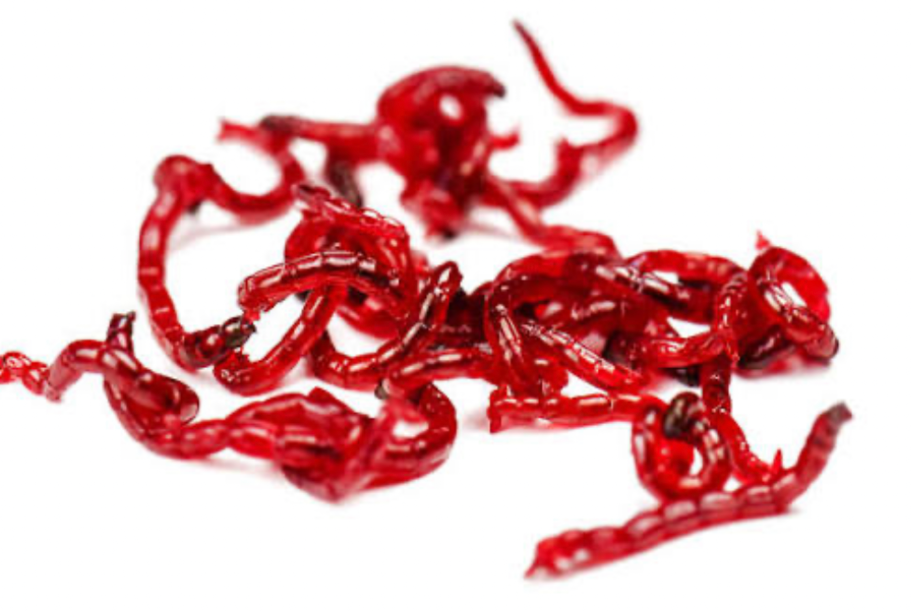
If you’re wondering what to feed cherry barb species, the answer is everything. They are omnivorous pets that eat all types of food, including animal and plant matter, such as flakes, micro pellets, frozen brine shrimp, and daphnia.
Focus on color-enhancing foods like daphnia, bloodworms, and brine shrimps to boost their vibrant red color.
Author’s Note: For more on feeding your aquatic pets check out The Ultimate Guide to Fish Food: Pros and Cons & Best Choices!
Moderate your cherry barb feeding schedule to 2-3 times daily, with small portions each time, so they’ll consume all the food within 2 minutes. It’ll keep your pets from wasting food or having other food-related health issues, which we’ll discuss soon.
But first, let’s choose some friendly tank mates for these social species, up next.
Behavior & Best Tank Mates
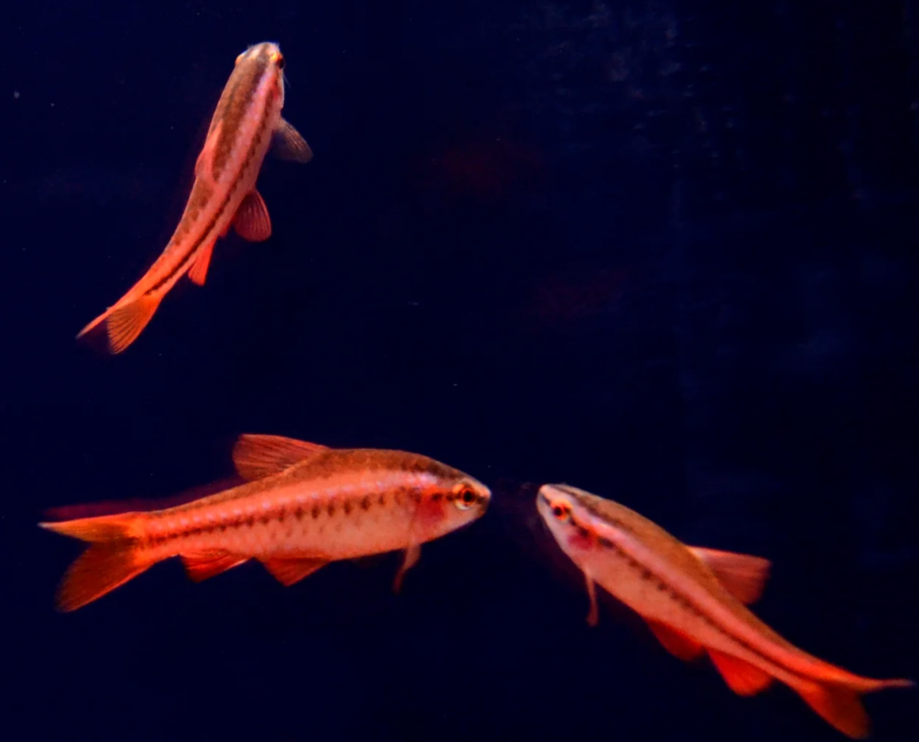
Did you know that your Cherry Barb is a peaceful community fish?
That means you can build a school with a variety of other compatible species if you don’t want a species-specific tank. But to maintain their peaceful nature, each potential species must undergo a schooling-fish compatibility test.
Check if they play well with others and can cohabit in one tank without nipping at your Cherry Barb’s fins or becoming territorial. Also note that they eat the same kinds of food to make feeding sessions easy, and that they tolerate the same water conditions.
Some cherry barb tank mates that pass the test include rasboras, small tetras, and corydoras. Always avoid long-finned species that trigger nipping groups of barbs. Now, we can discuss health concerns and how to prevent them.
Health Concerns & Prevention
Cherry Barbs are naturally resilient pets, but they’re susceptible to shipping stress and fungal or velvet disease in poor conditions.
Understanding the triggers of cherry barb disease prepares you to help your pets avoid them, and when you can’t, you can quickly improve their condition for a quicker recovery.
Common Health Concerns
Cherry Barbs face risks of serious health concerns, such as:
- Injury: Untreated injuries from fin-nippers or dangerous environments.
- Obesity: Overfeeding causes indigestion in the short term and obesity in the long term.
- Ich: White spot disease caused by parasites
- Velvet Disease: A parasitic infection that causes yellowing and dusty scales.
- Fin Rot: A bacterial disease caused by poor water conditions and stress.
- Dropsy: A bacterial disease that presents as bloating, which, when left untreated, can cause organ failure.
Prevention
You can prevent velvet in cherry barb fish by keeping the aquarium water in optimal condition. Keep the water clean, always quarantine new fish before introducing them to the tank, and fill the tank with dense vegetation, as they have in the wild.
Use portion control when feeding your Cherry Barbs and maintain a balanced diet to boost their immunity and build resilience against diseases. Also, avoid incompatible tank mates that’ll nip at their fins.
Quarantine new shipments and ensure that they’re healthy before adding them to the aquarium with the rest of your school.
Treatment
Cherry barb disease treatments are similar to prevention methods, as most issues arise from poor maintenance. Start by testing the water to determine the trigger of the disease, whether it’s bacterial or parasitic.
Remove the affected fish and quarantine it in a separate tank for proper treatment.
quarantine new shipments. Here are some fish quarantine tips:
- Set up a quarantine tank with 10-20 gallons of water.
- Set up the environment with enough hiding spots using plants but no substrates.
- Reduce the lighting to keep the quarantine tank dim.
- Set a low filtration to keep the water clean without stressing your pet.
- Increase the temperature to the highest level of 79-81°F.
- Use separate equipment to avoid contaminating the healthy fish.
- Make weekly 20-30% water changes until your affected fish is stable and healthy again.
- Wait 1-2 days before applying treatment, such as antibacterial or antiparasitic creams, to give your Cherry Barb time to acclimate.
- Improve your pet’s diet while administering medication to ensure they recover quickly and well.
Breeding Basics
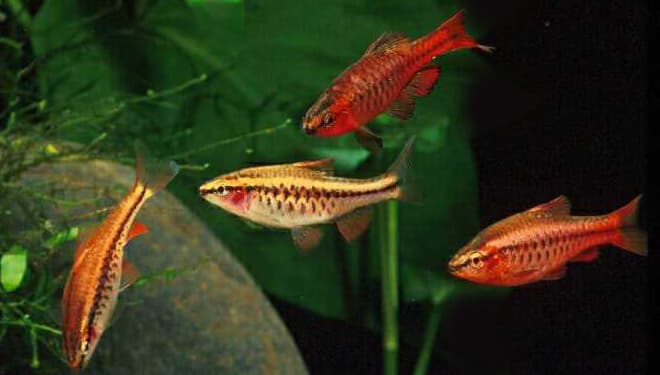
Cherry Barbs are egg scatterers, so here’s an insight into how you can manage cherry barb breeding in a tank outside their natural habitat.
The first thing every expert would tell you about how to breed cherry barb or any other fish species is to get a breeding tank.
Preparation Stage
Choose a healthy male and 2-3 female Cherry Barbs as breeders, then start conditioning them. Increase their protein intake by feeding them more live or frozen animal matter, such as crushed brine shrimp and bloodworms. Then, observe for signs of breeding.
The male Cherry Barb will turn a vibrant red, while the females will turn paler.
Set up the breeding tank with bare ground to give the eggs more room when the parents scatter them. Set ideal water conditions, then introduce your breeders into the tank.
Spawning Stage
Put your male and female breeders in the same tank after conditioning and watch the male chase the females into the moss or any dense vegetation you’ve set up.
Once they’re ready, the females will spawn and scatter their eggs inside the moss, which is why you must leave a bare ground area in your breeding tank.
Egg to Fry Stage
Separate parents from their eggs immediately after spawning because they can become predatory and eat them. Watch your cherry barb eggs for 24 – 48 hours until they hatch, and prepare to care for the free-swimming fry.
Within 48-72 hours, hatched eggs will become free-swimming fry. Raising cherry barb fry requires careful attention because they’re sensitive at this age. Start by feeding your newborn pets with infusoria and other liquid foods until they can process crushed food.
As they develop into juveniles, Cherry Barb fry can eat crushed commercial fry food and microworms.
Ensure the water stays pristine and clear during this stage to prevent diseases and early death. Also, be careful with your chosen filter system. Use a sponge filter on a low-flow setting to avoid sucking up your young fry before they have a chance to grow.
Lifespan & Care Level
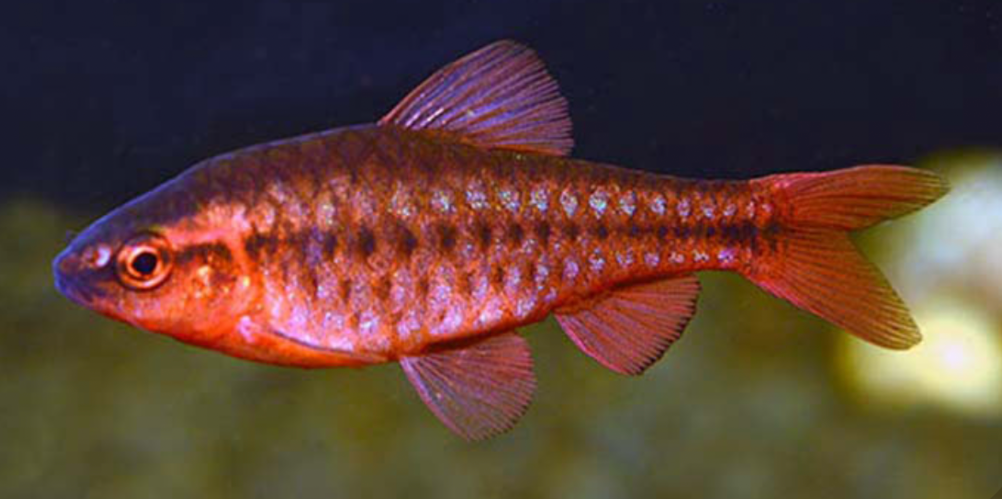
With proper, stable care and disease prevention, your cherry barb’s lifespan can extend to 4–7 years.
From the beginner barb care tips in this guide, you can see why this species is excellent for beginners.
It doesn’t matter if this is your first schooling species. If you follow this guide step by step, you won’t have a problem. Start by identifying your Cherry Barb correctly, then prepare an ideal habitat for your new pet, feed them adequately and in portions, and avoid stress triggers.
If you want an easy aquarium fish to start your aquatic journey, the Cherry Barb is a great “first barb” for your planted nano or small tank.
Conclusion: Is the Cherry Barb Right for You?
You have so many reasons to keep cherry barbs as a new aquarist. It’s a small, calm, and colorful variant with an interesting schooling dynamic. If you want a planted community, then the Cherry Barb is also a good addition to your fish species mix.
This cherry barb beginner guide shows you how to maintain this shy yet active swimmer in your planted community and nano setups. Your pets won’t get lost in dense vegetation; instead, its vibrant crimson or pale red color would stand out against any dark substrate.
So, are you ready to add this classic planted-tank schooling fish to your aquarium?