
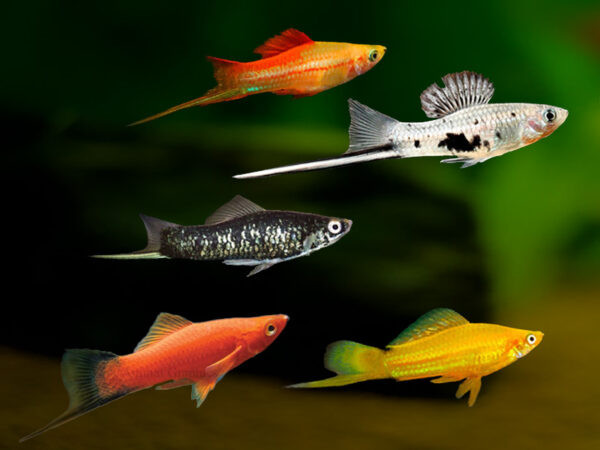
A detailed list of colorful Swordtail fish morphs with picture references that can form a small to medium community setup without stressing a first-time aquarist with their care needs.
Why Swordtails Are Perfect Beginner Fish
Starting an aquarium as a beginner can be challenging unless you find a suitable hardy livebearer like the Swordtail fish. The Swordtail is a top choice for beginners due to its adaptability, colorful appearance, and active nature.
This native Central American species typically grows between 4 – 6 inches and lasts about 3 – 5 years when you provide optimal care. Optimal Swordtail aquarium care is easy to manage, despite their occasional territoriality, since they eat omnivorous foods and birth fully formed fry.
If you’re ready to start your aquarium-keeping journey with this simple species, here are 10 types of swordtail fish for inspiration. They can live in a species-only tank or peacefully in a community with compatible species.
Author’s Note: Check out our post Are Swordtails Easy To Keep for a deep dive on what all swordtail beginners must know!
Common Swordtail (Green Swordtail)
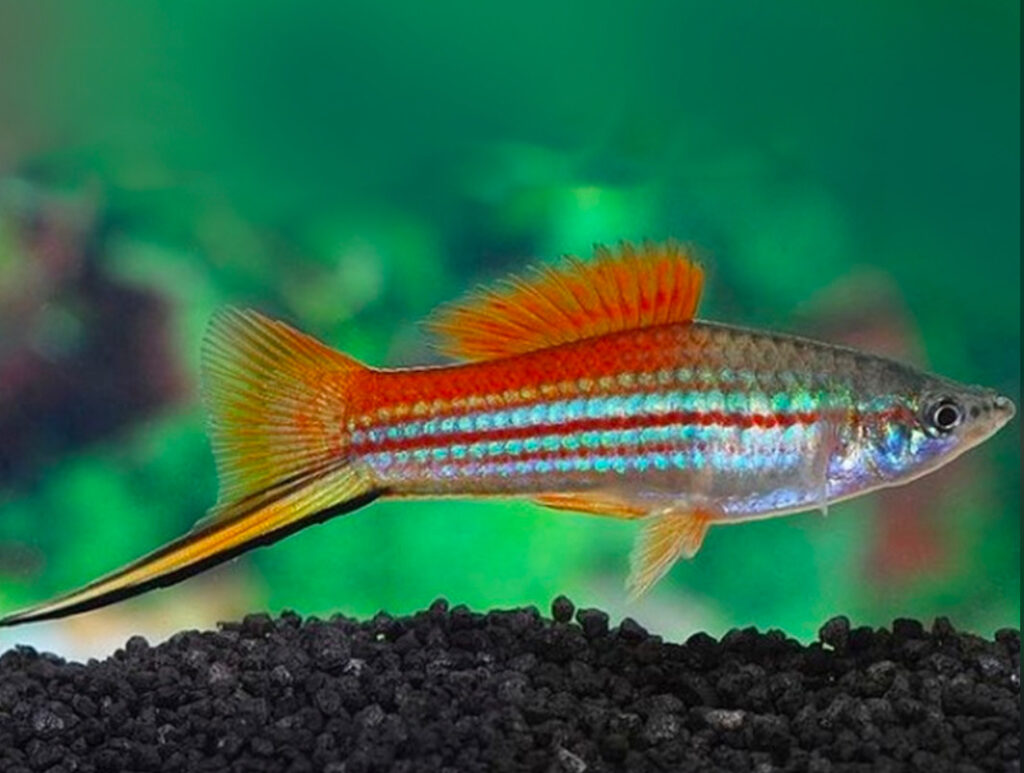
First on this list is the Green swordtail, the OG wild-type ancestor of all color morphs. It’s also called the Common swordtail fish because it’s popular amongst all other types. This hardy variant has a typical extended tail fin that resembles a sword.
Because it’s found in the wild, the Common Swordtail’s natural color is a greenish body with reddish-orange fins. It’s an active swimmer that enjoys interacting with plants and other compatible species. So, here are some Swordtail care basics to provide a good aquarium life for your pet.
Care Tips for Common Swordtail
As a species that loves open swimming and plant interaction, get a tank that’s about 20 – 30 gallons large. Common swordtail fish tolerate moderate to hard water but need specific temperature and pH levels to function properly.
- Temperature: 72 – 82℉
- pH: 7.0 – 8.3
- Hardness: Moderate to Hard
Remember that this beginner aquarium species loves active swimming, so add live plants with an open swimming area to its tank and ensure it eats a balanced omnivorous diet rich in protein and veggies.
Red Swordtail
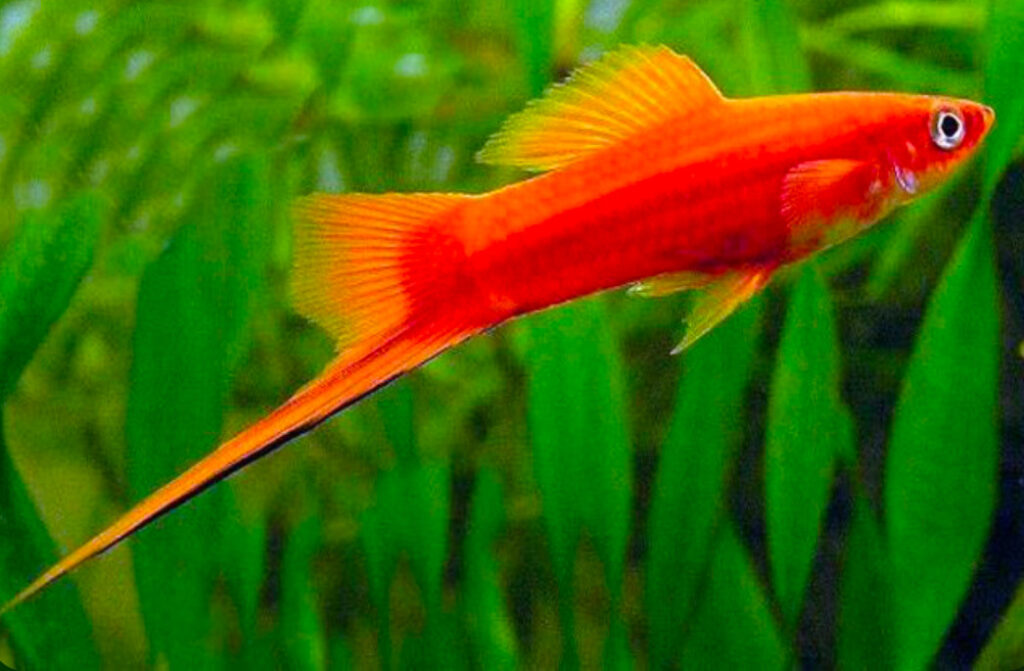
If you want a summery tank with vibrant warm colors, get the Red Swordtail fish. It’s a bright red variant that thrives in group settings with other gentle tankmates. A fun fact about this Red livebearer is that its females don’t have the distinctive sword caudal fin.
Due to its vibrant red color and ease of care, this variant is a pet store staple for beginners.
Care Tip for Red Swordtail
To protect and keep this colorful aquarium fish in a tank, you’ll need a minimum of 20 – 30 gallons of water for a small group of 4 – 6. Ensure the male-to-female ratio stays between 1:2 to avoid competition or aggression if you want to enjoy their peaceful nature.
Other basic care needs for this beginner community fish include feeding them animal- and plant-based foods, using commercial flakes and pellets as supplements, and maintaining adequate water parameters.
- Temperature: 72 – 82℉
- pH: 7.0 – 8.3
- Hardness: Moderate to Hard
Pineapple Swordtail
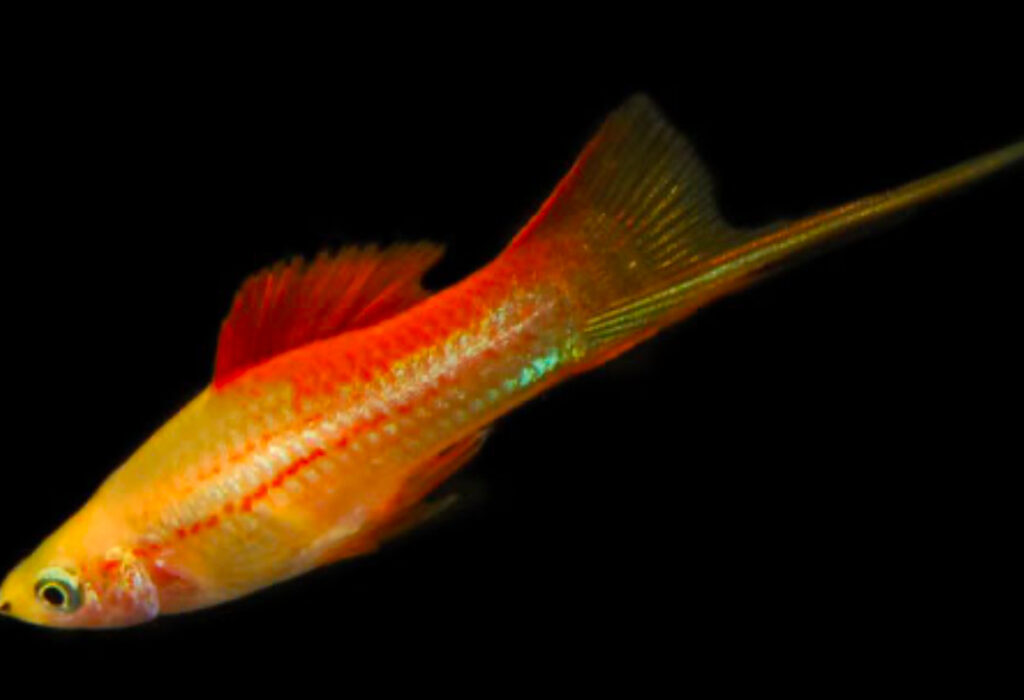
Colorful Swordtail morphs like the Pineapple variant, which has a golden-orange body with a red streak that glows under aquarium lighting, are showstopping centerpieces. There’s a dark tint on the edge of the scales that makes Pineapple Swordtail fish look like its namesake fruit.
Because of its special glow, this small freshwater fish is perfect for aquariums with a bright, warm aesthetic, whether from natural or LED lighting.
Care Tip for Pineapple Swordtail
Standard care practices apply to this Orange swordtail, including an omnivorous diet, a tank size of 20-30 gallons, aquascaping with live plants, and water conditions.
- Temperature: 72 – 82℉
- pH: 7.0 – 8.3
- Hardness: Moderate to Hard
Note that when breeding this vivid aquarium fish, the females need 28 – 35 days to complete gestation. Also, you need to tailor its diet to include algae-rich meals to enhance color.
Marigold Swordtail
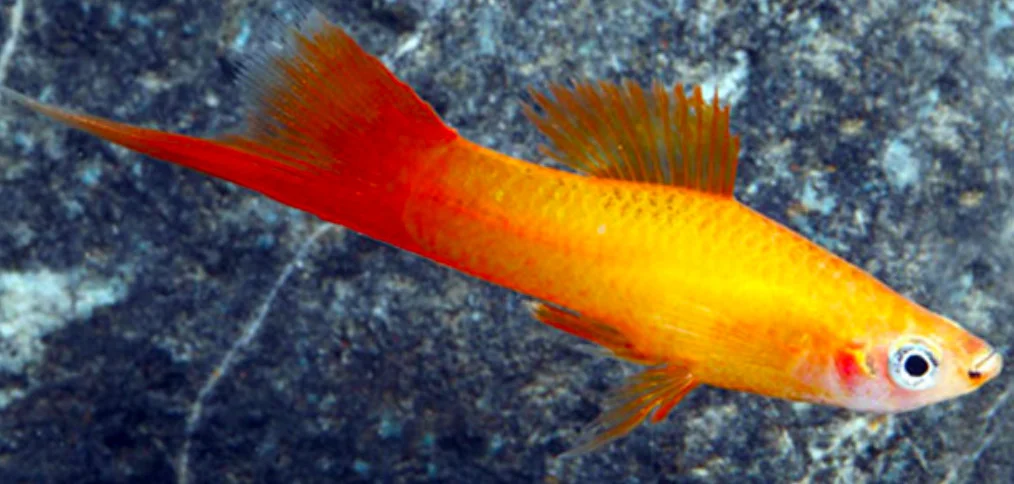
Another bright and warm variant more suited to an autumn-themed tank is the Marigold Swordtail fish. It’s a little different from the Pineapple swordtail in that its scales have a gradient coloration from yellow to orange, which presents a vivid contrast.
If you want to blend themes and create a flashy aquascape, adding this orange-yellow Swordtail to your tank is a good choice.
Care Tip for Marigold Swordtail
This orange aquarium fish survives on high-quality flakes and pellets with live foods and vegetables as supplements. Don’t forget to add color-enhancing food sources like spirulina and algae to keep its orange-to-yellow scales vibrant.
- Temperature: 72 – 82℉
- pH: 7.0 – 8.3
- Hardness: Moderate to Hard
If you want to breed this decorative livebearer, it’ll take about 35 days before the females give birth to their fry. During this breeding season, ensure that there are enough hiding spots in the tank to protect the juveniles before they mature.
Lyretail Swordtail
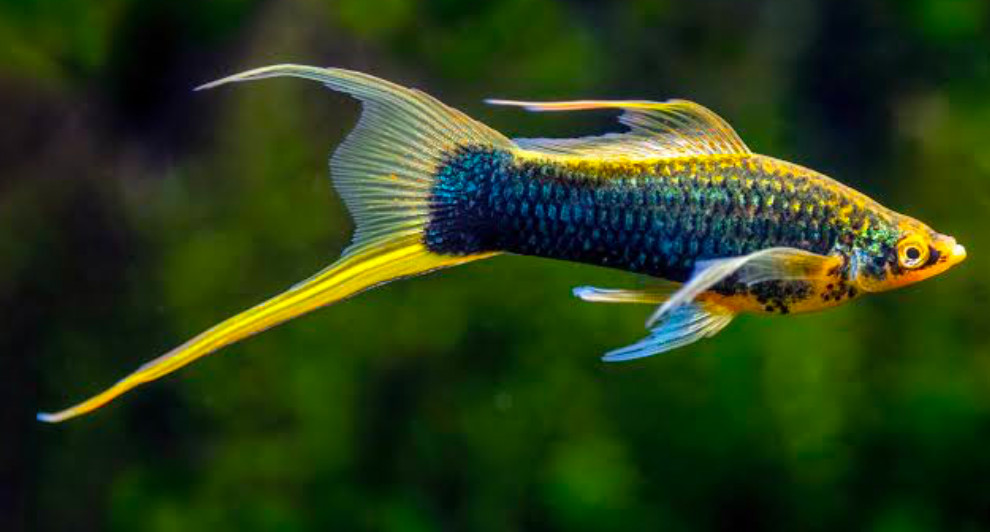
By now, you probably think all swordtail variants have the same body shape, but the Lyretail Swordtail fish would change your mind. It has an elegant split tail with elongated tips and comes in other subvariants, including the Pineapple Lyretail Swordtail, Red Lyretail Swordtail, and Marigold Lyretail Swordtail.
Unlike the pure swordtail variants, this Fancy Swordtail’s females and males have the same tail shape, but the female’s sword shape is shorter than the male’s own.
Care Tip for Lyretail Swordtail
Due to the unique tail shape of this ornamental aquarium fish, it needs a gentle water flow that’ll prevent fin damage. However, other water conditions remain the same.
- Temperature: 72 – 82℉
- pH: 7.0 – 8.3
- Hardness: Moderate to Hard
Also, maintain an open swimming area with hiding spots for this peaceful livebearer, keep one male to two females. Feed them an omnivorous diet, and only pair them with compatible species. Compatible species for Lyretail Swordtail fish are Guppies, Platies, Mollies, and Corydoras.
Black Swordtail
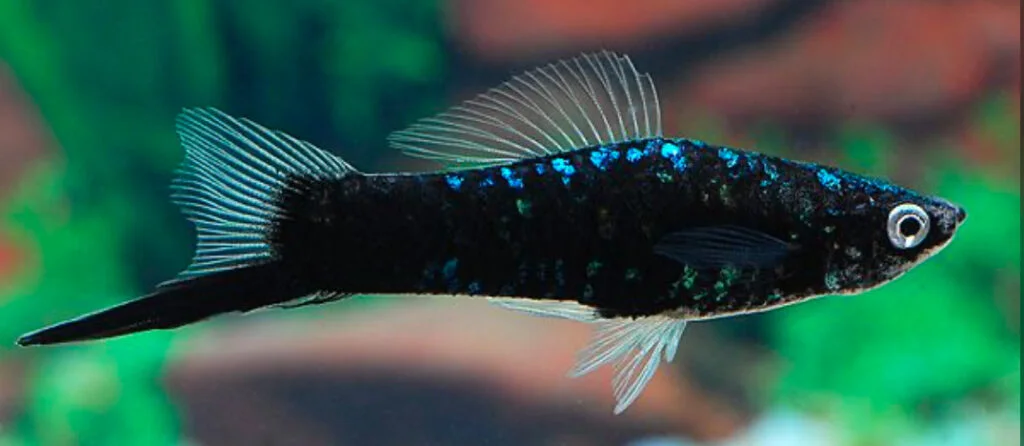
For a dramatic contrast, add the sleek Black swordtail fish to your aquarium. It has a jet-black body that stands out against bright aquascapes and colorful community setups. This dark aquarium fish has the same characteristics as other Swordtail species, from its size to temperament and food preferences.
Care Tip for Black Swordtail
If you can care for a common Swordtail, then you can handle this monochrome livebearer.
Get them high-quality flakes or pellets as staples, and supplement them with live foods like bloodworms, brine shrimps, and daphnia, as well as plant-based foods such as spirulina, algae, and blanched vegetables.
Set the same water parameters for them and fill the 20 – 30 gallon tank with live plants as hiding spots for the fry.
- Temperature: 72 – 82℉
- pH: 7.0 – 8.3
- Hardness: Moderate to Hard
Now, let’s highlight another unique beginner fish that creates contrast and makes a suitable centerpiece in your aquarium.
Neon Swordtail
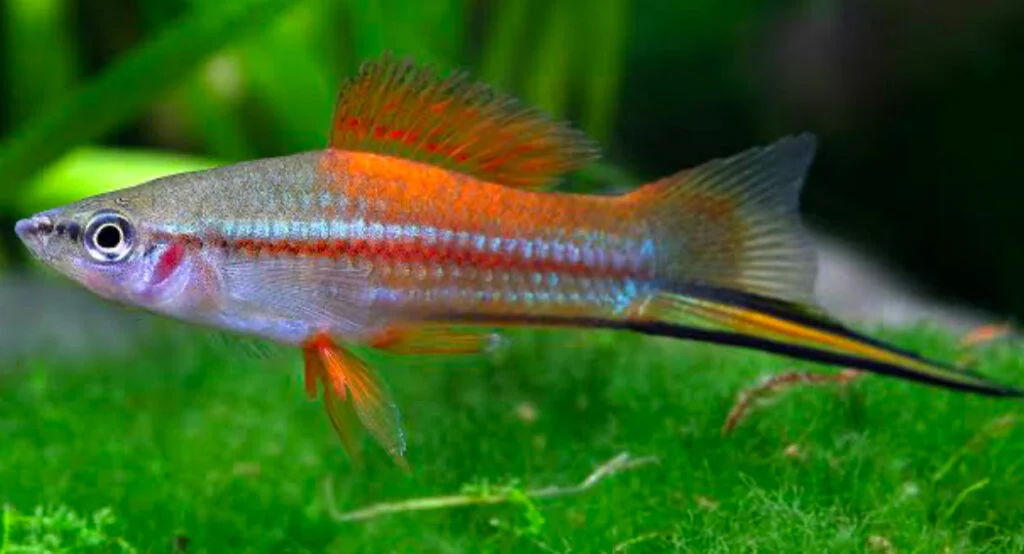
Colorful swordtail types made from selective breeding are rare morphs that add that extra shimmer to simple tanks. The Neon Swordtail fish is popular for its iridescent colors, which combine a turquoise-blue sheen with red or orange accents for a unique, glowing appearance.
This Blue swordtail fish stands out the most in planted tanks filled with green live tall and floating plants. Like the Lyretail variant, there are other sub-variants like the Neon Wagtail, Neon Lyretail Swordtail, and Red Neon Swordtail, but the blue color is the most popular.
Care Tip for Neon Swordtail
- Temperature: 72 – 82℉
- pH: 7.0 – 8.3
- Hardness: Moderate to Hard
After setting ideal water conditions and determining a tank size of 20-30 gallons for an average of 4-6 Neon Swordtails, ensure they have adequate food for healthy growth. Feed this iridescent fish with blanched vegetables, spirulina and algae for color enhancement, live foods, and high-quality commercial pellets and flakes.
Don’t worry about selectively breeding this species to preserve its neon blue coloration because it’ll pass the shade genetically to its fry.
Hi-Fin Swordtail
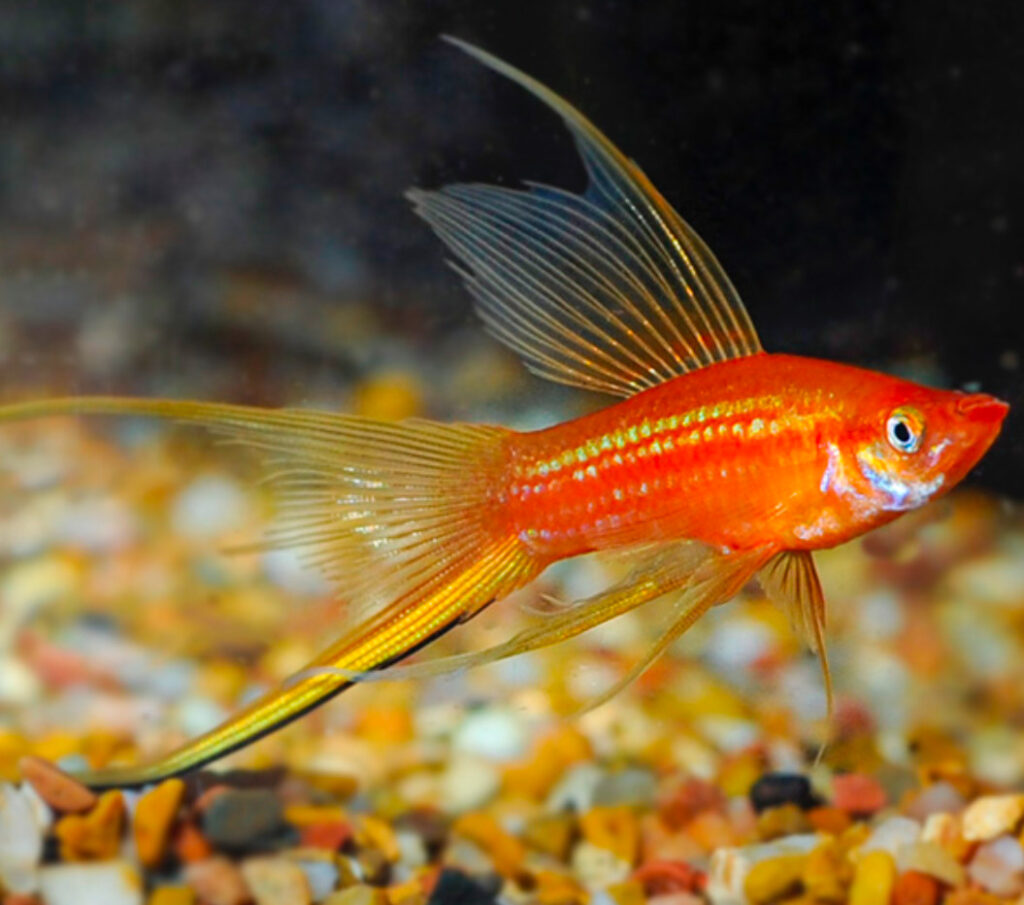
Sometimes bigger is better, and that’s what you get with the Hi-Fin Swordtail fish variant. Unlike other basic variants, which grow between 4 – 6 inches only, this fancy swordtail fish appears larger because of its tall dorsal fin.
Hi-Fin Swordtail varieties also exist in multiple colors, like the ones you’ve seen earlier, including Hi-Fin Pineapple Swordtail and Hi-Fin Neon Swordtail.
Care Tip for Hi-Fin Swordtail
Firstly, for this elegant aquarium fish, an appropriate tank size is 30-40 gallons, which is medium. Next, you must design the internal aquascape with an open swimming area surrounded by dense, live plants.
Complement the open swimming area with a slow-to-calming water flow to prevent stressing your Hi-Fin Swordtail or damaging its tall fin. Set the same standard Swordtail fish water conditions.
- Temperature: 72 – 82℉
- pH: 7.0 – 8.3
- Hardness: Moderate to Hard
Although this species eats the same thing as other common swordtails, they need more protein-rich foods to strengthen their fins and prevent easy damage.
Wag Swordtail

When considering contrasting variants, another black species that stands out is the Wag Swordtail fish. It’s a popular swordtail variant with distinctive dark tail and fins that contrast with vibrant body colors ranging from red to orange and gold.
The dark tail is shaped like a “wag,” hence the name, and despite its unique appearance, this Black fin swordtail fish is easy to find and hardy. So, it’s an ideal choice for first-time fishkeepers.
Care Tips for Wag Swordtail
As a hardy beginner fish, Wag Swordtail fish has the same care conditions as the common Swordtail, including its diet, environmental needs, and water conditions. So, set the following parameters:
- Temperature: 72 – 82℉
- pH: 7.0 – 8.3
- Hardness: Moderate to Hard
Feed them an omnivorous diet and keep your Wag Swordtail fish in a planted tank with an open swimming space. With proper care, this colorful livebearer will live between 3 – 5 years in good health.
Kohaku Swordtail
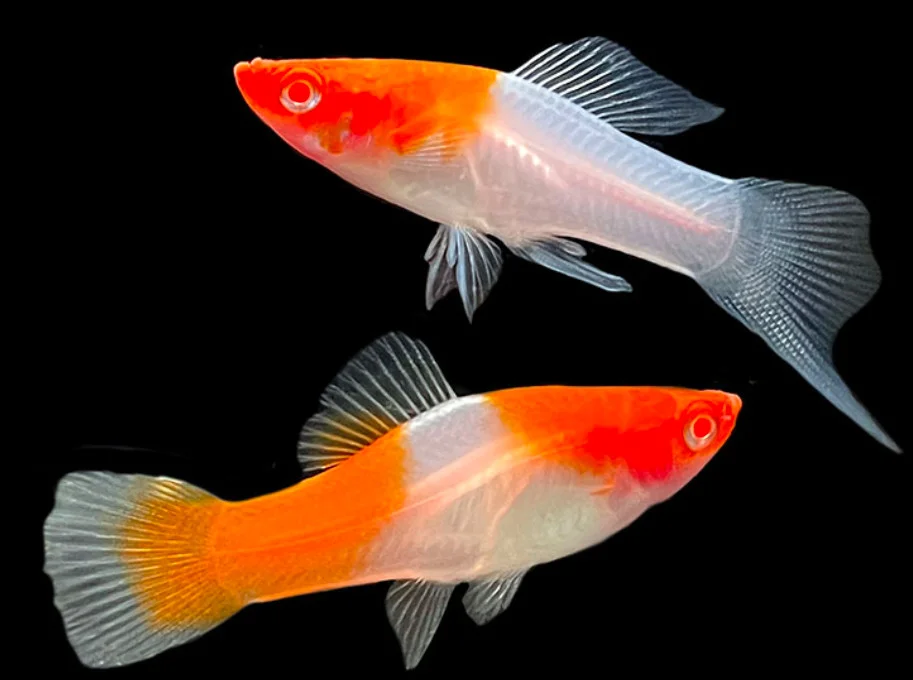
Finally, we’ll close this colorful list with the Kohaku Swordtail, which is inspired by koi coloration. It has a white base body with red-orange patches on the scales, while some rarer morphs show a black outline on their fins and tails.
Aquarists cherish this rare and fancy livebearer for its ornamental appeal. Despite being a designer livebearer, the Kohaku Swordtail fish is easy to care for and has the same needs as common swordtail variants.
Care Tips for Kohaku Swordtail
There’s no special care requirement for the Koi swordtail fish, so set the same standard water parameters.
- Temperature: 72 – 82℉
- pH: 7.0 – 8.3
- Hardness: Moderate to Hard
Feed them an omnivorous diet that’s rich in carotenoids and algae to boost coloration, and wait between 28 – 35 days for the females to give birth to their fry during breeding season.
Always maintain a male-to-female ratio of 1:2 to reduce the risk of territorial aggression, and only keep peaceful, compatible species in the community.
Conclusion: The Swordtail Starter Fish Advantage
With the versatility of these Swordtail fish varieties, from warm Red Swordtails to contrasting Black Swordtails, sub-varieties like the Lyretail, Wag Swordtail, and Hi-Fin Swordtail, to rare morphs like the Kohaku Swordtail, you can easily set up a small species-only community.
The best part of this option is that Swordtail species are easy aquarium fish to maintain. All variants have the same basic care needs, including tank size, water conditions, habitat, companions, and diet.
So, if you’re drawing inspiration from this beginner swordtail care guide, explore the wide color range and create a visual variety with these colorful livebearers. Pair dark Swordtails with fiery and warm variants, and add a Neon Swordtail for an extra shimmer.
Whatever you do, make sure you follow your heart.


