
Displaying the striking Odessa Barb in your planted aquascape is a visual win for any hobbyist, so here’s a guide on successfully housing this Myanmar native as a pet, including breeding insights for keepers.
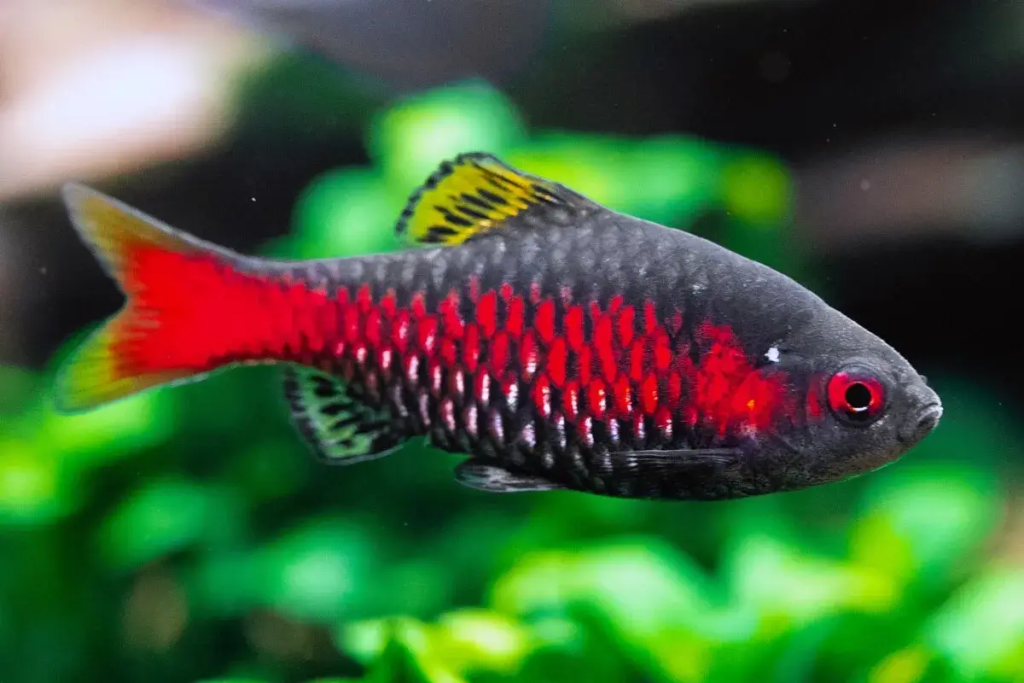
Odessa Barb: Striking Red Stripe for Planted Tanks
When researching colorful schooling barb variants to add to their community aquarium, many people overlook Pethia padamya, also known as the Odessa Barb.
However, this underrated variant, with its standout red-and-black coloration and energetic swimming habit, is worth a second, third, and even fourth look.
Odessa Barb is a popular planted-tank barb for its unique coloration, which makes it a good showpiece schooler.
In this guide, you’ll learn that providing optimal Odessa Barb care intensifies its already striking colors and gives your tank an outstanding aesthetic, no matter the backdrop design.
Keep reading to learn how you can provide top-notch Pethia padamyacare, whether you’re a beginner or a pro.
Author’s Note: Check out our post 13 Types of Barbs That Are Perfect for Colorful Beginner Nano Tanks which includes details on even more barbs to choose from!
Natural Range & Appearance
Natural Range
The Odessa Barb is a Myanmar freshwater fish native to the Southeast Asian rivers. Although the Odessa barb distribution spreads beyond this region, you’ll typically find it in the lower Chindwin River and Anisakan Falls by Toe Gyi Lake.
Appearance
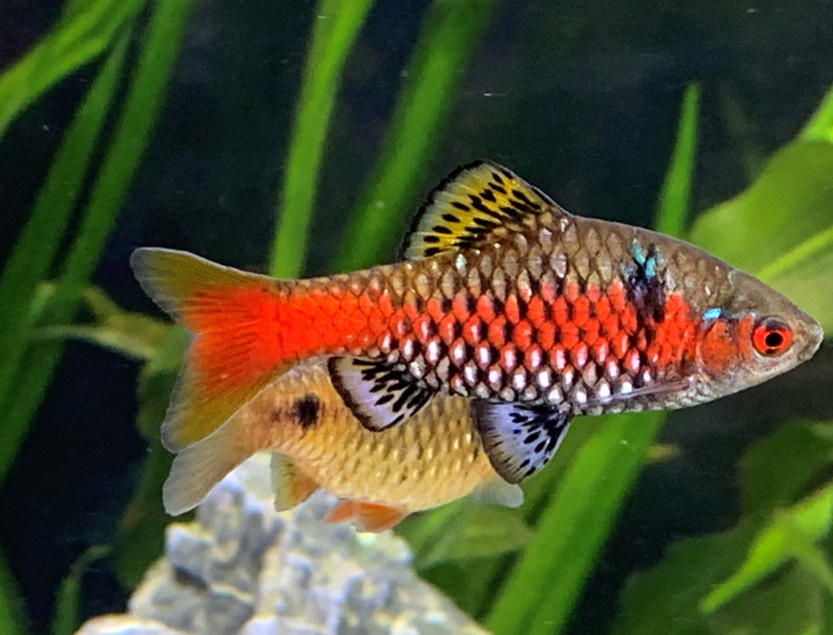
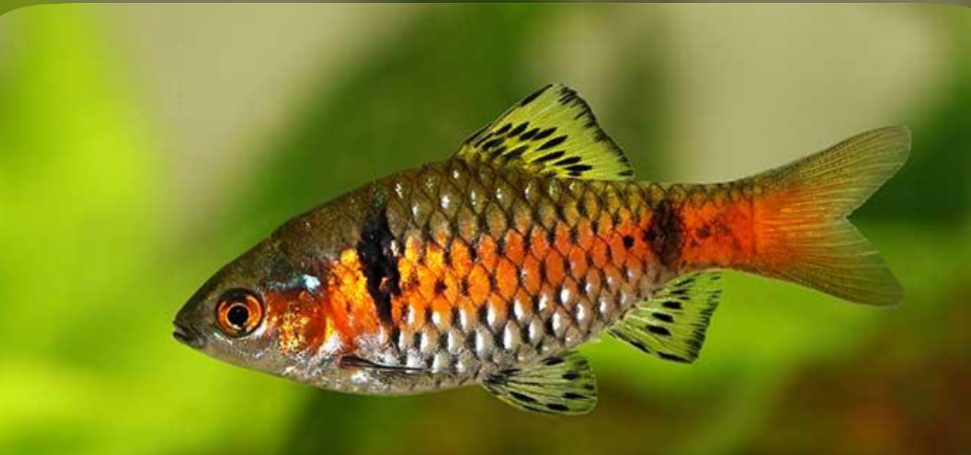
An average adult Odessa Barb is very small, reaching a maximum size of 2-3 inches. You’ll recognize this small barb by its vibrant, horizontal red stripe across a silver body.
Like many other barb variants, this red stripe fish has sexual dimorphism for easy distinction, especially during breeding. The males are smaller and brighter in color, while the females are larger and duller without the distinctive red stripe across their silver bodies.
Because the Odessa barb habitat is in a small region, keeping this species isn’t as common amongst hobbyists, but it’s becoming a go-to choice for intermediate and expert keepers.
Here’s how you can provide a suitable home for your Odessa Barb outside the rivers of Myanmar.
Tank Size & Schooling Needs
Ideal Tank Size
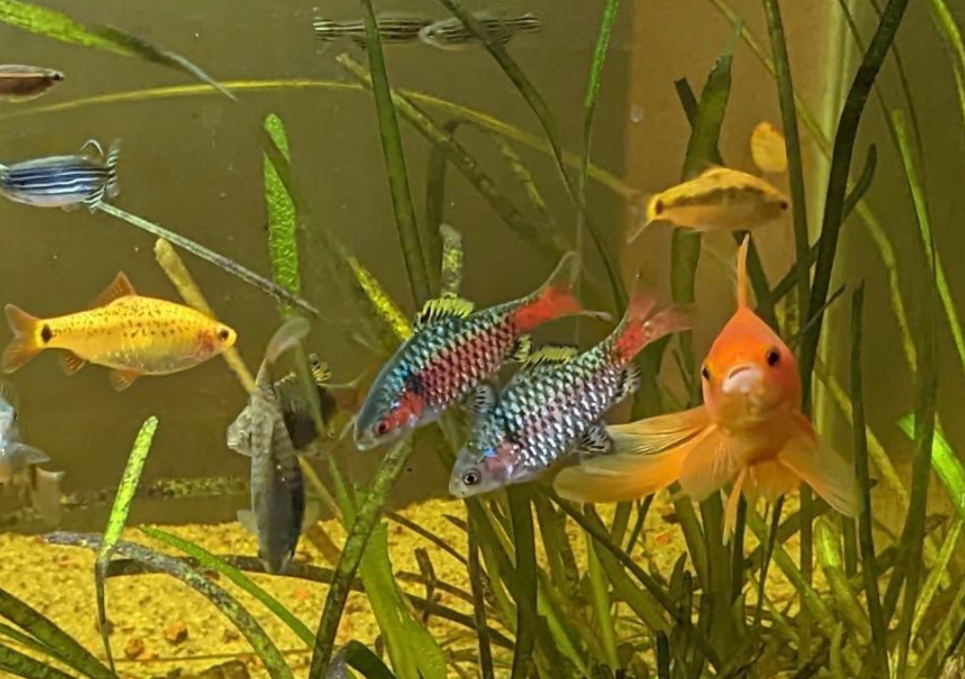
Due to its extremely small size, you can get an Odessa barb tank size of 20–30 gallons minimum for a small school of 5-6, and a 40+ gallon tank for larger groups to flaunt their colors.
Due to its natural habitat, Odessa Barb is a planted schooling fish, so decorate its surroundings with live plants such as Java Fern and Amazon Swords.
This species is an active swimmer, so ensure there’s an open swimming area for your pets to explore and express themselves.
Schooling Needs
Other schooling needs to ensure your Odessa Barb is comfortable in a community tank, including:
- Keeping compatible tank mates
- Adding live plants for interaction
- Adding aquarium rocks as hiding spots
- Securing the tank with a breathable lid to keep them from jumping and escaping.
Now, let’s set up the ideal water parameters and flow for your best school of Odessa Barb fish.
Water Parameters & Flow
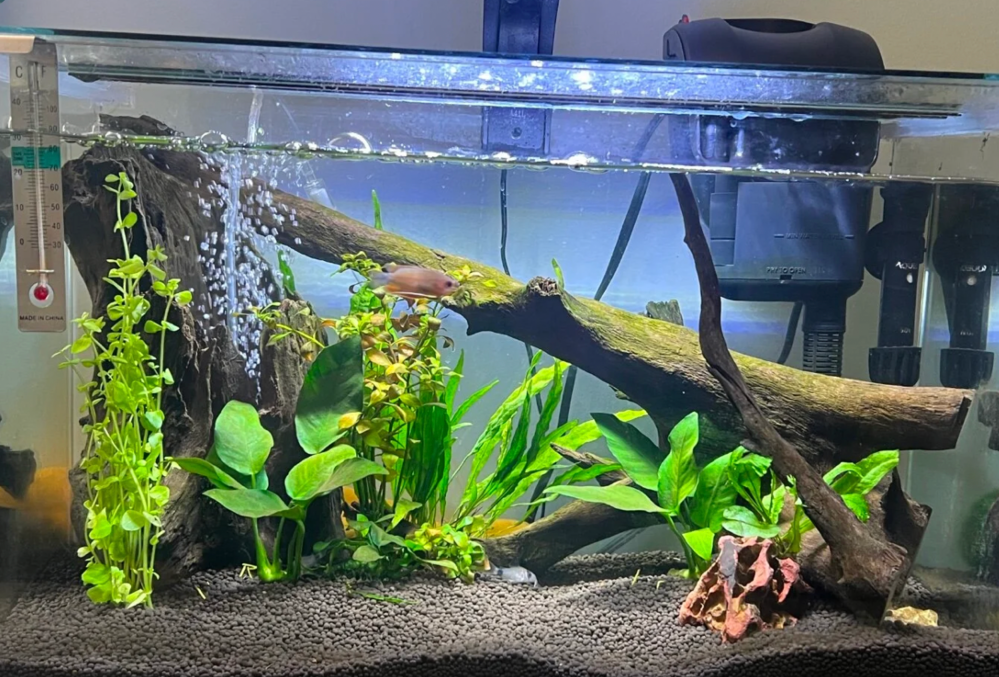
Odessa Barbs aren’t as hardy as other barbs like the Gold variety, so set water parameters suitable for sensitive fish skin. Ideal Odessa Barb water parameters are:
- Temperature: 72–78°F is an ideal temperature for Odessa Barb fish.
- Hardness: 4 – 10 dGH
- pH: Neutral at 7 is optimal, while slightly acidic at 6.5 – 7.5 is tolerable.
Pay attention to your Odessa Barb’s oxygen needs, as they affect its activity levels. Odessa Barb needs a dissolved oxygen saturation of at least 8.3 ppm to accentuate its vibrant scales.
Maintain a steady to fast flow with a good filtration system that can also stagger surface agitation for oxygen entry. The ripples would open the water, allowing better airflow to reach your pets.
Observe your pets for signs of low oxygen, such as gasping, rapid gill movements, and lethargy (a lack of motivation to swim).
Apart from the health benefits of maintaining pristine water conditions, strong water quality also yields a deeper red pigment in your Odessa Barb, so it’s good for aesthetics.
Diet & Color Enhancement
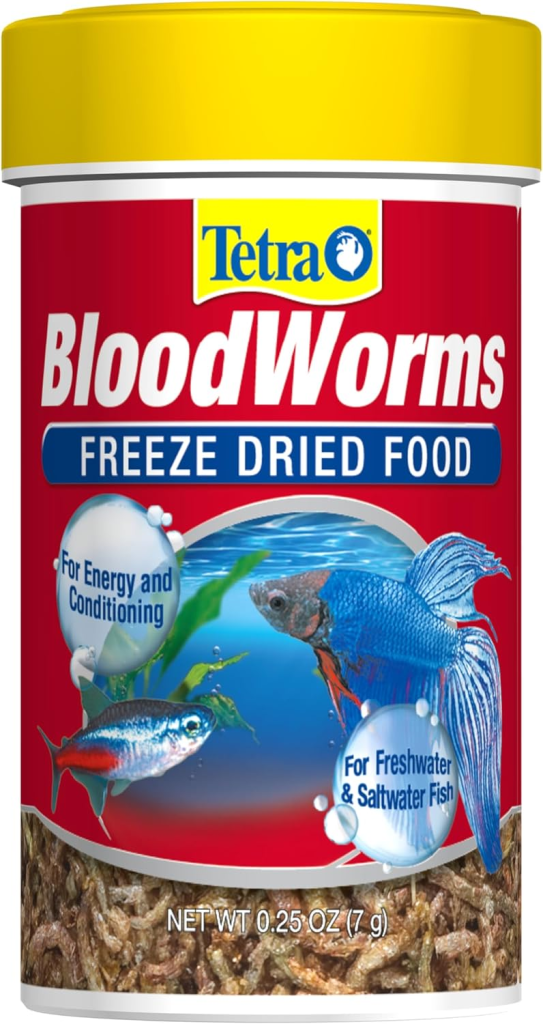
Freeze-Dried Tetra BloodWorms
As a fish with bold scale colors, your Odessa Barb needs specific color-enhancing fish food. If you don’t know how to color Odessa Barb naturally and artificially, look for foods rich in carotenoids and spirulina.
You can make your Odessa Barb diet plan with natural color-enhancing sources, such as vegetable matter, and live, freeze-dried animal matter, such as blanched spinach and zucchini with bloodworms, daphnia, and brine shrimp.
There are also high-quality commercial flakes and protein treats that’ll boost red pigments and deepen the silver color on their skins.
Author’s Note: For more on feeding your aquatic pets check out The Ultimate Guide to Fish Food: Pros and Cons & Best Choices!
You can also spice up your Odessa Barb’s food once in a while by sprinkling paprika into their gel foods, but be extra careful with the portions. Serve them small portions that they can finish within 2 minutes, and feed them only twice daily.
Behavior & Compatibility
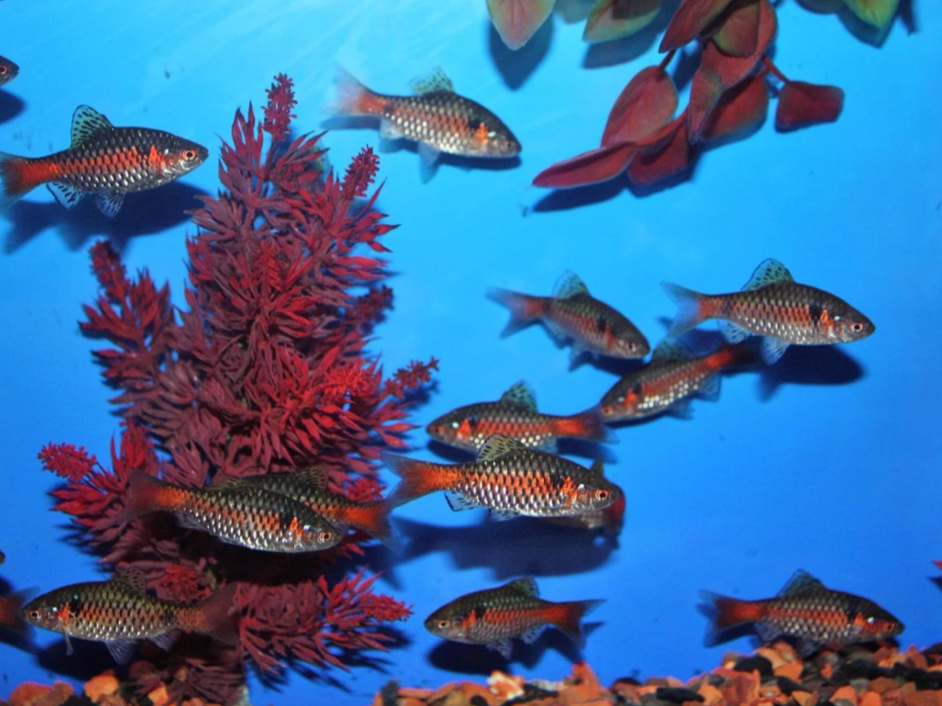
Odessa Barbs are active and social pets, so when choosing compatible aquarium species, consider their temperament, physical appearance, and tank conditions.
Fast-swimming, peaceful species such as Gouramis, Tetras, Rasboras, and Corydoras are ideal tank mates for Odessa Barbs. However, avoid fin-nipping by keeping long-finned species like Bettas and Angelfish, or slow-moving species that can become prey to your Odessa Barb away.
As midwater swimmers, your Odessa Barb will explore all levels of your aquarium, so keep them busy and curious with interesting, safe decor. Avoid sharp, rough edges, and secure all fittings tightly.
Health Considerations
Odessa Barbs are prone to stress due to their high activity levels, and the biggest trigger is cramped spaces.
To ensure optimal Odessa Barb health, start by following the tank requirements listed above, pairing them with compatible tank mates, and sticking to the recommended diets.
Then, ensure period checks to stabilize the temperature, maintain low nitrates, improve oxygen levels, and keep a reasonable group size to prevent stress in barbs.
Also, quarantine Odessa Barb Fry and new adults before adding them to your community tank. It’ll give you a chance to observe their health and ensure they’re safe before joining your other pets.
In case of illness, watch out for symptoms and match them to the disease before administering treatment. Some common symptoms and diseases in Odessa Barbs are:
- White spot disease from Ich or Golden/Rusty colors on scales from Velvet disease. These are parasitic infections that you can treat by increasing the temperature to speed up the parasite’s life cycle and applying anti-parasitic creams or feeding oral medication to your pet.
- Fin rot from bacterial infections. Treat this by increasing your aquarium temperature to speed the bacteria’s life cycle and applying antibacterial medication to the affected area.
- Hole in the Head is also a parasitic disease, and you can treat it with the right medication.
- Floating, laziness, and Listing are all signs of swim bladder disorder. Fast your fish for a day and introduce fiber-rich foods to its diet to ease bladder movement and relieve discomfort.
These are first aid treatments, but if the symptoms persist, it’s time to visit a professional fish veterinarian for help.
Note, though, that prevention is better than treatment, so if you provide your Odessa Barb with optimal care, there’ll be less risk of illness and disease.
Breeding Tips
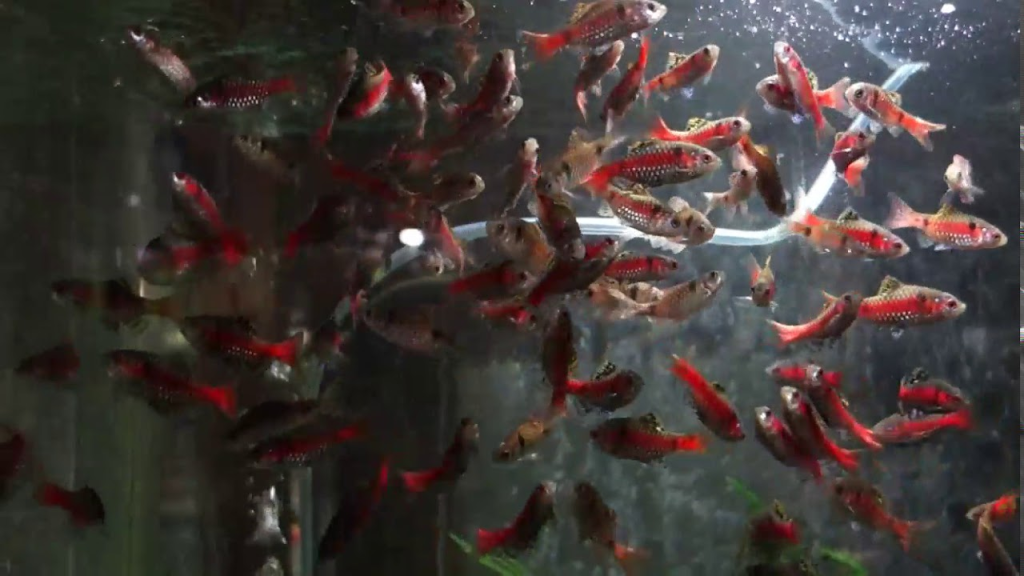
Successfully breeding community fish species, such as Odessa Barbs, requires careful planning and detailed execution.
You must first condition your breeding pair, then set up an ideal environment, care for the eggs and fry before introducing your juveniles into an adult tank. It sounds taxing, but it’s simple once you know the steps.
Conditioning
First, you must select healthy adult Odessa Barbs as your breeding pair. Choose one male and one or two females to avoid territoriality, then prepare them to spawn. Separate the sexes and condition them individually.
Condition your breeding barbs by increasing their protein intake with more live and frozen foods at least 2 weeks before breeding day.
Tank Setup
Set up a 10 – 20-gallon tank with a bare floor, spawning mops, mesh divider, and dense plants to catch all the eggs when the females spawn, since they’re scatterers.
Dividers are suitable for dual-purpose tanks, while spawning mops are for exclusive breeding tanks. Reduce the water level to 6-7 inches and ensure a high-quality filter to keep the environment clean.
Spawning
Place the breeding pair into your prepped breeding tank and wait for action at night. The male Odessa Barb will chase the females until dawn, when they’ll spawn their eggs.
Females spawn Odessa barb eggs by scattering them throughout the tank. The egg then falls into the surfaces you set, such as spawning mops and wide leaves, in cluster groups.
Immediately after spawning, remove the adult Odessa Barbs from the tank.
Egg and Fry Care
Within 24 to 48 hours of spawning, the Odessa Barb egg would hatch, depending on how hot you make your tank. Increase the temperature for quicker hatching. Once they hatch, you must be quick with your fry care.
Here’s how to raise Odessa fry like a pro:
- Feed them infusoria and liquid fry food for the first few days, until they develop teeth and are ready to chew.
- As they grow bigger and develop defined mouths, they switch their food to baby brine shrimp and crushed fry food to build their muscles and aid development.
- Keep them in quarantine for another few weeks, depending on how fast they develop, before introducing them to the main tank.
Once your Odessa Barb matures and is ready to join the adults, you can reintroduce it to the main aquarium.
Lifespan & Hobby Fit
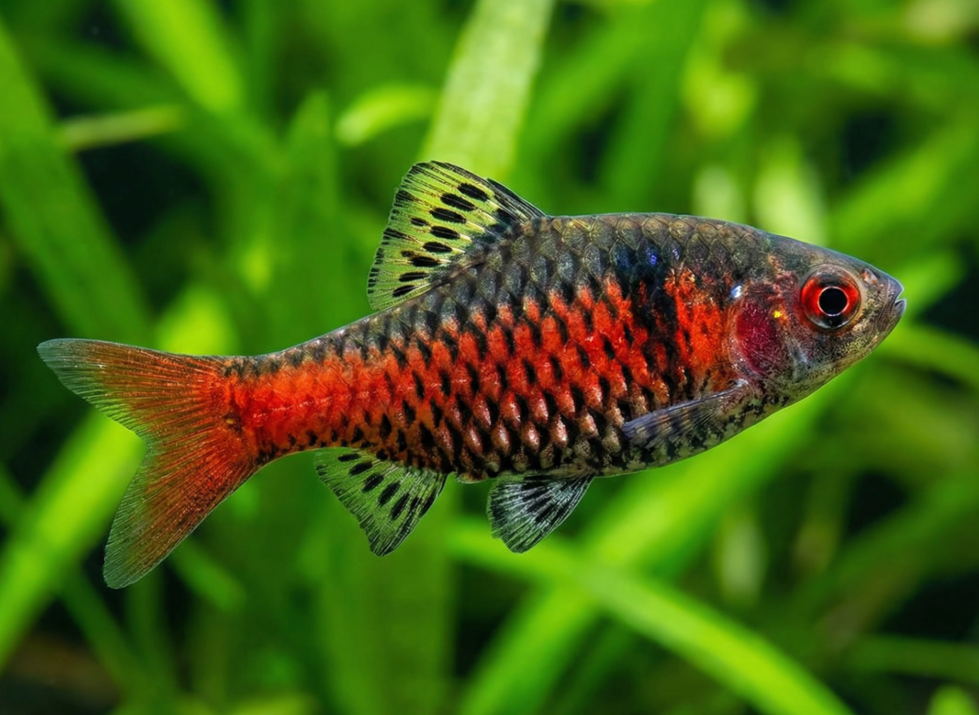
Why is the Odessa Barb a beginner show fish? It’s aesthetically pleasing and easy to maintain, even for first-time hobbyists. With excellent care and attention, you can extend your Odessa Barb’s lifespan to 4-6 years, or even longer on rare occasions.
Although this planted tank schooling fish is ideal for beginners, it’s better for intermediate-level hobbyists who already know what they’re doing.
The margin of error would be slimmer, and most times, intermediate to expert hobbyists have advanced equipment to provide the Odessa Barb with a perfect lifestyle outside its natural habitat.
It’s a great choice for aquascape-driven community tanks.
Conclusion
Following this Odessa Barb guide when preparing to house this visually stunning fish species is a cheat code to achieving success in your hobby. Most people keep odessa barbs and other fish for aesthetic reasons, but they often forget that these pets also need daily care and attention.
As a good fishkeeper or hobbyist, knowing the specific requirements for this red schooling fish care would distinguish your pets from random aquarium collections, and the best part is that they’re low-maintenance variants.
Give them enough room with a rectangular tank with dense planting, high-quality water, and a color-enhancing diet, and watch your Odessa Barbs flourish. To best accentuate the colors of this aquascape display species, use dark, smooth substrates and select contrasting plants.
Enjoy the show.


