Skip to content
Spend less for more with the vibrant and beautiful Gold Barb fish species – an affordable beginner-friendly pet with low-maintenance requirements for first-time hobbyists.
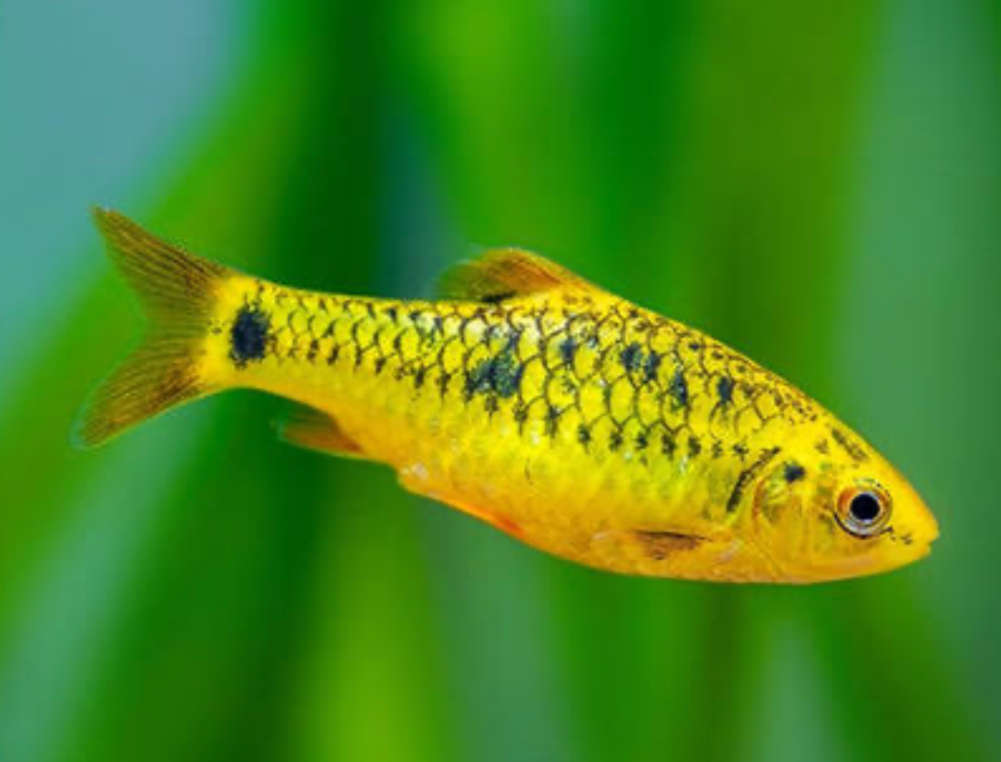
Do you want a unique beginner schooling fish that’ll draw attention to your aquarium? Would you like a variant that stands out in a community of vibrant varieties? Then consider adding a Gold Barb to your tank.
Puntius semifasciolatus, also called Gold Barb and Schubert barb, is a durable, showy schooling species suitable for community tanks. This unique barb variant is the result of selective breeding but retains wild barb traits such as hardiness and tolerance.
To master this gold barb’s care routine, you must first understand its needs based on its origins, appearance, and average life expectancy. So, let’s get to it.
Author’s Note: Check out our post 13 Types of Barbs That Are Perfect for Colorful Beginner Nano Tanks which includes details on even more barbs to choose from!
Natural History & Selective Breeding
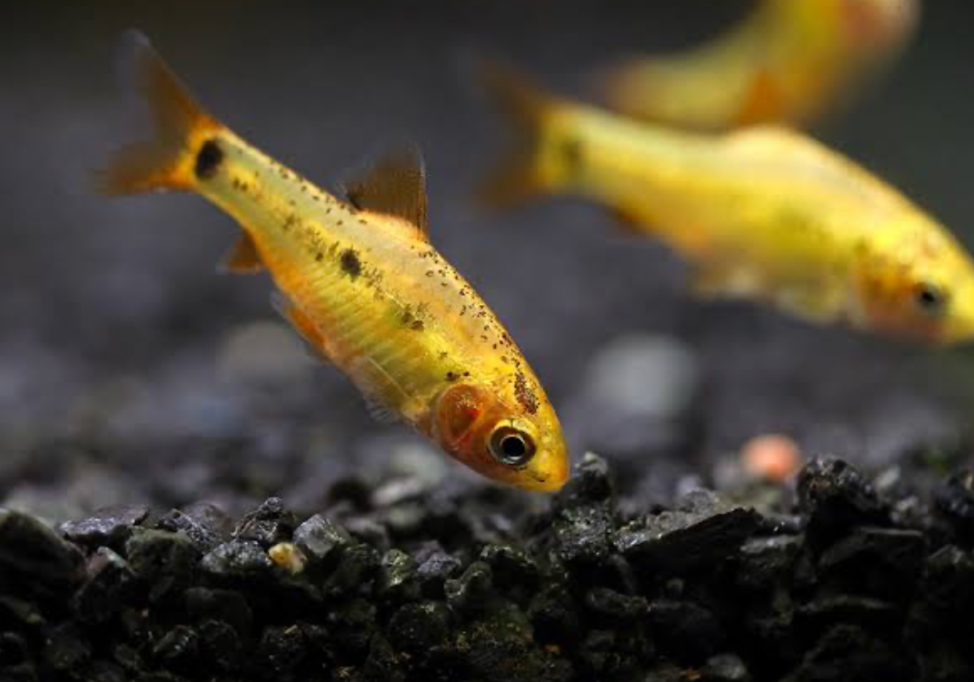
A deep dive into Schubert barb history reveals that its wild ancestor is the green barb, native to the Asian Red River that runs through Laos, China, and Vietnam.
Schubert Barb earned its name from famous hobbyist Thomas Schubert, who selectively bred the first gold Barb in the 1960s.
Despite being a selectively bred barb, Puntius semifasciolatus is widely available and inexpensive. That’s because its wild parents are easily accessible in their natural habitat but not in aquaria.
Now that you know the gold barb origin, let’s help you identify this domesticated color morph to avoid mistaking it for the similar golden barb species.
Identification & Color Varieties
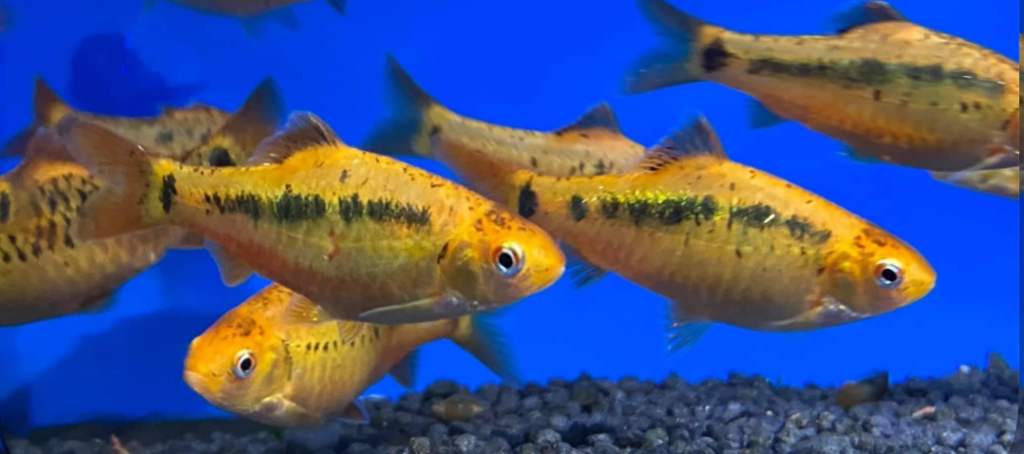
You can identify gold barb fishspecies by their physical appearance and behavioral traits. Adult gold barb variants grow between 2.5 and 3 inches long at maximum length. They have arched backs that are often reddish-brown or a light gold shade, while their sides have a metallic golden sheen, sometimes green.
This metallic aquarium fish has two barbels on the sides of its mouth. Its males spot a golden brass hue on their underbelly, which turns whitish to yellow-green during mating season.
Some gold barb color morphs have orangish-red ventral colors, but the females maintain an overall dull look with a rounder belly. These vibrant, golden-toned metallic sheens shine brighter under LED lighting.
Once you select the right gold barb fish, it’s time to create a suitable aquarium for housing it.
Tank Size & Ideal Setup
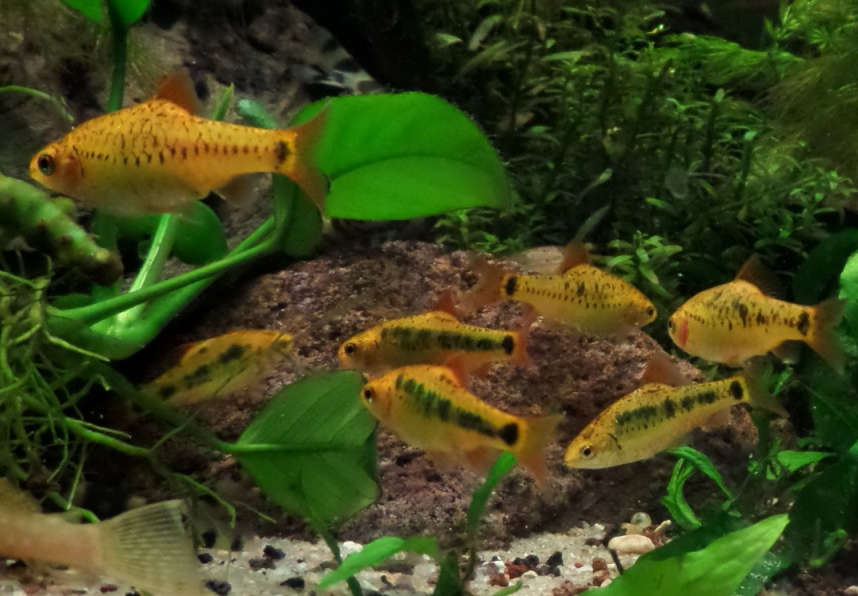
Due to the species’ small size, the average gold barb tank size is about 20–30 gallons for a small group of 4-5. This group mostly swims midwater, but it needs planted edges to feel safe enough to hide when it desires.
Since the size requirements are manageable, you can start your Gold barb in a beginner barb tank with other compatible species.
For a starter community setup, live plants such as Java Fern, Anubia, and Amazon Sword, mixed with driftwood and rocks, arranged with an open swimming area, will give your pets a hyper-realistic environment to live in.
Also, layer the tank with soft, smooth sandy substrate so they won’t hurt themselves when foraging.
Water Parameters & Maintenance
Ideal water parameters for gold barbs include a pH of 6.5-7.5, a temperature of 64-78°F, and a hardness of 5-25 dGH. They prefer cooler water temperatures like those in the subtropical region they originate from, so you should keep the tank unheated until winter.
Despite being a low-maintenance tropical fish, gold barbs need slow to moderate current, as frequent or heavy water flow stresses them out. Also, regulate the water changes to avoid stressing this hardy aquarium fish. A 20% water change once a week is ideal for keeping the water pristine without harming your pets.
Ensure there’s a filtration system, preferably a sponge filter, set to a gentle and moderate flow to keep the water clean after feeding.
Diet & Feeding Tips
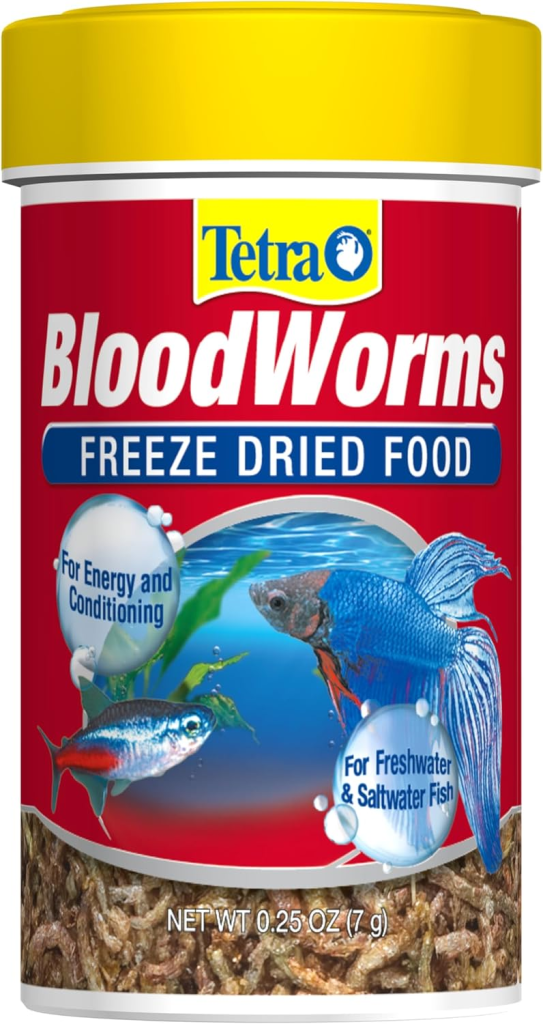
Freeze-Dried Tetra BloodWorms
Generally, most barbs are omnivores, which means they eat plant-based and meat-based diets, but the best food for gold barb variants is meals that’ll boost their appearance and health.
Feed them specifically modified pigment support foods such as high-quality flakes and pellets as staples. Then, supplement these with frozen live food such as brine shrimp and bloodworms. Rotate their diet to maintain their vibrant coloration and keep feeding time exciting.
Set up your gold barb feeding routine to accommodate their fast eating habits. You can give them a portion of food that they’ll finish in less than 2 minutes twice a day and introduce treats once a week. Treats can include plant-based snacks and specific fruits, such as shelled peas and blanched zucchini.
Author’s Note: For more on feeding your aquatic pets check out The Ultimate Guide to Fish Food: Pros and Cons & Best Choices!
Behavior & Tank Mates
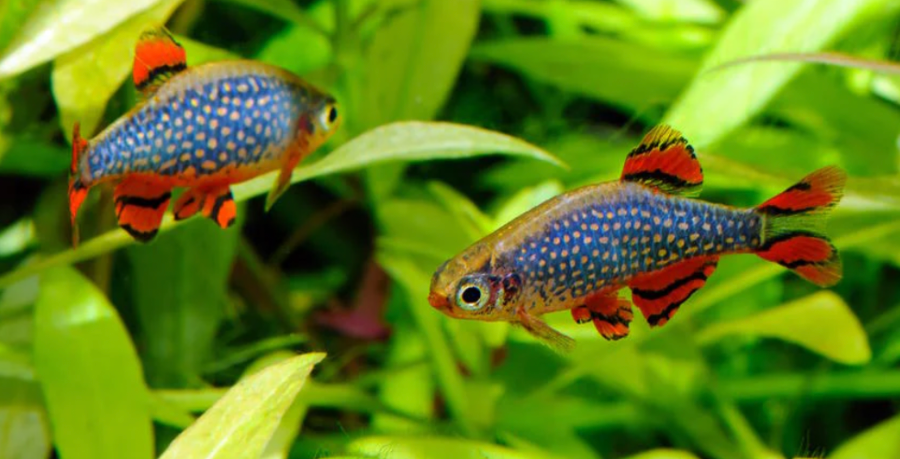
Because the Gold Barb species is a peaceful schooling fish, you must select any potential tank mate carefully. Consider their tolerance for the environmental conditions suitable for your gold barb, their diet, their size and appearance, and their personalities.
Compatible gold barb tank mates would share the same tank conditions, eat the same kinds of food, be similar in size, and have a calm personality, such as tetras, gouramis, and rasboras.
Avoid nano-sized and very large species, especially the ones with tall fins and aggressive personalities, such as Bettas, Guppies, and Angelfish. They’re not the nicest companions for community barb species like your gold barb because they’re fin-nippers with predatory tendencies.
Health & Common Problems
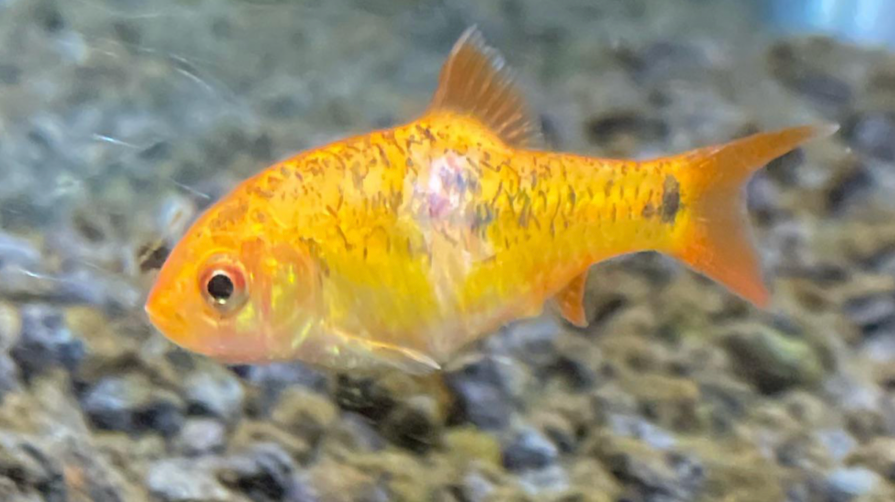
Although your Gold Barb fish is a typically hardy species, it takes careful maintenance to raise healthy schooling barbs in an aquarium. They’re naturally resistant to common illnesses, which is why they’re beginner-friendly, but are prone to specific diseases such as:
- Bacterial infections
- Parasitic infections
- Fungal infections
- Feeding problems
- Swim bladder disorder
Bacterial Infections
- Symptoms: Ulcers, red spots, bleeding
- Causes: Untreated injuries from fighting ot fin-nips and bacterial growth in dirty water
- Treatment: Immediately apply an antibacterial cream or medication, and separate your gold barb from the aggressive tank mate.
Parasitic Infections
- Symptoms: Physical parasites on the fish’s body, paleness, white spots for ich, sores, and hemorrhaging.
- Causes: Flatworms, flukes, and leeches, which often grow in untreated aquarium water.
- Treatment: Change the water and treat your gold barb fish with anti-parasite medications.
Internal Infections
- Symptoms: Raised scales, dropsy, swelling, and bloating.
- Causes: Internal infections left untreated for too long.
- Treatment: If you notice early signs of internal infections, take your gold barb to the vet for professional treatment, as this is a fatal disease.
Feeding Problems
- Symptoms: Obesity, abnormally small/slow growth.
- Causes: Overfeeding, malnutrition
- Treatment: Fast your fish for two to three days and increase their fiber intake to ease constipation from overfeeding. Improving their diet to a balanced diet will help address malnutrition.
Swim Bladder Disorder
- Symptoms: Off-balance swimming.
- Causes: Bladder incontinence
- Treatment: Improve your pet’s diet to promote better bowel movements and relieve your gold barb so it can return to peak health.
The good news is that most of the care requirements in this guide also double as gold barb disease-prevention tips.
When you provide your pets with optimal living conditions, avoid overcrowding even with compatible tank mates, and feed them a balanced diet, they’ll survive for long periods in good health. An ideal community size per 20-30 gallon tank is 5-6 gold barbs or similar-sized companions.
Breeding Notes
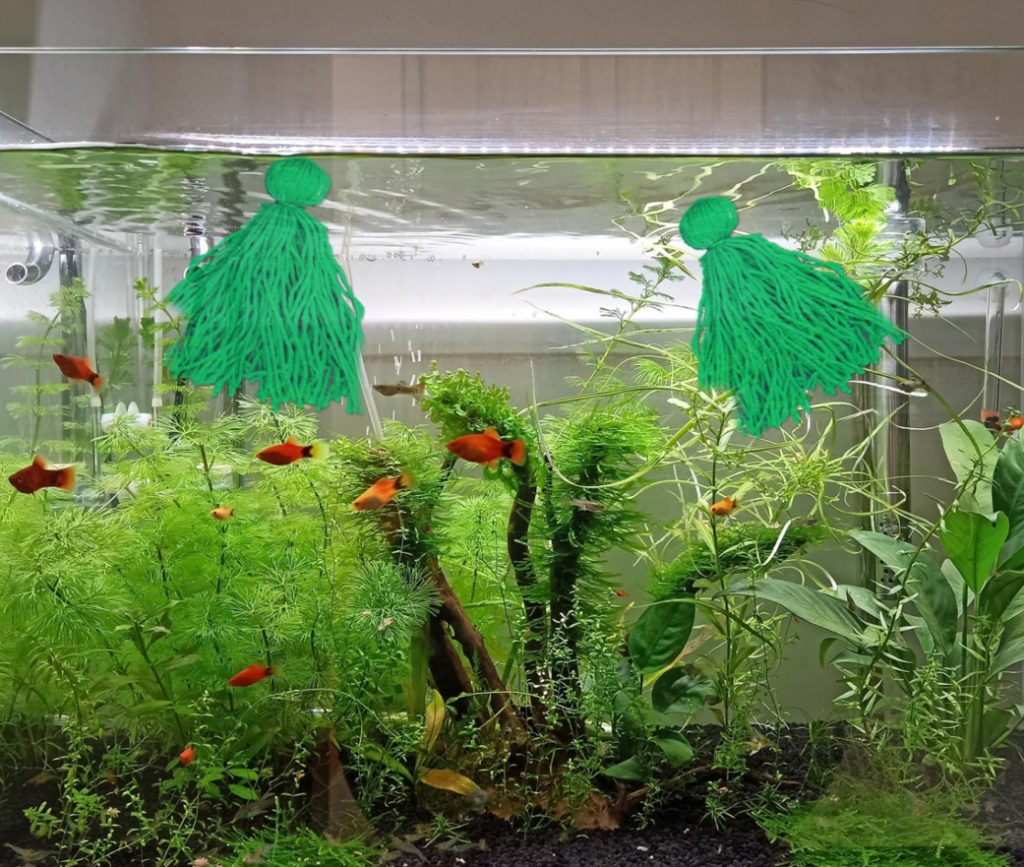
Are you interested in breeding gold barbs to help you multiply this species in a controlled environment? Then read this guide on raising gold barb fry, starting with the ideal tank setup, egg care, fry care, and eventual assimilation into the adult tank.
Breeding Tank Setup
Since breeding tanks would house only two to three gold barbs, you need only 5 – 10 gallons of water. Add fine-leaf plants such as Java moss and a spawning mop to catch the eggs when the female gold barb spawns in groups.
Keep the ground bare, but cover it with a spawning mesh to protect the eggs and prevent them from scattering.
Spawning
Condition your breeders, which should be one male to two or three females, by feeding them high-protein meals at least two weeks before the breeding day. Introduce the breeding pair at night and wait for them to spawn at dawn.
The male will chase the female until she’s ready to spawn. Females spawn gold barb eggs in scattered groups around the breeding tank. That’s why the spawning mops and fine leaves are necessary.
Egg & Fry Care
Immediately after the adults finish spawning, you must remove the parents from the tank with the eggs to prevent them from eating their newborns. The eggs will hatch within 24 to 48 hours, and it’ll be time to switch to freshwater fry care routines.
Feed your juvenile fry with infusoria and other liquid fry food until they’re big enough to chew on crushed fry flakes. Change 20-50% of the water daily to ensure pristine conditions, as gold barb fry are more sensitive to poor water quality than adults.
Reintroduction
After two to three weeks, the juvenile gold barb would be ready to join the main tank. Breeding is relatively straightforward in dedicated tanks, so prepare the right environment, and you’ll have healthy gold barb fish within a month.
Lifespan & Fit for Beginners
With optimal care, the average gold barb’s lifespan will last between 4 and 6 years. That’s why this species is a suitable beginner barb fish. You don’t have to do too much to keep them in good health.
So, get the environment ready and gently introduce this easy schooling fish into your community and trust that you’ll enjoy half a decade or more with your pet.
Conclusion
Are you now ready to keep gold barbs in your aquarium? They’re cheap to purchase, easily accessible, and require little but careful attention for survival. You’ll enjoy watching this affordable aquarium fish move in unison and display its vibrant gold scales, whether in a barb-only tank or a diverse community.
If you’re a first-time hobbyist, this is one of the best beginner barbs to explore without fear of making mistakes. All you need to do is keep the environment pristine, set ideal conditions, pair them with compatible mates, and feed them a rich, balanced diet.
Enjoy your vibrant community setup and share your thoughts with us.